dailynewsnblog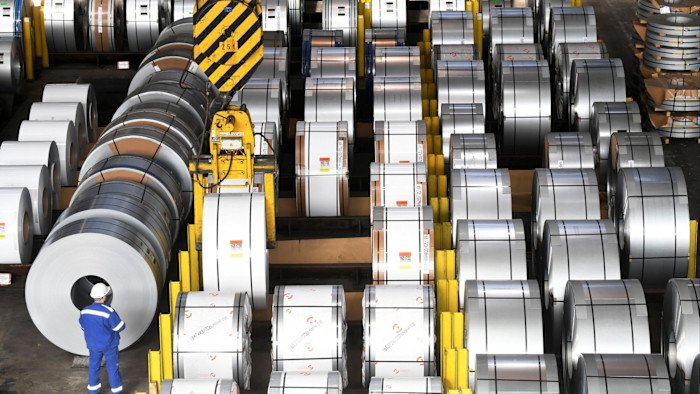
This article is an on-site version of our Europe Express newsletter. Premium subscribers can sign up here to get the newsletter delivered every weekday and fortnightly on Saturday morning. Standard subscribers can upgrade to Premium here, or explore all FT newsletters
Good morning. Today, our trade and environment team report on the steel industry’s tariff woes and our Rome colleagues unpack the Winter Olympics’ Italian quirks.
I’m away skiing next week so Laura will be running the show. Have a great weekend and see you in March.
Stopping the steel
EU steel exports to the US fell by almost a third as US tariffs began to bite, but it’s unlikely that trade ministers meeting today will give the industry a reprieve, write Andy Bounds and Alice Hancock.
Context: The EU and the US sealed a trade agreement last summer, but steel and aluminium were not included in the deal which lowered tariffs on most EU exports to 15 per cent.
Eurostat data shows that exports of steel from the EU to the US fell by almost a third in the past six months of last year, compared with the same period in 2024, after the US hit them with tariffs of 50 per cent.
The “blunt 50 per cent tariffs . . . are damaging our industry,” said Axel Eggert, director-general of the steel industry body Eurofer. He added that the industry remained in limbo after the trade deal, which only committed the two sides to “consider the possibility” of reducing steel tariffs.
The EU has moved to protect its industry by imposing 50 per cent tariffs on all steel imports above a certain quota, including from the US. But this has not convinced the US to come back to the negotiating table as it does not export much metal to the EU.
The European industry’s pleas are however likely to fall on deaf ears among EU trade ministers meeting in Cyprus today. The US is not even officially on the agenda, which instead focuses on WTO reform, China and ongoing bilateral trade talks with the likes of Australia and the Philippines.
Even the European parliament, which has taken a more muscular approach to Washington than member states and the Commission, is only offering mild support.
“The EU agreed 50 per cent on steel and we have to keep to our agreements,” said Bernd Lange, chair of the parliament’s trade committee.
The committee has however proposed tackling another US levy of 50 per cent on derivative steel and aluminium goods — such as parts of washing machines or motorbikes — which lawmakers believe breaches the terms of the deal.
If those are not removed within six months of the EU ratifying the agreement, likely to happen in May, the parliament wants to raise the EU’s tariffs on US steel again. Lange believes member states would back the clause.
Chart du jour: Shitstorm

The Netherlands has almost as many farm animals as people, and the strain on nature is showing. But limits on using manure as fertiliser have sparked protests that are convulsing Dutch politics.
Other side of the medal
The Winter Olympics wrap up this weekend and host country Italy has had a bumper edition on the snow and ice. But the Games have still generated plenty of domestic controversies, write Amy Kazmin and Giuliana Ricozzi.
Context: Over the past two weeks, 2,900 athletes from more than 90 countries have competed in over 100 events, from figure skating to ski-mountaineering. Italy has had its best Winter Olympics ever, currently coming in third in the medal tally.
But not everyone performed well. Public broadcaster Rai yesterday announced the resignation of Paolo Petrecca as head of Rai Sport, after repeated blunders while narrating the live Olympics opening ceremony.
His errors included wrongly naming the stadium, mistaking an Italian actress for global superstar Mariah Carey and failing to recognise players from Italy’s gold medal-winning women’s volleyball team. Rai staff had threatened industrial action unless he stood down.
The International Paralympic Committee’s ruling that athletes from Russia and Belarus could participate in the opening ceremony of the upcoming Paralympics carrying their national flags also exposed tensions within Italy’s governing coalition.
Italian foreign minister Antonio Tajani and sports minister Andrea Abodi expressed Rome’s “absolute opposition’‘ to the ruling, given the ongoing military aggression in Ukraine. But deputy prime minister Matteo Salvini’s pro-Russian League hailed the decision as “positive news”.
Italy’s Olympic organising committee also came under fire for only providing 10,000 free condoms in the Olympic Village. Branded with Olympic rings, they ran out after just three days.
The organising committee said that “higher than anticipated demand” led to stocks being depleted. Critics however noted that the number initially available were just a fraction of the 300,000 condoms reported distributed during the Paris Summer Olympics.
What to watch today
-
Defence ministers from France, Germany, Italy, the UK and Poland meet for E5 summit in Krakow, together with EU chief diplomat Kaja Kallas.
-
Informal meeting of EU trade ministers in Nicosia.
Now read these
Recommended newsletters for you
Free Lunch — Your guide to the global economic policy debate. Sign up here
The AI Shift — John Burn-Murdoch and Sarah O’Connor dive into how AI is transforming the world of work. Sign up here
Are you enjoying Europe Express? Sign up here to have it delivered straight to your inbox every workday at 7am CET and on Saturdays at noon CET. Do tell us what you think, we love to hear from you: europe.express@ft.com. Keep up with the latest European stories @FT Europe