dailynewsnblog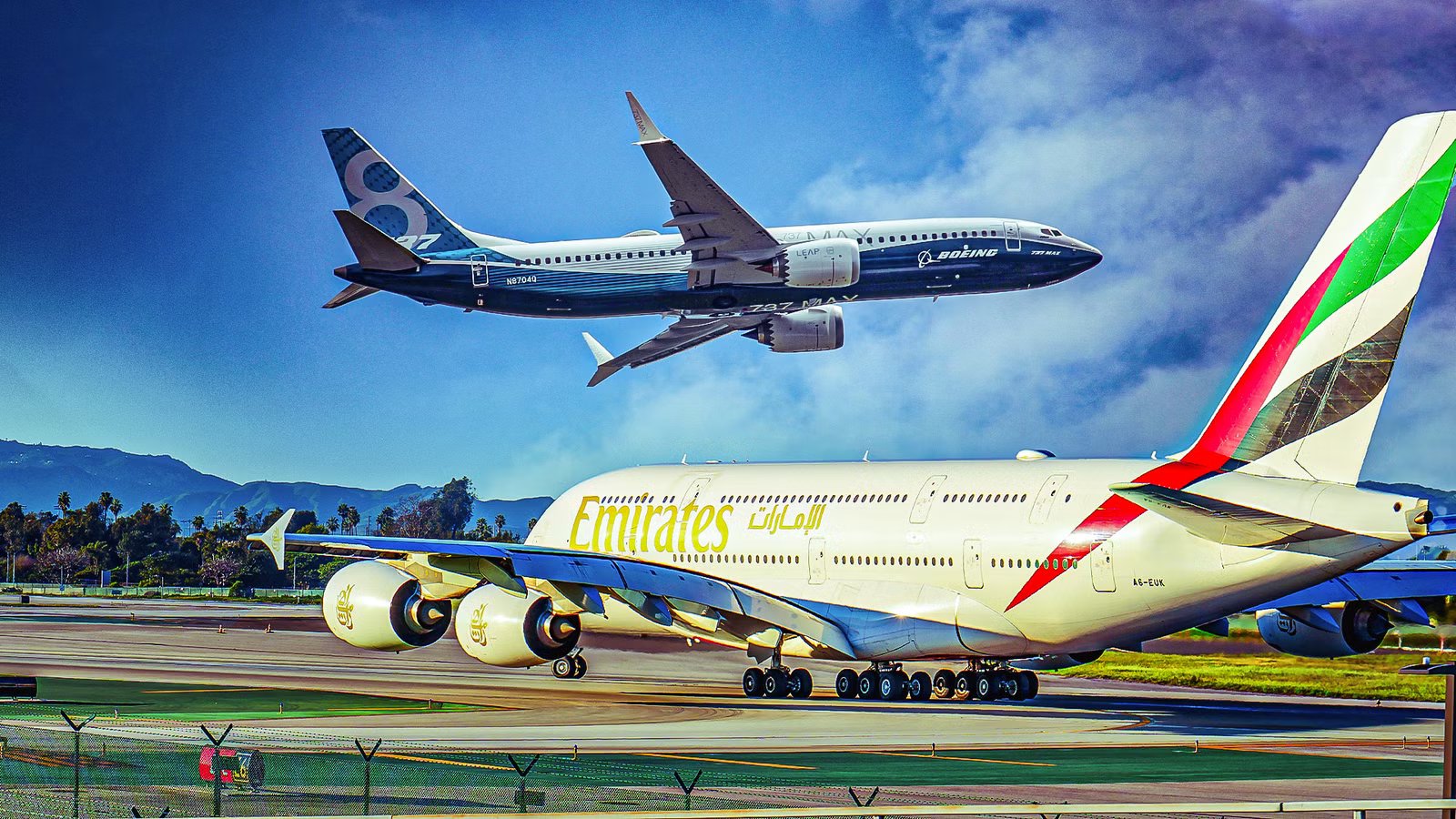
Upon first glance, the  Boeing 737 MAX seems like an aircraft that almost any major airline would want. It is fuel-efficient, flexible, and capable of serving a huge range of short- and medium-haul markets with strong operating economics. But Emirates is not just any airline. The Dubai-based carrier has managed to build its identity around a very different operating philosophy. The carrier moves large numbers of long-haul passengers through one massive global hub using widebody aircraft rather than scattering capacity across a number of smaller jets. In that context, the Boeing 737 MAX is not a missing piece that would add strength to the carrier’s overall network strategy. Rather, it is an aircraft that solves a problem Emirates never really had in the first place.
This overall distinction matters quite significantly. Emirates’ overall reluctance to touch the MAX is less about rejecting Boeing and more about actually staying disciplined. The airline remains heavily invested in Boeing widebodies, especially the Boeing 777 family, while its fleet today is centered on the Airbus A380 and Boeing 777, with some A350s also operating. The airline is also continuing a massive retrofit program to keep that widebody product competitive in the market. At the same time, narrowbody flying is already handled within Dubai’s broader aviation ecosystem by sister carrier flydubai, which operates 737s, including the MAX. Therefore, the headline is not that Emirates dislikes the 737 MAX specifically. Rather, it is that the aircraft does not fit the airline’s network design, overall brand position, or fleet logic.
Emirates’ Fleet Strategy At A High Level

The  Emirates fleet strategy is unusually clear by the standards of modern airlines. Customers should stay focused on large widebody aircraft and build scale through Dubai International Airport (DXB). The ultimate purpose is to avoid unnecessary complexity by pretty much any means possible. For decades, that approach has meant that the airline has relied exclusively on the Boeing 777 and the Airbus A380 to funnel traffic from across the world into a singular super-hub, a place where passengers connect onward to Europe, Asia, Africa, Australia, and the Americas.
Even as the fleet continues to evolve, the overall philosophy has not. The Airbus A350 has now joined the fleet, and more Boeing 777X aircraft are on order. Emirates has also added to its 787 commitments, but all of those moves reinforce the same long-haul, high-capacity model rather than replace it with a narrowbody strategy. This is why the Boeing 737 MAX sits outside the plan. Emirates prefers fleet commonality, premium consistency, and high seat counts on trunk routes.
A narrowbody would introduce extra pilot training, maintenance, scheduling, and cabin-product variation without advancing the carrier’s principal objective. Where thinner regional routes or higher-frequency short-haul flying make sense, flydubai fills that role and feeds traffic into the broader Dubai system. At the same time, Emirates is choosing to double down on its existing formula through a multibillion-dollar retrofit effort and a broad cabin and connectivity upgrade across its widebody fleet. Thus, Emirates is not under-diversified, but rather deliberately specialized due to the design of its network.
What Role Does The Boeing 737 MAX Play For Airlines Today?

For most operators, the Boeing 737 MAX is a workhorse narrowbody designed for a few different purposes at once. For starters, the jet is supposed to offer lower operating costs, add network flexibility, and match capacity more precisely to overall demand. Its core role is replacing older Boeing 737NG-family aircraft with a jet that burns less fuel, produces less noise, and can manage to fly farther, which matters because fuel remains one of the industry’s biggest cost items and airlines are under constant pressure to improve overall operating efficiency.
Boeing says that the MAX family cuts fuel use and carbon dioxide emissions by at least 14% over earlier Next Generation Boeing 737s, while also offering more range across the family as a whole. That makes it attractive on dense short-haul routes, medium-haul sectors, and even thinner longer missions that do not justify a widebody jet. From a strategic perspective, the Boeing 737 MAX helps airlines grow without overcommitting capacity.
A carrier can use it to open secondary city pairs, increase frequency on business routes, or defend market share with a lower trip cost than a larger aircraft. The plane also fits the economics of low-cost carriers and full-service airlines at the same time, because narrowbodies now make up nearly 60% of the global commercial fleet, with the Airbus A320 and Boeing 737 families dominating the segment with virtually no competition. The jet is the aircraft that airlines rely on to make large parts of their networks economically viable.

Why The Airbus A350-1000 Is Perfect For Emirates’ Ultra‑Long Flights
Why the Airbus A350-1000’s range, efficiency, and comfort can make it the ideal aircraft for Emirates’ ultra-long-haul global network.
Why Doesn’t The Aircraft Make Sense For Emirates?

There are a few key reasons to discuss why the Boeing 737 MAX does not fit Emirates’ fleet needs, because Emirates is built around a very different model from the airlines that rely on narrowbodies. Emirates’ network is centered on carrying huge volumes of long-haul connecting traffic through Dubai with large widebody aircraft, not on operating lots of short-haul point-to-point routes with smaller jets.
That is ultimately reflected in its current passenger fleet, which is built around the Airbus A380, the A350, and the Boeing 777. In its plans, which continue to emphasize widebody growth through additional 777-9 and A350-900 acquisitions, the carrier has stayed firm in its strategy, according to Forbes. The airline has been routinely identified as the world’s largest buyer of commercial-grade long-haul widebody aircraft.
Just as importantly, the narrowbody role already exists elsewhere in the Dubai aviation system. Emirates’ sister carrier, flydubai, which also serves as a close operating partner for the airline, operates a single-type Boeing 737 fleet that already includes large numbers of Boeing 747 MAX 8s and MAX 9s. In practice, that means Dubai already has a carrier designed to serve the thinner regional and medium-haul routes where the MAX makes sense.
How Does Emirates Handle Short-Haul Flights?

Emirates serves short-haul routes by applying its long-haul model to more regional types of flying. Instead of using narrowbodies, the airline schedules widebody aircraft on shorter sectors, so those flights can act as feeders into its long-haul Dubai hub. That works because Emirates is built around banks of connecting traffic rather than local point-to-point demand on its own. A flight from a nearby market does not just carry passengers going to Dubai. Rather, it delivers travelers onward to Europe, Asia, Africa, and the Americas.
In that kind of system, a widebody can make sense even on a relatively short stage length because the airline is optimizing the whole hub network, not just the local route in isolation. Emirates also keeps its fleet full of widebodies, with the Airbus A380, Boeing 777, and A350 forming its passenger operations. Therefore, the logic of why the A350 is being rolled out is not difficult to follow.
The airline said its initial Airbus A350s are going to be configured specifically for shorter routes, with just three classes and 312 seats. The airline has indicated it will be assigning them first to places like Bahrain, Kuwait, Muscat, Mumbai, Ahmedabad, Colombo, Bologna, Lyon, and Edinburgh. Thus, Emirates does serve regional markets in an aggressive manner, choosing to do so with high-capacity aircraft instead of smaller ones.

These Are The Aircraft Emirates Flies In 2025
Emirates is one of the few major airlines to operate an all-widebody fleet.
Why Do Other Gulf Carriers Operate Narrowbodies?

There is an interesting observation to be made that other Gulf carriers use narrowbodies, and this is primarily because their network economics are a bit different. Both  Qatar Airways and Etihad Airways both need aircraft that can profitably serve thinner regional and medium-haul markets, add extra frequencies on business-heavy routes, and open destinations where demand is not yet strong enough for a widebody model.
Qatar Airways has long operated Airbus A321-family jets, and it has said explicitly that its A321LR models are meant to connect Doha to new, growing markets, places where widebodies would offer too much capacity or existing narrowbodies were not able to reach. Etihad Airways has elected to follow a relatively similar path. It is choosing to add A321LRs to serve more destinations at higher frequencies, all while marketing them as premium short- and medium-haul products with long-haul comfort.
Emirates, on the other hand, has chosen fleet specialization. It has chosen to design a passenger fleet around the Airbus A380, the Boeing 777, and the A350, all because its model is to move very large connecting flows through Dubai rather than fragment capacity across smaller aircraft. Dubai already has a dedicated narrowbody operator in flydubai.
What Is Our Bottom Line When It Comes To Emirates’ Decision To Not Operate The Boeing 737 MAX?

At the end of the day, it is no indictment on the design or capabilities of the Boeing 737 MAX that Emirates decided not to order the model. Emirates’ principal strength is how fundamentally simple its operations and network are. This allows it to focus on keeping costs low and retaining the highest-yielding cohort of passengers.
The bigger question, however, arises when one looks into whether Emirates would need to order any kind of narrowbody in the first place, since it has a regional carrier providing more local connectivity for it. This is a place where  flydubai is exceptionally valuable for the Emirates network.
By having this smaller, Middle East-focused carrier providing feed into Emirates’ global network, it is easy to maintain connectivity across the region while continuing to specialize in its long-haul fleet. There are relatively few legacy carriers in the market today that have this advantageous situation.