dailynewsnblog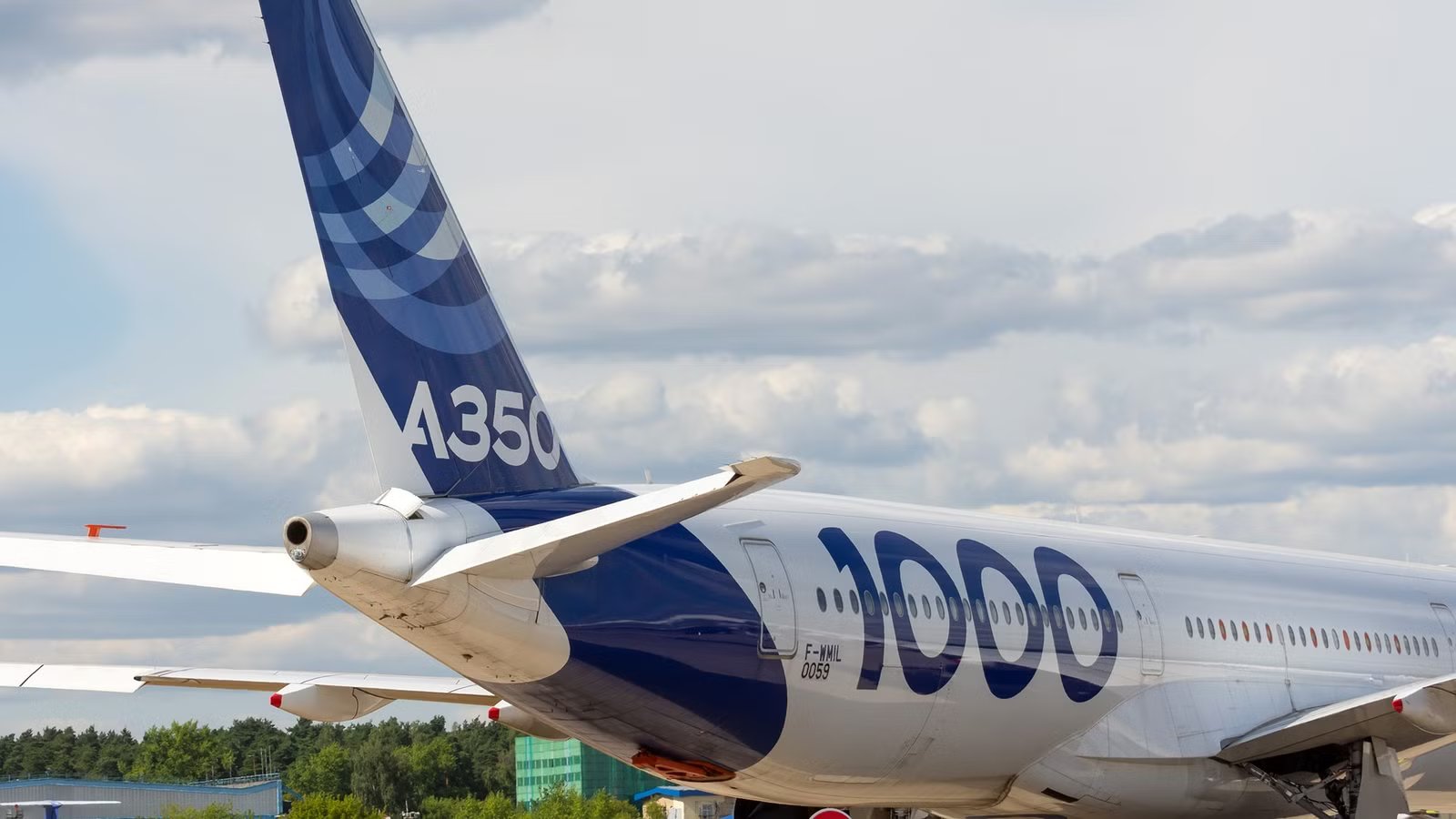
Airbus introduced the A350 family in the mid-2000s as its direct response to the Boeing 787 Dreamliner. The widebody was designed to deliver efficiency, long-haul capability, and passenger comfort, and it has since become a key part of many global fleets. The family includes two main variants: the A350-900, which is known for its range and versatility, and the larger A350-1000, which adds seating capacity for high-demand international routes.
Airlines across the world operate the type extensively. However, across the fleets of US carriers, the A350-1000 is nowhere to be found.  Delta Air Lines has adopted the A350-900, but the larger variant has yet to appear in American skies, as the country’s major carriers have instead favored Boeing widebodies. That will change in the coming years, but for now, the aircraft remains missing from every US airline fleet.
Fleet Strategy Explains The Absence Of The A350-1000

In 2004, Airbus found itself under pressure.  Boeing had already built a strong reputation with the 777, and the launch of the new 787 program, which was then branded as the 7E7, was quickly gathering orders from airlines around the world, and received around 300 orders before the first aircraft even flew. The European planemaker initially tried to counter with a modified version of the A330, but the ‘A330-200 Lite’ failed to gain traction among airlines and leasing companies.
Indeed, these stakeholders doubted its ability to match the Dreamliner’s efficiency and performance. Therefore, by 2006, the European manufacturer turned to a clean-sheet design instead, committing billions to the development of the aircraft. The result was the A350 XWB, featuring a new fuselage, advanced aerodynamics, and Rolls-Royce Trent XWB engines. The program soon gained momentum, and Singapore Airlines became the launch customer.
Within a few years, the A350 had become one of the most successful widebodies of its generation. More than 1,300 orders have since been placed, and both the A350-900 and A350-1000 are now regular fixtures at major international airports, particularly in Asia and Europe. The story, however, looks different in the United States. Delta operates the A350-900, but the A350-1000 has been left out of every US fleet.
The reason is simple: carriers have prioritized fleet simplification and commonality and have chosen to center their widebody operations on Boeing aircraft. The 777 and 787 families already cover the long-haul missions required, and for some airlines, there has not been a pressing operational need for the A350. In their view, the type did not offer a decisive advantage over the aircraft they already fly, so American Airlines and United Airlines have leaned on Boeing widebodies for long-haul needs.
Why American And United Walked Away From The A350

For  American Airlines, the A350 was never about the -1000. The airline inherited an order for the smaller -800 and -900 variants when it merged with US Airways in 2013. US Airways had committed to the A350 years earlier, ordering around 20 aircraft when it was struggling financially and supported by a loan from Airbus. At the time, the order made sense: it had an Airbus-heavy fleet with A320s and A330s, and the A350 would have been a natural fit.
The airline even expanded the order in 2007 to 22 aircraft, split between the A350-800 and A350-900, before the -800 was ultimately canceled. But once the merger was complete, American reassessed the order. Executives determined that adding the A350 to an already diverse fleet would create unnecessary complexity. As former CFO Derek Kerr explained, the goal was to reduce variety, simplify maintenance, and allow flexibility with pilot deployment.
The airline already had Boeing widebodies in place for long-haul operations and saw no pressing need for another type. Vasu Raja, then a Senior Executive at the carrier, went further, reportedly telling Airbus directly that American had no use for the A350. By 2018, the inherited order was canceled, leaving American with a Boeing-only widebody fleet. United Airlines, on the other hand, did consider the -1000.
The airline first ordered 25 A350-900s in 2009, then converted the commitment to the larger -1000 and expanded it to 35 aircraft. The jets were intended to replace United’s Boeing 747-400s, but regulatory deadlines and costs forced the airline to retire the jumbo jets earlier than planned. At the time, the US planemaker offered the 777-300ER at favorable pricing, and United chose it instead as its new flagship. The A350 order did not disappear, but it shifted.
United converted the commitment back to the -900, increased the total to 45 aircraft, and repeatedly pushed back deliveries before removing it from its fleet plan. Another major factor was its inherited 787 order from Continental Airlines, which had already locked the Dreamliner into the fleet. When United revisited its long-term fleet strategy, executives concluded that the smaller A350-900 was a better fit as a future replacement for the 777-200, while the 747’s role would be covered by the 777-300ER.
Delta Air Lines Will Bring The A350-1000 To The US

No airline in the United States currently flies the Airbus A350-1000, but that is about to change. Delta Air Lines has placed an order for 20 of the type, with options for 20 more, and deliveries are scheduled to begin this year. This will make Delta the first US carrier to operate the stretched variant, adding it to a fleet already anchored by the smaller A350-900. Delta’s Chief Executive Officer, Ed Bastian, commented on the larger variant when the order was placed:
“The A350-1000 will be the largest, most capable aircraft in Delta’s fleet and is an important step forward for our international expansion. The aircraft complements our fleet and offers an elevated customer experience, with more premium seats and best-in-class amenities, as well as expanded cargo capabilities.”
The A350-1000 will also become Delta’s largest Airbus aircraft in its fleet. The airline plans to deploy the new jets on long-haul routes from its international hubs, where higher capacity and premium demand support their introduction. Furthermore, the new order fits the carrier’s long-term shift toward Airbus widebodies. After canceling an inherited for 18 Boeing 787-8s from Northwest Airlines, the SkyTeam Alliance member chose to build its long-haul fleet around the A330 and A350.
Using just two widebody types gives it common pilot training and shared maintenance, which lowers costs and adds flexibility. Interestingly, it is the same commonality logic that led rivals like American and United to go in the opposite direction. Boeing widebodies in Delta’s fleet include the 767-300ER and 767-400ER, although the smaller 767s are expected to retire by the end of the decade.
According to ch-aviation, Delta currently operates 38 A350-900s with six more on order, which will bring the -900 fleet to 44 aircraft. Once the A350-1000s begin arriving, the combined A350 fleet is expected to surpass 60 by the end of the decade.
What The Airbus A350-1000 Brings

While US carriers have favored Boeing widebodies, airlines elsewhere have shown strong confidence in the type. Much of that comes down to the advantages built into the design. As previously mentioned, Airbus launched the A350 XWB family with two variants: the A350-900, which entered service in 2014, and the larger A350-1000, which followed in 2018. The -1000 is seven meters (23 feet) longer than the -900, which adds capacity for about 40 more passengers.
In typical layouts, it seats around 375 to 400 travelers across three cabins, compared to about 332 to 352 on the -900. Both can also be arranged in higher-density configurations, with the -1000 reaching up to 480 seats in all-economy. This makes it particularly attractive for airlines on busy international routes, where adding capacity on a single flight can bring stronger returns without increasing frequencies.
Performance is another key selling point. The A350-1000 has a range of about 9,000 nautical miles, supported by Rolls-Royce Trent XWB-97 engines that deliver 97,000 pounds of thrust, 13,000 more than the -900’s. Both A350 variants share a clean-sheet structure with carbon-fiber fuselage and wings, accounting for more than half of the airframe.
|
Specifications |
Airbus A350-900 |
Airbus A350-1000 |
|---|---|---|
|
Overall Length |
219 feet, 1.9 in (66.80 m) |
242 feet, 0.7 in (73.78 m) |
|
Cabin Length |
167 feet, 5.4 in (51.04 m) |
58.03 m |
|
Fuselage Width |
234 inches (5.96 m) |
234 inches (5.96 m) |
|
Max Cabin Width |
225 inches (5.61 m) |
225 inches (5.61 m) |
|
Wing Span (geometric) |
212 feet, 5.2 in (64.75 m) |
212 feet, 5.2 in (64.75 m) |
|
Height |
55 feet, 11.2 in (17.05 m) |
56 feet, 44 inches (17.08 m) |
|
Range |
8,500 nm (15,750 km) |
9,000 nm (16,700 km) |
|
Cruise Mach |
0.85 |
0.85 |
|
Max Take-off Weight |
283 tonnes |
322 tonnes |
|
Max Fuel Capacity |
166,488 liters |
168,300 liters |
The composite design, combined with high-aspect-ratio wings and advanced winglets, improves efficiency. Airbus estimates the A350 family to be about 25% more fuel efficient than previous-generation widebodies. In addition, the manufacturer is also developing an even more capable model. In June, Airbus confirmed flight tests for the A350-1000ULR, designed around Qantas’ Project Sunrise.
These aircraft will be able to fly nonstop from Sydney and Melbourne to London and New York, journeys of nearly 10,000 miles lasting close to 19 hours. The variant will incorporate additional fuel tanks, increased capacity, and cabin changes designed for ultra-long missions. Qantas has ordered 12, configured for 238 passengers across four classes, and the aircraft’s entry into service is now expected in 2027.
Who Operates The A350-1000 Today?

According to ch-aviation, 111 Airbus A350-1000s are in active service worldwide, and the European planemaker also has an order book for 257 more units. At last year’s Paris Air Show, it managed to secure an order for 25 aircraft, with options for 25 more from Riyadh Air.  Qatar Airways is the largest operator, which is currently flying 28 examples and awaiting 14 additional deliveries. British Airways and Cathay Pacific each have 18 in service.
Other airlines that fly the type include Virgin Atlantic, Japan Airlines, Etihad Airways, Ethiopian Airlines, Air Caraïbes Atlantique, and French Bee. Notably, Air France had initially planned to take both variants, but recently revised its commitment by converting eight of its A350-1000s into A350-900s. Its original 2023 order covered 50 aircraft, split between 39 -900s and 11 -1000s.
Several major carriers also have future commitments. These include Lufthansa, Air India, Korean Air, Qantas, Air China, EVA Air, and, of course, Delta Air Lines, which will introduce the type in the US market. As far as routes are concerned, one of the A350-1000’s busiest city pairs is London Heathrow to New York JFK, where Virgin Atlantic flies the jet on a regular basis.
The airline also deploys the type on services from Manchester to Orlando, as well as from Heathrow to Los Angeles, Las Vegas, Orlando, and New York. Qatar Airways is another major user on long-haul missions, flying the aircraft to Dallas/Fort Worth, Miami, New York JFK, Atlanta, San Francisco, Seoul, Sao Paulo, Houston, and London Heathrow.
The A350-1000 Will Soon Join A US Fleet

The Airbus A350-1000 is now firmly established as a leading long-haul aircraft with more than 100 in service and hundreds more on order. Its combination of range, efficiency, and high seating capacity has made it an important part of fleet strategies for airlines across Europe, Asia, and the Middle East.
In the United States, the variant has yet to appear. Airlines have concentrated on Boeing’s widebody families to simplify training, maintenance, and operations, leaving the A350-1000 absent despite its global success, but that absence will not last much longer.
Delta Air Lines will soon take delivery of its first A350-1000 and become the inaugural US operator of the type. The aircraft will give the airline its largest Airbus jet to date, with extra premium seating, expanded cargo capability, and seamless integration alongside its existing A350-900s.