dailynewsnblog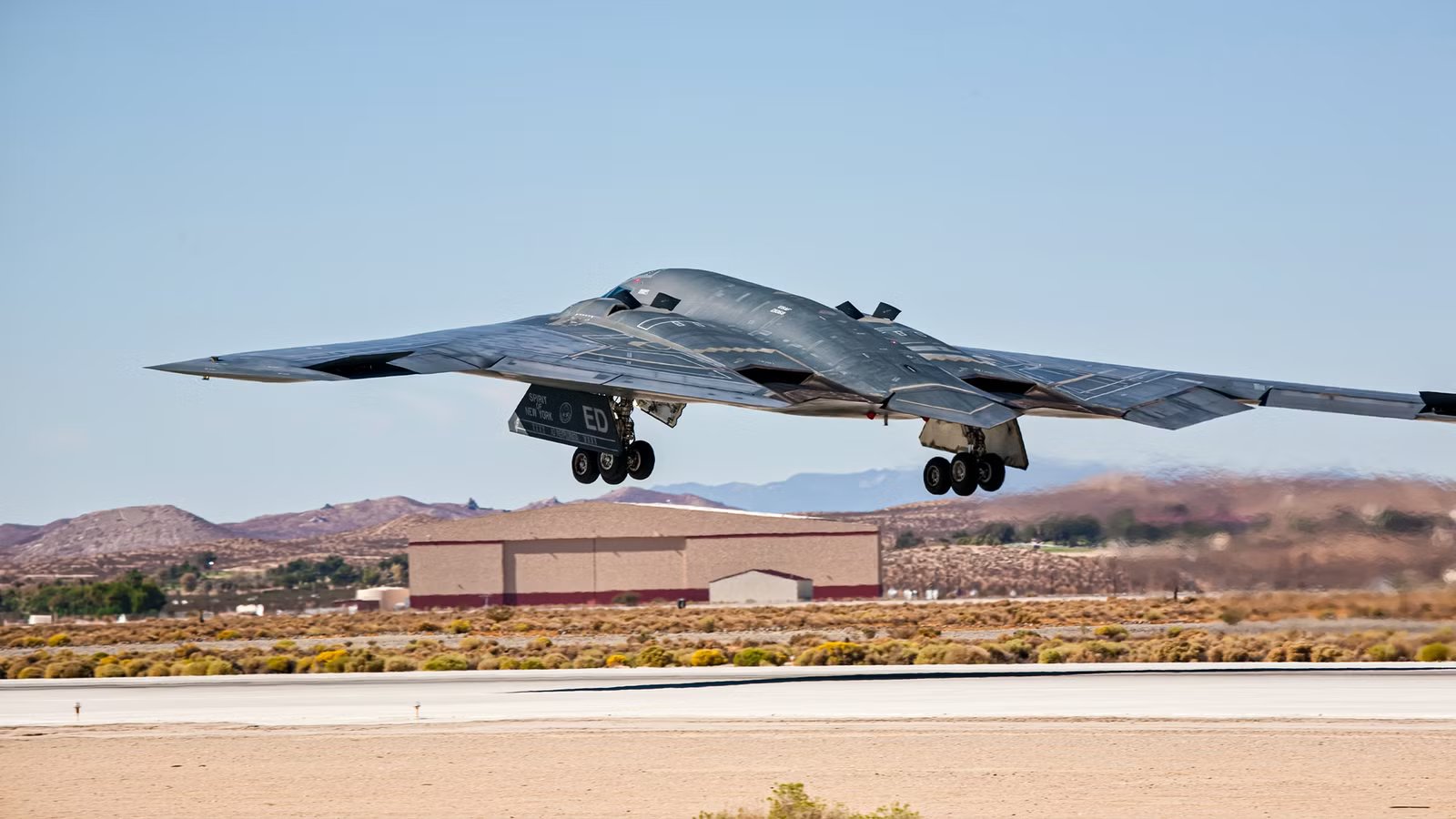
One of the most striking features of the Northrop B-2 Spirit compared with aircraft that came before it is the absence of a tail. This is a design element that is being retained on the incoming B-21 Raider and is being seen on new Chinese fighter jet and autonomous aircraft designs. The B-2’s design was the first post-war US Air Force strategic bomber design and concept that actually stood the test of time, carrying out missions as its original design doctrine envisioned.
Other bombers like the B-52 Stratofortress, the B-58 Hustler, XB-70 Valkyrie, B-1A Lancer, and B-1B Lancer, all represented major doctrinal differences from each other (although the XB-70 was sort of a B-58 on steroids). The B-52 and B-1B soon found themselves used in a doctrinally different to how engineers had envisioned them. By contrast, the B-2 has proven successful to the point that the B-21 represents a next-generation upgrade on the same doctrine. This is why the B-21 externally closely resembles the B-2 and is continuing the flying-wing tailless concept.
B-2 Spirit: The First Flying Wing

The B-2 Spirit is the world’s first true “flying wing” strategic bomber, except for experimental aircraft like the early Northrop YB-49. The aircraft’s design philosophy is centered around stealth, allowing it to penetrate enemy air defenses and carry out its mission. The aircraft’s design is optimized for the lowest possible radar cross-section (RCS). By eliminating the tail, the Spirit blends the entire aircraft into a smooth, curved shape that is excellent at scattering radar signals.
The aircraft is built for long endurance, subsonic cruise, and high altitude, and its primary goal is extreme radar signature reduction. It is basically a long-range flying radar absorber. Vertical tails are problematic for stealth aircraft as they create strong radar returns from multiple angles. The vertical surface also forms corner reflectors on the aircraft’s fuselage.
By eliminating them, the B-2 Spirit is able to ditch a major source of radar returns from its side aspects, while also simplifying its overall shaping for all-aspect stealth. Another benefit is reduced drag, allowing the aircraft to have a greater range. This is a design that has been incorporated into Northrop’s subsequent large stealthy spy drones, like the RQ-170 and likely the rumored RQ-180.
The Costs Of Removing Tail Stabilizers

At the same time, the B-2 Spirit suffers a major penalty for removing the tail stabilizers. After all, there are sound aerodynamic reasons why practically all aircraft have them. The loss of the tails means the B-2 loses natural aerodynamic stability; without them, the aircraft is inherently unstable. To compensate, it is reliant on advanced fly-by-wire systems with computer systems constantly making micro-adjustments.
The loss of the tail stabilizers also means the B-2 loses maneuverability. The B-2 can tolerate these trade-offs because it is designed to fly mostly straight and level without the need for aggressive maneuvering. Fighter jets are built to be super maneuverable, allowing them to dogfight and dodge threats. The lumbering B-2 can’t do that and must rely on its stealth, onboard defenses, and escorts to survive.
Tails are likewise removed from the Northrop Grumman B-21, which is set to become the cornerstone of US strategic bombing capability. Nothrop says, “the B-21 Raider will be standing by, silent and ready. We are providing America’s warfighters with an advanced aircraft offering a combination of range, payload, and survivability. The B-21 Raider will be capable of penetrating the toughest defenses to deliver precision strikes anywhere in the world. The B-21 is the future of deterrence and the world’s first sixth-generation aircraft to reach the skies.“

How Many B-2 Spirit Bombers Are Left?
The US’ B-2 stealth bomber is an awesome warplane, but how many are there?
Why The F-22 Raptor Preserves Its Tails

The Lockheed Martin F-22 Raptor air dominance fighter is the world’s first fifth-generation fighter jet and was developed around the same time as the Northrop B-2. However, it retains its tail surfaces, even though the aircraft emphasizes stealth. The F-22 is designed for a different role than the B-2 and needs a different set of skills to carry out its intended missions. As an air dominance fighter, the Raptor must supercruise, exhibit extreme maneuverability, sustain high angles of attack, and excel in air-to-air combat.
The Raptor has to maintain control in violent maneuvers, rapidly changing direction. Flying wing designs are excellent for subsonic efficiency, but perform poorly supersonically. To help reduce the radar cross-section from the tail stabilizers, they are canted outward. This avoids perpendicular radar reflections while keeping aerodynamic stability.
The F-22 can’t sacrifice its tails and retain the needed directional stability and yaw control, especially during its high-speed maneuvers, post-stall recovery, and the like. It would be much more difficult for the Raptor to aim its weapons or evade threats without its tail surfaces. At the same time, the Raptor has been in service for 20 years, and technology and requirements are moving on.
Fighter Jets Without Tails

While the F-22 and F-35 may preserve their tails, it seems technology improvements and ever-greater all-aspect stealth requirements will start removing them from the next generation of fighter jets. Prototype fighter jets emerging in China, like the so-called J-36, show three-engined fighters without tails. There is only a single partial Air Force rendering of the upcoming F-47, and it appears to show a tailless fighter. That said, the Air Force has hinted there could be misdirections in the rendering. Renders by Boeing and Pratt & Whitney also appear to show a tailless design.
Talking about the F-47 steps into speculation, but it appears that it is being built for extreme all-aspect stealth. The aircraft is thought to be massive for a fighter jet and is built as a command center with loyal wingman drones. It will be able to engage targets at great distances while remaining hidden. Factors like this may reduce its need to be super maneuverable.
|
Select USAF & USN warplanes without tail surfaces |
First entered service |
|---|---|
|
Northrop YB-49 |
n/a (1940s experimental) |
|
Northrop B-2 Spirit |
1997 |
|
Lockheed Martin RQ-170 Sentinel |
2007 |
|
Northrop Grumman RQ-180 |
2018 (rumored) |
|
Northrop Grumman B-21 Raider |
2027 (planned) |
|
Boeing F-47 |
Approx. 2030 (planned) |
|
F/A-XX |
Approx. 2035 (planned) |
It’s possible that the F-47 will follow more of the B-2 (and B-21’s) logic. Some renders show canards, while thrust vectoring nozzles, highly sophisticated fly-by-wire with trailing-edge split surfaces may act as virtual rudders. This is the philosophy that Boeing proved in its X-36 tailless demonstrator years ago. The lower drag should also boost its range, which is a core requirement of the US Air Force’s next-generation fighter.

The Unique Jet Engines Powering The USAF B-2 Spirit
Much of the B-2 program is on a classified level, what we do know about the aircraft and the power plant driving this aircraft is truly remarkable.
Why Some Fighters Will Retain Tails

Renders and mockups of the two European sixth-generation fighters show them with large canted tail surfaces. Of these two, the GCAP/Tempest fighter led by the United Kingdom, with Japan and Italy, is further into its development cycle. BAE Systems is now producing the first demonstrator in the United Kingdom, and it is expected to fly in 2027. The rival Franco-German FCAS with Spain program is embroiled in arguments and appears poised to collapse in its current form.
The Tempest design suggests that Britain and partners are focusing on a broader mission set than the highly specialized F-47. It appears to prioritize high agility, air superiority maneuvering, and recoverability, and appears to follow a similar logic as the F-22 and F-35. It appears to be emphasizing a true multirole fighter role that can dogfight, perform long-range strikes, and carry larger internal loads. Mockups and renders also show the tails as heavily canted and blended to minimize their RCS.
It seems likely the Tempest is not being designed to achieve the extreme stealth, range, and deep penetration of the F-47. Meanwhile, the United States Navy is also working to develop its next-generation F/A-XX fighter jet to replace its F/A-18 Super Hornets and complement its F-35s. Renders, including one by Northrop Grumman, appear to show a tailless design. It should be emphasized that no design has yet been selected or publicly released.
A Winning Design For AF 6th-Gen Penetration Warplanes

Some core requirements that the tailless B-2, B-21, and F-47 appear to have in common are extreme stealth, long range, and deep penetration of the most densely protected airspace. It remains unclear how maneuverable the F-47 will be, but the US Air Force is prioritizing stealth with these aircraft. It remains unclear exactly how the F-47 is able to ditch its tails when the F-22 couldn’t, although contributing factors are likely to include improved stand-off engagement range, improved fly-by-wire controls, and other systems providing more maneuverability.
The B-2 Spirit and its tailless design provided a winning formula for the Air Force. When it entered service 20 years ago, it was able to operate in contested airspace with near-impunity. Saying that it’s important to keep in mind that even the stealthiest aircraft are detectable and can be engaged and shot down. Stealth is not an invisibility cloak; it delays detection and makes it harder to fix a firing solution. But now the B-2 is aging, with its relative advantage gradually eroding as new radars and more advanced enemy fighter jets are designed and built.
Further complicating affairs is that there are only 19 remaining airframes available, meaning the fleet size has almost no depth. The Air Force is now prioritizing the introduction of the B-21 to restore the B-2’s previous advantages and provide mass. The Air Force is expected to purchase at least 100 B-21s. In February 2026, the Air Force stated it is investing $4.6 billion to accelerate the program and that this will increase “annual production capacity by 25%, compressing delivery timelines.”