dailynewsnblog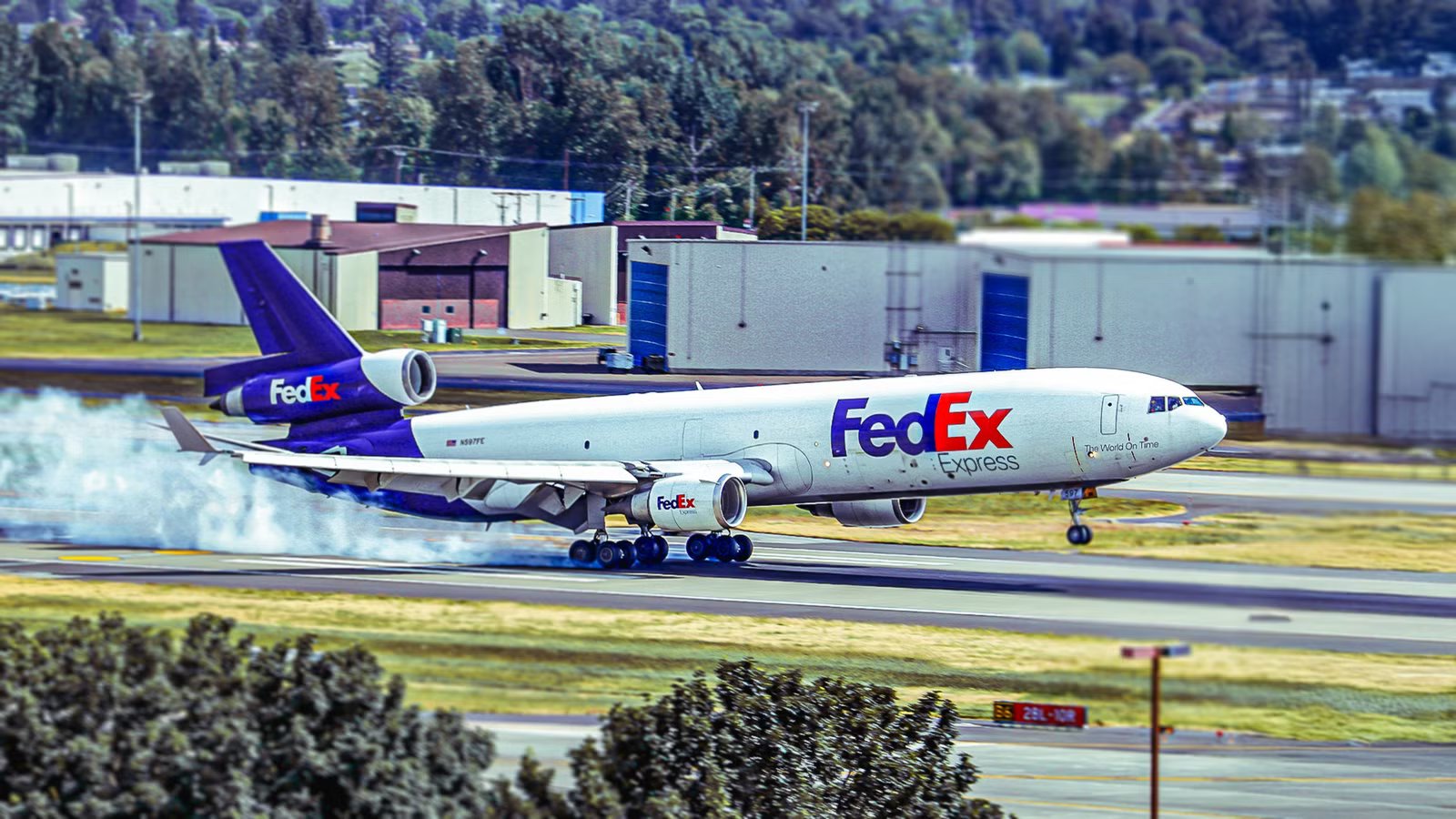
Pilots often mention the McDonnell DouglasMD-11 when discussing “unforgiving” airliners. This three-engine widebody stands out for its unique look, but it is also known for challenging landings, hard touchdowns, and little room for error. On short final, the MD-11 looks different from a Boeing 777 or Airbus A330. Its nose is higher, the flare can seem abrupt, and the groundspeed at the threshold is clearly faster.
The MD-11’s fast landings are the result of design choices made when McDonnell Douglas updated the older DC-10. To give the plane more range and capability, engineers lengthened the fuselage, increased its maximum takeoff weight, made the tail smaller to reduce drag, and added a stability system. This created a long-range freighter that is efficient in cruise, but it approaches the runway with more speed and energy than most similar widebody jets.
From DC-10 To MD-11 Stretching The Design

The MD-11 was not drawn on a clean sheet. It was a major update of the DC-10, built to carry more payload and fly farther while burning less fuel. McDonnell Douglas kept much of the DC-10’s wing and structure, but stretched and refined other parts of the aircraft.
Published specifications show that the MD-11’s fuselage is about 11% longer than the DC-10’s, reaching around 202 feet (about 61.6 meters). The maximum takeoff weight also increased by about 14% to 630,500 pounds (286 tonnes). That is a big jump for a wing that was only slightly modified, not fully redesigned.
|
Feature |
McDonnell Douglas DC-10-40 |
McDonnell Douglas MD-11 |
|---|---|---|
|
Length |
182 feet, 2.6 inches |
202 feet, 2 inches |
|
Height |
57 feet, 7 inches |
57 feet, 11 inches |
|
Wingspan |
165 feet, 4 inches |
170 feet, 6 inches |
|
Range |
Around 5,100 miles |
Around 6,800 miles |
Adding more weight to almost the same wing increases wing loading. A heavier aircraft with a similar wing area must fly faster to generate the same lift. At low speeds, this raises stall speed and the reference landing speed (Vref). Certification rules also require Vref to stay above the minimum control speed with one engine out (Vmca), so the MD-11’s Vref cannot be as low as that of newer twin-engine widebodies with larger wings and tails.
Pilots observe this most on approach. Even at normal landing weights, the MD-11 cannot safely fly as slowly as an A330 or 777. It has to keep more speed down the final, over the threshold, and into the flare.
A Smaller Tail And Less Natural Stability

One of the biggest aerodynamic changes from the DC-10 to the MD-11 is at the tail. To boost cruise efficiency and range, engineers made the horizontal stabilizer smaller than on the DC-10. A smaller tail creates less drag at cruise, but it also means less pitch control and stability at low speeds, just when the aircraft needs to flare and land.
In most airliners, the horizontal stabilizer and elevator give pilots enough control to lift the nose and reduce the descent rate at Vref plus a small margin. With a smaller tail, the MD-11 has less natural leverage. To get the same pitch response during the flare, it needs more airflow over the tail, which is easiest to achieve by keeping the approach speed higher.
As the MD-11 nears the runway, the crew is handling a heavy aircraft with less natural pitch stability. Any change in thrust or control can produce a bigger pitch response than pilots might expect if they are used to more forgiving types. If the speed drifts below target, the smaller tail makes it harder to recover without a firm correction.
Choosing a smaller tail made sense for range and fuel burn. The trade-off is that near the ground, the aircraft is less forgiving and relies more on speed, systems, and pilot skill to stay within the margins.
Why Crews Carry So Much Speed On Final

All these factors, higher wing loading, a smaller tail, and certification rules, combine to give the MD-11 its fast approach speeds. At the same landing weight, the MD-11’s stall speed is higher than that of similar twin-engine widebodies with bigger wings and tails. Regulations require Vref to sit above both stall speed and Vmca, so MD-11 approach speeds end up clearly higher than what crews see on most twin-engine widebodies.
In real operations, conditions are rarely calm. In gusty or strong crosswinds, crews add extra speed for safety. Since the MD-11 already has a high Vref, even modest wind components can result in very high ground speeds at touchdown.
This creates a demanding scenario. The MD-11 often crosses the threshold with more energy than other similarly sized widebodies. That extra energy must be managed. If the flare is late or the descent is not arrested in time, the aircraft can land harder than planned. If it bounces, the high speed and sensitive pitch make it much harder to recover smoothly.
Landing Gear Geometry And Bounce Risk

Wikimedia Commons | Simple Flying
The MD-11’s landing gear layout adds more complexity. Like the DC-10, it has a tricycle setup with a nose gear, main gear under the wings, and an extra center gear under the fuselage to handle the higher weight. On the MD-11, the center gear sits slightly behind the wing gear.
During a firm landing, this geometry can create a pivot effect. If the center gear contacts the runway before or harder than the main gear, it acts like a lever, pushing the tail up and the nose down. Pilots sometimes call this the “pogo” effect, in which the aircraft feels as if it wants to pitch forward around the center gear.
If the aircraft then bounces back into the air, the combination of high speed, reduced tail authority, and sensitive pitch can quickly overwhelm a crew that is not fully prepared for the situation. Pilots may pull back to soften the second touchdown, but overdoing it can make the pitch too steep and cause another hard landing, putting extra stress on the gear and wings.
Several MD-11 accidents have followed this pattern: hard touchdown, bounce, nose-down pitch, and structural failure. In simple terms, a heavy, fast aircraft with a center gear behind the main gear behaves differently on a rough landing than a typical twin with only wing gear. That difference cuts down the room for small errors.

Why The McDonnell Douglas MD-11’s Nose & Main Landing Gear Needs 12 Tires
The heavy weight of the aircraft combined with the aircraft’s design requires 12 tires on the main landing gear.
LSAS: Stability Help With Awkward Timing

To help with the handling challenges from the smaller tail, McDonnell Douglas added a Longitudinal Stability Augmentation System (LSAS) to the MD-11. LSAS monitors pitch and makes small automatic corrections through the controls to help the aircraft fly more smoothly, aiming to make the MD-11 feel closer to a typical widebody.
In cruise and on descent, LSAS can reduce workload by damping pitch oscillations and helping the aircraft stay on a trimmed attitude. However, pilots who have flown the type often describe a mixed relationship with the system. When LSAS is active, the aircraft can feel slightly artificial in pitch, and when its influence is reduced near the ground, the handling can change just when the crew needs the most precise control.
Near touchdown, certification and design rules mean LSAS cannot “land” the aircraft. Its role tapers off, so the pilot must handle all the fine pitch and thrust inputs for the flare. Since the MD-11 is already fast and sensitive in pitch, this transition demands strong training, recent experience, and accurate control.
If the aircraft bounces at this stage, the limited help from LSAS and the MD-11’s natural aerodynamics mean the outcome depends almost entirely on pilot technique. That underlines how narrow the margin is in the last few seconds of flight.
Flaps 50 The Setting Few Crews Use

In theory, using more flap can reduce landing speed by increasing lift. The MD-11’s flap system has a maximum setting called “Flaps 50,” which should allow slower approaches by increasing the wing’s camber and area.
In day-to-day airline flying, though, Flaps 50 has rarely been the default. Extending the flaps fully creates a large increase in drag, which requires significantly more thrust to stay on the glide path. That extra power burns more fuel, raises noise levels, and can add structural loads to the flap system. It can also tighten other margins, such as go-around and engine-out performance in some conditions.
Because of this, many operators standardized on intermediate flap settings, typically in the mid-30s for most landings. Those configurations offer a more balanced trade-off between lift, drag, fuel burn, noise, and performance. The result is that the MD-11 usually lands faster than it theoretically would if maximum flaps were used. Its normal operating profile keeps approach speeds relatively high in exchange for better economics and performance margins.
A Fast-Landing Jet With A Narrow Margin

Put all these factors together, and the MD-11’s fast landings make sense. The aircraft carries more weight on essentially the same basic wing as the DC-10, with a smaller tail to reduce drag and improve cruise efficiency. That combination raises stall speed and Vref and forces higher approach speeds to preserve margins over Vmca and stall. The center landing gear geometry can add nose-down pitching tendencies and bounce risk in hard touchdowns. LSAS helps through much of the flight envelope, but its role is limited near the ground, exactly where pilots must manage a high-energy, pitch-sensitive flare by hand. In service, most airlines avoid the maximum flap setting that would further reduce speed due to its drag, noise, and performance penalties.
For well-trained and current MD-11 crews, these traits are manageable. The aircraft can be flown safely and predictably if handled with care and precision, and many pilots who mastered it remember the MD-11 as demanding but rewarding.
For the average transport pilot, however, the MD-11’s margins are much tighter than on newer widebodies. Approach speeds are higher, the flare window is smaller, and mistakes during landing can escalate quickly. Accidents at places like Narita and Newark, where hard landings led to bounces, structural failures, and rollovers, show how unforgiving the MD-11 can be if something goes wrong close to the ground.
As the last MD-11s continue working freight schedules, they carry a mixed legacy. In cruise, they remain efficient, long-range freighters. On approach, they remind us that not every performance upgrade comes with extra forgiveness and that some aircraft will always demand a little more respect from the pilots at the controls.