dailynewsnblog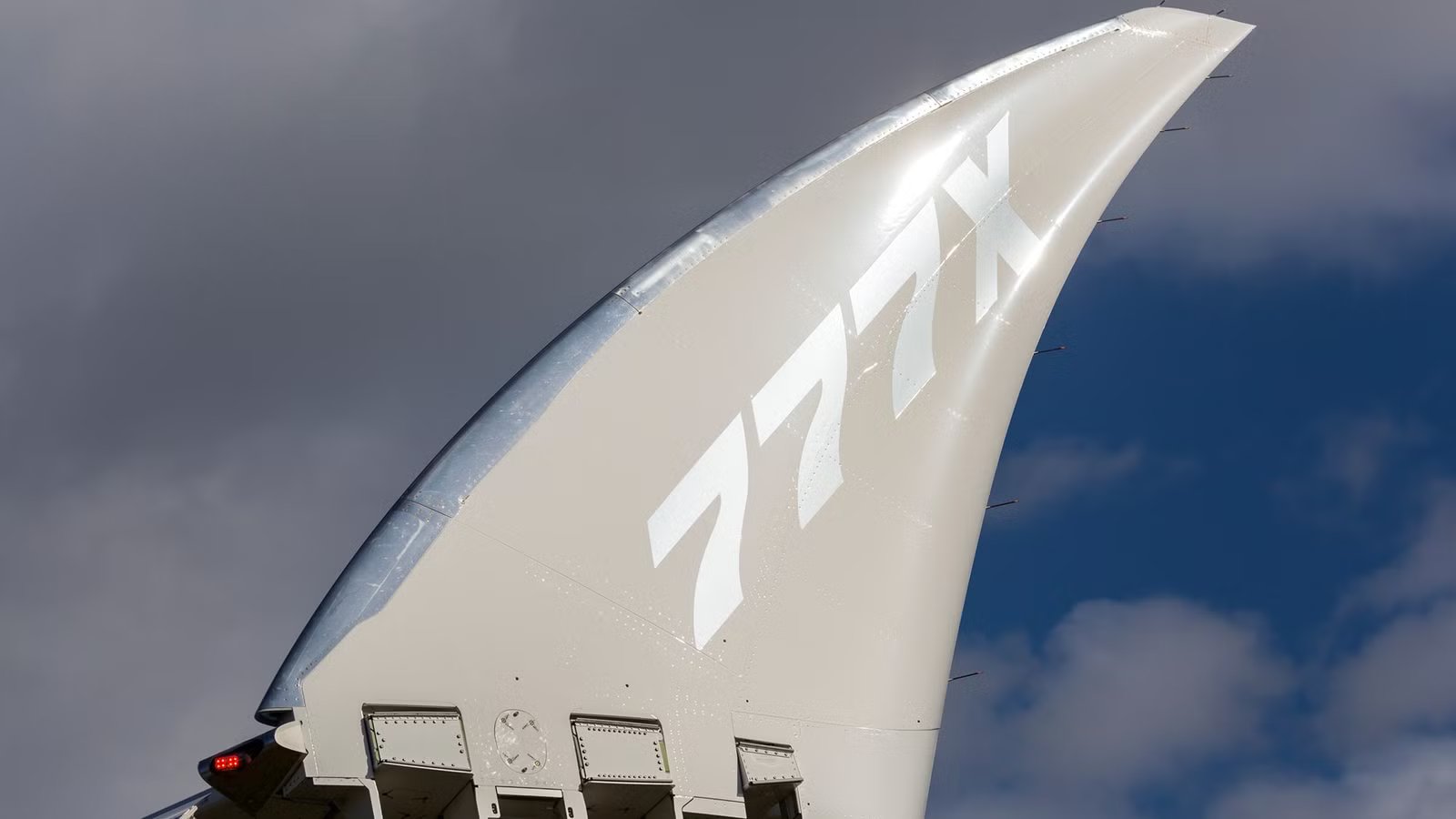
When the Boeing 747-8 Jumbo and 787 Dreamliner entered service in 2012 and 2015, respectively, engine nacelle chevrons appeared to be a technology of the future. It was one of the technologies that made the Dreamliner an innovative next-generation airliner, taking noise reduction to a new level. But 20 years later, the Boeing 777X is soon to enter service without them. It is an example of what appeared to be a future technology, but turned out to be more of a false start for the industry at large.
Here is why the 777X will not have chervons and why they appear to be something of a one-hit wonder. The 747-8 is out of production, leaving the Dreamliner as the only aircraft currently produced with chervons. The costs of redesigning the engines without them are likely prohibitive, but it seems like chevrons will not be coming back with any future aircraft.
The Benefits Of Chevrons

The benefits of modern commercial engines with chevrons or saw-tooth serrations located at the trailing edge of the engine nacelle is mostly confined to noise. They were first introduced in the 2000s and are found on the Boeing 787 Dreamliner and 747-8. Both of the Dreamliner’s engine types, the GEnx and the Rolls-Royce Trent 1000, have them. A variant of the GEnx turbofan exclusively powers the Boeing 747-8 Jumbo.
The main purpose of chevrons is to achieve noise reduction. They help break up the turbulence that generates jet noise from the hot core flow and cool bypass flow. NASA helped to develop aircraft chevrons, and in 2010, it wrote, “One of the most recent noise-reducing technologies shepherded through the research process by NASA and now making a difference on commercial jet engines is chevrons.”
NASA explained, “As hot air from the engine core mixes with cooler air blowing through the engine fan, the shaped edges serve to smooth the mixing, which reduces turbulence that creates noise.” Having a lower noise footprint helps the Boeing 787 better comply with ICAO and airport noise regulations and aids it when operating at noise-restricted airports.
Disadvantages Of Chevrons

However, having chevrons on the engines is not free; it has some drawbacks. Chevrons induce some drag; they slightly reduce propulsive efficiency, add structural complexity and weight, and introduce maintenance complications. The key, then, is for the engine and airplane manufacturers to decide if the trade-off and penalty are worth it.
Since the Dreamliner entered service, Boeing has introduced one type of re-engined aircraft, the Boeing 737 MAX, and is getting ready to introduce the Boeing 777X. Airbus has introduced the A330neo, the A350, and the A320neo. Interestingly, none of these aircraft have chevrons, suggesting Boeing and Airbus have not agreed that the trade-off is worth it. The Pratt & Whitney PW1000G (GTF family), which powers Embraer E-Jets, the A220 (formerly Bombardier CSeries), and some A320neos, also doesn’t have them.
This shows that while the chevrons are not particularly detrimental to the Dreamliner, they were not the next stage in aircraft design, as some thought they would be. It appears chevrons were a one-hit wonder; they worked on the Dreamliner (and 747-8 piggy-backing on GEnx development), but not subsequent engines. Notably, it’s also not a GE Aerospace-only technology, as Rolls-Royce also developed it for its Trent 1000s.

How Many Engine Types Power The Boeing 787 Dreamliner?
The Boeing 787 Dreamliner soars through the skies, but what powers this marvel of aviation?
Why Early Renders Of 777X Had Chevrons

Early artist’s renderings of the Boeing 777X show it with chevrons. At the time, detailed aerodynamic optimization was not completed, and renderings had to extrapolate from previous programs and what seemed like the future. Chervons had become Boeing’s “modern quiet engine” signature thanks to the 747-8, and then the upcoming 787.
It was also assumed the Boeing 777X, with its massive engines, would push noise limits. But progress and development are rarely linear, or at least not linear forever. The GEnx and Trent 1000 engines were large for their time, and engineers were conservative about their compliance with noise regulations. Adding the chevrons enabled the Dreamliner to have a wide noise margin and be marketed as the quietest aircraft ever made.
|
787 Vs. 777X |
Boeing 787 Dreamliner |
Boeing 777X |
|---|---|---|
|
Introduction Date |
2015 |
2027 (expected) |
|
Engine |
GEnx & Trent 1000 |
GE9X |
|
Engine Chevrons? |
Yes |
No |
|
Advertised Noise Reduction |
60% |
40% |
|
Variants |
787-8, 787-9, 787-10 |
777-8, 777-8F, 777-9 |
|
Range |
7,565 nautical miles (787-9) |
7,285 nautical miles (777-9) |
The Dreamliner’s 60% noise reduction was a core part of its advertising, but by the time of the 777X’s development, these pioneering advantages had waned. The Boeing 777X is going to be one of the most niche commercial aircraft on the market. Over half of the firm orders are from just two airlines (  Emirates and
  Qatar Airways), and no US-based airlines have ordered it. For now, it has been dismissed in the US (and North American) market as “too big.”
Why The GE9X Dropped The Chevrons

GE Aerospace doesn’t have a publicly available breakdown of its reasoning for dropping the chevrons. So explanations for why it dropped them need to be inferred. One factor is that the GE9X has an extremely high bypass ratio of 10:1; having a higher bypass ratio reduces jet noise and the need for chevrons. The high bypass creates a lower exhaust velocity, and a lower exhaust velocity generates a lower jet noise.
The main purpose of the third-generation 777X is to increase its fuel burn, boost its range, and allow it to continue to compete with the Airbus A350-1000. It can be inferred that after engineers determined the GE9X would be able to meet ICAO noise regulations without the chevrons, they weren’t worth the penalty caused by increased drag. There have also been improvements to fan blade aerodynamics with composite fans having lower tip speeds.
Technology has also improved to better refine exhaust mixing without the need for external serrations. It’s worth noting that evolutionary improvements in acoustic materials may also be playing a role. Engine noise matters both externally and internally. Internally, better acoustic liners mean Boeing is better able to insulate passengers in the cabin from aircraft noise than in the 2000s when the Dreamliner was developed.

How Boeing’s Engine Chevrons Still Pose A Problem To Performance
They help reduce engine noise levels significantly.
An Evolutionary Upgrade

The Boeing 777X is not intended to be a new aircraft so much as an evolutionary upgrade to the 777 lineage. Boeing says, “With new breakthroughs in aerodynamics and engines, the 777-9 will achieve 20% lower fuel use and emissions and a 40% smaller noise footprint than the airplanes it will replace, with 10% lower operating costs than the competition.” The Boeing 777X will increase its use of advanced lightweight materials to 30%, although this remains much lower than the 787 and A350.
The 777X will also incorporate many of the Boeing 787 Dreamliner technologies. Most obviously for passengers, there are the large dimming windows. Even without the chevrons, GE says that the 777X engines are the quietest they have ever built, falling within 8 dB of Stage 5 aircraft noise standards. Direct noise comparisons between the 777X and 787 are difficult, as the Effective Perceived Noise in Decibels (EPNdB) for the 777X is not yet published.
While the 777X is mostly a conservative upgrade using proven technologies, it does have novel folding wingtips. The 787’s chervons may not have become industry standard, but the folding wingtips might be, as Airbus’ A320 replacement is apparently being designed with folding wingtips. Note that Airbus is in the early stages of the A320 replacement, and folding wingtips have not yet been formally decided. That said, the Boeing 777X may be paying a penalty for these novel wingtips, as they may be contributing to the FAA’s delay in issuing the aircraft’s type certificate.
Chevrons Missing In Renders Of Upcoming Aircraft

It seems noise-reducing chevrons were a one-hit wonder (plus the related 747-8), with both of the Dreamliner’s engine types. But since then, it seems the airplane makers: Airbus, Boeing, Bombardier, COMAC, and Embraer, along with the engine manufacturers Rolls-Royce, GE Aerospace, Safran, and Pratt & Whitney, have all concluded that they are not worth it. The narrative then flips from not why the Boeing 777X doesn’t have chervons, but why the Dreamliner was so unusual for having them.
Looking ahead, CFM International (the GE Aerospace and Safran joint venture) is developing open-fan engines as its CFM International LEAP successor for narrowbody aircraft. If this becomes standard, chevrons will have no opportunity to return on future engines, or at least narrowbody engines. Early renders of the 737 also don’t show chevrons, though the program is so early-stage that it’s hard to read into them. Boeing is known to be studying open fans and truss-braced wings, but studies remain early.
Not only that, but there are no chevrons in the renderings of JetZero’s blended-wing-body aircraft currently under development. Even renderings of the upcoming Boom Supersonic Overture and Spike S-512 supersonic aircraft don’t have chevrons. Noise reduction (especially from the sonic boom) is a core part of the supersonic aircraft’s design. It seems the industry moved away from chevrons as soon as they were introduced, with new technologies offering many of the benefits at lower cost.