dailynewsnblog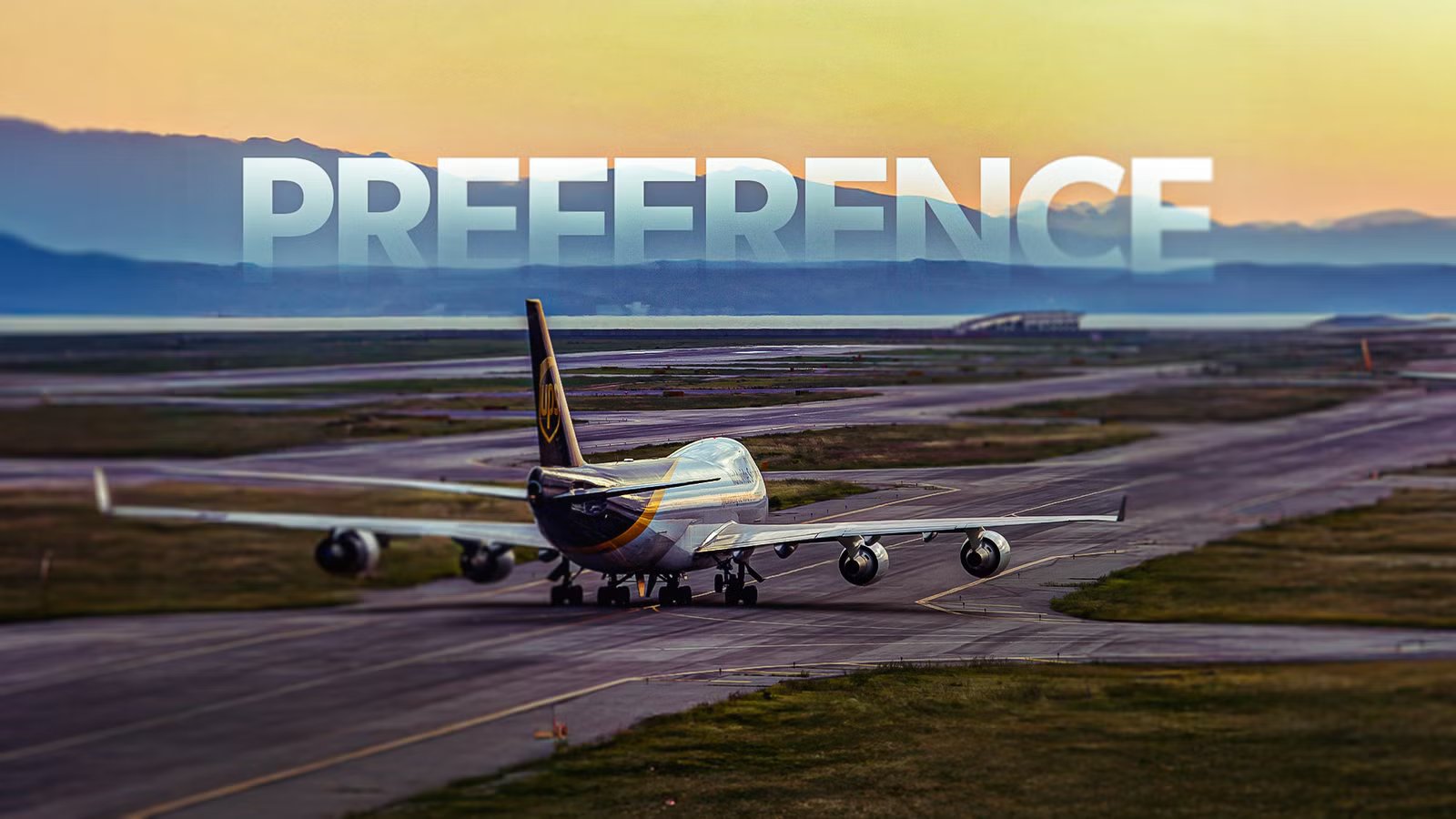
The transition of the Boeing 747 from a passenger icon to a cargo workhorse is one of the most significant changes in aviation history. Many major airlines have retired their passenger Jumbos in favor of more fuel-efficient twin-engine jets, but the freighter variants continue to dominate the world’s most critical logistics corridors. This transition raises a fundamental question for the industry: why do cargo airlines still prefer a quad-engine aircraft with higher maintenance and fuel costs over modern alternatives?
The 747 was never really just a passenger plane; it was designed with a freighter-first philosophy that has allowed it to outlive almost all of its original rivals. This article will explore the mechanical and strategic advantages that the 747 holds over newer jets like the Boeing 777F or the upcoming Airbus A350F, clarifying the specific engineering features, such as the iconic nose door and superior floor strength, that make the 747 an irreplaceable asset for moving the heavy industrial equipment and high-tech exports that keep the global economy in motion.
Unique Feature For Optimizing Cargo

Why cargo airlines are remaining loyal to the 747 is down to its unmatched ability to swallow huge cargo through its unique nose-loading door. Typical modern twin-engine jets are restricted to side-loading, whereas the 747 can lift its entire nose to accommodate items that are longer than a standard side door could ever handle. This single architectural feature makes it the only Western commercial freighter capable of carrying industrial turbines, long oil pipes, or aerospace components with this level of ease.
This capability provides a massive competitive advantage for carriers operating in specialized markets. For example, in the Japanese manufacturing sector, where high-precision machinery is often exported in massive, single-piece crates, the 747 is often the only viable transport option. Airlines like Nippon Cargo Airlines or Atlas Air utilize this nose-loading feature to bid on high-value contracts that other aircraft do not allow for. By offering a straight-in loading path, the 747 reduces the risk of damage during the loading process, as complex ninety-degree turns are not required to get the cargo onto the main deck.
Going back to the 747’s origins, when Joe Sutter and his team designed the aircraft in the late 1960s, they placed the cockpit on the upper deck specifically to allow for this nose-loading capability, anticipating that the future of the aircraft would eventually be in freight. This foresight has resulted in a main deck on the -400F that has a continuous, unobstructed 120-inch (304.8 cm) high tunnel that runs nearly the entire length of the fuselage. This structural advantage, combined with four engines that provide redundancy for heavy-lift operations, ensures that the 747 remains the king of the cargo world even as the passenger version fades into history.
Still Achieves Speed Despite Its Size

The main deck floor of a 747 freighter is specifically reinforced to handle point loads, which are heavy, concentrated weights like industrial machinery or aircraft engines. This floor can support significantly higher pressure than a standard passenger-to-freighter conversion, allowing it to carry items that would compromise the floor of a lighter twin-engine jet. This structural density allows the aircraft to reach its maximum weight limit, even when the hold is only partially filled with dense, heavy cargo.
The freighter-first design philosophy is most evident in the raised cockpit, which creates a completely flat and unobstructed main deck. This internal volume is further enhanced by a specialized cargo handling system consisting of powered rollers and locks, which allows the crew to load or unload the entire aircraft in less than 90 minutes. The hump of the 747, often seen as a luxury passenger space, is technically a structural byproduct of ensuring that cargo can flow smoothly underneath the pilots.
|
Metric |
Boeing 747-400F |
Boeing 747-8F |
|
Max Structural Payload |
113 tons |
137 tons |
|
Main Deck Pallet Positions |
30 |
34 |
|
Total Cargo Volume |
710 cubic meters |
853 cubic meters |
|
Engines |
4 x CF6-80C2 or PW4056 |
4 x GEnx-2B |
|
Fuselage Length |
231 feet 10 inches (70.66 meters) |
250 feet, 2 inches (76.3 meters) |
The evolution from the -400F to the -8F provided a 16 percent increase in revenue volume, allowing airlines to carry four additional main-deck pallets. This stretch was achieved by adding two fuselage plugs, one forward of the wing measuring 160 inches (406.4 cm) and another aft measuring 100 inches (254 cm). For a high-capacity carrier, this additional size translates directly into millions of dollars in extra revenue over the lifespan of the airframe. The 747-8F also introduced a new wing design and quieter, more efficient engines, ensuring that the aircraft meets modern noise and emission standards while maintaining the heavy lifting capabilities of its predecessors.

Over 13 Hours: The World’s Longest Regularly Scheduled Boeing 747 Route
A 13-hour marathon that pushes the Queen of the Skies to its limits. Discover the route that stretches the 747’s endurance like no other.
The Competitive Edge

Those leading the cargo industry consistently emphasize that the Boeing 747 remains a cornerstone of global logistics because it occupies a technical space that no other aircraft can currently fill. Michael Steen, the CEO of Atlas Air, which operates the world’s largest fleet of 747 freighters, has noted that while his company is modernizing with orders for the Airbus A350F, the 747-400F is expected to remain in service until at least the mid-2030s. Experts across the sector argue that the scarcity of large widebody freighters makes the existing 747 fleet an essential asset for handling the overflow of demand that newer, smaller twin-engine jets cannot accommodate.
The strategic value of the 747 is particularly evident in the recent acquisition of Nippon Cargo Airlines (NCA) by ANA Holdings, which was finalized in August 2025. Koji Shibata, the President and CEO of ANA, highlighted that the integration of NCA’s eight Boeing 747-8 freighters provides the group with specialized cargo expertise to “greatly improve [the] capability to serve customers’ needs”. This fleet allows the carrier to maintain a competitive edge on high-priority routes to Europe and the United States, utilizing the 747’s unique 120-inch (304.8 cm) height and nose-loading capability to move high-tech manufacturing equipment that is foundational to the Japanese economy.
The continued reliance on these aircraft has significant implications for global supply chain resilience. There is currently no direct replacement for the 747’s nose-loading door in the western market, so the retirement of each airframe represents a permanent loss of specialized lifting capacity. This has led to a situation where secondary market prices for well-maintained 747-400Fs remain surprisingly robust, as specialized operators scramble to secure the remaining airframes to fulfill military contracts and heavy industrial charters.
New Era For Twin Jets

The aviation industry has aggressively moved toward twin-engine platforms like the Boeing 777F and the upcoming Airbus A350F to handle the vast majority of global freight. These newer aircraft represent a different philosophy where fuel efficiency and lower maintenance costs are prioritized over raw volume capability. For a typical logistics flight involving standard e-commerce pallets or temperature-controlled pharmaceuticals, a twin-engine jet is almost always the more profitable choice. This transition is why the 777F has become the best-selling freighter in Boeing’s history, providing a bridge between the older 747-400F capacity and modern operating economics.
The primary disadvantage of these newer rivals is the physical constraint of the side-loading cargo door. A standard 777F side door measures approximately 142 inches (360.7 cm) in width and 120 inches (304.8 cm) in height. While this is sufficient for the majority of palletized goods, it forces a hard limit on the dimensions of a single piece of cargo. Unlike the 747, which allows for a straight-in entry through the nose, cargo entering a 777F or A350F must be turned ninety degrees once inside the fuselage. This maneuver requires a significant amount of internal swing space, reducing the maximum length of any single item to roughly 20 feet (six meters) to 30 feet (9.1 meters), depending on its width.
This comparison highlights why the 747 is not truly in competition with the 777F and is a complementary tool in a global fleet. The 777F is the choice for high-frequency, long-range routes where fuel burn is the primary concern, while the 747-8F is the specialist reserved for routes that are physically impossible for a twin-engine jet. Until a manufacturer decides to engineer a new nose-loading aircraft, an expensive and unlikely prospect, the 747 will remain the only answer for the world’s most difficult shipping challenges.

The Boeing 747‑400F’s Incredible Cargo Hold
Exploring the design of the Boeing 747-400F.
The Gradual Demise Of The Boeing 747 Freighter

The 747 brings with it a massive fuel consumption required to keep four engines running compared to the two engines found on a 777F or A350F. A 747-8F burns approximately 7,300 gallons of fuel per hour, while a 777F requires only about 4,780 gallons to cover the same distance. This fuel differential can translate into tens of thousands of dollars in extra operating costs, a gap that is difficult to justify unless the aircraft is carrying a maximum payload or specialized cargo.
Beyond the fuel bill, the maintenance requirements of the 747 fleet are becoming increasingly burdensome for smaller operators. Maintaining four engines means double the inspections, double the spare parts, and double the risk of a technical delay compared to a twin-engine jet. As the older 747-400F fleet continues to age, sourcing high-quality replacement parts has become a challenge, with many airlines having to rely on harvested components from retired passenger airframes. Even the iconic nose door is a point of concern because the complex hydraulic and locking mechanisms require meticulous upkeep to ensure it remains pressurized and safe during flight.
Environmental regulations are also tightening the net around the remaining 747 fleet. New CO2 emission standards and stricter noise curfews at major European and North American hubs have led some airports to increase fees or limit night-time operations for older four-engine jets. Moving toward net-zero goals means the high carbon footprint of a quad-engine freighter is an easy target for regulatory pressure. For carriers that currently operate the type, it is clear to see why so many are pivoting towards new-generation twin-engined options.
Truly Irreplaceable?

The enduring preference for the Boeing 747 in the cargo sector is a rare example of a legacy design remaining technically superior to its modern replacements in a specific niche. The aviation world is undeniably shifting toward the efficiency of twin-engine jets, but the Queen of the Skies remains the only commercial freighter capable of handling the world’s most difficult loads.
The outlook for the 747 fleet is one of transition rather than immediate retirement. The 747-8F will likely remain in favor for heavy-lift operations well into the 2040s. Even as fuel costs and environmental regulations put pressure on four-engine fleets, the unique revenue-generating potential of the 747’s nose door ensures that its place in the global supply chain is secure for the foreseeable future.
Looking forward, the arrival of the Boeing 777-8F will undoubtedly capture a large share of the general freight market, but the shadow of the 747 will continue to loom large over the industry. Until a manufacturer commits to the massive engineering challenge of building a new nose-loading freighter, the 747-8F will exist in a class of its own. It has successfully evolved from a symbol of glamorous passenger travel into the most vital piece of industrial machinery in the sky.