dailynewsnblog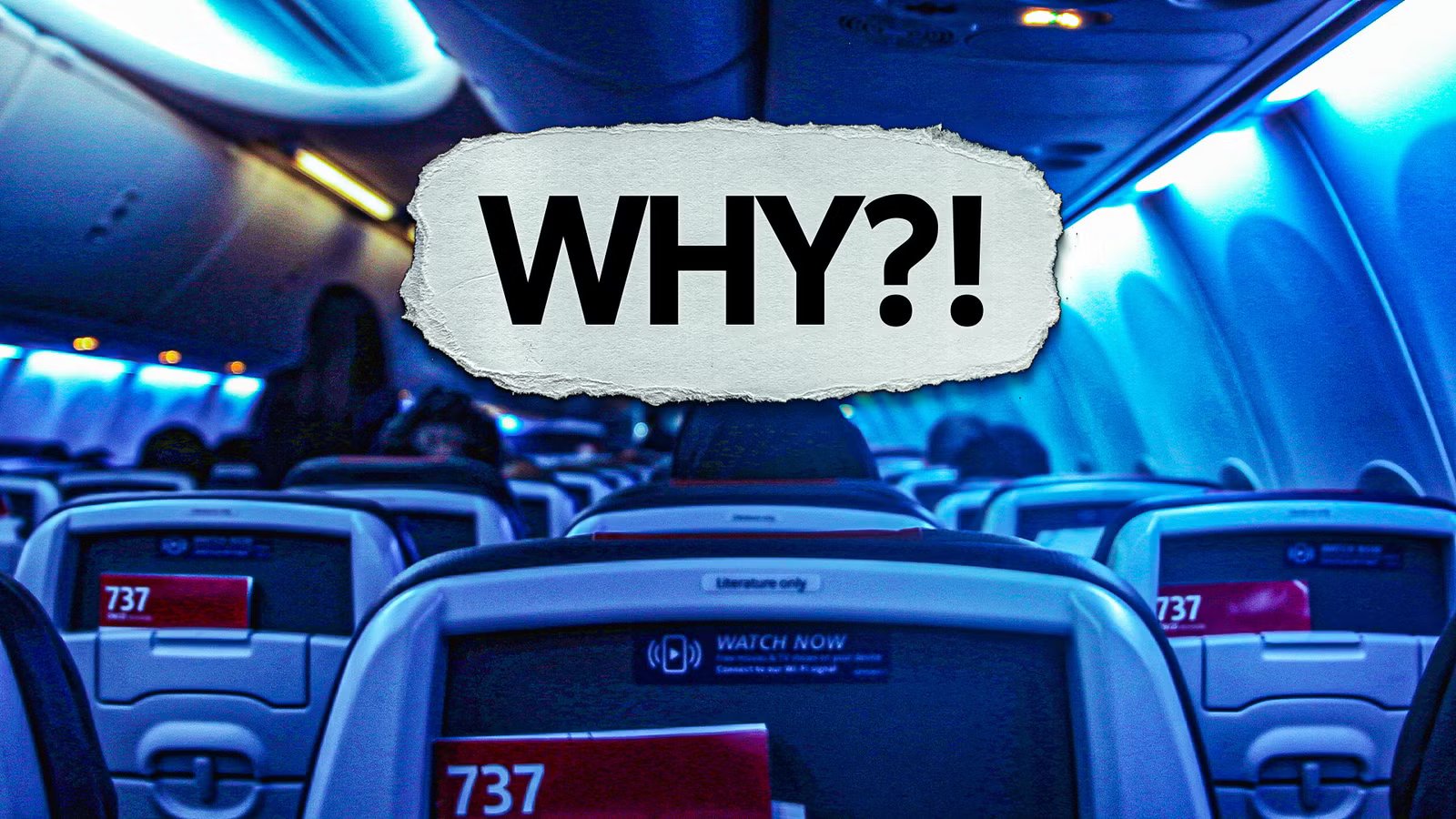
Anyone who has flown on a commercial flight will know the feeling of cabin lights dimming during takeoff and landing. Most airlines don’t explain to passengers why exactly this is done, but we have all experienced it. Despite the speculation, this isn’t done for reasons such as comfort or saving electricity. Rather, dimming the lights is standard practice across the industry and is primarily done as a safety precaution.
Takeoff and landing are the two most critical phases of a flight when the likelihood of an accident occurring is at its highest. Emergency situations can be incredibly chaotic, with passengers trying to exit the aircraft in poor visibility. As such, airlines need to ensure their flight crew can respond rapidly to any problem as well as safeguard the well-being of their passengers. But how exactly does dimming the cabin lights contribute to greater safety?
Airlies Dim Cabin Lights For Safety Reasons

The cabin will be brightly lit during the boarding stage with the cabin lights switched on as normal, possibly aided by natural sunlight coming in through the windows if it is during the day. With all passengers boarded and the doors closed, the aircraft will begin taxiing towards the runway as flight attendants complete their final checks. After this, the flight crew will notify the cabin crew that the cabin lights should be dimmed as the aircraft approaches the runway for takeoff.
So why exactly is this standard procedure? It is mostly to allow passengers to adapt their eyes to darker conditions before takeoff or landing, which could prove vital in the event of an emergency. Studies show that the human eye can take up to 30 minutes to properly adapt to darker conditions, although rapid adaptation takes place within the first five to ten minutes. While this initial adaptation phase does not fully optimize the eyes for darkness, they are still far better prepared to see in dark conditions.
Another reason is that it is easier to identify emergency lighting in darker conditions. This includes exit signs as well as floor path lighting, illuminating the path for passengers to safely exit the aircraft. This is particularly important during moments of impaired visibility, such as smoke or fires in the cabin. With the lights switched off for several minutes before takeoff and landing, the eyes are much better adapted to discerning emergency lighting. Patrick Smith, an airline pilot and author of Cockpit Confidential, told The Telegraph:
“Dimming the lights allows your eyes to pre-adjust to darkness, so that you’re not suddenly blinded if something happens and the power goes out, and you’re dashing for the doors in darkness or smoke. The emergency path-lighting and signs will also be more visible. And it makes it easier to see outside, which helps you to maintain at least a basic sense of orientation – i.e. which way is up.”
How Important Is Dimming The Cabin?

The practice of dimming the cabin is firmly grounded in science and decades of experience accumulated across the industry. Having learned from accidents in previous decades, authorities recognized that disorientation and light sensitivity were major factors with passengers evacuating in darkness or smoke-filled conditions. Aviation regulators could also look to science for studies on eye-light acclimation, understanding that the eye can take several minutes to adapt to the dark or light.
This phenomenon is also well understood by pilots, who have to take certain steps when transitioning through different light environments. Aviation regulators require aircraft to always be ready for rapid evacuation, and dimming the lights is one of these requirements. It is not so important during day flights, as the prospect of being in total or near-darkness during an accident is minimal, and therefore the eyes don’t need to be adapted.
However, during night flights, it can be the difference between a safe evacuation and a tragic one. As for this practice occurring at takeoff and landing, it is well-established that these are the two most risky phases of flight. Over 20% of fatal accidents happen during takeoff or initial climb, while more than 45% occur around the landing phase. In the event of an accident, cabin crew aim to evacuate the entire aircraft in 90 seconds, although it typically takes longer.

Here’s Why Airplane Passengers Shouldn’t Sleep Through Takeoff & Landing
Sleeping during the most critical part of any flight may affect the health and safety of passengers.
Common Misconceptions

The flight crew rarely explains to passengers why they are dimming the lights at certain stages of flight, which has led to several misguided theories about this practice. For example, many believe it is more about creating a comfortable and relaxing environment during the two riskiest phases of the flight, but this isn’t true.
It is also not the case that airlines do it to save on electricity costs, although it can free up some electrical power. There is also the idea that lights are dimmed to minimize interference with visibility in the cockpit, which is partially true, although it is only a secondary reason to dim the lights.
A brightly-lit cabin can create a degree of glare in the cockpit windscreen or side windows, and pilots often need to rely on visual cues outside the aircraft, such as runway or approach lights. However, the main reason for dimming the cabin has always been passenger safety.
Window Shade Protocol

If you have flown a lot, you will likely have noticed flight attendants asking passengers to put their window shades up during takeoff and landing. This doesn’t happen on every flight, but it is standard practice for daytime flights. The reasoning behind it is also related to safety, as it keeps the cabin interior well-lit even if the power has gone out, and also gives those onboard a visual of the aircraft’s exterior.
In emergency events like a fire, mechanical error, or bird strike, the flight crew will often need visual confirmation of the problem to understand the situation. Cabin crew can more easily check the aircraft’s exterior if all the window shades are open, allowing for a more rapid response in an emergency.
At night, visibility outside the aircraft is low, although not entirely gone. For this reason, keeping shades up or down is optional on night flights. Some airlines will ask passengers to keep their shades up, but it is not a common request at night. Having the cabin lights dimmed in such a situation is important, as it allows the cabin crew to see out of the window more clearly. If all the cabin lights were on, the glare on the window surface would prevent a clear sight of the aircraft’s exterior.

Why Window Shades Are Upside Down In Exit Rows
Do you know the reason for this design quirk?
Other Reasons The Lights Are Dimmed

Cabin lights can still be dimmed for non-safety reasons, the most common one being to let passengers sleep or get more comfortable. Airlines will almost always dim the lights for hours on end during overnight, long-haul flights to match the sleeping patterns of those onboard.
Modern aircraft are equipped with sophisticated mood lighting systems that can be altered at different stages of the flight. For example, warm colors can gradually be introduced before and after sleeping periods to mimic the sun setting and rising, while cooler colors are ideal as passengers arrive and depart.
The Airbus A350 and Boeing 787 Dreamliner are two notable aircraft types with this feature, which ultimately contributes to greater passenger wellbeing by reducing tiredness and jet lag. As for a plane’s external lights, most of these are switched off during the flight to save on energy and prolong their durability.
Evacuating An Aircraft

As part of the rigorous aircraft certification process, a commercial aircraft must be designed to facilitate a complete evacuation within 90 seconds, even if half of the plane’s emergency exits are unusable. This means planes must be equipped with sufficient emergency exits, floor path lighting, and slides to get passengers off the aircraft as quickly and safely as possible.
Just as important are the crew training procedures that will ensure the cabin crew are ready to deal with any emergency situation. Cabin crew undergo regular evacuation training and drills so they are prepared in case of an accident, and we have seen this training pay off in recent accidents. This includes Air Busan flight 391 in January 2025, which caught fire while taxiing and was swiftly evacuated with no fatalities.
We have also seen accidents where an evacuation was not carried out properly with deadly consequences. For example,  Aeroflot flight 1492 in May 2019 caught fire after a hard landing in Moscow, causing flames to engulf the rear of the aircraft and killing more than half of those onboard. In this case, some passengers were accused of holding up the evacuation by collecting their luggage before exiting the plane.