dailynewsnblog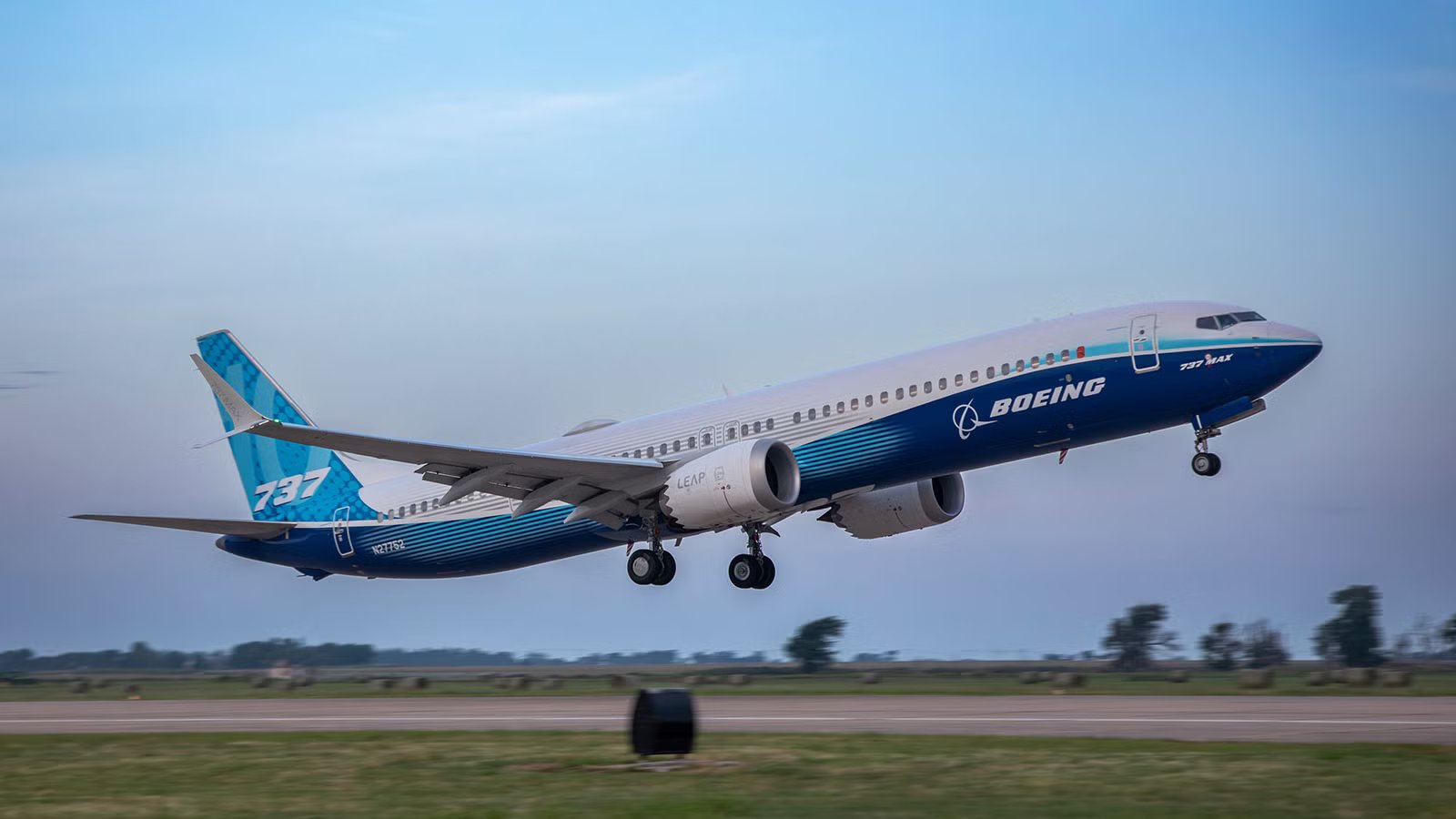
While some early Boeing 777s and Boeing 787s were configured nine and eight abreast, respectively, almost all airlines configure them ten and nine abreast, respectively, in economy class today. Some may also be doing this with new production standard Airbus A350s, which have an extra four inches in internal cabin width. Philippine Airlines has become the first flag carrier to configure economy ten abreast, instead of the standard nine abreast.
But the same can’t be said for narrowbody aircraft. The first 737s, 757s, and A320s were all configured six abreast in economy class when they launched and remain the same today. The core reason is regulations. A new clean-sheet narrowbody aircraft can offer more lateral space per passenger, but can’t fit more passengers side-by-side.
Regulations Limit It To 3-3

There are multiple ways of answering why narrowbody aircraft have six seats abreast. One reason is that this is how those aircraft were designed. But the single most decisive factor is regulations. FAA 14 CFR 25.817 and the equivalent EASA CS-25.817 state that aircraft with a single passenger aisle can not have configurations more than three seats abreast.
With a single aisle, the limit is six seats (3-3). Widebody aircraft have two aisles, so they can be configured 3-4-3, with the middle row bordered by aisles on both sides. The regulation is intended to facilitate the 90-second evacuation requirement, which requires an aircraft to evacuate all its passengers in 90 seconds in an emergency.
The regulation is also why airlines can’t configure the narrowbody aircraft as 2–4. No passenger is permitted to be more than two other seats away from the aisle. It’s worth noting that in the past, there were some aircraft, such as the Hawker Siddeley Trident and Channel Airways in the 1960s, configured seven-abreast. But these are pre-regulation, and no modern narrowbodies have been configured that way or built to be configured that way.
Smaller Aircraft Are Regional Jets

The aircraft considered narrowbody aircraft have all been designed to fit six-abreast seats in economy. These include the 737, 757, A320, Airbus A321, COMAC C919, and the upcoming Russian MC-21. It’s not as though there aren’t aircraft configured five abreast; there are, but they are considered regional aircraft. Examples include the A220 and the 717.
The A220 (originally the Bombardier CSeries) and the Boeing 717 (based on the Douglas DC-9 family) have internal cabin widths of 10 feet and nine inches (328 cm) and 10 feet and three inches (312 cm), respectively. These are configured five abreast as 3-2. The Embraer E-Jet series (including E170/175/190/195 & E2) is even smaller at eight feet and two inches (249 cm) wide. The E-Jet is configured four abreast as 2-2.
For economy class passengers seeking more space, the A220 is considered one of the best. It is wider than the 717 and is wider per seat than the Boeing 737 and Airbus A320. Naturally, airlines can configure their six-abreast narrowbodies for five-abreast seating in economy. But they are disincentivized from doing so, as it reduces the number of seats available.

What Are The Largest Boeing 737 MAX Fleets In The World?
US carriers make up a large share of the global 737 MAX fleet.
Narrowbody Aircraft Are Built For Six-Abreast

When Boeing developed the 737 in the 1960s, it specifically designed it to have the narrowest internal cabin feasible for seating six-abreast as 3-3. When Boeing developed the 777, it designed it to comfortably seat nine abreast, yet also left enough room to squeeze in an extra seat. This gave airlines the flexibility to add an extra row of seats, a flexibility they never had on the 737 or 757.
The A320 is a newer aircraft, designed in the 1980s. Airbus designed it to have a marginally wider internal cabin than the. 737, while still seating six abreast. There is a common misconception when it comes to space getting smaller and smaller on aircraft as airlines cram more seats in. Airlines do this (subject to max certified seating limits) by reducing the seat pitch or distance between a seat and the seat in front of it.
Airlines do not reduce the amount of side-to-side room on narrowbody aircraft. That has remained unchanged. It’s also a little fake when articles talk about seat widths on narrowbody economy class aircraft. Airlines may be able to provide a little more space between armrests by reducing their thickness, but they have almost no latitude to actually seat passengers farther apart. All A320 cabins are 12 feet and two inches (370 cm) wide and six passengers abreast in economy. All of these aircraft have the same number of passengers sharing the same amount of lateral space.
The Boeing 737: The Least Comfortable

Among modern narrowbody commercial aircraft, the 737 is the oldest and the squishiest. While the 737 is now in its fourth generation (MAX), the upgrades have not widened the internal cabin. The 737 has an internal cabin width of 11 feet and seven inches (354 cm). The Airbus A320 increased this to 12 feet and two inches (370 cm). The old Soviet Tupolev Tu-204 is 11 feet and nine inches wide, while the Boeing 757 “Flying Pencil” is 11 feet and seven inches wide.
The Chinese COMAC C919 is now in service in China and is the first clean-sheet narrowbody aircraft to enter service in many years. That aircraft has been widened to 12 feet, 10 inches (390 cm) in the internal cabin. This means there is noticeably more room for passengers on these aircraft than on the 737 and A320.
|
Narrowbody aircraft |
Internal cabin width |
|---|---|
|
Boeing 737 |
11 feet, 7 inches (354 cm) |
|
Boeing 757 |
11 feet, 7 inches (353 cm) |
|
Airbus A320 |
12 feet, 2 inches (370 cm) |
|
COMAC C919 |
12 feet, 10 inches (390 cm) |
|
Yakovlev MC-21 |
12 feet, 6 inches (381 cm) |
Russia has developed the Yakovlev MC-21 (formerly known as the Irkut MC-21), which is also 12 feet and six inches (381 cm) wide. The aircraft’s entry into service has been delayed by Western-led sanctions since 2022, and it will no longer get its type certificate to fly to destinations in the European Union. The C919 and MC-21 are much wider than the Boeing 737, but they are all limited to carrying a maximum of six passengers abreast, configured 3-3.

What Are The Best Seats In Each Class Of Air Canada’s Boeing 777s In 2026?
A cabin by cabin look at the best and worst seats on Air Canada’s Boeing 777.
Clean-sheet Narrowbodies Getting Wider

Making the cabins wider doesn’t have a significant impact on the aircraft’s aerodynamic performance. This allows modern clean-sheet narrowbody aircraft to increase their internal cabin and provide passengers with more space and comfort, but there is no way to increase the number of seats the aircraft can be fitted with width-wise. The only ways to fit more seats into the aircraft are to stretch it (make it longer) or level up to widebody (twin-aisle) aircraft.
COMAC and Yakovlev are at a marked disadvantage, as Airbus and Boeing are firmly dominant in the narrowbody market. It is very difficult for these companies to break into the market with their new aircraft. One way to make their aircraft more appealing is to make them wider and market them as more comfortable. However, sanctions have essentially ended the MC-21’s prospects of being exported in any serious way, and the US is mulling limiting the C919 as well. In 2025, the US briefly cut off the supply of engines for the Chinese aircraft.
Airbus and Boeing are now working on the clean-sheet replacements for their 737 and A320 aircraft. These programs remain in their early days, and so little is publicly known or even internally finalized. However, it is likely that they will design them wider as passenger comfort has become a major competitive issue. Most analysts expect the 737 to be about three to six inches wider internally, while the A320 successor may be one to three inches wider. This remains speculative for now, and it is unclear whether they will try to match the width offered by the C919.
Future Remains Six-Abreast

As Boeing and Airbus work on their narrowbody replacements, they are sure to remain six-abreast (3-3). Regulations mean they can’t increase the seating to seven-abreast without adding a second aisle. If they add a second aisle, then by definition, they are not narrowbody aircraft, and the question is mute. The upcoming narrowbody replacements are expected to be evolutionary upgrades, not radical changes from existing aircraft.
One new feature that these next-generation aircraft may have is folding wingtips to provide increased aerodynamic performance and remain within airport gate regulations. Another next-generation feature may be open-fan engines. These technologies are still in an early stage, and it remains unclear if they will be adopted. For Boeing, a clean-sheet design allows it to finally overcome design issues with its 1960s-era 737 that continue to plague the aircraft.
One issue is that the 737’s landing gear is low, making it difficult to accommodate today’s large engines. This is what led to the installation of the infamous MACS software and the 2018 and 2019 MAX crashes. Another thing is that the 737 is artificially narrow, and with modern lightweight materials, there is no reason to keep that limitation. Boeing wants its successor to be “more comfortable than the A320,” which means its cabin needs to be less squishy. Regardless, next-generation narrowbody aircraft will remain configured 3–3.