dailynewsnblog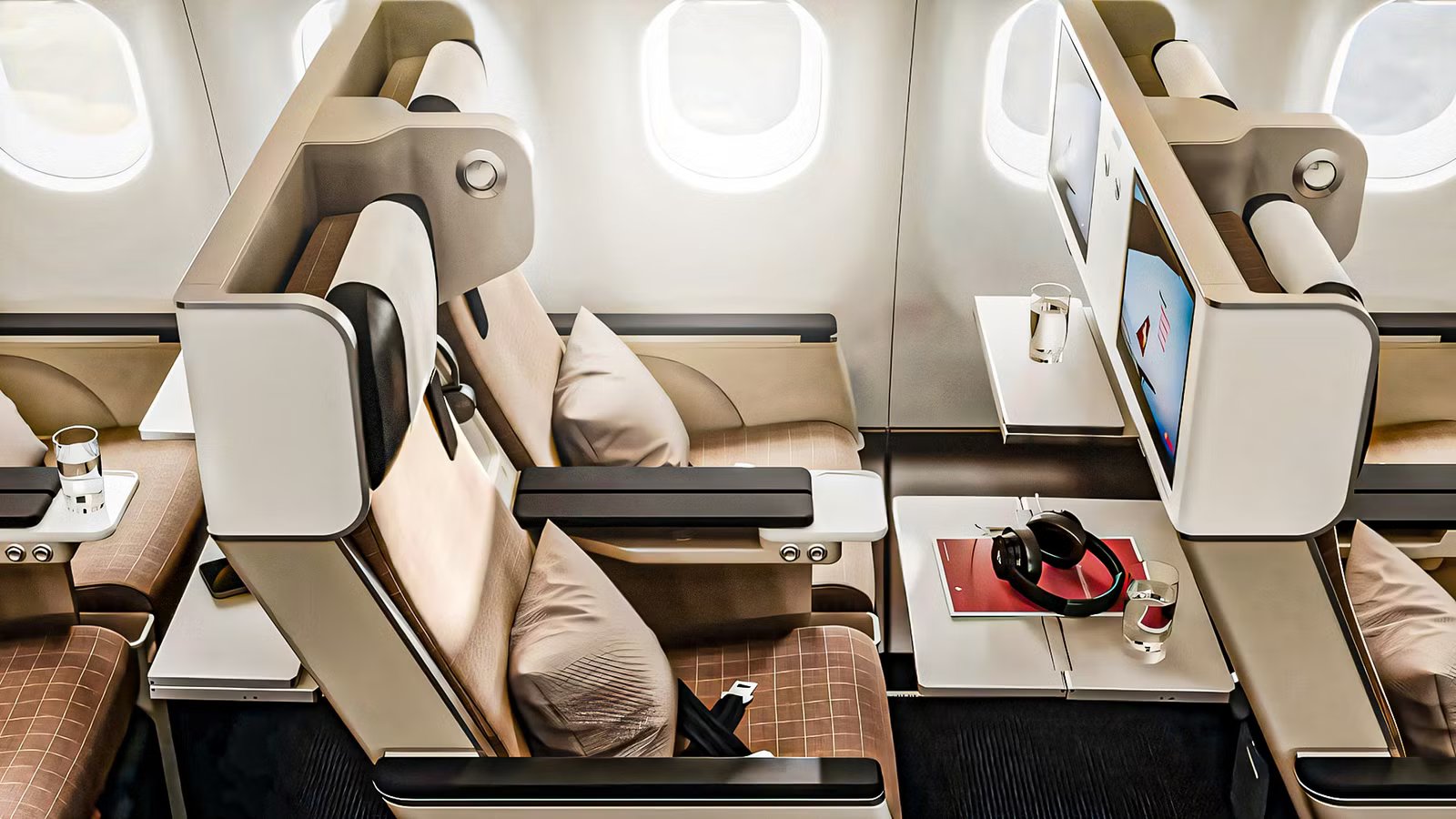
Premium Economy may increasingly be popping up as an option for a bit of extra comfort on flights, but the idea of having a middle ground to fill the void between coach and business has actually been around for decades. Attributed to EVA Air and what was dubbed Evergreen Class at the time, such a premium economy option actually dates all the way back to the early nineties.
For passengers, premium economy has developed into a means of making flights just that extra bit more comfortable, without the hefty price tag of a business class ticket. For airlines, though, offering that middle ground has proven to be a real moneymaker.
Best Use Of Space To Maximize Revenue

It is not rocket science for airlines. Premium economy is simply the best use of space aboard aircraft for maximizing revenue. Where business and first-class seats offer lucrative margins, they take up room. Economy seats do not need so much room, but competition keeps a cap on the already suppressed prices airlines can charge. Offering a premium economy section can perfectly fill that middle ground, therefore, where space needed is kept to a relative minimum, but revenue per seat can be very rewarding.
Take a Boeing 787-8 Dreamliner, for the sake of argument, as analyzed by Australian Frequent Flyer. Where 44 premium economy seats could be placed in a 2-3-2 configuration between the first and second set of doors, 20 business class pods or 63 economy seats would also take up a similar amount of room through a 1-2-1 or 3-3-3 layout, respectively.
United Airlines, as a champion of the variant, often flies its 787-8s on the nearly nine-hour route between Chicago O’Hare and Munich. Prices of such flights for mid-April were listed from £929 ($1,247) in economy, £3,514 ($4,719) in premium economy, and £5,303 ($7,121) for the best seats. All this goes to say that United looked to fetch 278 percent more from premium economy passengers than those in the coach seats, by offering just roughly 43 percent more room in the cabin. Comparatively, United would get just under 51 percent more per business class passenger against those in premium economy, but by using well over double the space per seat.
Demand For Premium Economy

Part of the reason airlines place such an emphasis on premium economy is entirely down to the behavior of their passengers. Where business class is associated with high costs and often corporate travel, premium economy offers a middle ground for the money-conscious, yet comfort-seeking passenger. As such, studies have found demand for the latter to be far more appealing to airlines.
This is displayed by the elasticity of demand of each option, where changes in price directly affect consumer buying habits. According to research featured in the IOSR Journal Of Economics and Finance, a survey of passengers’ flight and class choices showed demand around business class travel to be highly elastic, so heavily dependent on price. Premium economy exhibited inelastic demand, meanwhile, meaning price hikes would do less to hamper sales.
While just the results of one study, the simple fact is that investing in premium economy can make for a less risky gamble for airlines. Of course, business class seats will return far better profit per passenger, but they pose a greater risk of not selling. The alternative is offering a greater number of premium economy seats and banking on them being far more likely to fill up based less on passengers’ financial situations.

The Striking Differences Between Premium Economy & Economy Class In 2026
What secrets lie between these two cabin classes in 2026? The differences may surprise you…
Airlines Increasingly Jumping On The Bandwagon

Demand trends are indeed a huge factor, but opting to offer premium economy can be far more practical for airlines too. Again, it is the same old simple choice for airlines: Use more space on aircraft for business class seats to sell at more lucrative prices, or cram in greater numbers of travelers for less revenue per ticket. For both passengers and airlines, premium economy can hit that perfect sweet spot of comfort at a solid price.
Airlines have become increasingly wise to this, with Lufthansa itself dubbing premium economy a “money-generating machine”. In the German flag-carrier’s case, revenue per square foot across premium economy was found to be 33 percent higher than in basic economy, but interestingly, six percent more than in business too. American Airlines offers another example, having flagged premium economy “the most profitable use of square footage on [its] widebody,” given fares in such cabins averaged around twice as high as those for the most basic seats.
All it takes is a look at how quickly airlines have kitted out their jets with premium economy cabins in recent years to show the appetite for selling such seats. Per data from aviation analyst Cirium, a total of 42 airlines offered a premium economy option in 2017. Jump forward five years to 2022, and some 63 carriers were boasting premium economy seats.
Gap Between Business And Economy Now Just Too Big

Why premium economy seats sell so well is in part due to the evolution of both economy and business cabins themselves. Once upon a time, the difference between the two boiled down to a few basic factors like seat width and legroom. Nowadays, economy class cabins feel increasingly cramped against the newest business seats, which in many cases are more like a completely private pod rather than just a simple seat on a plane.
Indeed, flying business class with several carriers now will get you a flat bed, additional storage space, and even a door to be entirely separated from the rest of the cabin. Add on luxury dining options, airport lounge access, and a heap of other perks airlines look to entice premium passengers with, and such developments have only worked to widen the gap between economy and business. For most passengers, the jump between economy and business is too stark, and all the frills of the latter are just not necessary if all that is wanted is some extra space.
Airlines have no doubt taken notice, hence the growing popularity of premium economy. As former Citi analyst Mark Manduca put it: “Airlines are getting smarter about what their customers want.” Flagging carriers were moving away from the traditional three-class model to better boost revenue per unit of space, he added: “I think you are going to get even more product segmentation [ahead].””

The Airlines With The World’s Most Spacious Premium Economy Cabins In 2026
These cabins are incredibly comfortable.
All In Moderation

Airline executives may well have looked at the nice, fat margins on premium economy seats and wondered about the viability of just offering these on flights. The problem for them is that it is only in the context of their other offerings that premium economy is allowed to shine. Take United’s Chicago to Munich flight, as mentioned above. Against the £929 economy ticket price, the £3,514 premium economy option looks expensive. Compare that to the most expensive £5,303 ticket, and all of a sudden it does not actually seem so bad.
For the passenger, flying premium economy can make for a treat when the alternative of being squeezed into coach is taken into consideration. This is one of a number of psychological factors airlines can pick at, alongside the likes of the so-called pain of payment phenomenon. In this case, a passenger might not pass up on the opportunity to upgrade upon checking in, because the time that has passed since their original ticket purchase has taken with it that sinking feeling of forking out on it. A nice middle ground option, like premium economy, only makes it easier to do this.
While it might all sound a tad sinister, the onus is, of course, ultimately on the passenger to decide whether the price of what they are paying for is worth it. Premium economy, on the surface, may be an additional 43 percent of space or so for several times the price of a basic ticket. However, if one values how much more rested they might feel thanks to the extra room, then is it not worth it?
Premium Economy Complementary To Surrounding Classes

Realistically, opting to install premium economy makes far more sense than any other cabin class for airlines. Being able to charge so much without forfeiting ridiculous amounts of space is a powerful tool. That said, premium economy has its place, and that is as a complement to both the more and less luxurious seating options by which it is surrounded.
Therein lies the key for airlines, and where a simple three-class layout on planes was once enough, a growing disparity between each has opened the door for the likes of premium economy to fill in those gaps, as what passengers are offered constantly evolves.