dailynewsnblog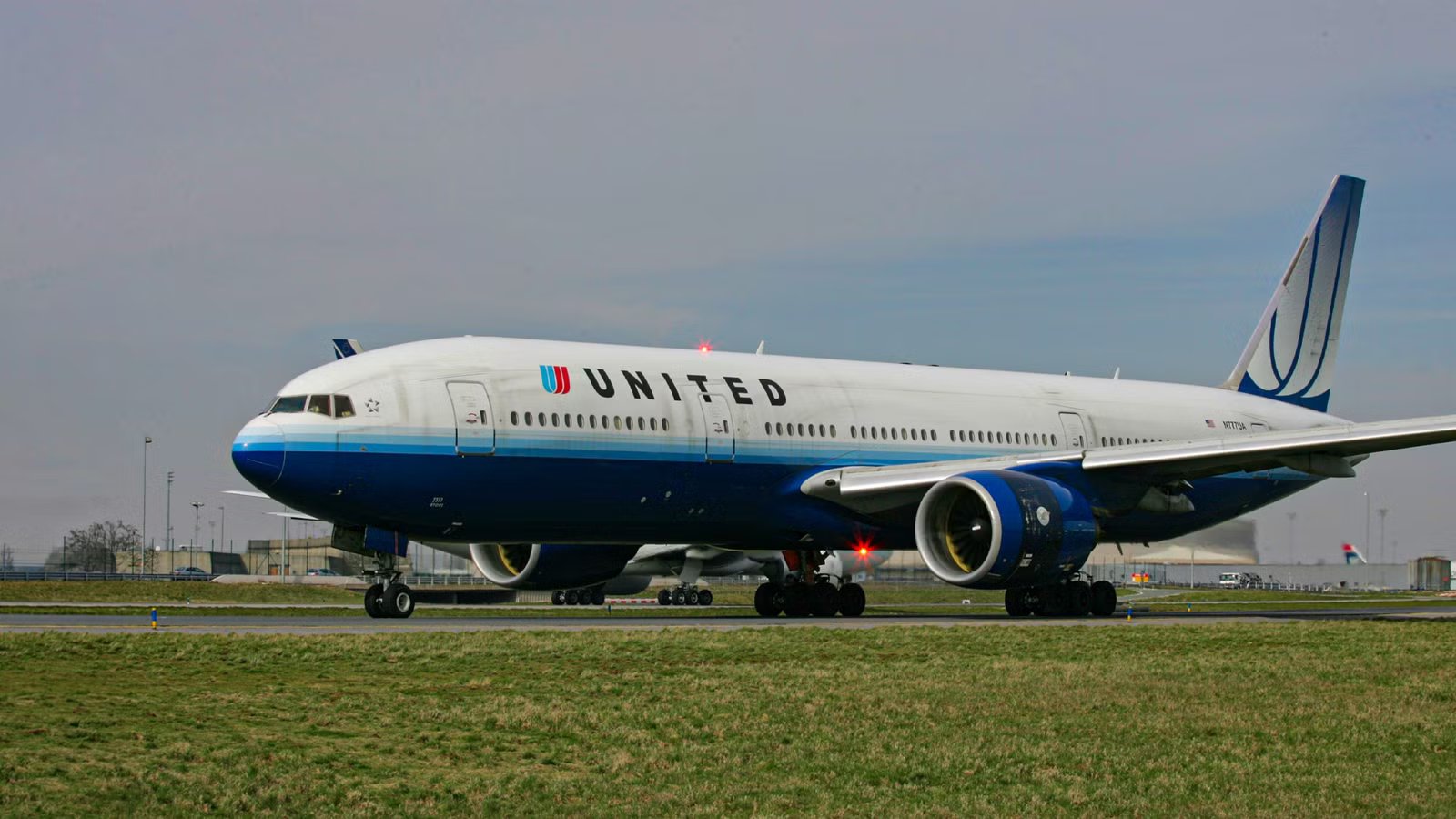
Almost every carrier has some legacy jets in its fleet. Yet, these aren’t just sitting around gathering dust, but play an important role in a carrier’s operation, often carrying out missions that are not compatible with modern airliners. Common old narrowbody jets include outdated 737 and A320 variants, and the Boeing 757, the workhorse of United Airlines. Other notable aircraft that seem like they should be obsolete include the Airbus A380 and 747 superjumbos, and early A330s and 767s. Old jets are particularly popular among cargo carriers, who don’t have to worry about passenger experience, and fly their aircraft less frequently.
Read on to learn more about why old aircraft continue to be mainstays for many of the world’s best airlines, and which US carriers have the most prevalent old aircraft. The 717 is then used as a case study to investigate the unique capabilities of old aircraft.
Why We Expect Carriers Will Usually Prefer Newer Aircraft

To ask why carriers fly older aircraft than is expected, we first need to interrogate why we expect them to fly new aircraft. Passenger airliners love new aircraft because they come with fantastic cabin amenities and features that allow them to provide a more competitive passenger experience. For instance, the Boeing 787 Dreamliner comes with large windows, increased cabin pressure, and better air filtration systems. Passengers flying on such modern aircraft won’t suffer so much from jet lag.
New aircraft like the Airbus A350 are also far more efficient. This allows the aviation industry to meet global sustainability goals as deadlines to reach net-zero come rushing forward. These aircraft use lighter and more aerodynamic airframes and more efficient engines. Modern jets also have better compatibility with sustainable aviation fuel (SAF).
The sustainability advantages also boost a carrier’s profit margins. Using less fuel to fly larger aircraft greater distances reduces costs incurred per seat. Carriers lose less of your airfare to these costs while flying modern aircraft.
Which Legacy Carrier Flies The Oldest Aircraft

The United States’ three legacy carriers all have fleets of relatively similar ages.  United Airlines has the oldest fleet, with an average aircraft age of 15.3 years. This is followed by
  Delta Air Lines at 15 years.
  American Airlines has the youngest fleet with an average age of 14.5 years.
The table below shows the oldest aircraft flown by US legacy carriers, selecting from planespotters.net data on American, United, and Delta on aircraft types over 20 years. It includes the plane’s average age and the total in each carrier’s fleet:
|
Aircraft Family |
American Airlines: number in fleet (average age) |
United Airlines: number in fleet (average age) |
Delta Air Lines: number in fleet (average age) |
|---|---|---|---|
|
Airbus A319 |
132 (22 years) |
75 (24.3 years) |
57 (24.1 years) |
|
Airbus A320 |
45 (25 years) |
67 (26 years) |
46 (29.3 years) |
|
Boeing 717 |
N/A |
N/A |
80 (24.5 years) |
|
Boeing 757 |
N/A |
61 (27.3 years) |
90 (27.2 years) |
|
Boeing 767 |
N/A |
53 (28.4 years) |
58 (27.8 years) |
|
Boeing 777 |
67 (21.4 years) |
96 (22.6 years) |
N/A |
The average age trend is mirrored by the number of aircraft each carrier has in its fleet, with an average age of over 20 years. The youngest fleet, American, has 244 such aircraft spread across just three families. The Airbus A319 is by far the most prevalent, and old examples of this jet are also present among the other two legacy carriers. The second-oldest fleet, Delta, has five aircraft types averaging over 20 years old with a total of 331 aircraft. The most bizarre within this fleet are the 80 717s. Finally, the oldest fleet, United has 352 jets over 20 years old. These planes are also spread across five aircraft types. The presence of families like the Boeing 757 and 767 is rather predictable.

What Determines An Aircraft’s Lifespan?
When delivered from the manufacturer, an aircraft has an intended lifespan, which is not measured in years but by pressurization cycles.
Why Is There Such Longevity?

Wikimedia Commons | Simple Flying
The most important reason an aircraft would keep flying is that it remains safe to do so. “Over time, every part of the plane will be replaced with a new part,” InsiJets notes, regarding how proper maintenance can keep an aircraft flying for far longer than expected. “However, older aircraft still have more operational issues, such as faults with heating and plumbing.” Such faults can be tolerated given the astronomical costs of replacing an old aircraft with a modern equivalent. A single Boeing 777X has list prices in excess of $400 million. Many carriers won’t be able to make up this cost in operational savings. For that reason, and the fact that most strain on the aircraft happens during takeoff and landing, long-haul widebody aircraft tend to have longer lifespans than short-haul narrowbody jets.
Old aircraft also have usually been completely paid off with no outstanding lease or loan payments. These are also assets with little room for further depreciation. Costs outside of basic operations and maintenance are limited.
Carriers have to undergo hefty challenges to keep jets over 20 years old in the sky. Three types of maintenance checks are needed. A-Check is undergone every 400-800 flight hours, with mechanics checking basic systems. C-Check happens every 20-24 months with more structural checks. Finally, a D-Check is done every 6-10 years and involves a full airframe teardown and rebuild. The latter will keep a jet out of operation for an extended period.
How The COVID-19 Pandemic Increased Aircraft’s Lifespans

An aircraft’s true age isn’t measured by the number of years since it left the factory, but by the number of times it has flown and the distance it has covered. During the COVID-19 pandemic, travel bans were in place, so aircraft spent far longer than usual on the ground. Time in storage was time spent not flying and incurring wear.
Mechanics also took the opportunity to conduct more extensive maintenance than they would usually have time for. Thorough maintenance allowed issues to be spotted before they could become a problem that would force an airframe to be retired. It will be interesting to see if the current conflict in the Middle East will have any similar impacts, given the enormous amount of disruption to the industry already caused:
On the other hand, the pandemic offered an opportunity to retire aircraft. Flight Global reported in 2020 that “the coronavirus travel downturn is accelerating the retirement of aircraft that are older, less fuel-efficient, and higher maintenance.” These retirements occurred because carriers no longer needed to meet capacity demands. The pandemic brought them time to conduct extensive reshuffling of their fleets towards newer jets.

FedEx Vs. UPS: Which Carrier Has The Oldest Fleet?
Overall, UPS operates the older fleet.
The Delta 717 Case Study

The choice to fly old aircraft is often made because they continue to fulfill a role effectively that modern jets can’t account for. Delta Air Lines’ Boeing 717s are slightly different because the jet’s longevity is due to the carrier’s rich history with McDonnell Douglas aircraft. It previously had sizable fleets of the MD-88 and MD-90, with the last of these examples being retired in 2020. Delta handles maintenance through its in-house TechOps team, who have tremendous experience dealing with older McDonnell Douglas aircraft.
Similar experience of McDonnell Douglas aircraft among the carrier’s pilots and crew also allows the 717 to continue to operate seamlessly. All this is relevant as the aircraft was first developed in the 1990s by McDonnell Douglas under the name MD-85, becoming the 717 when the manufacturer merged with Boeing in August 1997.
Delta Air Lines currently operates 80 717s with 73 in active service and seven parked for maintenance. It has also had to retire 24 of these aircraft. The planes continue to be used prolifically, with Cirium data revealing 12,648 flights and 1.4 million seats planned in June 2025. The main impact of the 717 has been to remove 2.2 50-seat regional jets from Delta’s fleet per 717, giving the carrier a decrease in seat costs and an increase in economy and premium class capacity.
Cargo Carriers And Old Aircraft

Cargo carriers are particularly prevalent operators of old aircraft. FedEx Express’s aircraft have an average age of 20.7 years, slightly higher than UPS Airlines’ 19.8 years. Meanwhile, DHL Aviation has some jets over 35 years old. Atlas Air has 50% of its fleet nearing 30 years old. Old aircraft are popular amongst cargo carriers as they are cheaper to purchase, often converted from passenger airliners that have reached the end of their life in commercial aviation. That means cargo carriers can turn a quick profit. Issues with higher operating and maintenance costs are less of an issue as cargo jets tend to fly less frequently than passenger airliners.
The nature of cargo flying also puts less of a strain on the aircraft. Cargo jets fly longer routes as short-haul cargo tends to be conducted by truck or train. These planes spend less time conducting takeoffs and landings, flight phases that cause the greatest strain, compared with cruising.
All this isn’t to say that cargo carriers only fly outdated aircraft. Some cargo carriers have put in orders for modern jets like the 777X freighter. Yet, this is more a case of dipping their toes into modern flying, while the cheap acquisition costs of older planes continue to win out.