dailynewsnblog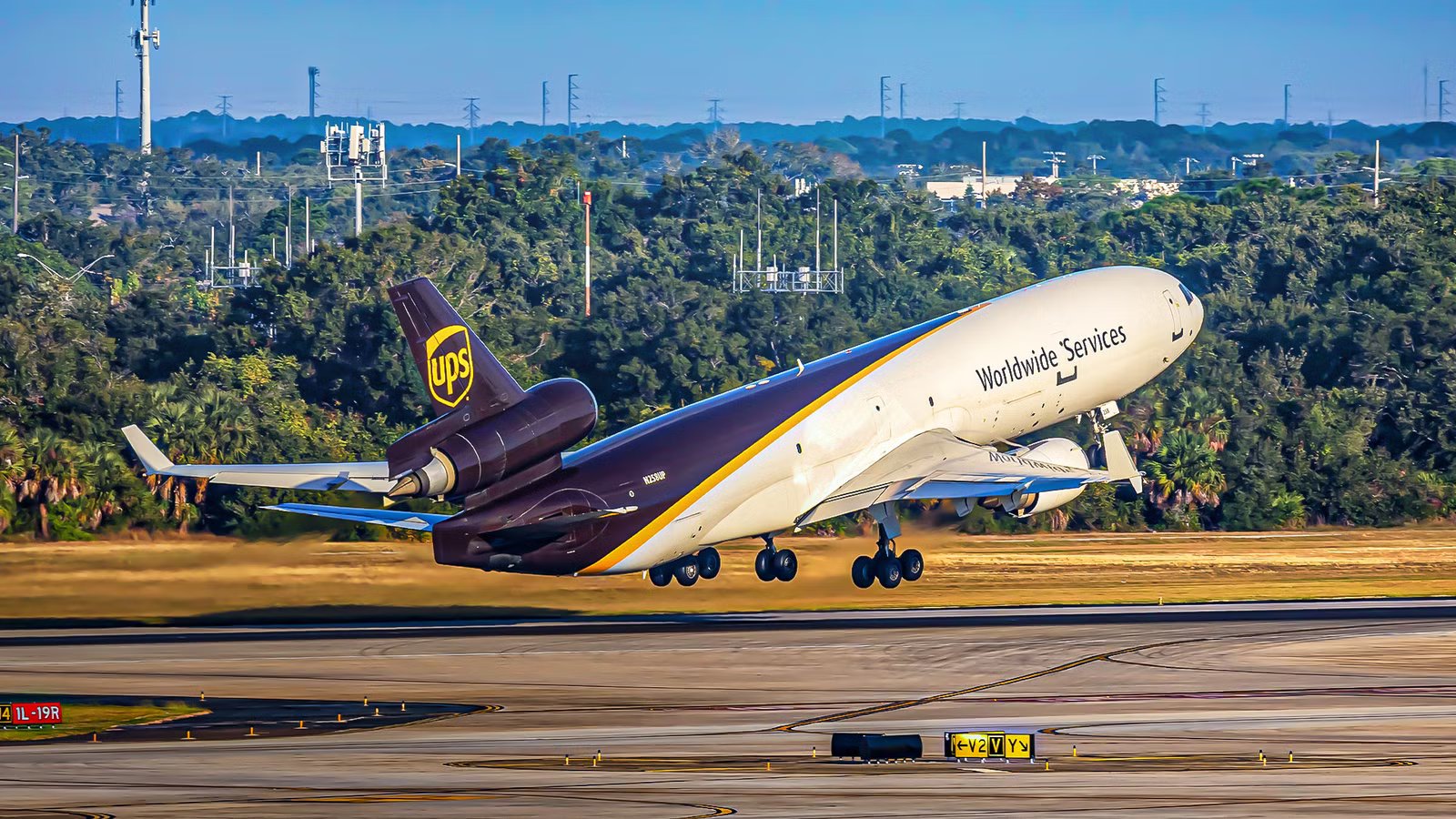
Airliners are not just tasked with carrying passengers and freight, but they also carry the manufacturer’s branding. An aircraft type’s name becomes shorthand for its capabilities, its safety record, and the maintenance and training ecosystem built around it. This is why Boeing’s 1997 acquisition of McDonnell Douglas raised an obvious question, as Boeing never chose to make the McDonnell Douglas MD-11 a Boeing-numbered model. The short answer here is that the MD-11 was already a mature, certified, in-service widebody with a large operator base by the time the merger came into effect on August 1, 1997. Boeing inherited a product whose sales momentum had slowed, and it soon chose to phase production out after filling the remaining order backlog.
Rebranding would have created extensive paperwork, training, and market churn without delivering meaningful additional sales. The MD-11 also sits at an unusual intersection of what it is called versus what it is. In practice, pilots, regulators, lessors, and insurers care more about manuals and fleet commonality than a badge on the brochure. That overall dynamic becomes clearer when one contrasts the MD-11 with the newly-launched MD-95, which was reborn under  Boeing as the 717, and with the DC-10 cockpit retrofit program that produced the MD-10 for decades afterwards.
The Aircraft Offered Exceptional Long-Range Capabilities

The McDonnell Douglas MD-11 was the manufacturer’s effort to modernize and stretch the DC-10 into a more efficient, longer-range three-engine aircraft. The plane featured the DC-10’s signature layout, with two engines under the wings and a third in the tail. The design also added a longer fuselage, winglets, aerodynamic refinements, and new-generation engines. The biggest operational shift was up front, with the MD-11 introducing a two-pilot “Advanced Common Flightdeck,” which eliminated the flight engineer and aligned the jet with the cockpit philosophy spreading across widebodies.
The aircraft itself first flew in 1990 and entered service in 1991. In passenger form, the plane was marketed as a medium- to long-haul workhorse able to carry roughly 300–400 passengers, but that does depend on which and what kind of layout an operator might choose to roll with. It is also important not to ignore the freighter and converted freighter variants that emphasized volume and payload, which later became the type’s core niche.
From a commercial perspective, the MD-11 arrived as efficiently as twin-engine widebodies due to its advanced capabilities. This made it appealing initially to commercial operators. The Boeing 767, the 777, and the Airbus A330 slowly began to shape airline route economics, as they offered improved operating economics. This shift eventually eroded demand for three-engine airliners. Only 200 MD-11 models were built. Boeing, after inheriting the program, announced a production phase-out in 1998 and ended deliveries once 2000 came around. The MD-11’s long afterlife has primarily existed in cargo operations.
Who Operated The McDonnell Douglas MD-11?

In passenger service, the McDonnell Douglas MD-11’s story is largely a tale of the 1990s and the early 2000s. The jet served as the backbone for long-haul networks, primarily for carriers that liked its capacity between the Boeing 747 and smaller widebodies. Carriers such as Swissair, KLM,  Delta Air Lines, Finnair, and China Eastern were all among those that eventually grew to rely on the type. Over time, however, the economics of twin-engine widebodies, alongside the cost of running small tri-jet sub-fleets, pushed operators toward Boeing 777s, Airbus A330s, and eventually 787s and A350s.
The aircraft, as you can clearly see, was a favorite of legacy carriers that prioritized high-capacity aircraft that could easily travel across oceans. For its time as well, the McDonnell Douglas MD-11 was an incredibly capable aircraft, making it technologically relevant in an era like the 2000s when older three-engine models were quickly being phased out, according to the Delta Flight Museum. This also made the program somewhat commercially and financially appealing for Boeing.
Federal Express became the largest operator of the MD-11 and used the type as a backbone for long-haul flying between hubs. While UPS also operated a major MD-11 fleet, other operators, including Lufthansa Cargo, leaned on the aircraft’s payload-range sweet spot for dense intercontinental services. Even when operating as a freighter, the jet has been aging into a world of Boeing 777Fs and converted Boeing 767s, driving retirements and shrinking the remaining community of operators. Parts support for the type, however, remains robust.

Was The McDonnell Douglas MD-11 A Failure?
A look at whether the MD-11 failed, and, if so, for which airlines?
Why Did Boeing Not Change The MD-11’s Name After The Merger?

Boeing did not change the MD-11’s name after the merger for the same reason that airlines rarely rename a type that has already entered operations. The name itself has already been baked into regulation, documentation, and habit. Unlike new programs, there was no marketing reset moment. By the time August 1997 came around, the MD-11 was already certified, delivered, and globally recognized as a specific derivative of the DC-10 family.
This is where we get to the challenges that Boeing’s customers would have faced if they attempted to rename the type after it had already entered service. Rebranding an in-service model would have meant revising manuals, parts catalogs, training materials, and marketing collateral, all while risking confusion in leases, insurance documents, and maintenance costs. In practice, both operators and regulators care far more about the approved type design than the logo on the cover.
Just as importantly, Boeing was left with extremely little commercial incentive to spend time and money on a cosmetic change. In 1998, the manufacturer announced that it would phase the MD-11 out of production because demand beyond the existing order base did not exist. When a program is being sunset rather than expanded, preserving continuity for current customers matters more than relaunching a brand. Lastly, the MD-11 had already become part of aviation. Boeing could support the airplane as the manufacturer-of-record without trying to rename what pilots and mechanics already know the aircraft as.
But Why Did Boeing Rename The Boeing 717?

The Boeing 717 is the counterexample, which makes it noteworthy that the airline did not rename the MD-11. This jet was renamed by the manufacturer because they believe this branding shift could help secure more orders. What became the Boeing 717 entered Boeing’s hands as the MD-95, a young program that really needed customers. After the 1997 merger, Boeing chose to continue it but rebranded it as the Boeing 717 in 1998, pulling it into the company’s mainline product family.
Unlike the MD-11, the MD-95 (or the 717) was not a long-established type in airline fleets. It was still a marketing proposition, and Boeing wanted a Boeing badge on the jet’s brochure and the purchase contract for the plane. They also wanted the narrative that the aircraft was very much Boeing’s regional offering. Rebranding helped convince airlines that the program had a future. The Boeing 717 name was also available, having never been fully applied to use on a commercial airliner.
This left Boeing with an unused three-digit designation that fit its numbering logic and avoided extensive confusion with existing products. Thus, the difference came both in the form of timing and intent. The MD-11 was eliminated for overall continuity and the post-merger integration, but the Boeing 717 name was maintained for overall portfolio identity.

The Striking Differences Pilots Notice Between The McDonnell Douglas DC-10 & MD-11
A tale of two jets: the striking differences pilots notice between the McDonnell Douglas DC-10 and MD-11.
Why Are Some DC-10 Jets Called MD-10?

The MD-10 name serves as a reminder that aircraft naming is not always about corporate branding, but can also be about operational reality. Structurally, an MD-10 starts its life out as a DC-10 airframe, but the difference is in the cockpit. Under a program driven largely by FedEx, older DC-10s were modified to incorporate Boeing’s Advanced Common Flighdeck (ACF), creating a modern two-crew glass cockpit with an instrument layout identical to that of the newer MD-11.
This change saved airlines a considerable amount of money as it removed a flight engineer from the cockpit. Pilots could be qualified to fly the MD-10 and MD-11 interchangeably, and airlines could consolidate training, procedures, and spare avionics support. Boeing leveraged this operational distinction by certifying the modified aircraft and designating the DC-10s that had received the ACF retrofit as the MD-10.
The name itself signaled that the aircraft had been upgraded, even if the fuselage and wing were still essentially from a DC-10. Regulators reinforced the relationship in their own way, as the FAA standardizes both aircraft under the same MD-11 type rating. For operators, that is the kind of naming that saves money.
What Is The Bottom Line?

If Boeing had chosen to buy McDonnell Douglas a decade earlier, when the MD-11 was still new and chasing orders, the plane may have carried a different name. However, the merger took place in 1997. As a result, the MD-11 was already an established aircraft type with operators, manuals, and certification paperwork all built around the name.
Boeing’s question was not about creating a new identity for the aircraft but rather supporting it and finishing its backlog, leading to a production phase-out across the board. The Boeing 717 shows that rebranding makes sense, as a young program needs momentum and a place in the lineup.
What Boeing was really trying to do was not just help slowly bring an end to the MD-11 program while supporting existing customers, but also, and more crucially, keep extant customers as Boeing loyalists. This is why the aircraft is remembered as the MD-11, not as a Boeing-denominated jet.