dailynewsnblog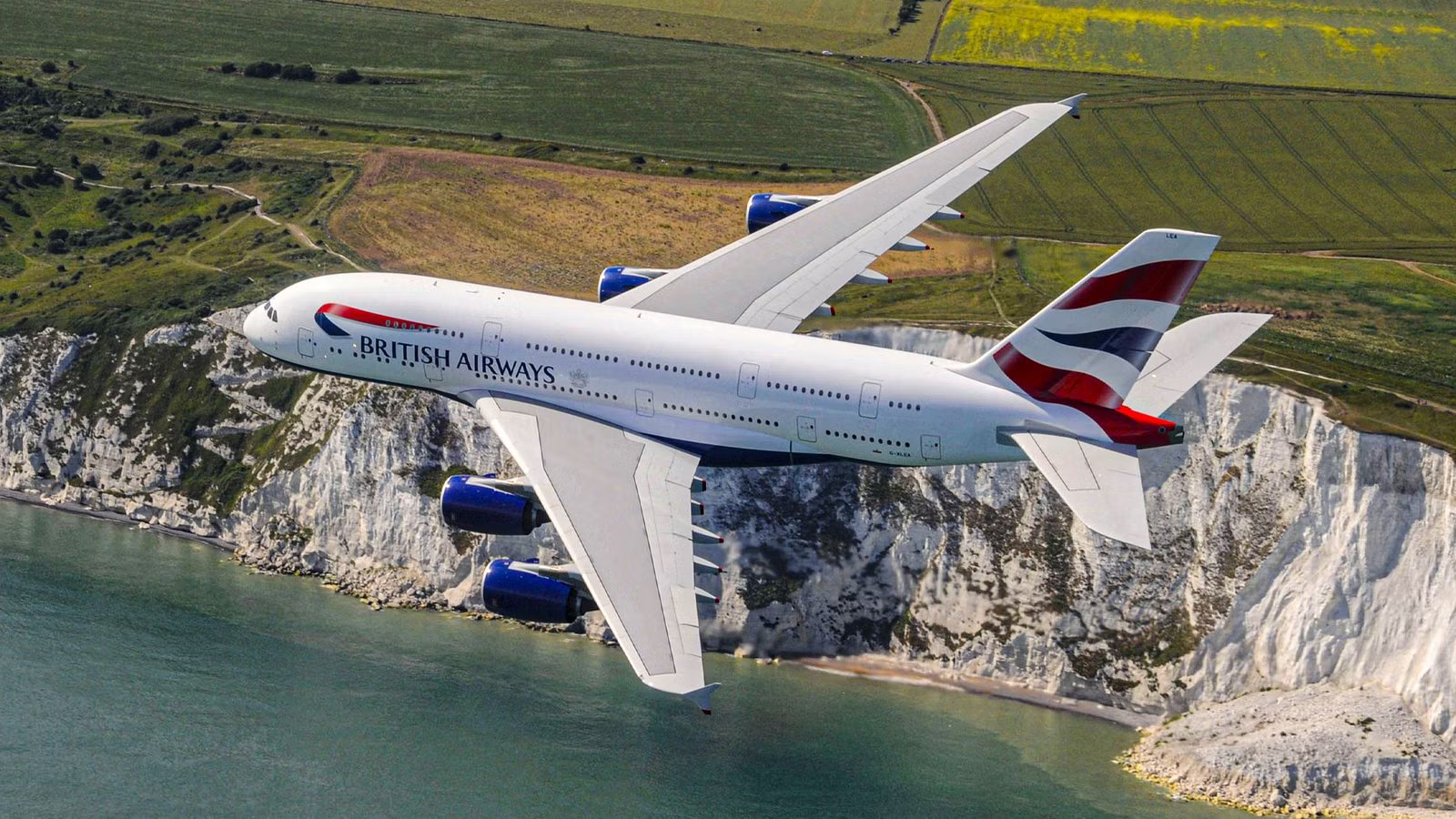
In September 2007, UK flag carrier  British Airways made a rare split decision as it determined the future of its long-haul fleet. The carrier decided to back Boeing’s Boeing 787 family for flexibility while making a noteworthy commitment to the larger Airbus A380. The company placed an order for 12 Airbus A380 models alongside 24 Boeing 787 Dreamliner models, a renewal designed to replace older 747-400s and 767s while letting British Airways keep growing from its Heathrow home base.
That last point matters, as Heathrow is one of the world’s most slot-constrained hub facilities, so the airline’s economics often come down to just one question, and that specifically is how to add seats when adding flights is not an available option. British Airways’ own investment rationale mixed hard math with brand identity. The Airbus A380’s per-seat economics and lower noise footprint were pitched as a way to maximize use of scarce Heathrow slots on key high-density routes.
When BA took delivery of its first Airbus A380 in July 2013, it arrived as the first of 12 models and entered service that autumn in a 469-seat layout. However, the Airbus A380 era soon became obsolete as airlines gravitated toward smaller and longer-range twin-engine aircraft. Airbus ultimately ended production of the type in 2021. Despite this, a look back at BA’s operations and order for the Airbus A380 highlights the airline’s continued interest in making a constrained hub a more capable central network node.
The Airbus A380 In A Nutshell

The Airbus A380 is the largest passenger aircraft ever built, and it is the only full-length double-deck jet to ever enter regular commercial service. Designed for high-demand long-haul markets, the plane is essentially an aircraft built around a simple constraint and streamlined operational philosophy. When airports are slot-limited, the easiest way to grow is simply to carry more people per flight. This is exactly what drove Airbus to design the largest passenger jet ever created.
In a typical three-class configuration, the Airbus A380 is capable of seating a little over 500 passengers, and it is certified for up to 853 passengers in an all-economy layout. It pairs this impressive capacity with genuine long-haul capabilities, making it one of the few aircraft that hit the market at the time that was genuinely capable of serving as a long-haul flagship. The model was designed to be powered by either the Rolls-Royce Trent 900 or the Engine Alliance GP7000.
The aircraft’s physical scale is defined, as its wings are quite literally wider than the aircraft is long. Airbus also marketed it as a step-change in overall passenger comfort, enabled by two full decks and a very large cabin floor area, which gave airlines flexibility for premium-heavy layouts and onboard flagship features. Although production has ended, the aircraft remains in service on trunk routes where demand density and airport constraints still reward very large-gauge models.
A Traditional Network Approach

To understand what makes the Airbus A380 work for British Airways, it is important to analyze the airline’s network strategy. British Airways operates a classic hub-and-spoke model built primarily around  London Heathrow Airport (LHR), one of the world’s highest-capacity and heavily slot-constrained airports, supplemented by London Gatwick (LGW) for a mix of leisure and long-haul flying. London City Airport (LCY) is also served by British Airways CityFlyer.
This hub system shapes the airline’s fleet needs, as the carrier looks for high-gauge aircraft to maximize seats per slot out of Heathrow, while mid-sized widebodies and narrowbody jets help serve thinner markets. When it comes to long-haul travel, British Airways fields a deliberately mixed widebody lineup, including the Airbus A380-800, the Boeing 777-200/300, and the B787-8/9/10. The airline also uses the Airbus A350-1000 as a new-generation premium flagship.
The A380 and 777 are natural tools for Heathrow trunk routes, with the Dreamliner and A350 offering newer-generation efficiency. For its short-haul network, the airline primarily uses the Airbus A320 family to feed its Heathrow hub and defend high-frequency European business markets.
From a commercial perspective, British Airways is especially oriented on the North Atlantic, where it participates in a high-yielding transatlantic joint business venture with American Airlines and its other partners from the International Airlines Group (IAG). This includes partners that coordinate schedules and expand network reach, all while IAG has highlighted the airline’s continued investment focus on North American and premium capacity.

All The Routes British Airways Is Scheduling Its Airbus A380s On Next Month
One corridor will see twice-daily flights operated by the superjumbo.
BA’s Decision To Acquire The A380

The BA A380 story starts with a Heathrow constraint. In September 2007, British Airways approved an order for 12 Airbus A380-800s, with options for up to seven more, as part of a wider long-haul fleet renewal that also included 24 Boeing 787s. The superjumbo was not purchased to add a ton of cities to the airline’s route map, but rather to add seats on the city pairs that British Airways already needed to dominate while keeping precious Heathrow slots focused on serving the highest-yield markets.
British Airways selected Rolls-Royce Trent 900 engines for the fleet and framed the deal as a cornerstone of its multi-year widebody refresh. This would eventually span  Boeing 787s, 777s, and Airbus A350s, with the airline later describing it as a massive long-haul fleet upgrade program. Deliveries were originally expected earlier in the decade, but program delays pushed British Airways’ first aircraft into 2013.
On July 4, 2013, British Airways became the first UK airline to take delivery of the A380 when the jet arrived at Heathrow, and it would soon be joined by 11 other models. British Airways said first commercial flights would begin in autumn 2013, after initial crew familiarization with the largest aircraft to ever enter service. The initial cabin the airline deployed included 469 seats across four cabins, making it one of the most premium-dense ever deployed anywhere on Earth.
How Did British Airways Deploy The Superjumbo?

British Airways’ operational use of the Airbus A380 followed a relatively clear pattern. The plane was mostly deployed where demand density, premium mix, and slot scarcity made the bigger gauge rational. The first scheduled Airbus A380 service connected London Heathrow Airport (LHR) and Los Angeles International Airport (LAX) on October 15, 2013. This was followed by services to and from Hong Kong International (HKG) that started on November 5, 2013.
Over the next year, the carrier widened how it deployed the type. Services to Johannesburg (JNB) using the A380 were launched in February 2014, and Washington Dulles Airport (IAD) saw the type starting in September. In October 2014, the airline brought the plane to its flagship routes to Singapore Changi International Airport (SIN). The fleet slowly built toward 12 aircraft and, as a result, the aircraft quickly became a valuable trunk-route tool.
After all, it could easily substitute for larger widebodies like the Boeing 777 and the 747, all while helping the airline concentrate premium-heavy capacity on routes to a handful of global hubs. The pandemic, however, broke the aircraft’s operating economics. British Airways grounded the type in spring 2020 and moved multiple frames into long-term storage.
As borders began to reopen and widebody availability tightened, it made a lot of sense for the jet to return to service. British Airways brought the aircraft back into service much earlier than analysts had expected it to, using short-haul refresher flying in November 2021 before launching long-haul A380 operations again in December of that year.

Why Is British Airways Refitting Its Airbus A380 Cabins?
A major upgrade is coming to British Airways’ A380 fleet, but what surprises does the new first class cabin hold?
How Does BA Configure Its A380s?
As you might expect of an airline deploying its flagship product on the Airbus A380, British Airways’ jets are configured in a premium-heavy setup. This features a four-cabin, two-deck layout that offers a total of 469 seats, which balances a small flagship first class cabin with a large economy section and meaningful business class and premium economy capacity. This cabin layout was meant to optimize revenue, and, for BA, it effectively does in multiple key ways.
Most of the economy-class volume, as well as the first-class cabin, sits on the main deck, with the upper deck concentrating on premium economy and a sizable portion of both business class and economy class seating. These are useful for tailoring boarding floors and maintaining higher-yield cabins intact, according to the airline.
|
Class Of Service |
Number Of British Airways Airbus A380 Seats |
|---|---|
|
First Class |
14 |
|
Club World (business class) |
97 |
|
World Traveller Plus (premium economy) |
55 |
|
World Traveller (economy class) |
303 |
Over time, some industry analysts have commented that the airline’s products have grown somewhat outdated, forces that were behind pushes for cabin refresh efforts. Nonetheless, the aircraft remains a core flagship for the airline despite its extensive operational overhaul throughout the past decade.
The Bottom Line

At the end of the day, the Airbus A380 is a core flagship that continues to underpin the British Airways brand today. The jet is just as relevant a fleet instrument today as it was decades ago, when the model first rolled out of the factory. British Airways was one of the jet’s first supporters and will likely be one of the last to operate the type.
However, that does not mean that the aircraft has not placed a burden on the airline operationally. After all, the Airbus A380 is a lumbering beast, and managing to deploy it carefully and selectively to consistently generate profits is quite challenging. Indeed, during the COVID-19 pandemic, the airline had to seriously consider whether getting rid of it was a good option.
As such, passengers and crew today can be thankful that British Airways decided to order the jet when it did. It fundamentally has no replacement, and few operators will ever be able to embrace the aircraft the way British Airways did. With Heathrow only getting busier and busier every year, the A380’s relative value only continues to climb.