dailynewsnblog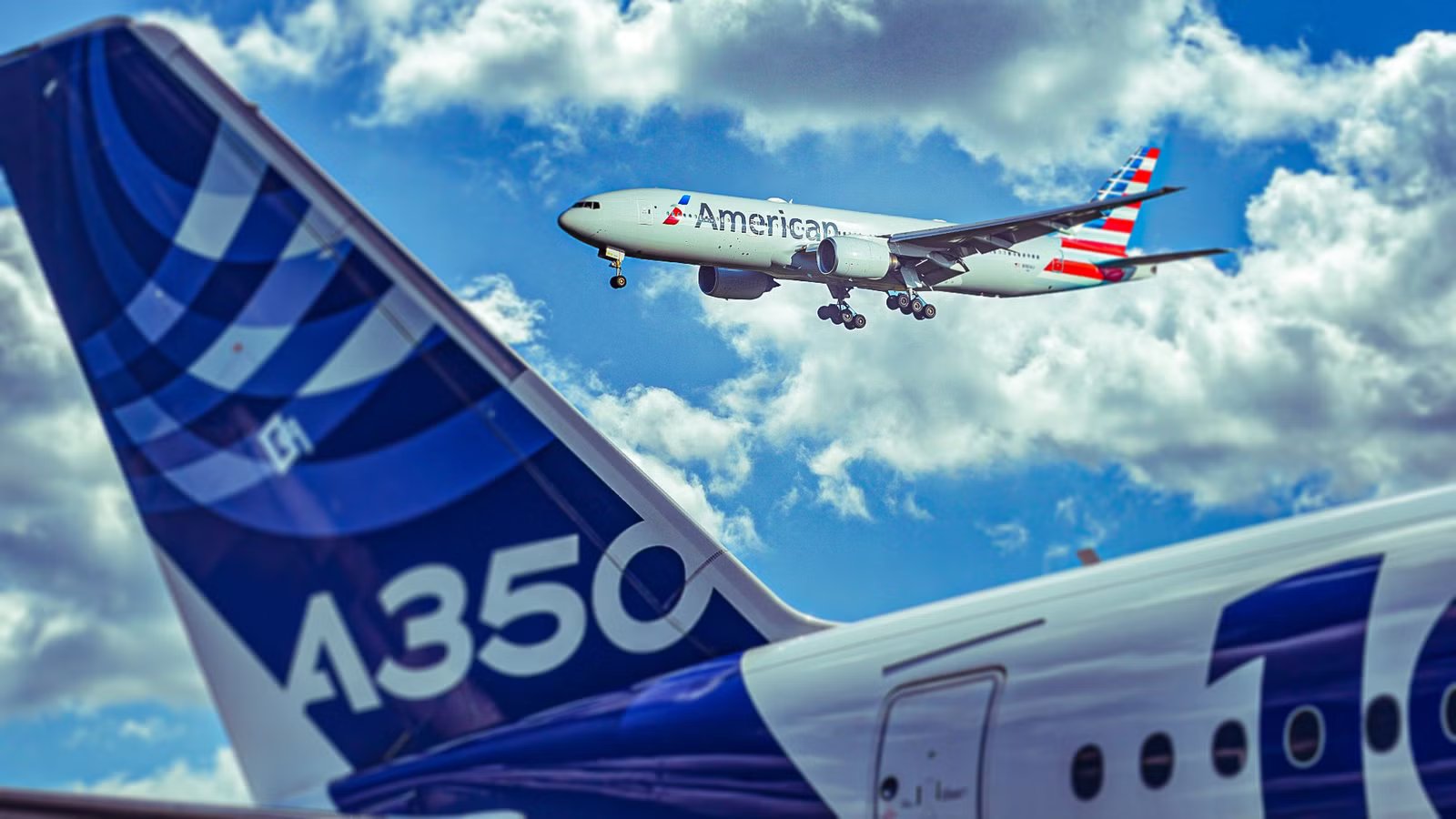
After  American Airlines emerged from bankruptcy and completed its merger with US Airways, the carrier faced a series of major decisions that would shape its long-haul future for decades. One issue involved an inherited order for the Airbus A350, a modern widebody already proving itself at airlines around the world. Rather than embrace it, American chose to walk away. At the time, the decision stood out because the A350 appeared to offer exactly what many airlines were seeking.
It promised long-range capability, strong fuel efficiency, and a competitive premium product. For American, however, the aircraft conflicted with a broader push toward an all-Boeing long-haul fleet. American’s leadership believed consistency would outweigh the benefits of diversification, even if it meant forgoing a favorable widebody opportunity. The A350 decision would later become a debated topic, as the aircraft went on to succeed elsewhere while remaining absent from American’s fleet.
About US Airways

US Airways traces its roots back to 1939, when it began operations as a mail carrier. Passenger service followed in 1953, and the airline later rebranded as US Air in 1979 as it expanded its network. After major mergers with Piedmont Airlines and PSA Airlines, the carrier adopted the US Airways name in 1997. These moves transformed it into one of the largest airlines in the United States. The airline’s fleet reflected a strong preference for Airbus narrowbodies. US Airways operated a large number of A320 family aircraft, which became the backbone of its domestic network.
That core was supplemented by a smaller widebody fleet of A330s, along with Boeing 737s, 757s, 767s, and E190s. US Airways built its network around a series of strategically located hubs across the United States. The airline’s first major hub was in Pittsburgh, which served as a cornerstone of its early expansion. Over time, additional hubs were established in Charlotte, Las Vegas, Philadelphia, Phoenix Sky Harbor, and Washington Reagan. These hubs allowed US Airways to balance short-haul domestic flying with longer international services while maintaining a strong presence on the East Coast and in key Sun Belt markets.
US Airways once maintained an extensive domestic and international route network. The airline served as many as 193 destinations across 24 countries, spanning Europe, the Middle East, and North and South America. Between 2004 and 2014, it was a member of Star Alliance, before transitioning to the oneworld alliance in 2014 to better align with American Airlines. This shift set the stage for its eventual integration into the American Airlines Group.
The American Airlines And US Airways Merger

The merger between American Airlines and US Airways was finalized in 2013, creating the world’s largest airline at the time. As part of the integration, the decision was made to retain the American Airlines name, branding, and iconic logo. The US Airways brand was gradually phased out, officially disappearing in 2015.
The deal was driven largely by financial necessity on both sides. American Airlines had filed for bankruptcy protection in 2011, while US Airways was still recovering from multiple restructurings earlier in the decade. Neither carrier was in a strong standalone position by the early 2010s. The merger offered scale, network complementarity, and a path toward long-term stability.
Despite its strategic logic, the merger faced significant resistance. The two airlines encountered legal challenges, including lawsuits that sought to block the transaction on antitrust grounds. Regulators raised concerns about reduced competition in several key markets. Ultimately, concessions were made, allowing the merger to proceed and reshaping the US airline industry for the next decade. In 2013, then Chairman, President, and CEO of American Airlines, Tom Horton, said the following.
“Today, we are proud to launch the new American Airlines – a premier global carrier well equipped to compete and win against the best in the world,” said Tom Horton, Chairman, President, and Chief Executive Officer of American Airlines. Together, we will be even better positioned to deliver for all of our stakeholders, including our customers, people, investors, partners, and the many communities we serve.”

American Airlines Suffers Chicago Ground Stop After Snow Melter Reportedly Catches Fire
A sudden halt at one of America’s busiest airports.
US Airways’ A350 Order And History

The original commitment for the Airbus A350 came from US Airways in 2005, shortly after its merger with America West Airlines. At the time, the decision aligned well with a fleet already weighted toward Airbus aircraft, including the A320 family and A330. The deal was also tied to a $250 million loan from Airbus that supported the airline’s restructuring. The order reflected both fleet logic and financial considerations.
US Airways was initially positioned to become the launch customer for the A350, with entry into service targeted for 2011. That plan unraveled when Airbus elected to fundamentally redesign the aircraft. The original A350 concept was no longer seen as competitive with the emerging Boeing 787.
When Airbus reintroduced the program in 2007 as the A350 XWB, US Airways revised and expanded its commitment. The airline increased its order to 22 aircraft, split largely between the smaller A350-800 and a smaller number of A350-900s. Over time, the A350-800 variant was canceled as Airbus streamlined the family around larger models. US Airways President and CEO Doug Parker said back in 2006,
“We have an order for the A350 and that’s where our head is at this time. We aren’t going to speculate beyond what might happen with the A350 because it’s simply still in progress. Airbus is a terrific partner and they are taking the necessary time to consider their options. We’ll wait to hear from them.”
Why American Airlines Declined The A350

Following the merger, US Airways deferred delivery of its Airbus A350 order until 2017, by which point the aircraft would be arriving under American Airlines management. This delay gave American time to reassess the inherited widebody order as part of a broader post-merger fleet strategy. By then, the airline was already reshaping its long-haul plans around a different set of priorities.
American ultimately concluded that the A350 no longer fit its fleet philosophy. The airline already operated a heavily Boeing-weighted long-haul fleet. American opted to avoid further investment in long-range Airbus widebodies and later retired its remaining Airbus A330 fleet during the COVID-19 pandemic, a move that also drew criticism. The result was a simplified long-haul operation centered entirely on Boeing aircraft.
That decision, however, was controversial. Because the A350 deal had been structured years earlier, the aircraft would have been acquired at a relatively low price compared with contemporary market values. Some industry observers argued that walking away from such favorable economics was difficult to justify, even if fleet commonality suffered.
The controversy was further fueled by public remarks from Vasu Raja, a senior executive at the airline at the time. He compared the A350 to a lawnmower, implying that American Airlines operated in a high-rise penthouse and therefore had no use for it. The comment was criticized and not well-received by Airbus. Raja said the following,
“You know what, let me explain it to you this way. You are selling a great lawn mower. Actually, you’re giving it away for free. Here is the problem. I live in a high-rise penthouse.”

This Might Be American Airlines’ Greatest Asset From Merging With US Airways
The airline gained quite a lot from this merger.
Other Controversial Decisions Under Vasu Raja

Vasu Raja faced mounting criticism for several strategic decisions during his tenure at American Airlines. While he was a central figure in shaping the airline’s commercial strategy, some initiatives drew negative attention from corporate customers and the broader industry.
One of the most significant missteps involved American’s handling of business travel. Many corporate travelers book flights through travel agencies, which earn commissions for managing complex itineraries and company policies. American attempted to restrict agency access to its fares in an effort to push customers toward direct bookings. Instead of shifting behavior, the strategy drove many corporate travelers to competing airlines that remained easier to book.
Raja departed American Airlines in June 2024. He had served as Chief Commercial Officer since April 2022, following earlier roles as Chief Revenue Officer and Senior Vice President of Network Strategy, where he oversaw network planning and alliances. Raja joined American in 2004 and spent two decades in a variety of commercial and sales-focused positions.
What Is Our Overall Takeaway?

American Airlines’ decision to walk away from the Airbus A350 reflects a broader philosophy centered on fleet simplicity and long-term operational consistency. From a pure strategy standpoint, aligning around a single widebody manufacturer reduced complexity in training, maintenance, and scheduling.
However, that clarity came at the cost of passing on an aircraft that many viewed as economically attractive and well-suited for long-haul growth. In doing so, American accepted a narrower set of future options in exchange for tighter control over its existing network and fleet structure. Although the A350 has proven itself as one of the most popular and capable widebody jets in service today, American opted against the Airbus plane for various reasons.