dailynewsnblog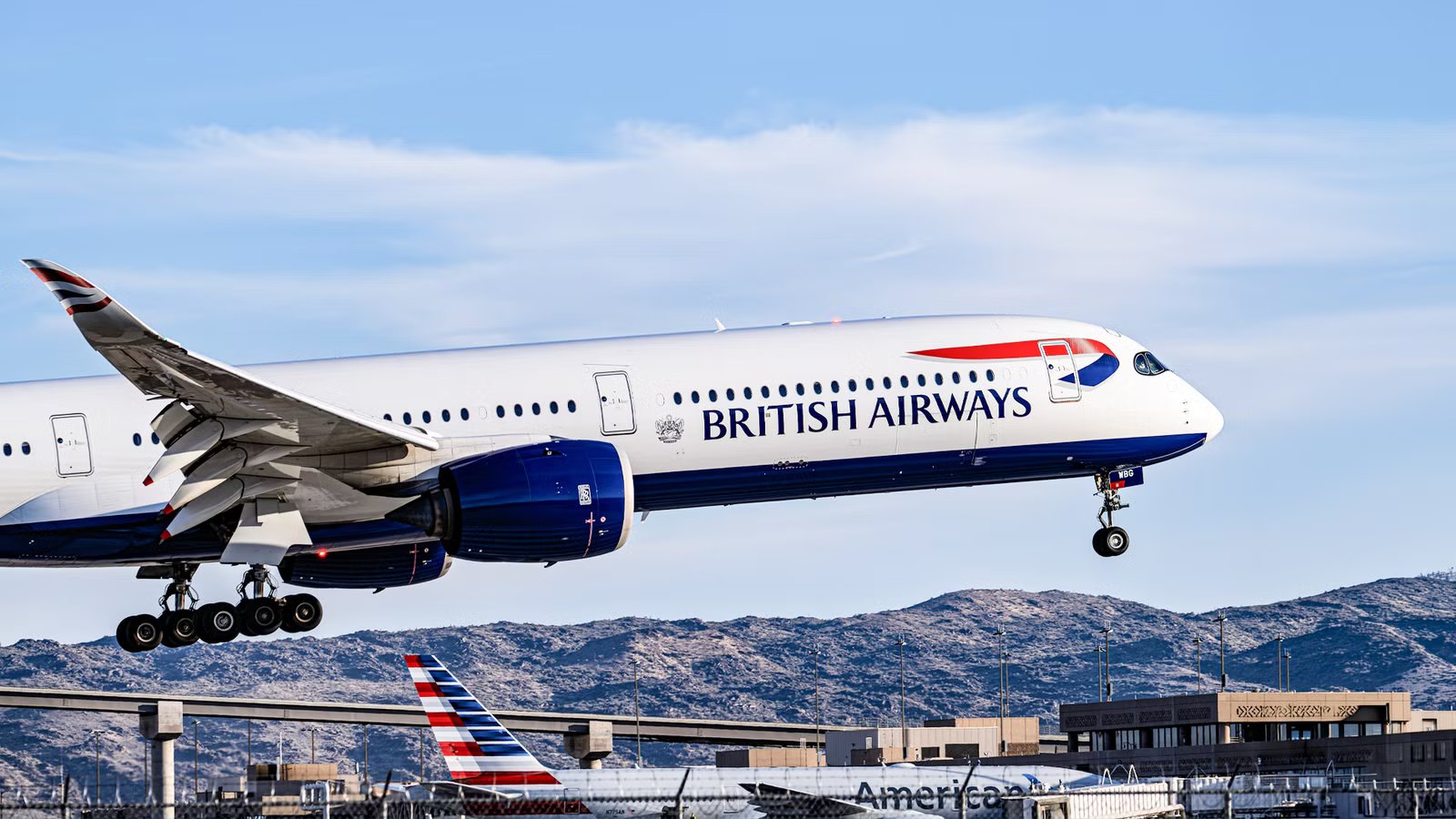
The Airbus A350-1000 uses six wheels on each main landing gear, adding up to a total of 12 main wheels. In contrast, its younger sibling, the Airbus A350-900, has just four wheels on each main gear, for a total of eight. That difference exists primarily due to the A350-1000’s greater maximum takeoff weight that exceeds 700,000 pounds (320,000 kg). The extra wheels allow Airbus’s largest twinjet to distribute weight across more tires, reduce runway pressure, and increase braking capacity during landing.
Drawing on Airbus technical specifications and landing-gear design, this article explores why Airbus redesigned the landing gear for its largest A350 variant. With the A350-1000 becoming a more common sight at airports across the world, especially in US markets like New York, Los Angeles, and growing in cities like Chicago, even a small element like extra wheels can make a huge operational difference.
How Does Aircraft Landing Gear Distribute Weight?

Landing gear performs several crucial roles on any aircraft, no matter if it’s a widebody commercial airliner or a four-seater general aviation aircraft. The wheel complexes support the aircraft while on the ground, absorb the high forces associated with impact upon landing, and enable safe taxiing, braking, and takeoff. For larger commercial jets, the landing gear must be able to withstand the enormous forces exerted during these phases of flight.
From a basic physics standpoint, when an aircraft lands, its landing gear absorbs both the vertical component of the aircraft’s weight and the force due to the airplane’s descent speed, or its downward acceleration. To absorb these strong forces, the suspension system within the landing gear helps dissipate the energy to prevent structural damage to the airframe. These systems typically consist of shock-absorbing struts filled with hydraulic fluid and compressed nitrogen gas, aiding in energy absorption.
Further, a key aspect of landing gear design is weight distribution. Each tire can safely support only a limited amount of load. Because of this, utilizing more tires allows aircraft to spread weight across more wheels, reducing the load carried by each tire. This principle becomes even more important for large widebody aircraft that can weigh hundreds of tons when fully loaded, and even small differences between variants within aircraft families can cause necessary changes to landing gear assemblies.
Runway and pavement infrastructure also play an important role in this design decision. Airports around the world use a measurement called the runway pavement classification number (PCN), which basically reflects the amount of force the runways or taxiways can withstand. Aircraft must remain within these limits to avoid damaging runway surfaces. Thus, by distributing weight across a larger number of wheels, aircraft designers reduce the pressure exerted by each tire, which allows aircraft to operate safely with the possibility of not requiring reinforced runways.
Spreading The A350-1000’s Weight Across More Wheels

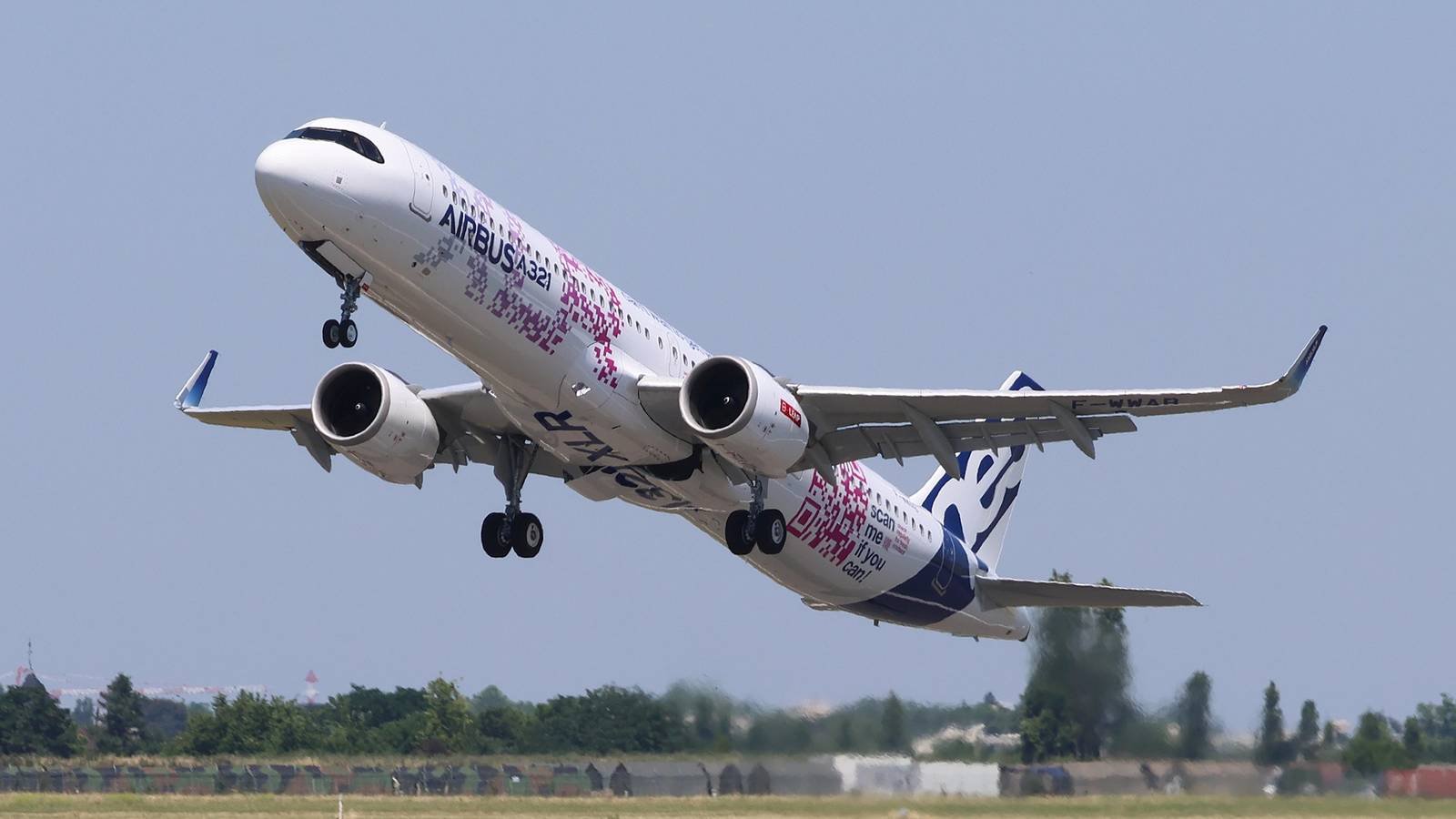
Compared with the Airbus A350-900, the smaller and more popular version of the Airbus A350 family, one of the more obvious differences between aircraft types lies in their landing gear configurations. While the A350-900 utilizes a four-wheel bogie, or landing gear assembly, the A350-1000 uses six wheels per bogie. These additional wheels significantly improve the A350-1000’s ability to distribute its weight across the runway surface.
The A350-1000’s maximum takeoff weight, or MTOW, exceeds 700,000 pounds (320,000 kg), making it one of the heaviest twin-engine aircraft in the skies today. To safely support this weight, the A350-1000 required more tires so that its landing gear system could be capable of handling those high loads, especially during initial taxi and takeoff. By increasing the number of wheels on each bogie compared to the A350-900, the four additional wheels across both main landing gear complexes significantly reduced the amount of weight carried by each individual tire by 33%. This prevents tires from exceeding their load limits and helps extend their operational lifespan.
Additionally, another key benefit of the A350-1000’s additional wheels is reduced pavement pressure. Since taxiways and runways around airports are rated for a specific amount of pressure, it is important that aircraft manufacturers, like Airbus, ensure their planes do not exceed common PCNs. With twelve wheels distributing the aircraft’s weight instead of eight, the A350-1000 places less pressure on each individual contact point with the runway, allowing the aircraft to operate from a wider range of airports without requiring infrastructure upgrades. This flexibility is extremely important to airlines as well, as it enables them to deploy the largest A350 to airports around the world without major operational limitations.

Why The Airbus A380’s Main Landing Gear Needs 20 Tires
From mass to mechanics: why the A380 needs more wheels than a semi-truck.

Beyond weight distribution, the additional wheels of the A350-1000 provide several other performance and safety benefits. In terms of performance benefits, one of the most important advantages of additional wheels is the benefit to braking performance during landing. Each wheel on a modern commercial aircraft contains a carbon-disc braking system that is capable of generating enormous stopping forces. When an aircraft lands, these brakes must bring 700,000 pounds moving at over 120 miles per hour to a stop. The heavier the aircraft, the more energy the braking system must absorb.
With twelve wheels instead of eight, the A350-1000 effectively has more brakes available to share the workload. These additional brakes increase total braking capacity and allow the aircraft to dissipate heat more effectively during heavy braking action after landing. This improved braking performance is particularly important for long-haul aircraft like the A350-1000, capable of flying up to 9,100 nautical miles (16,850 km). During an aborted takeoff for a fully-loaded A350 at high speeds, this increased maximum braking performance is critical for safety.
The additional wheels also improve redundancy. If a tire fails or becomes damaged, the remaining wheels can still safely support the aircraft. In fact, commercial aircraft are certified to tolerate certain numbers of tire failures without catastrophic consequences. With six wheels on each bogie, the A350-1000 can redistribute loads more effectively than an aircraft with fewer wheels, should an emergency situation arise.
Why Does The A350-900 Only Need Four Wheels?

While Airbus engineers determined that the A350-1000 would require a six-wheel landing gear configuration to withstand the additional force generated by the larger aircraft, the smaller A350-900 is capable of safe and effective operations with just four tires per bogie. Although the two aircraft variants share many similarities, the A350-900 is significantly lighter. Its lower MTOW of around 620,000 pounds (283,000 kg) means the loads experienced by the landing gear are also lower. As a result, the four-wheel bogie configuration on the A350-900 provides sufficient strength and load distribution.
Adding additional wheels to the A350-900 would also increase the weight and complexity of the landing gear assembly, and the overall aircraft, without providing meaningful benefits. Given that heavier planes require more fuel to fly the same distance, and that additional complexity usually comes with higher maintenance costs, additional tires on the A350-900 simply were not necessary. By retaining the four-wheel design for the A350-900, Airbus ensured that the aircraft remained as lightweight and efficient as possible while still meeting all safety and operational requirements.
How Does The A350-1000’s Landing Gear Compare To Other Widebodies?

While the A350-1000 differs from the A350-900 in terms of wheel count, the aircraft’s six-wheel landing gear configuration places it in the same category as several other large widebody aircraft. For example, the Boeing 777, the closest competitor to the A350-1000 in terms of size and mission profile, also uses six wheels on each main landing gear assembly, adding up to a total of twelve main landing gear wheels. This similarity is not coincidental, as both aircraft are designed to operate at similar maximum takeoff weights and carry comparable passenger loads on long-haul flights. As a result, they require landing gear systems capable of supporting similar structural loads.
However, aircraft manufacturers sometimes use different design strategies to achieve the same goals. While in the case of the A350-900 vs A350-1000, Airbus could simply add additional wheels to the existing wheel assemblies of the -900, some aircraft are so large and heavy that they require more bogies altogether. The world’s largest passenger jet, the Airbus A380, for instance, is so large that it has two six-wheel gear assemblies as well as two four-wheel complexes all serving as its main landing gear. This allows the A380 to effectively distribute its weight of about 1.25 million pounds (560,000 kg) and provides additional stability as well. The Airbus A340 is similar in this way as well. Rather than adding additional tires to the main gear assemblies, Airbus instead opted to install three four-wheel bogies to serve the same purpose.
On the Boeing side of things, the Boeing 787is akin to the A350-900, at least in terms of its landing gear. With a lower MTOW, the 787 only needs four wheels on each of its gear assemblies, rather than the six on the A350-1000. Ultimately, both Airbus and Boeing follow the same engineering principles when designing landing gear systems. The number of wheels used on each aircraft is determined by its weight, performance requirements, and, importantly, to maintain compatibility with airport infrastructure worldwide.