dailynewsnblog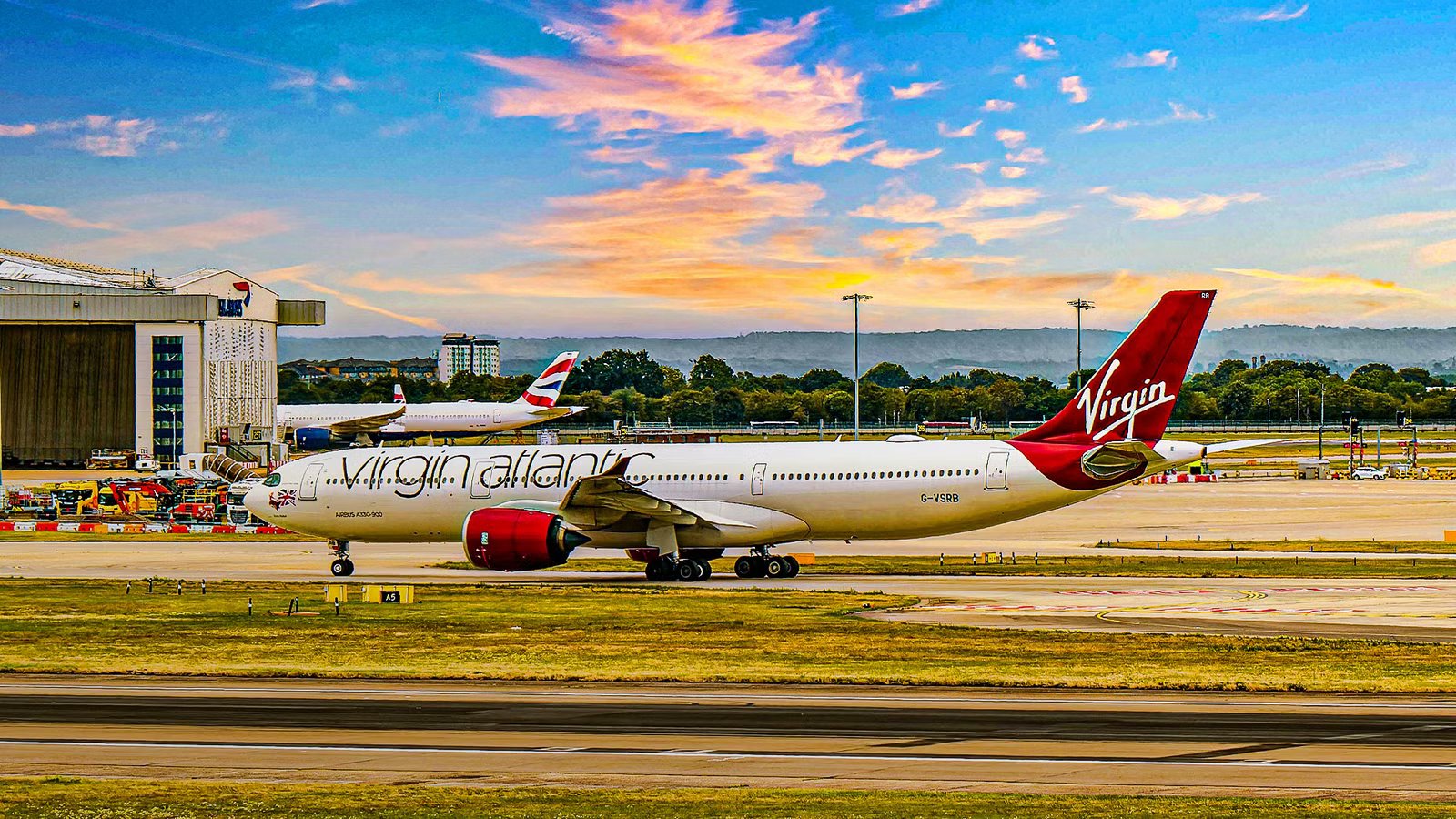
The Airbus A330neo is built with blended Sharklets, as that is the design Airbus found best suited to the aircraft and its requirements. The wingtip device has the advantage of being the newest wingtip designed by Airbus, having drawn from its A350 blended wingtip and the Sharklets designed for the Airbus A320neo. These wingtip devices reduce induced drag from vortices generated at the wingtips and improve aerodynamic performance by around 4%.
The wings are the second most important major upgrade to the A330neo’s increased efficiency, after the new engines. When Airbus launched the A330neo program, it optimistically assessed that there was demand for up to 1,000 A330neo aircraft. Eight years after its launch, it is almost halfway there, although it’s unclear if it will ever attract that many sales. Here is what to know about the A330neo’s wings and choice of wingtips.
Why Airbus Built The A330neo

In order to compete with the clean-sheet Boeing 787-8 Dreamliner, Airbus had planned to develop a shorter variant of the A350 that was called the A350-800. This was ordered by some airlines, like Hawaiian Airlines, to replace some of their legacy A330s. However, Airbus then chose to abandon the A350-800 and update its A330 instead. The A330 was part of a greater family of jets that included the quad-engined A340, which was developed with ETOPS certification and was still a cause for concern.
The A330 and A340 shared a common basic wing design. But the wing was always suboptimal for both aircraft because one version of the wing had to support two engines and the other only one, resulting in design compromises. Airbus decided to develop two A330neo variants, the A330-800 and the A330-900, to replace both its A330-200 and A330-300 aircraft. In practice, the A330-800 has been a disaster, attracting a veritable handful of non-canceled orders.
One of the A330-800’s customers was Hawaiian Airlines, but after seeing how almost no other airlines were ordering the A330-800, Hawaiian got nervous and saw it as a risky aircraft. Hawaiian then canceled the order and ordered the 787-9 instead. Meanwhile, the A330-900 has been a success, attracting around 461 firm orders to date. The A330-900 variant is so dominant that “A330neo” is almost shorthand for the -900 variant.
How Airbus Upgraded The A330

Shutterstock | Simple Flying
As with all upgrades, the A330neo represents a set of compromises compared with Airbus creating a clean-sheet aircraft design. The upgrade targeted the low-hanging fruit and was also comparatively affordable and quick to carry out. The A330neo offers a 14% reduction in fuel burn per seat, while retaining a mostly aluminum alloy fuselage. This contrasts with the cleansheet A350, which comes with a 25% advertized reduction in fuel burn compared with the aircraft it replaces. The A350 also boasts “an airframe made of over 70% of advanced materials.“
The Trent 7000 contributes most of the A330neo’s efficiency gains, delivering a 10% specific fuel consumption improvement relative to older engines, with a 10:1 bypass ratio. Airbus speaks of the “seven wonders of the A330neo,” although the two most important factors for increased fuel efficiency are the new wings and the new engines. Of these, the most important factor is the new Trent 7000 engines.
Three key factors that drive fuel efficiency are more efficient engines, lighter weight, and better aerodynamic performance. The seven wonders that Airbus lists are the new Trent 7000 engines, new wings, updated avionics and flight deck, an enhanced cabin, extended range, better maintenance efficiency, and lower noise and emissions. The increased range and lower emissions are partly thanks to the aircraft being more fuel-efficient.

Why Did Boeing Build The 777 Without Winglets?
We unravel the secrets of the 777’s wingtips.
How Airbus Updated The A330neo Wing

The older Airbus A330 wing needed replacing. Not only was it designed in common with the A340, but it also had limitations in aspect ratio, flexibility, and drag reduction that couldn’t fully exploit the new Trent 7000 engines. The new engines introduced advanced materials, minimized induced drag, and improved lift generation across all flight phases. The wing also came with the world’s greatest aspect ratio for a modern airliner.
The wings are also longer, giving the A330neo a wingspan of 210 feet (64 meters). Overall, these wings are thinner and longer. Airbus says, “The A330neo wing has an aspect ratio of 11, the highest of any airliner in production today, lowering induced drag and generating more lift at all speeds and flight phases. Overall, the new design results in substantially improved wing loading and the best possible lift-to-drag-ratio.”
|
A330neo (per Airbus) |
A330-800 |
A330-900 |
|---|---|---|
|
Range |
8,100 nautical miles |
7,350 nautical miles |
|
Max seating |
406 |
465 |
|
Max take-off weight |
251 |
253 |
|
Firm orders |
12 (some likely canceled) |
461 |
The new wing enabled the A330neo to become more aerodynamically efficient by approximately 4%. This is a modest but significant improvement, with the wings being a major source of efficiency gain after the engines. Airbus refined the development of the wings using advanced 3D Computational Fluid Dynamics (CFD) simulation technology that wasn’t available when the original A330ceo wings were developed.
Why Airbus Chose Sharklet Wingtip Devices

The wingtip device Airbus selected for the A330neo is the Sharklet, which is a large, curved blended winglet design that integrates smoothly with the wing. The older A330s used wingtip fences, but Airbus chose the Sharklet because it found it was more effective at reducing the spiral-shaped vortices that form at wing ends during flight. Airbus also assessed that the Sharklet was better suited than the A350’s blended wingtips.
All wingtip devices function to reduce drag and thereby increase aerodynamic efficiency by countering the vortices that form at the wingtips during flight. Another benefit of the Sharklet’s curved profile is that it improves noise reduction during takeoff. The Sharklet has been designed based on the evolution of the wingtip devices found on the A350 and A320neo. They are similar to, but still different from, the wingtip devices found on the A350.
Blended Sharklets allowed the A330neo to increase its wingspan to 210 feet and not exceed Code E airport gate limits. One way to improve aerodynamic efficiency is to increase the wingspan. However, the aircraft runs into Code E restrictions. The A350’s wings are designed to be the best they can be within those restrictions, but it does involve a compromise. Boeing is introducing folding wingtips in an effort to get around the Code E regulations and improve aerodynamic performance.

Why Did Airbus Build Newer A320 Family Planes With Winglets?
Airbus built A320neo family jets and retrofitted A320ceos with Sharklets after the technology was developed and the benefits outweighed the costs.
Market Segment The A330neo Was Built For

The Airbus A330neo is designed to replace the older A330ceos and bridge the gap between Airbus’ A321neo narrowbody and the A350-900 widebody. The A321XLR is now filling the mid-sized airplane market and comes with a range of up to 4,700 nautical miles. The A330-900 has a range of around 7,350 nautical miles, while the A350-900 has a range of up to 8,500 nautical miles. The A330-900’s range is enough to rival the 787-8 and the 787-9 to some degree, while being significantly longer range than the 787-10.
The A330-800 has a typical capacity of 220-260 passengers and a longer range of 8,100 nautical miles. It was intended to target long-haul thin routes and was to offer a replacement for airlines operating Boeing 767-300ERs while competing with the 787-8 head-to-head. As stated, this aircraft failed. Most airlines had already selected the 787-8 or chose the higher capacity A330-900 over the A330-800’s range. The A330-900 has a typical seating capacity of 260-300 or more passengers (up to 440).
The A330-900 targets higher volume transatlantic and transpacific routes. It also targets dense regional long-haul markets and hub-to-spoke feeders in some cases. The aircraft is positioned as a replacement for the A330-300, A340-300, and even the Boeing 777-200ER, and it competes with the 787-9. While the more popular 787-9 is its primary direct rival, it also competes with the 787-10 when higher-capacity is a driving need. Indirectly, it may also compete with the A350-900 on some routes.
A Successful Upgrade

The improvements to the A330neo were enough to allow the aircraft to represent a modest generational upgrade over older aircraft, without the massive costs of designing a cleansheet aircraft. Upgraded aircraft are also cheaper for airlines, especially airlines seeking to upgrade their older aircraft. It means they can fairly easily transition to the new aircraft without having to bear large costs associated with setting up substantially new maintenance and pilot training regimes.
Another benefit is having a lower cost of manufacturing the aircraft. As the manufacturer doesn’t need to recover such a high R&D expense, the cost of purchasing them can be lowered. These aircraft may not be as efficient as modern cleansheet aircraft, but they are also cheaper. For reference, Airbus estimated it cost around $2 billion to upgrade the A330, while it spent around $12–15 billion in developing the A350. $2 billion is relatively cheap for a re-engine upgrade. Boeing has reportedly sunk around $10 billion to as much as $15 billion into its delayed and over-budget 777X upgrade. Boeing will have to sell many 777Xs to break even on that program.
With the number of firm orders for the A330neo approaching 500, the aircraft has been a success. It was never expected to attract the large number of orders that a cleansheet aircraft, like the 787 and A350, is expected to. This is part of the reason why the A330neo is exclusively powered by the Trent 7000. The market size for the aircraft was not considered large enough by Rolls-Royce or GE Aerospace to develop an expensive bespoke engine variant without being given exclusivity.