dailynewsnblog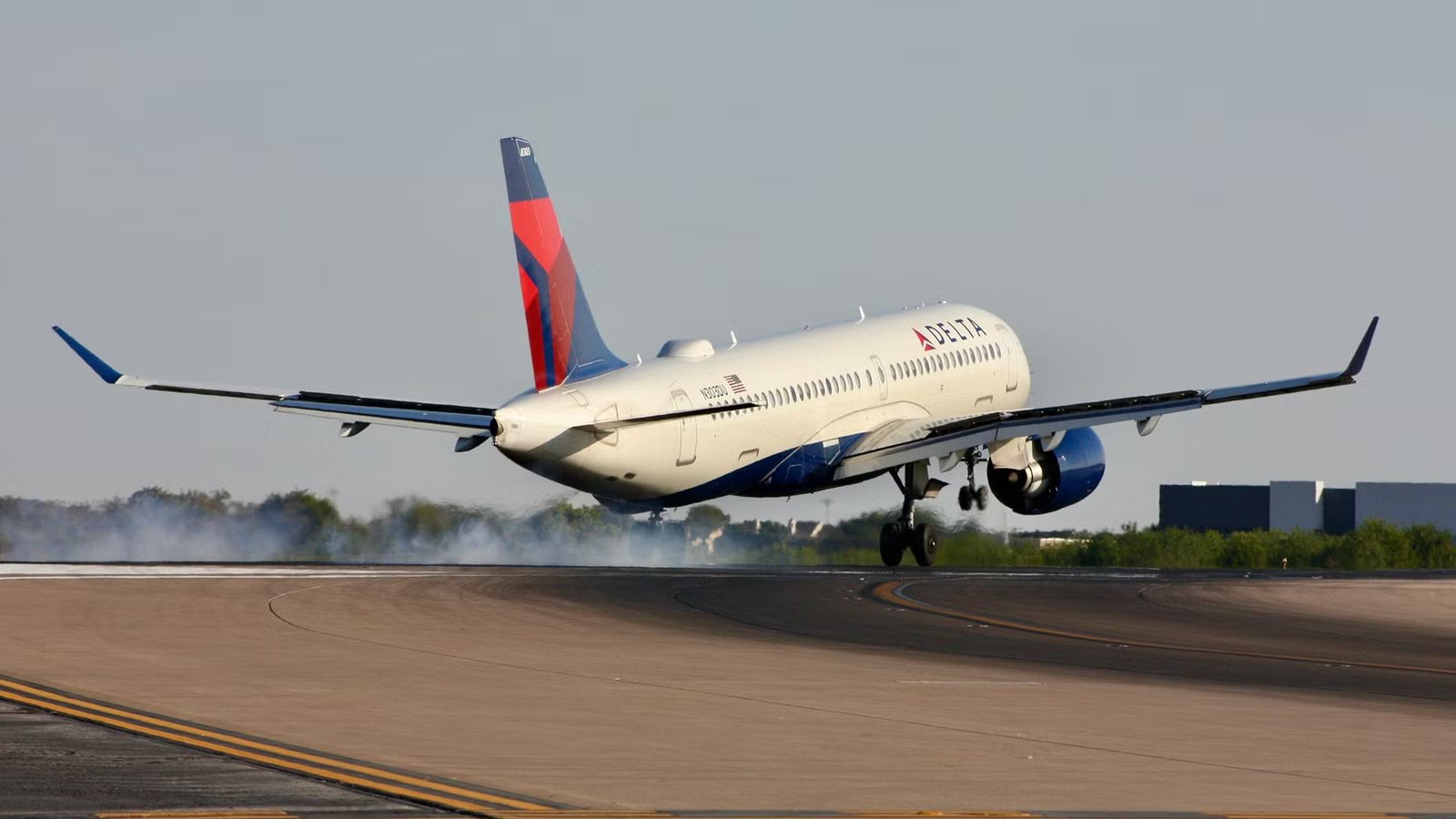
Only 156 Boeing 717s were wheeled off the production lines during what was the shortest production run of any Boeing airliner still flying today. The vast majority of carriers have stopped flying them, with Delta Air Lines and Hawaiian Airlines holding the unusual distinction of being the only major carriers still using the type. Most competitors have moved to modern alternatives, and these jets are approaching retirement even for Delta.
It remains unclear when the Boeing 717 will be retired, but, when it does, Delta may choose the Airbus A220as a suitable replacement. Let’s explore Delta’s history with the 717, including why the jet became so important to it, and the role the A220 may have in its fleet in the second half of the 2020s.
The Boeing 717 In A Nutshell

The story of the 717 starts in the 1960s when the McDonnell Douglas DC-9 revolutionized short-haul aviation with its iconic rear-mounted jets and T-tail. The aircraft developed into the MD-80, -90 and -95, all based around the same design. The name, but not the philosophy, changed in 1997 when Boeing acquired McDonnell Douglas and the MD-95, an aircraft design that they had no part in designing and was actively competing with its own aircraft.
Boeing renamed it as the 717, but the manufacturer had neither the ability nor the desire to commit to the aircraft, as most of its attention was on creating the 737 Next Generation variants. The production run ended in 2006, bringing one of the longest-running families of jetliners to a conclusion. The table below details some of the key specifications for the Boeing 717.
|
Capacity |
106 (two classes) to 117 (one class) |
|---|---|
|
Wingspan |
Wingspan: 93 ft 4 in (28.45 m) |
|
Maximum takeoff weight |
110,000 lb (49,895 kg) |
|
Powerplant |
2 × Rolls-Royce BR715-A1-30 turbofan engine, 18,920 lbf (84.2 kN) thrust each |
|
Cruising speed |
504 mph (811 km/h) |
|
Range |
1,644 miles (2,645 km, 1,430 nautical miles) |
|
Service ceiling |
37,000 ft (11,000 m) |
|
Fuel capacity |
3,673 US gal (13,900 L) |
The main reason the Boeing 717 never gained significance was that when it entered the market, the industry already had updated jets, including the Bombardier CRJ-900 and Embraer ERJ 145. Carriers like American Airlines and United chose aircraft such as Embraer E-jets and Bombardier CRJs for their flexibility on short routes, which the 717 was too large for. Meanwhile, carriers hoping to increase capacity on short routes while maintaining flexibility used the 737 NG and A320, jets that the 717 couldn’t match in size.

It’s 2025, But Why Do Some Airlines Still Love The Boeing 717?
Unveiling the mystery behind the Boeing 717’s enduring appeal among airlines.
Delta Air Lines & The Boeing 717

While almost every other airline in the world has moved away from it, Delta now bases much of its short-haul network on the Boeing 717. This is because the 717 became available just as Delta had a capacity gap that was perfect for the airline. In 2012, Delta was struggling with an aging fleet of McDonnell Douglas DC-9s, MD-88s, and MD-90s. It wanted to replace them with similar-sized 100-seat jets, but there was little in the market that was appropriate. Regional jets were too small, while 737s and A320s were too large for hour-long flights.
The 717 was perfect for Delta’s short routes and had a 110-seat capacity. Such aircraft could be used for the range of Delta Air Lines’ high-frequency shuttles. These include Atlanta to Charlotte and Detroit to Pittsburgh. Notably, elsewhere in the US, Hawaiian Airlines uses its 717s to fly short hops in between the islands, such as the 20-minute flight from Honolulu to Maui.
An opportunity emerged for Delta Air Lines to acquire Boeing 717s for pennies on the dollar when Southwest bought AirTran. This merger included a fleet of 88 717s, sitting in opposition to Southwest’s philosophy of using only 737s. Delta negotiated long-term leases of these jets for excellent prices. Other 717s have been acquired from Trans World Airlines and Hawaiian Airlines.
Moreover, these jets had similar systems and overlapping parts with Delta’s retiring MD-90s and MD-88s, so they could consolidate maintenance for Delta Tech Ops programs and avoid the need to completely retrain pilots. The aircraft also became a favorite among many passengers, as the 2-3 configuration means that there is a lower chance of getting stuck in the middle seat. The engines’ position at the back also makes most of the cabin quieter.

The Aircraft Replacing The Boeing 717
As the Boeing 717 retires, modern planes like the Airbus A220 and Embraer E-Jets are stepping in to reshape the future of short-haul aviation
Delta’s 717 Fleet

According to ch-aviation, Delta has a fleet of 80 Boeing 717s, comprising 71 active jets, five that are in maintenance, and four that are in storage. The jets’ ages range from 19.92 to 27.06 years old, with an exceptionally high average age of 24.4 years.
With 80 aircraft set to stop flying for Delta, the airline faces an incoming capacity crisis that it will need to address by acquiring suitable modern aircraft to replace 717s. This is where the Airbus A220 could end up playing an important role at the Atlanta-based US ‘big three’ legacy carrier and  SkyTeam founding member in years to come.

How Many Boeing 717s Were Built?
Explore the unique heritage and challenging market that shaped the Boeing 717’s limited production run.
Delta Air Lines & The Airbus A220

The most likely aircraft to replace the Boeing 717 may be the Airbus A220. Delta already has a sizable fleet of these aircraft, which will make the acquisition of these jets easy to adapt to in terms of maintenance and training. Currently, Delta has 45 A220-100s and 37 of the larger A220-300 variant. This fleet makes Delta the largest A220 operator and the only US operator of both A220 series. It also has orders for 63 further A220-300s.
The jets arrived at the airline right before the pandemic, with Delta hoping to use them to wind down its regional jet service. They are necessary because of Delta’s limited list of regional partners: Endeavor Air, SkyWest Airlines, and Republic Airways operate CRJ and ERJ fleets for the airline under the Delta Connection brand.
The strengths of the A220’s excellent PW1500G engines and range also give it more versatility than these regional jets. These aircraft fly a wide variety of routes, with New York LaGuardia-Dallas Fort Worth being the most commonly served. Other common routes include Orange County to Salt Lake City, New York LaGuardia to Chicago O’Hare, and Seattle to San Francisco. All of these routes are domestic and generally high-frequency.

93 Routes: Where Delta Air Lines Flies The Boeing 717 Workhorse
More than seven in ten of November’s flights will be from Atlanta.
How Does The Airbus A220 Compare To The Boeing 717?

It should be noted that the A220 is not a perfect equivalent to the Boeing 717. For instance, it has a higher capacity, with Delta offering 12 business class and 118 economy seats aboard its A220-300s. Moreover, the aircraft has a greater range, allowing for longer routes. For example, Delta’s longest A220 route is the 2,306-mile (3700 km) trip from Washington DC to Seattle, a veritable odyssey compared to what the 717 is capable of. Another route serving over 2,000 miles (3,200 km) is from Atlanta to Santa Barbara.
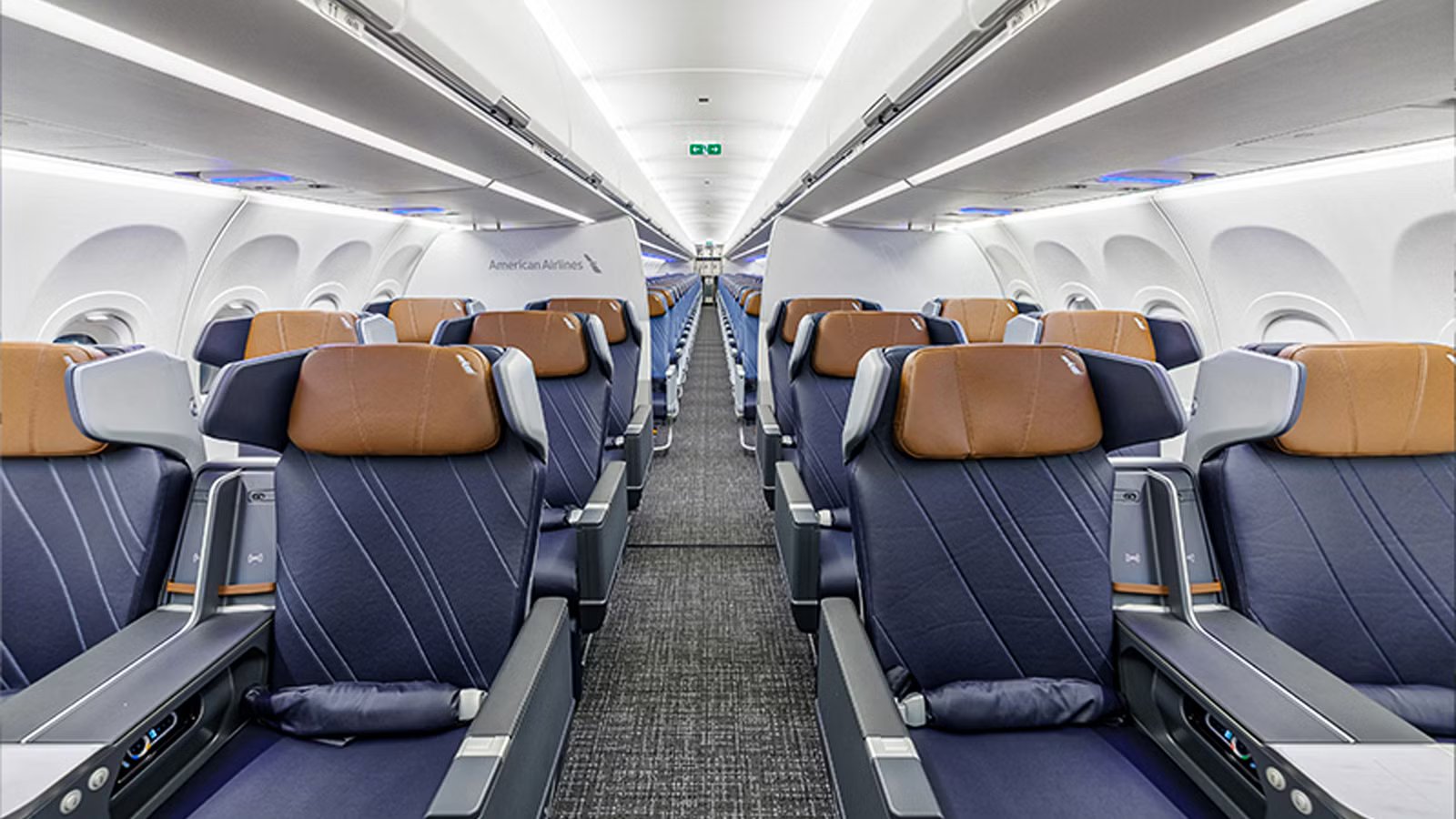
However, the A220 can match the excellent passenger experience aboard the Boeing 717. Although the engines are not rear-mounted, they are sufficiently modern to ensure a quiet cabin experience. The A220 also has the 2-3 layout used for the 717, reducing the likelihood of ending up in the dreaded middle seat. The left side of the aircraft has passengers only enjoying a view out of the window or the extra space and convenience of the aisle. The configuration also allows for a wider central aisle.
Another advantage of the A220 is the large overhead bins, as passengers can use these to store their carry-on luggage without having to battle with other passengers for space. On the A220-100, the Delta cabin includes 12 first-class seats, 15 Delta Comfort + seats, and 82 main cabin seats. These seats offer 37 inches (94 cm) of pitch in first-class, 34 inches (86 cm) in Delta Comfort, and 30-32 inches (76-81 cm) in Delta Main. These figures are roughly equal to the seat pitch available on a Delta 717.