dailynewsnblog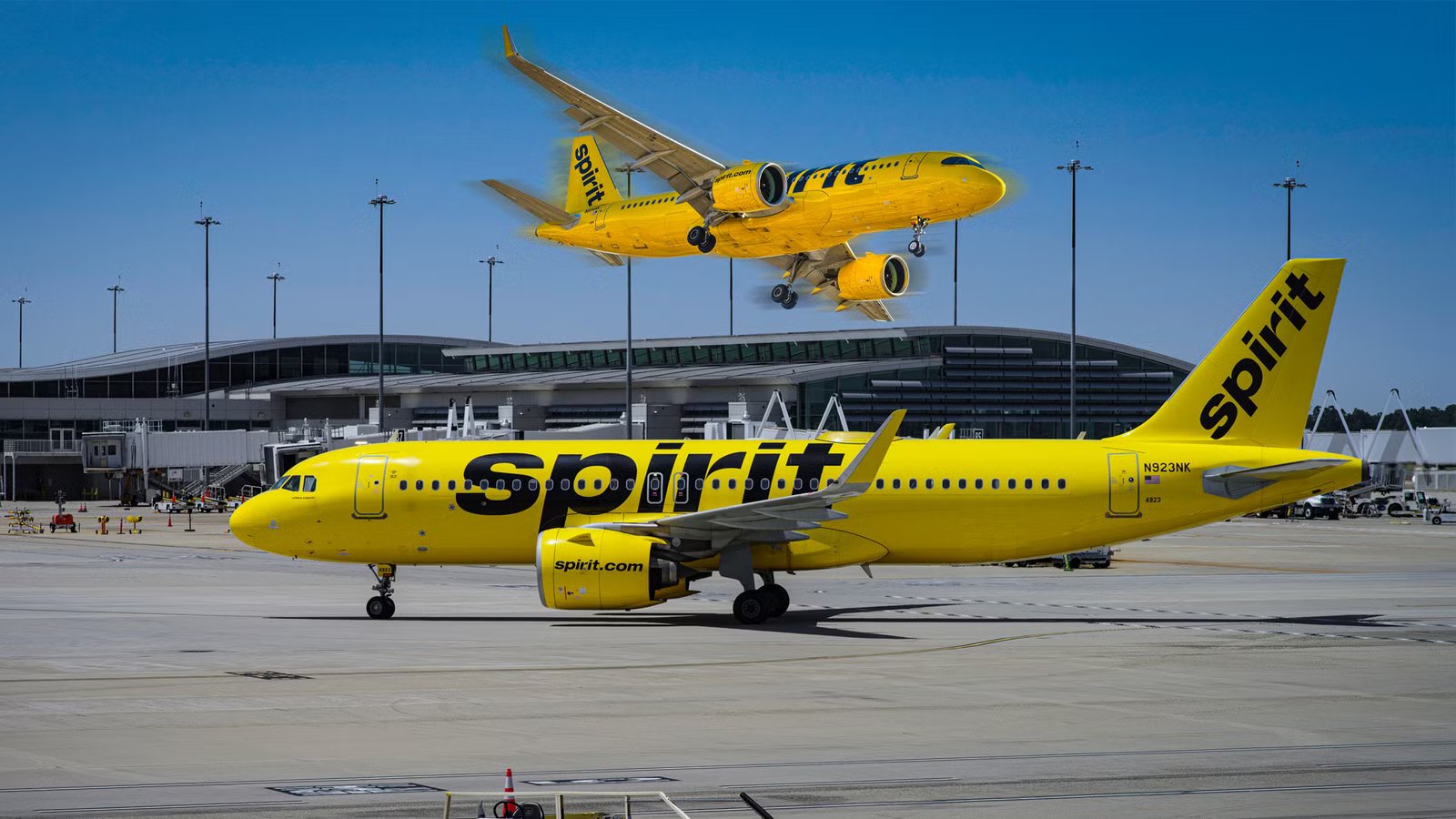
The Airbus A320 family is the most successful jet aircraft program of all time, and key to its success is the popularity of the newer A320neo family, which is made up of the A319neo, A320neo, and A321neo (including the A321LR and A321XLR subvariants). While the A319neo has found few customers, the A320neo has already received over 4,000 orders, while the A321neo and its subvariants have accumulated over 7,000 orders, making it the most ordered commercial variant of all time.
Not only does the A320neo family have limitless demand, but Airbus can’t build the planes fast enough to meet airlines’ needs. What you’d expect in this scenario is a large second-hand market, in which used A320neo family planes are in high demand and are priced accordingly. However, it’s been reported that some former Spirit Airlines A320neos, which have been returned to lessors, may be scrapped for parts. Some have already been scrapped, but why are these aircraft being dismantled?
The Situation With Spirit Airlines

The Airbus A320neo is an update to the long-successful A320 family. While some airliner refreshes are extensive (such as with the Boeing 737NG), the main change Airbus made to create the A320neo was take the latest A320 and replace the engines.
The A320neo is offered with either CFM LEAP-1A (succeeding the CFM56-5B) or the Pratt & Whitney PW1100G (succeeding the IAE V2500) turbofans. Airbus offered the new engines on the A319, A320, and A321, but not the A318. It also revised the exit layout of the A321 while later adding long-range variants.
Spirit Airlines is in serious financial trouble, having declared bankruptcy twice in 2025. As part of its restructuring plan, it’s returned several A320neos, as well as some A320-200s, back to their lessors. In addition, Spirit has also rejected incoming leased aircraft. Compared to the airline’s peak, it’s now shrunk its fleet by nearly half, and it’s predominantly returned newer A320neo and A321neo aircraft while keeping most of its older A320-200s and A321-200s, as these have lower capital costs.
The planes have been returned to Irish lessor AerCap, as part of a three-way agreement approved by the US Bankruptcy Court for the Southern District of New York. Ordinarily, these aircraft may be reassigned to another customer or possibly sold, but it’s being reported that they will instead be scrapped for parts. These planes are less than three years old, and they’re also state-of-the-art airliners that are in high demand, making their potential fate surprising.
Why Are These Planes Getting Scrapped?

Spirit’s returned A320neos and A321neos are powered by the Pratt & Whitney PW1100G turbofan, which is an innovative, exceptionally fuel-efficient engine that is most notable for featuring a gearbox. This allows for each major component of the engine to spin at its optimal speed, rather than all of them moving at the same speed. A geared turbofan is a novel technology that has been used on only a few engines in the past, but has gained popularity with the PW1100G.
The gearbox has proven its fuel efficiency benefits and has also proved to be reliable. Unfortunately, other components of the PW1100G have been far from reliable, and the family as a whole has been one of the most troubled engine programs in recent history, so defects are causing extensive inspections and subsequent repairs. This is expensive for airlines, but more importantly, in this case, the thousands of affected engines are overwhelming Pratt & Whitney’s maintenance network.
This means that there are more engines in need of repair than can be fixed, leading to grounded aircraft. While A320 family aircraft as a whole are in high demand, it’s the engines that are truly special on the A320neo. As such, the PW1100G turbofans are more valuable than the aircraft, since airlines with grounded A320neos can then purchase the engines and get their aircraft flying again. As such, the engines will be sold, and the airframes will be scrapped for parts.

Frontier Airlines Airbus A321neo Returns To Cleveland After Engine Compressor Stalls
A rough ride ended safely back on the tarmac.
The Issues With The PW1100G

The PW1000G is a successful engine family, and its success is part of why airlines are having difficulty keeping their aircraft airborne, since Pratt & Whitney can’t repair or produce engines fast enough. Not only does it power the A320neo (as the PW1100G model), but it’s also the exclusive engine on the lauded Airbus A220 (as the PW1500G) and on the Embraer E2 series (as the PW1900G). As such, issues with the engine have also impacted the E2 and especially the A220.
The PW1000G has been troubled with reliability issues for years. Initially, air seal leaks caused metal particles to enter the aircraft’s oil system, affecting aircraft operated in more challenging conditions, such as those flown by IndiGo. Later, issues with the knife seal edge caused in-flight shutdowns, requiring redesigns and repairs. Later, PW1000Gs on the A320neo experienced excessive engine vibrations, and several A320neo and A220 aircraft have experienced in-flight shutdowns.
|
Aircraft |
Engine |
|---|---|
|
Airbus A318/A319/A320/A321 |
CFM56-5B, IAE V2500 |
|
Airbus A319neo/A320neo/A321neo |
CFM LEAP-1A, Pratt & Whitney PW1100G |
In 2023, it was discovered that contaminated metal powder was used in the production of some engine components, causing premature cracking. Pratt & Whitney issued a recall affecting thousands of engines, which has led to the grounding of several A320neo family aircraft. This has severely impacted airlines, especially those reliant on the PW1100G-powered A320neo, but also Pratt & Whitney, as the company has had to spend billions on repairing these engines and compensating operators.
How The PW1000G Problems Affect Other Aircraft

Compared to the A320neo, the Embraer E2 family has had it relatively easy. Although some airlines have had to ground their aircraft due to the same issues, for the most part, the Embraer E2 has been a fairly reliable aircraft. This may be due to lower production volumes, but as a whole, Embraer E2 operators have not been as severely impacted by issues with the Pratt & Whitney PW1000G engine. The same is not true for the Airbus A220, which is exclusively powered by a PW1000G model.
The PW1500Gs on the A220 have experienced numerous in-flight shutdowns. A220s have experienced uncontained engine failures, and the aircraft have required operating limitations while Pratt & Whitney continues to work on fixes for the engine. In addition, an engine failure onboard a SWISS A220-300 caused smoke to enter the cabin and led to a diversion, tragically killing a flight attendant. In addition, the same corrosion issues affecting the A320neo are also impacting the A220 family.
Currently, nearly a fifth of the world’s Airbus A220 fleet is grounded due to issues with the PW1500G. This is expensive for airlines, which cannot make money with the planes and have to pay to keep them stored, while Pratt & Whitney cannot repair engines fast enough to meet airline demand. SWISS has parked all of its A220-100s to cannibalise their engines and install them on the more economical A220-300s. Airlines have cancelled A220 orders, and Egyptair removed its entire A220 fleet.

How The Airbus A321XLR’s Engines Still Pose A Problem To Performance
What could hold the A321XLR back from being a true replacement for the Boeing 757, and does it really matter?
Engine Issues In The Industry

The saving grace for the Airbus A320neo family is that it’s also offered with the CFM LEAP-1A, but for the A220 and Embraer E2, issues affecting the PW1000G engines severely impact the programs as a whole. A new trend has emerged in the aviation industry, in that manufacturers are increasingly shifting towards sole-sourcing their engines. Most new programs now have only one engine choice, and this is true even for reengined aircraft like the Airbus A330neo.
Of course, while this saves time and money, it leaves programs vulnerable to engine issues. However, the other aircraft that is notorious for engine reliability issues (the Boeing 787 with the Rolls-Royce Trent 1000) also offers a choice of engines (the General Electric GEnx). This means that Trent 1000 issues have less of an impact on the 787 program, since customers can also opt for the GEnx.
|
Aircraft In Production |
Engines |
|---|---|
|
Airbus A220 |
Pratt & Whitney PW1500G |
|
Airbus A320neo |
CFM LEAP-1A, Pratt & Whitney PW1100G |
|
Airbus A330neo |
Rolls-Royce Trent 7000 |
|
Airbus A350 XWB |
Rolls-Royce Trent XWB |
|
Boeing 737 MAX |
CFM LEAP-1B |
|
Boeing 777X |
General Electric GE9X |
|
Boeing 787 Dreamliner |
General Electric GEnx |
|
Embraer E175 |
General Electric CF34 |
|
Embraer E2 |
Pratt & Whitney PW1900G |
For the Boeing 787 program, Trent 1000 issues have led customers to prefer the General Electric GEnx, which has increased its market share in the Dreamliner program. Furthermore, some Trent 1000 operators have switched to the GEnx for future operators. As such, the 787 program has not been as severely impacted by the issues, and Boeing continues to sell the planes to scores of airlines around the world. Rather, it’s Rolls-Royce specifically that is facing challenges selling its engines.
Engine market share for the A320neo is more even, although the reliability issues have increased demand for the competing CFM LEAP. However, it’s the A220 program, with its severe PW1500G reliability issues and reliance on a single manufacturer, that has perhaps been impacted the worst by these issues. This worsens the appeal of the aircraft as a whole and has led to airlines removing the type entirely due to the high costs associated with the groundings and repairs.