dailynewsnblog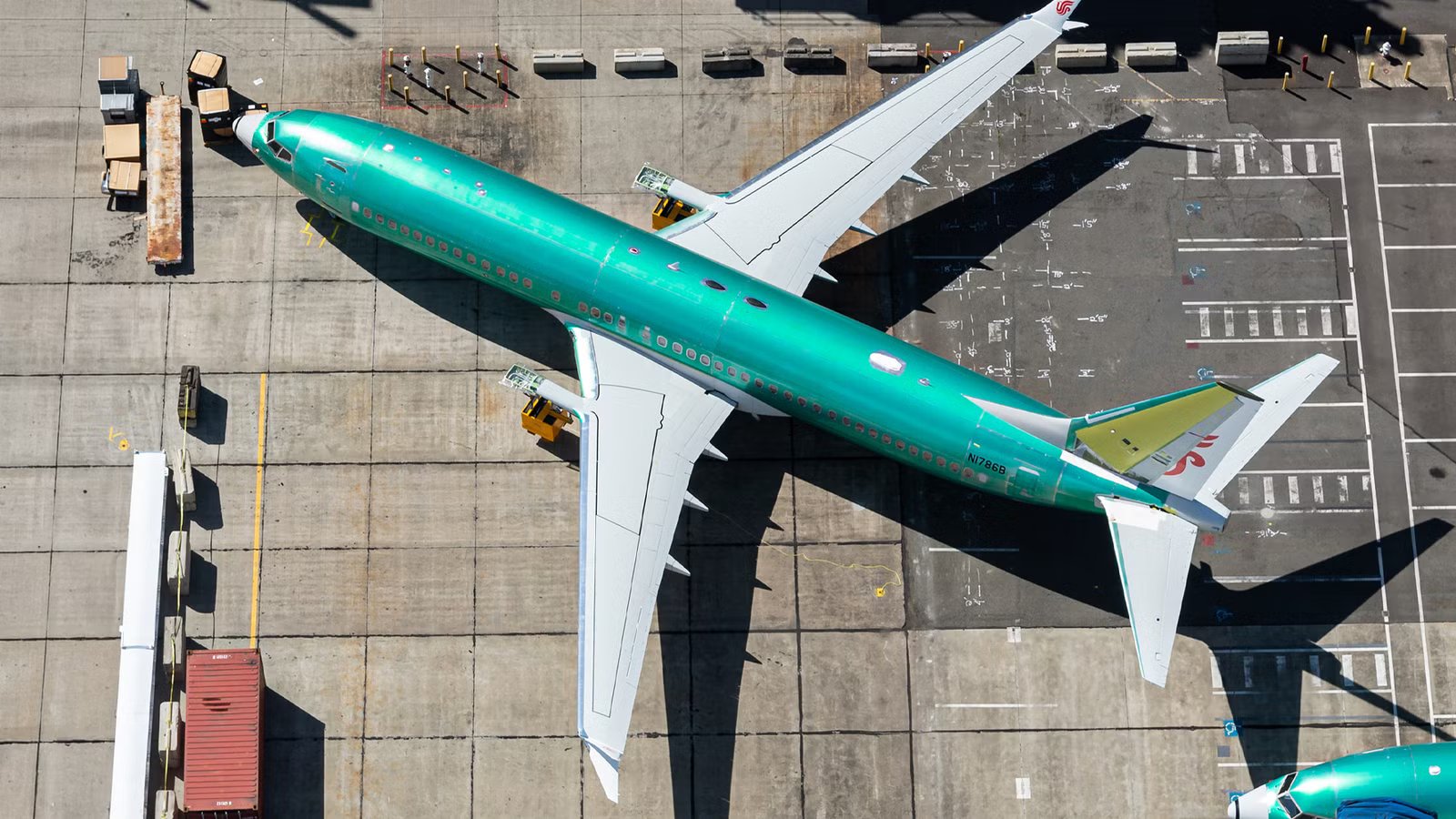
Throughout the 2010s and early 2020s, the narrative surrounding the narrowbody market was that Airbus had Boeing beat. While the Boeing 737-800 was an excellent aircraft and the 737-700 was competitive against the Airbus A319-100, the Airbus A321-200 was in a league of its own, easily outselling the 737-900ER. This dynamic only worsened with the A320neo family against the 737 MAX family, and the 20-month worldwide grounding of the 737 MAX didn’t help matters. Not only that, but Airbus has the A220 family as well.
In 2026, however, the narrative is shifting. Boeing is improving its production processes for the 737 MAX to allow for further production increases, and the 737 MAX is as popular as ever. In the 2010s, Airbus clawed away market share in Boeing’s backyard, selling hundreds of A321s and A321neos to long-time Boeing customers American Airlines, Delta Air Lines, and United Airlines, but Boeing is now selling more 737 MAXs to these airlines as well. The 737 MAX is back on the rise.
Production Challenges Being Solved With The 737 MAX

 Boeing has always been good at creating planes that the market wants. The Boeing 787-9 is history’s most ordered widebody aircraft variant. The Boeing 737-800 is the most widely produced commercial aircraft variant of all time. However, in recent years, it’s had difficulty building planes. In January 2024, a door plug blew out on a brand-new Alaska Airlines Boeing 737 MAX 9, causing all 737 MAX 9 aircraft in service to be grounded. This was attributed to manufacturing issues.
The FAA imposed a production cap of 38 planes per month after the Alaska door plug incident, in contrast to the A320neo’s production rate of over 50 planes per month. This increased wait times for customers and also increased unit costs for Boeing, as it had to prove to the FAA that its production and assembly processes were safe. Fast forward to 2026, however, and Boeing is now producing 42 737s per month. In addition, it’s planning to boost production to 47 737s per month, an increase that’s expected to be approved by the FAA later in 2026.
Boeing is working on acquiring supplier Spirit AeroSystems in an effort to bring more production back in-house, and it’s looking to complete work on a fourth 737 final assembly line (FAL), located in Everett, Washington, by summer 2026. This will be the first Boeing narrowbody FAL at Everett, which has otherwise only hosted FALs for widebodies. This line will be capable of assembling the 737 MAX 10, and long-term, Boeing hopes to deliver 63 737s per month. This is making the 737 MAX more attractive.
The Boeing 737 MAX 8, A True Winner

One of the biggest recent order upsets in North America came in 2013 from just north of the US, when Air Canada, which then operated the Airbus A320 and Embraer E-Jet families, ordered the Boeing 737 MAX. Today, the carrier operates 50 737 MAX 8 aircraft with one more set to arrive. In total, the 737 MAX 8 has received over 4,800 orders, almost as many as the 4,991 orders that the 737-800 has received, and more than the 4,160 orders that the competing Airbus A320neo has received.
The Boeing 737 MAX 8 is sure to overtake the 737-800 in total orders, and this will make it history’s second-most ordered commercial aircraft variant (the A321neo has received an outstanding 7,360 orders). In total, nearly 70% of all 737 MAX orders are for the MAX 8 variant. It has all of the same advantages over the A320neo as its predecessor did against the A320-200, in that it’s slightly larger, slightly lighter, has more range, can lift more payload, and burns a similar amount of fuel.
The 737 MAX 8 is extremely efficient and has enough range not just for US transcontinental flights, but also for shorter transatlantic routes. Air Canada has already been mentioned as a 737 MAX 8 operator (all of which will be transferred to Rouge), but the aircraft can also be found flying for WestJet, Flair, Aeromexico, Arajet, Caribbean Airlines, and Copa Airlines. Within the US, the 737 MAX 8 is flown by Southwest Airlines, American Airlines, Alaska Airlines, Allegiant Air, and United Airlines.

Airbus Vs. Boeing: Who Finished 2025 With More Orders?
Boeing won the race this year. Here’s how much further ahead the company is compared to Airbus, and the changing trends in the market.
The Impact Of The Boeing 737 MAX 10

The Boeing 737 MAX 7 has been ordered mainly by Southwest Airlines, along with a handful of other customers, and has received a total of 291 orders, while the competing A319neo has received 57 orders. The 737 MAX 8 has received over 4,800 orders, more than the A320neo. However, the 737 MAX 9 has received just over 500 orders, whereas the A321neo has received over 7,300 orders. Just as with the 737-900ER, the 737 MAX 9 has higher per-seat costs than the A321neo and has therefore been shunned by the market.
The Boeing 737 MAX 10 is a further stretch of the 737 to be a more appropriate answer to the A321neo. While it’ll still be slightly smaller than the Airbus, Boeing claims that the 737 MAX 10 will deliver lower per-seat costs than the A321neo. If true, this will make the 737 MAX 10 a legitimate threat to the A321neo. Although it won’t be as capable as an A321neo equipped with auxiliary fuel tanks, its range of 3,100 NM (5,700 km) will be enough for virtually all short and medium-haul operations.
With the 737 MAX 10, Boeing finally has a legitimate large narrowbody that’s economical to operate and comparable in size to the Airbus A321neo. The 737-900ER and 737 MAX 9 typically seat 175 to 180 seats in US airline service, between the 160 to 172 of the 737-800/737 MAX 8 and the 190 to 200 seats found on the A321/A321neo. In addition, the 737 MAX 10 will be lighter than the A321neo, and Boeing advertises that it will burn less fuel than the A321neo on shorter routes.
Recent US Victories For The Boeing 737 MAX

American Airlines was the launch customer for the Boeing 737 MAX, when it committed to ordering 100 737 MAX 8 aircraft in 2011 before the plane was originally announced. Alaska Airlines, which proudly promotes its relationship with Boeing, was always going to be a sure customer for the 737 MAX, and has ordered a total of 273 examples, split between the 737 MAX 8, 737 MAX 9, and 737 MAX 10. In the 2010s, Boeing also got United Airlines on board with the 737 MAX, and the carrier launched the 737 MAX 10. Southwest has also ordered hundreds of 737 MAX aircraft. In large part, these orders were expected.
In the 2020s, the 737 MAX has seen a resurgence in the US. United Airlines, already a major 737 MAX 9 customer and the launch customer of the 737 MAX 10, rapidly built a fleet of 123 737 MAX 8s following the COVID-19 pandemic, many of which were white-tail aircraft, while also building its total 737 MAX orderbook to 514 aircraft. American Airlines, which has largely simplified its narrowbody fleet to the 737-800/737 MAX 8 and A321/A321neo, ordered a total of 115 737 MAX 10s. Delta Air Lines ordered 100 737 MAX 10s, while Allegiant Air has ordered 50 737 MAX aircraft.
|
Airline |
Total 737 MAX Orders |
737 MAX Orders By Variant |
|---|---|---|
|
Alaska Airlines |
273 |
737 MAX 8: 25 737 MAX 9: 80 737 MAX 10: 168 |
|
Allegiant Air |
50 |
737 MAX 7: 24 737 MAX 200: 26 (737 MAX 8) |
|
American Airlines |
219 |
737 MAX 8: 104 737 MAX 10: 115 |
|
Delta Air Lines |
100 |
737 MAX 10: 100 |
|
Southwest Airlines |
765 |
737 MAX 7: 269 737 MAX 8: 496 |
|
United Airlines |
514 |
737 MAX 8: 123 737 MAX 9: 224 737 MAX 10: 167 |
American and Delta are notable victories as both carriers were previously relying exclusively on the A321neo as their large narrowbody. This validates Boeing’s claims that the 737 MAX 10 will be as economical as the A321neo and may be more efficient on certain sectors. As to how the planes will be configured, it’s believed that  United Airlines will install 189 seats, split between 20 first class seats and 169 economy seats, 10 more than the MAX 9 (one row of six seats and one row of four seats by the mid-cabin exits). Delta and American will likely replicate this layout.

The World’s Longest Routes With The Boeing 737 MAX In 2025
Taking a look at the longest scheduled routes in 2025 to be flown by the popular narrowbody, the Boeing 737 MAX.
The Benefits Of Dual Sourcing

The Boeing 737 MAX was grounded for 20 months from 2019 to 2020, and then the 737 MAX 9 was briefly grounded in January 2024. In addition, both Boeing and Airbus have dealt with quality control issues and delivery delays, while Airbus has been hit hard by problems with the Pratt & Whitney PW1000G engine, impacting the A320neo and A220 families. The lesson that operators have learned is that dual sourcing, at least for large airlines, is a safer strategy.
American, Delta, and United are all operating large fleets of Airbus A320 family aircraft and Boeing 737 family aircraft. The benefit is that if an issue affects one of these types, an airline can lean on the other and minimize operational disruptions. Similarly, if deliveries of one type are impacted, the carrier is still receiving new aircraft from the other manufacturer. Of course, this only works for large airlines that can economically operate huge fleets of both types.
|
Airline |
A320 Fleet Size |
A320 Variants |
737 Fleet Size |
737 Variants |
|---|---|---|---|---|
|
American Airlines |
484 |
A319-100 A320-200 A321-200 A321neo/A321XLR |
396 |
737-800 737 MAX 8 737 MAX 10 (on order) |
|
Delta Air Lines |
316 |
A319-100 A320-200 A321-200 A321neo |
240 |
737-800 737-900ER 737 MAX 10 (on order) |
|
United Airlines |
199 |
A319-100 A320-200 A321neo/A321XLR (on order) |
585 |
737-700 737-800 737-900 737-900ER 737 MAX 8 737 MAX 9 737 MAX 10 (on order) |
In addition, Airbus is essentially sold out on new A320neo family aircraft until the 2030s, and because the planes are in such high demand, Airbus is charging high prices. This is especially true for the A321neo. The 737 MAX, in contrast, is available sooner and is generally cheaper, while essentially being just as good.