dailynewsnblog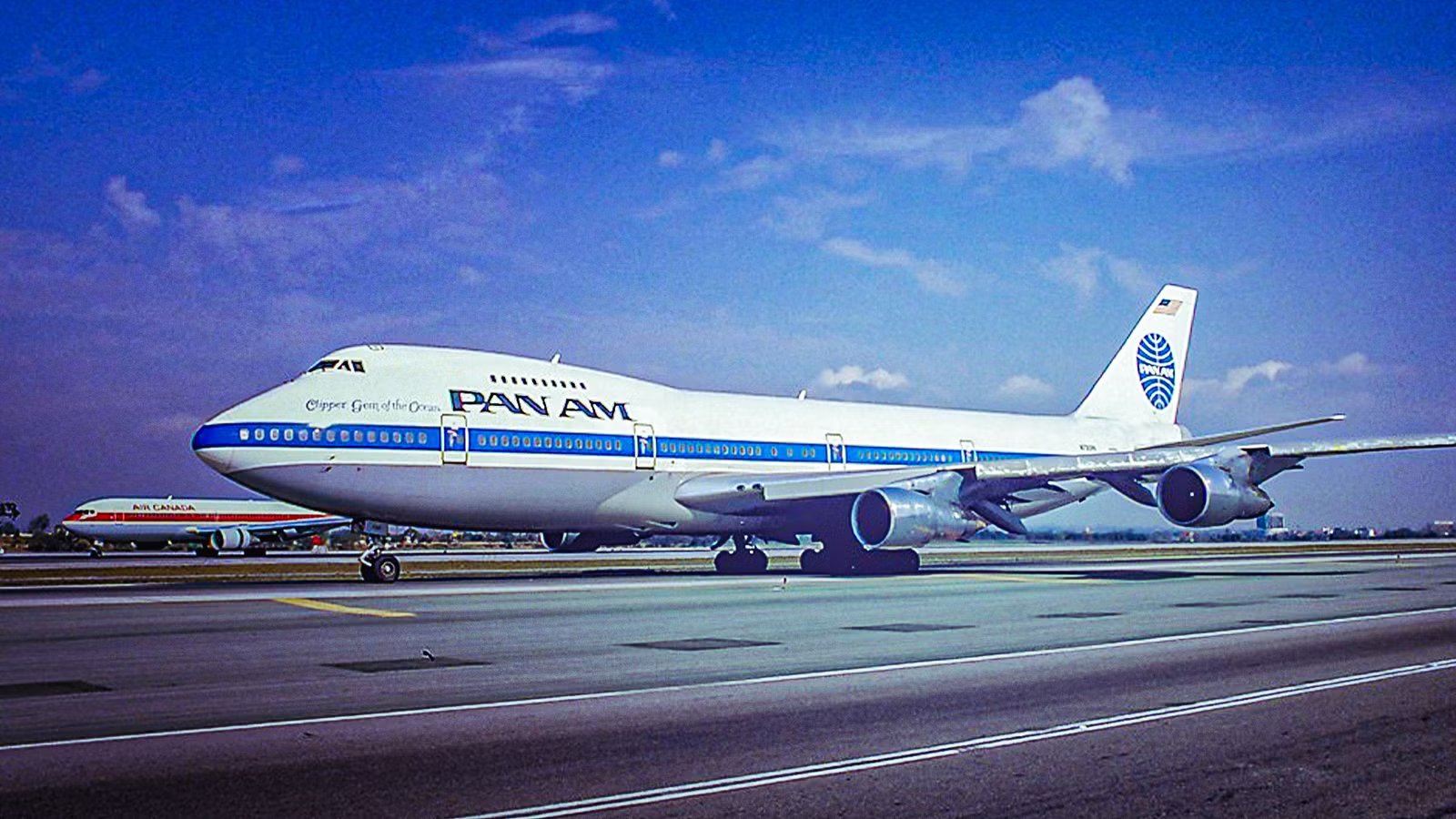
Pan American World Airways (also known a Pan Am) was once the closest thing that the United States had to a flagship airline. The carrier pioneered long-haul routes, the jet age as a whole, and a brand that came to symbolize American commercial aviation. However, despite its presence in the market, the airline decided to shut down on December 4, 1991, following several years of financial struggles and a brutal series of shocks. After the deregulation of the United States airline industry in 1978, competitors with large domestic networks could feed passengers directly into international flights. Pan Am lacked the feed it needed to support its network, and it attempted to buy National Airlines in 1980 to solve this problem, a costly and difficult integration that added further debt and complexity.
In order to raise cash, the airline began to sell off prime assets, shrinking a network that was in and of itself the airline’s biggest individual asset. Then external blows began to hit the carrier. The 1988 Lockerbie bombing damaged confidence in the airline, and it imposed major costs. The 1990-1991 Gulf crisis led to fuel prices rising, and led the airline’s per-seat costs to skyrocket. Pan Am originally filed for Chapter 11 bankruptcy protection in January 1991, and it attempted a slimmed-down reboot, with key pieces (including transatlantic operations) being sold off to Delta Air Lines. When the airline’s financing and turnaround plan unravelled throughout 1991, operations ceased, ending an era in which innovation outlived the company itself.
A Brief Overview Of How Pan Am Rose To Prominence

Pan American World Airways, which began in 1927 as a small airmail venture, launched scheduled commercial service between Key West, Florida, and Havana, Cuba, at a moment in time when Washington, D.C., was awarding foreign mail contracts, and Caribbean routes were increasingly proving strategically valuable. Under the leadership of Juan Trippe, Pan Am rapidly outgrew its mail-startup origins by building out an international network that most US airlines were still domestically oriented.
In the 1930s, the airline aggressively expanded into Latin America before pioneering long ocean-crossing flights using large “Clipper” flying boats from manufacturers like Sikorsky, Martin, and Boeing to connect far-flung cities without long runways, something which effectively turned the seas into its global airport system. This early infrastructure and diplomatic know-how helped Pan Am become, for much of the mid-20th century, the principal international carrier for the United States and an airline with a brand abroad that became synonymous with American aviation itself.
Pan Am also made its mark by shaping the industry’s technology curve as it helped usher in the jet age without early adoption of aircraft like the Boeing 707 and later became closely associated with the jumbo jet era, all the way through the Boeing 747, amplifying the airline’s image as the airline of modern global travel. By the time the 1950s came around, the carrier could credibly sell “around the world” service. Its iconic globe logo, Clipper flying boats, and cosmopolitan stewardship made Pan Am both a transportation company and a national symbol by the time it rose to market prominence.
When Exactly Did Pan Am Peak?

Pan Am’s peak came in the late 1960s and the early 1970s, when its blue globe logo signified international travel. The logo itself styled the airline as the World’s Most Experienced Airline, and the carrier’s scale backed this up. By 1968, it had 150 jets and flew to 86 countries on every continent except for Antarctica, with the airline operating 81,410 miles (131,000 km) of scheduled air travel routes.
During this period, the carrier was profitable, and it carried millions of passengers each year (around 6.7 million in 1966), and it dominated prestige corridors that linked New York with Europe and South America, in addition to connecting Miami with the Caribbean. Even in New York, the airline experimented with a helicopter shuttle connecting major airports to Manhattan and underscored the airline’s premium global-oriented identity. The airline’s peak came from technology, with Pan Am helping define the jet age with the Boeing 707.
The airline also helped create the widebody era when the Boeing 747 entered service with Pan Am on January 22, 1970. It was an aircraft that turned mass international air travel from a promise into something routine that passengers could count on. Onboard, the airline sold an end-to-end experience with ticket offices, lounges, and uniformed service, so that the airline itself felt more like an American embassy equipped with wings. For a brief window, the airline’s network, brand, and fleet aligned into something rare, as it was a carrier that did not just ride an aviation boom but rather became emblematic of it.

Is Pan Am About To Be Relaunched?
The company that owns the Pan Am brand is evaluating the feasibility of reviving it as a scheduled airline.
Difficult Times Ultimately Arose

Pan American’s early financial slide came from a structural mismatch between what the carrier was famous for and what the airline business began to financially reward after the 1970s. As an international specialist, Pan Am lacked a large domestic network to feed passengers reliably into its long-haul network, leading it to face higher load-factor risks and lean heavily on partners for connecting flights. The airline also had very few ways to shift aircraft around when demand weakened.
The airline’s worldwide footprint carried high fixed costs, including the higher prices associated with stations abroad, sales, ground handling, and irregular operations’ recovery. At the same time, Pan Am committed to expensive, long-range aircraft and a premium service model that pushed break-even load factors up and magnified exposure to fuel prices and global economic cycles. Here are some additional details on the airline from the National Air and Space Museum:
|
Category |
Specification |
|---|---|
|
Fleet size |
226 |
|
Maximum countries served |
87 |
|
Frequent flyer program |
WorldPass |
When the 1973 to 1974 oil shock and subsequent recession hit, the airline was put in a very difficult position as its unit costs only continued to rise while demand became much more volatile, something which stretched out cash flow. In order to plug gaps, management increasingly relied on asset sales and short-term financing, which provided relief but shrank the airline’s network and reduced strategic flexibility. Costs stayed high, revenue swings became significantly harder to absorb, and each shock forced decisions that weakened the franchise even before headline events began to tear the carrier apart in the 1980s and early 1990s.
An Airline That Reached Its End In 1991

Pan American’s collapse ended in a fast and highly visible exit in 1991 after years of mounting financial strain and repeated demand and supply shocks. By the time the late 1980s came around, the carrier was already weakened by a shrinking route map and high fixed costs, after which time it suffered a major reputational and financial blow from the 1988 Lockerbie bombing, one of the biggest aviation disasters in history.
In January 1991, Pan American filed for Chapter 11 bankruptcy protection, and it tried to survive by reinventing itself as a smaller carrier centered primarily on services in and out of Miami International Airport (MIA). The core element of this plan involved selling many of its highest-value assets to Delta Air Lines, including large components of its transatlantic service network and the Northeast Shuttle.
Pan Am briefly relaunched services on November 1, 1991, but losses persisted, and the airline’s confidence evaporated in the final weeks. On December 4, 1991, Pan Am ceased operations after the financing underpinning the reorganization began to fall apart. This abruptly ended a brand that helped define the jet age and international commercial aviation. This shutdown stranded thousands of employees and left Pan Am’s routes, aircraft, and airport footprint to be fully absorbed by other carriers rather than rebuilt under the original name.

New Pan Am Closer To Launch With Start Of FAA Certification Process
Is Pan Am coming back next year? If so, what will it look like?
What Legacy Does Pan Am Leave Behind?

Pan Am did disappear from the market, but it certainly left behind a legacy. The carrier also shaped modern international air travel networks, especially when it comes to transatlantic travel. Most of today’s US-based services to the European continent follow this framework that was created by Pan Am, one of the most innovative carriers of its time. While the airline’s headquarters on Park Avenue is now the MetLife building, the airline’s presence in the market continues to exist through Delta’s takeover of many of its marquee routes.
The airline also pushed forward the early jet travel era, introducing the dynamic Boeing 707. The carrier also helped launch the Boeing 747 and the widebody age. Its branding became the stuff of legend, with images of Pan Am Boeing 747s and Clipper flying boats becoming early icons of aviation.
The carrier raised global service and training standards, becoming an airline synonymous with a comfortable travel experience. Pan Am itself serves as a cautionary case on deregulation, debt, and careful management of assets. The carrier’s legacy was also absorbed into successor airlines, so echoes of the airline continue to exist.
What Is Our Bottom Line?

At the end of the day, Pan Am was a legendary operator, one that is synonymous with the growth of the commercial aviation industry in the United States. The airline’s decline is, in some ways, disappointing, as it created the modern environment where the United States lacks a proper flag carrier.
Pan Am’s legacy is impressive, and what it achieved during its decades of operation is equally fascinating. The airline pioneered jet travel, and, in doing so, helped bring about the conditions that lowered fares to the point that pretty much anyone could fly.
Even though you cannot see any Pan Am aircraft today, the airline remains a key part of the global aviation story. The fact that you can comfortably fly anywhere around the world from the United States, in many ways, is thanks to Pan American World Airways.