dailynewsnblog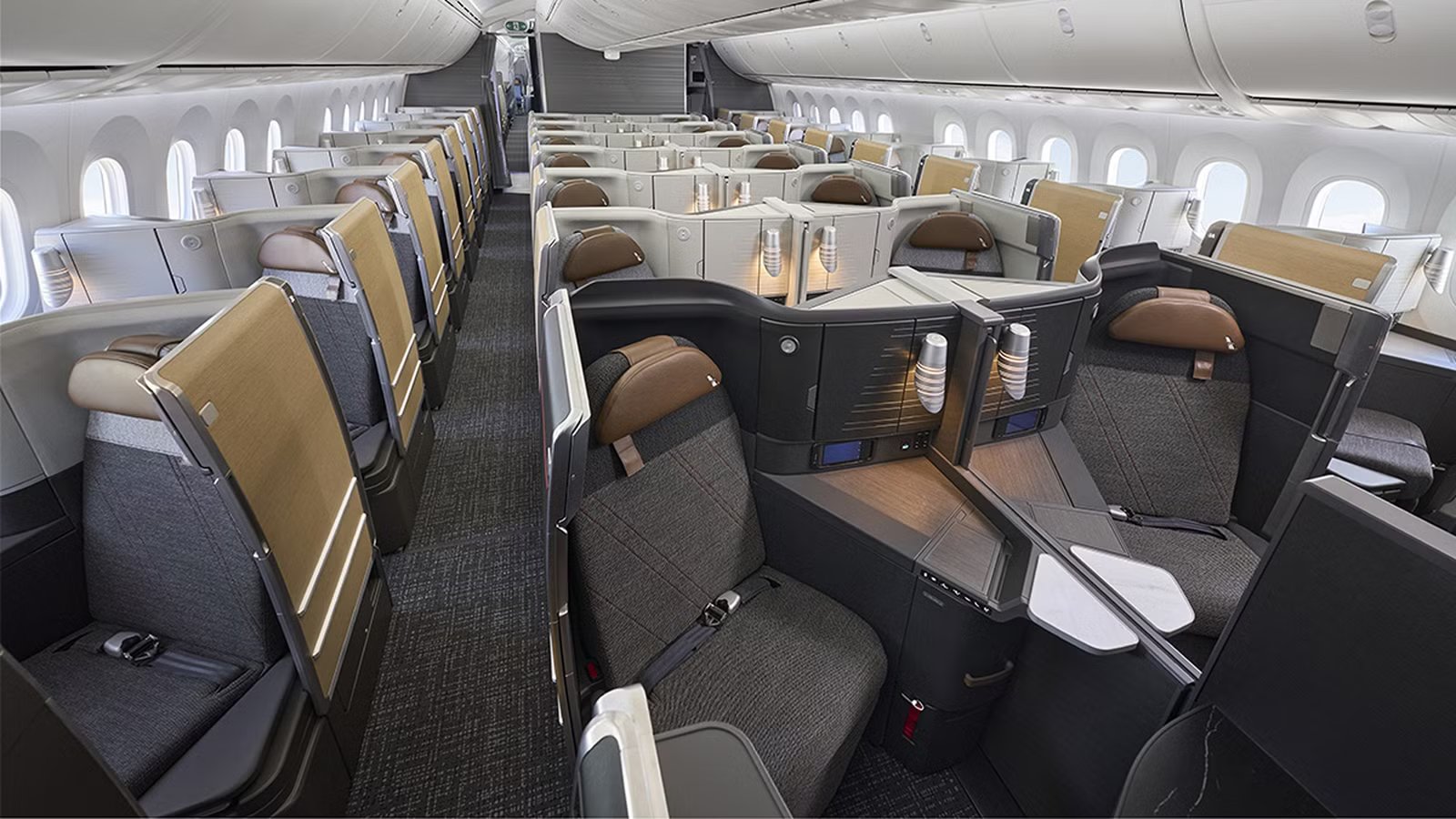
Air travel demand keeps rising, and so does the competition between airlines. On busy routes, carriers try to outdo one another in many ways, be it with flight schedules or in terms of what they offer passengers on the ground and on board. Premium cabin products have become key in setting airlines apart. In recent years, cabin design has seen major shifts. Premium economy has been widely adopted, and business class products now offer features that were once exclusive to first class.
For decades, first class was the defining marker of an airline’s prestige and a draw for travelers willing to pay for maximum comfort. However, now, the trend has shifted, and many airlines have scaled back or removed their first-class cabins entirely. Indeed, by 2024, the number of annual scheduled first-class seats had dropped by more than 40% compared to 2019.
American Airlines Still Sells First Class, But Not For Long

American Airlines remains the only US carrier to still sell international first-class fares. Its competitors moved away from the product years ago. United Airlines phased out first class by 2018, though some seats continued under the Polaris Business brand until aircraft were fully retrofitted in 2020.  Delta Air Lines removed the cabin altogether, and several international carriers, including Turkish Airlines, LATAM, China Airlines, China Southern, Malaysia Airlines, and Korean Air, have also stopped offering first class.
However, in 2022, American also confirmed it would follow suit and eliminate its so-called Flagship First class. Today, Flagship First can only be found on two aircraft types: the Boeing 777-300ER and the Airbus A321T. The widebody offers a 1-2-1 layout, while the narrowbody transcontinental A321T carries ten seats in a 1-1 configuration. Both aircraft provide lie-flat seating and direct aisle access.
The airline is in the process of removing the cabin from both aircraft types, though Flagship First is still available on long-haul services between the United States and destinations in Asia, Australia, Europe, and South America. At the time of writing, its website also lists Flagship First on five domestic routes: Los Angeles–New York JFK, San Francisco–JFK, JFK–Orange County, Los Angeles–Boston, and Los Angeles–Miami.
Why First Class No Longer Works For American Airlines

There are a few reasons why airlines, including American, are moving away from first class. The most obvious is financial. What all airlines want to do is sell seats, and the last thing they want is to operate half-empty cabins. Across the industry, carriers generally aim for a load factor of 80–85%. First class rarely meets that standard. On some flights, occupancy can be as low as 20%, which makes it difficult to justify the space and investment required for the product.
American’s own approach to first class has not helped demand. Travelers and reviewers alike note that the seats are only marginally better than business class; they lack privacy and offer little to justify the premium fare. In addition, the industry’s direction has only accelerated this decline. Airlines have invested heavily in business class over the past decade. Lie-flat seating, enhanced in-flight entertainment, and improved service have become standard in business cabins.
|
American Airlines’ Flagship First Rundown |
|
|---|---|
|
Aircraft |
Boeing 777-300ERs, Airbus A321Ts |
|
Routes |
Transcontinental, long-haul international |
|
Number of Seats |
Six on 777-300ERs, ten on A321Ts |
|
International Destinations |
Asia, Australia, Europe, South America |
Furthermore, first class also consumes more space and limits the number of revenue-generating seats on board, which makes it difficult to justify for carriers focused on efficiency. As business products have improved, fewer passengers see value in paying the steep premium for first class. That explains why so many airlines are phasing it out. The shift has already played out at other airlines, such as with  United Airlines’ launch of Polaris in 2016: American is now moving in the same direction.
From First To Business: A New Layout On The 777-300ER

The  oneworld alliance member, which was the first US carrier to introduce long-haul premium economy, announced the end of first class alongside the introduction of its new business product, known as the Flagship Suite. These seats feature a privacy door, added personal storage, and a chaise lounge seating option designed to increase comfort and privacy. At the time of the announcement, the airline stated that:
“With the introduction of new interiors on the long-haul aircraft, premium seating on American’s long-haul fleet will grow more than 45% by 2026.“
As part of the rollout, the airline plans to retrofit all 20 of its Boeing 777-300ERs. Once the work is complete, each aircraft will feature 70 business class suites and 44 premium economy seats, up from 52 and 28 respectively, while maintaining the 216-seat economy cabin.
This means the loss of eight first-class seats but the addition of 34 new premium seats overall. The reconfigured layout comes with other changes besides the removal of first class.
For instance, lavatories and galley space are being reduced to make room for the higher seat count, and business class pitch will shrink slightly from 43 to 42 inches. The walk-up bar between business cabins will also be removed, according to Live And Let’s Fly. The changes reflect a clear intent to strengthen American’s position in lucrative long-haul markets such as London, Sao Paulo, Tokyo, and Hong Kong.
The airline has acknowledged that demand for premium cabins remains strong despite wider economic uncertainty, and the reconfiguration allows it to offer more competitive capacity than its US rivals. For instance, United’s Polaris-equipped 777-300ERs top out at 60 business class seats, while Delta’s upcoming Airbus A350-1000 is expected to have around 50 in its Delta One cabin.
By contrast, American’s reworked 777s will carry the largest number of business class seats of any US airline’s widebody. In addition to the 777-300ER program, the airline will also retrofit its 16 Airbus A321T aircraft to align them with the rest of the A321 fleet. Of course, these jets will lose their bespoke Flagship First cabin, but American intends to continue offering lie-flat seats on its transcontinental routes from New York and Boston.
American Airlines Debuts Flagship Suites On Its New Boeing 787 Dreamliners

The Flagship Suite is also debuting on American’s new Boeing 787-9 Dreamliners, as part of one of the airline’s biggest cabin updates in years, which introduces its most refined long-haul product to date. For the first time, American has adopted fully enclosed suites on a widebody aircraft, moving away from the mixed rear- and forward-facing layouts previously found in its fleet. Each 787-9 carries 51 suites, which is a 70% increase in business class capacity compared to the earlier configuration.
The seats are based on the Adient Ascent platform, arranged in a 1-2-1 reverse herringbone layout, and feature a 79-inch lie-flat bed, an adjustable headrest pillow, a sliding privacy door, and a chaise lounge mode with a secondary seatbelt. Passengers also have access to a 17.5-inch 4K screen with Bluetooth audio pairing, a wireless charging pad, multiple USB ports, and two enclosed storage areas. In addition, there are eight bulkhead Flagship Suite Preferred seats
These are located in the first row of business class, and provide nearly 20% more bed space and over 40% more area than the standard suites. Since April 2025, American has taken delivery of several of these premium-configured Dreamliners. They are already in service on both domestic and international routes, including Chicago O’Hare to London Heathrow, Philadelphia to London Heathrow, and Chicago to Los Angeles.
According to scheduling data from Cirium, an aviation analytics company, the airline plans to extend its Flagship Suite footprint across more long-haul services. Indeed, following the initial rollout, November 2025 saw Dallas/Fort Worth added to the London network, followed by deployment on flights to Auckland, Brisbane, and Buenos Aires.
American Airlines Will Launch Premium Suites On Its A321XLR Fleet As Well

American also plans to bring its Flagship Suite to narrowbody aircraft. The Airbus A321XLR will debut with 20 suites arranged in a 1-1 layout across ten rows, according to Executive Traveller. The design mirrors the product already introduced on the 787-9 and scheduled for the 777-300ER retrofit. Indeed, this will allow the Fort-Worth-based airline to compete directly with JetBlue’s Mint Suites on the A321LR and United’s forthcoming Polaris product on its own A321XLRs.
The airline intends to deploy the type first on domestic transcontinental services, and routes such as Los Angeles to Boston and San Francisco to New York are expected to feature the new cabin. The airline had 50 A321XLRs on order, and took delivery of the first jet in July. It entered service in December, at around the same time that the second example was delivered.
Once deliveries progress, the type will give American the flexibility to add nonstop flights from its hubs to smaller destinations in Europe and South America that would not have been viable with larger widebodies. Over time, the A321XLRs will replace the older A321T fleet, which will be converted to match the rest of American’s A321 aircraft.
American’s Premium Future Lies Beyond First Class

As new aircraft arrive and the retrofit program progresses, American will be in a stronger position to compete in the premium market. For years, the airline drew criticism for sticking with dated cabins that offered little difference between business and first class. Reviews often pointed out that there was not enough appeal to justify the higher fares, and the landscape has also changed.
Indeed, lie-flat beds, privacy, and upgraded amenities are now expected in business class, leaving little reason for a separate first class cabin. As such, airlines have shifted toward business and premium economy instead, which are easier to sell and make better use of space, and American’s decision to remove first class and invest in new business suites reflects this new reality.
The Flagship Suite brings features that travelers once associated with first class, while giving the airline more seats it can reliably sell. By phasing out an underperforming product and focusing on premium cabins that align with current demand, American is adjusting to an industry where business class has become the true flagship.