dailynewsnblog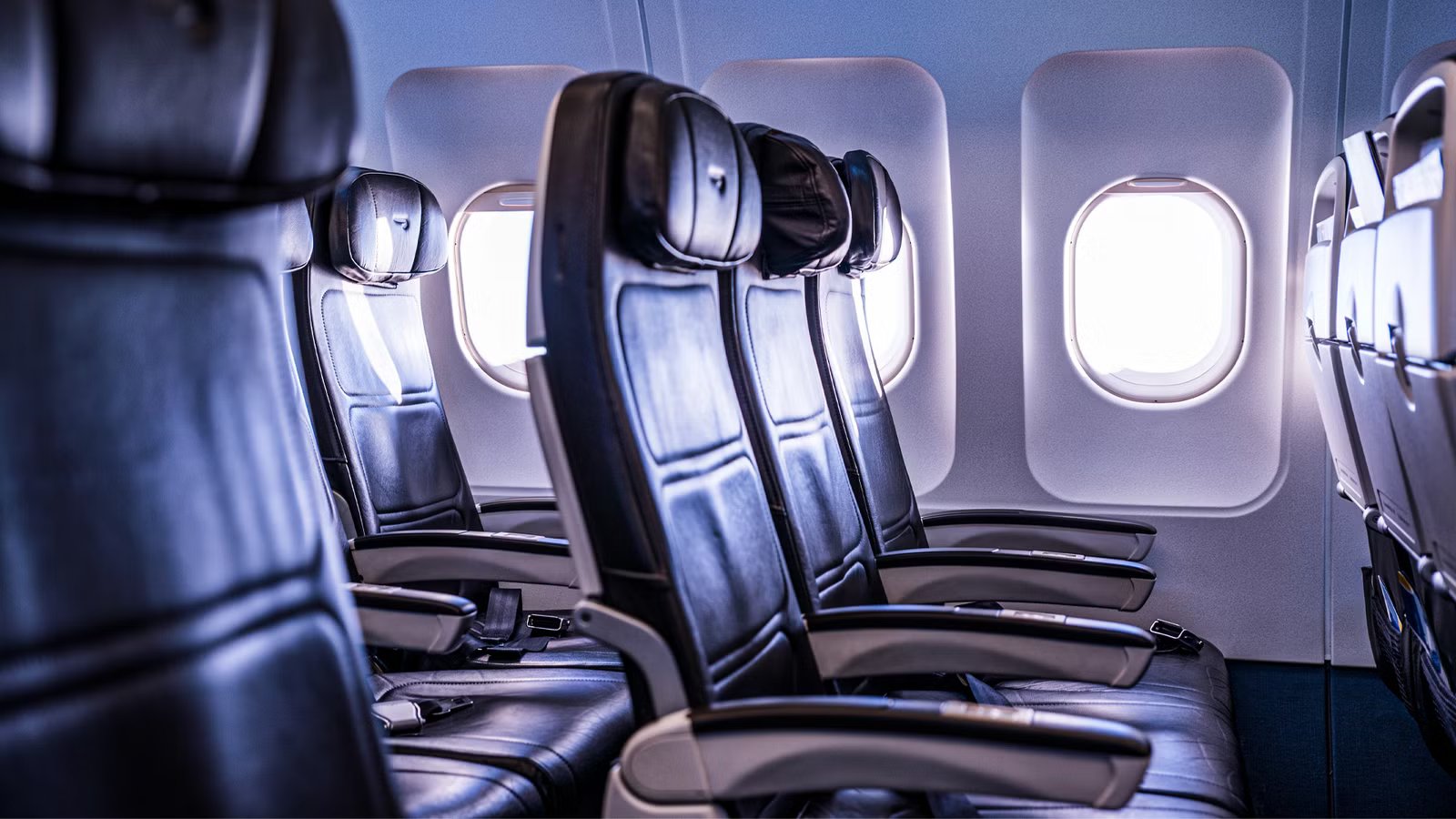
During taxi, takeoff, and landing, the cabin crew may well ask a passenger to raise their window shade. Some passengers may think it’s just trivial and that the cabin crew are being difficult, but this is not the case, as everything the cabin crew ask passengers to do is for a good reason. They are, at the end of the day, protecting passenger safety, should any emergency occur. Of course, there is little consideration for a passenger, since it’s something to lean against when sleeping or see the view outside.
It might be something very small, but it can be crucial in an emergency. Some airlines enforce that the window shade has to be open at certain times, and some do not. In this article, we will look in more detail at why raising the window shade is important and other safety procedures that might otherwise be misunderstood. We will also ask why some airlines do not see this as important and what the aviation industry’s recommendations are.
Assessment Of Outside Conditions

The most important reason for keeping window shades open is to ensure the fast assessment of external conditions before opening any emergency exit. Situational awareness is very important at critical phases of flight, including taxiing, takeoff, and landing. The cabin crew need to be aware of anything outside that may affect an evacuation. This could be the condition of the engine, fire, weather conditions, debris, or water levels. A spokesperson from the Flight Safety Foundation explained to IFLScience that:
“From a safety standpoint, open shades help improve situational awareness. During an emergency evacuation, flight attendants or passengers need to be able to see outside to determine whether it’s safe to open and use an emergency exit. You don’t want to send someone out an over-wing exit if the engine on that side is still running or on fire.”
KLM confirms this in its own flight manuals, with AFAR quoting it as saying that “flight attendants must ensure that shades are open at the emergency exits during take-off. This has to do with being able to check outside conditions in the event of emergencies.” Indeed, cabin crew have to determine if it’s safe to evacuate from their exit or if they should block the exit and use the opposite exit. It is also worth noting that time would be wasted trying to open window shades during an evacuation to see outside, and every second counts.
On this front,  British Airways also insists that window shades are open during critical phases. In an emergency evacuation, it is also important that first responders can see what is going on in the cabin. If the window blinds are closed, the emergency services can not see if there is smoke or fire in the cabin. They also have to work out the location of the smoke and fire and be able to find the best place to enter the cabin safely. First responders can better assess the situation if they can see inside the cabin.
Adjusting To Outside Conditions

Along with assessing outside conditions from the exit door, open window shades help the crew and passengers adjust their eyes to the outside. This is the same reason that lights are dimmed in the cabin for takeoff and landing. If an emergency evacuation were to occur, everyone can adjust better to the outside light and not be startled. It can take up to ten seconds for the eyes to adjust from light to dark conditions and vice versa, so in an emergency, that’s very precious time.
Reaction time is essential in an evacuation, and crew members have just 90 seconds to evacuate the aircraft. However, keeping window shades open during taxiing, takeoff, and landing is not mandated by law, and the FAA “allows this to be up to the discretion of individual airlines to enforce this practice.” While most domestic airlines do not require blinds to be left up, Newsweek notes that “interestingly enough, it is recommended in cabin crew training manuals.” As a bare minimum, exit rows should have the window blinds open.
The US Federal Aviation Administration ( FAA) does not require that window blinds be open during critical phases. However, it is considered best practice, and they note that eyesight adjustment is important, as reported by the United Association of Flight Attendants, which commended the cabin safety policy that requested passengers keep the window shades open during critical phases. This was in place in February 2020, when  United Airlines was the first and only US airline to adopt the practice.

Why Do Airlines Turn Off The Cabin Lights During Takeoff And Landing?
This practice ensures that passengers are better prepared during an emergency.
Why Does This View Change?

The initial policy was just a request and was not enforced by the flight attendants at United. Instead, they had to inform the passengers. Perhaps surprisingly, in March 2022, United decided to reverse this policy and stopped asking passengers to open window shades during critical phases. It said this was to align with other US airlines and avoid confusion. So what is the official stance on this rule?
The International Air Transport Association (IATA) represents more than 300 airlines around the world and sets commercial standards and operational best practices, and it recommends that window shades are open for takeoff and landing. The International Civil Aviation Organization (ICAO) sets mandatory international safety standards and is in line with the IATA recommendations, so it also supports this practice as a vital safety measure.
The FAA does not have a formal regulation regarding keeping window shades open, and it is not a law, just a best practice for situational awareness. The decision is down to the individual airline. Confusingly, although it is not a law, if a flight attendant or cabin crew member asks a passenger to open their window shade, they must comply, as failure to follow a crew member’s instructions is a violation of FAA regulations.
Does This Differ Between Aircraft Types?

Regional jets like the Bombardier CRJ series operated by brands such as Delta Connection and American Eagle do not have a window in the main left exit door. Therefore, flight attendants cannot see outside conditions and can ask the passenger seated at 1A to keep their window shade open during takeoff and landing, so they can assess conditions if there is an emergency.
On aircraft types such as the Boeing 737 and Airbus A320, where there are exit rows in the center of the aircraft, where passengers are seated, you may notice the window shades operate in the opposite way to the standard ones. This is because the exit release handle is above the window, so the shade cannot be stowed there. In a hard landing or emergency, the shade could slam down and get stuck. Therefore, operating like this ensures outside conditions can be seen when passengers need to operate the doors in an emergency.
New modern aircraft, such as the Boeing 787 Dreamliner and Airbus A350, take window shades to a whole new level. There are no physical shades, but they can be electronically dimmed by the passenger. The cabin crew can lock the shades to be transparent during takeoff and landing.

The Safest Seats On A Plane To Survive A Deadly Crash
Experts have analyzed whether seats such as the exit row, the aisle, the middle, and the window have higher survivability rates.
Other Safety Issues

Airline safety procedures are backed up by cabin crew manuals and training. During the cabin secure checks that cabin crew perform before takeoff and landing (and also mentioned in the safety demonstration), they check that your seatbelt is fastened, that baggage is stowed, and that the tray table is stowed and the seatback is upright. Seatbelts should also be kept on when seated in case of unexpected turbulence. Cabin crew check the passengers’ seatbelts during turbulence as well.
Wearing the seatbelt protects passengers in case the aircraft has to brake suddenly or something unexpected happens. The same goes for all baggage and loose items being stowed, as they can become projectiles and hurt someone. Tray tables and seatbacks should be in the correct position to ensure that all passengers have as much room as possible to exit the aircraft in an emergency evacuation. Tray tables can also cause injury if they are down and the aircraft brakes hard.
If a passenger does not follow the crew’s instructions and puts their seatback in recline again or puts their tray table back down, they are not only breaking a safety procedure, but they are also putting other people’s lives at risk. Should there be an emergency evacuation, the tray table or reclined seat can impede the evacuation and trap passengers in their seats. Headphones should not be worn during critical phases, so that if something happens, you can hear the crew’s instructions.
Key Takeaways

Most airlines do have strict policies regarding window shades being kept open during taxi, takeoff, and landing, and the cabin crew do enforce them as per their training and manuals. British Airways and KLM are two airlines that have this policy, but this is a more common practice in Europe. Indeed, the European Union Aviation Safety Agency’s ( EASA) regulations say that window shades should be open during takeoff and landing.
United was the first airline in the US to introduce a similar policy in 2020, but only requested that passengers keep window shades open during critical phases of flight. It was not a law or enforced by the airline, and it remains the choice of the individual carrier. United reversed the policy in 2022, when it decided to stay aligned with the other US airlines and not confuse passengers.
Although IATA and ICAO recommend that window shades should be kept open during the critical phase of flight, US airlines do not favor this despite the United Association of Flight Attendants endorsing the policy. The main reasons window shades should be kept open are to increase situational awareness, let the eyes adjust to the light outside, and to assess outside conditions in an emergency. However, the FAA has no mandatory rule regarding this policy.