dailynewsnblog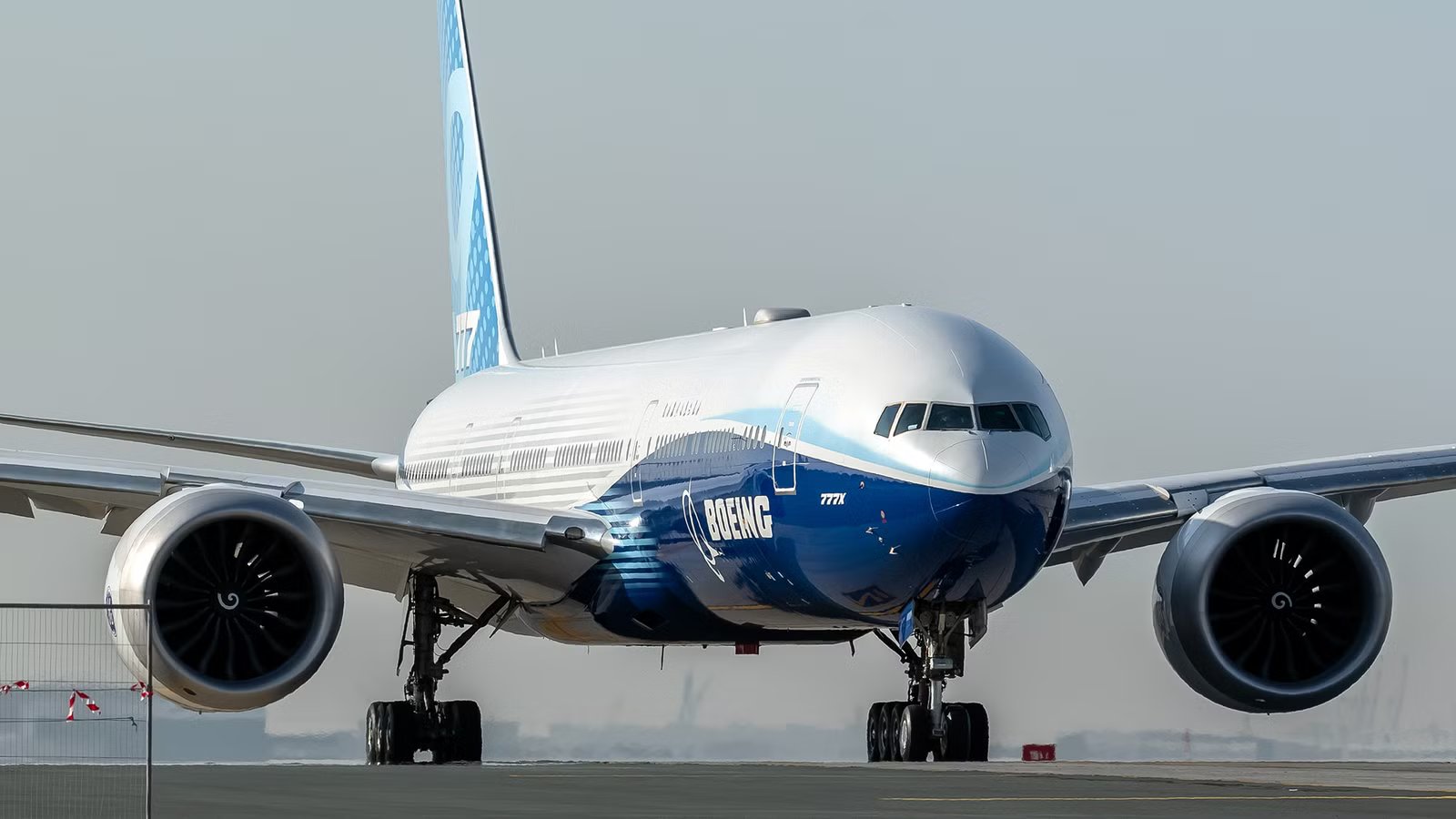
Boeing’s extensive exposure to the Middle East is no longer just a story about regional demand. Rather, it is a concentrated widebody vulnerability. Analysis indicates that Middle Eastern airlines and lessors happen to account for 14% of Boeing’s overall backlog as opposed to 9% of Airbus’. The problem is magnified by the Boeing 777X, where the manufacturer relies significantly on buyers from the Gulf, all of whom are currently caught up in the geopolitical crisis in the region.
 Emirates, on its own, currently accounts for 270 777X aircraft on order, making one airline central to the program’s long-term commercial success. This is very reminiscent of how Emirates was the anchor customer for the Airbus A350. If geopolitical conflict, airspace disruption, and overall weaker travel demand persist, Boeing could be in some serious trouble. The manufacturer could face deferrals, financing strain, and slower cash conversion precisely where it needs stability the most.
What Are The Core Developments In This Story?

The central development in this story is that Middle East instability has begun to significantly threaten Boeing’s backlog quality, not just overall airline operations. According to Leeham News, analysts have indicated that the region has 1,710 aircraft on order and that manufacturer Boeing is exposed to 57% of that backlog. That matters because most Gulf carriers are long-haul connecting airlines whose business models depend on stable hubs, strong premium demand, and reliable airspace access across the board.
At the same time, airlines globally are already dealing with higher fuel costs, route disruptions, and flight cancellations linked to the conflict. Analysts at Deutsche Bank (as we discussed yesterday) have reported fare hikes, airspace complications, and service suspensions. As a token example, Dutch flag carrier KLM has already decided to cancel flights to  Dubai International Airport (DXB) through March 28. That turns a geopolitical shock into a concentrated commercial risk for Boeing and its future.
What Are The Financial Implications For Boeing?

For manufacturer Boeing, the financial danger is less about immediate cancellations and more about timing, margins, and overall cash flow. Aircraft backlogs only become cash when customers take delivery, make final payments, and keep aircraft financing intact. A wave of Middle East deferrals would therefore slow revenue recognition and delay cash generation, especially in widebodies.
That, undoubtedly, comes as uncomfortable timing for Boeing, for which the 777X program was already the target of investor scrutiny. In October 2025, the company took a $4.9 billion pre-tax charge tied to the 777X program and pushed back the delivery of the first 777-9 model to 2027.
Widebody jets also matter disproportionately to mix and profitability expectations, so the disruption here hurts more than equivalent narrowbody turbulence. The manufacturer does have a massive backlog, with overall backlog reaching a record $682 billion and more than 6,100 commercial aircraft at the end of 2025. However, backlog size does not eliminate overall concentration risk if key customers delay accepting jets.

Delayed Again: Boeing 777X Delivery Timeline Pushes Back To 2027
The long-awaited next-gen widebody will wait even longer to debut.
What Different Outcomes Exist In The Middle East?

The best-case scenario is a relatively quick overall de-escalation. In that situation, Boeing would likely face some delivery reshuffling, but limited long-term damage, with Gulf carriers preserving fleet plans and the 777X’s backlog remaining broadly intact. This, in the long term, would probably have a limited impact on the company’s finances.
The middle scenario is a more prolonged but contained crisis. Fuel prices are staying elevated, airspace remains unpredictable, and transit demand through hubs like Dubai and Doha is recovering only very slowly. This would still raise the odds of order deferrals, financing renegotiations, and more cautious fleet growth in the future.
This, however, does not compare to the potential impacts of the worst-case scenario that the manufacturer has on the table. In that case, the company’s widebody exposure becomes much harder to manage because 777X customers are fewer, aircraft are heavily tailored, and remarketing takes significant amounts of time. The conflict only continues to escalate, and the closure of the Strait of Hormuz remains a major energy and aviation shock, so all three scenarios remain quite plausible.