dailynewsnblog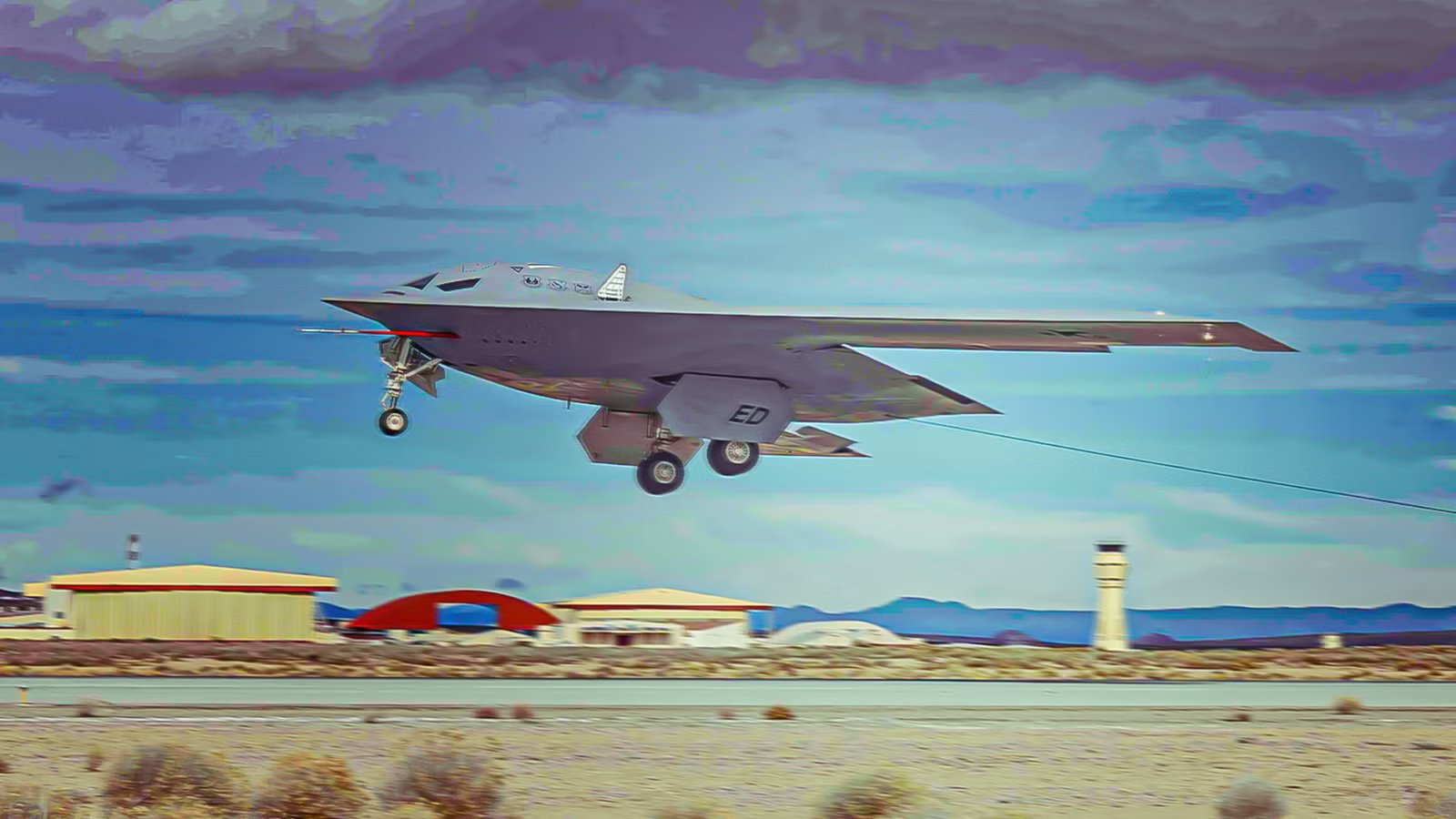
As the US Air Force and Northrop Grumman strive to bring the world’s first sixth-generation strategic strike aircraft into production, the B-21 Raider remains shrouded in secrecy. Slivers of information about its performance and capabilities have been released to the public. From what little we know, the B-21 is set to take the Air Force Global Strike Command (AFGSC) into a new era of stealth and strategic power.
Notably, the B-21 is expected to have a lower maximum payload and fewer engines than the B-2 Spirit, which it replaces. It will have only two engines, and there’s speculation that it may, in fact, have a longer range, but that is not confirmed. At the same time, the planes’ multispectral stealth capabilities as well as their technology on board will be enormously forward for AFGSC.
The Air Force is transitioning to a different fleet strategy with the B-21. They will have roughly 10 times the number of bombers in the B-21 fleet, compared to the B-2 fleet. With so many more aircraft, each can deploy with a smaller total payload and execute their mission in coordination with unmanned platforms and other exquisite manned aircraft like the forthcoming Boeing F-47 sixth-generation fighter.
In terms of raw firepower, the B-2 will actually remain the more powerful aircraft of the two. However, in the context of the modern battlefield, the B-21’s technology and ability to control and coordinate with drones will make it a more effective strategic strike platform for the air war of tomorrow.
Range And More Range

The B-21 Raider is expected to have similar or even greater unrefueled range thanks to improved aerodynamics and more modern engines. Despite the fact that it is smaller, which means less fuel capacity, the 4-plus decades of advanced aerodynamic and engine technology will more than make up for the difference. Additionally, having only two engines and not four may sound like a handicap to some, but with modern technology, it is likely to have the same performance but much greater fuel efficiency.
The B-2 Spirit was also notoriously difficult to maintain and costly as well. Reducing the number of engines will dramatically improve not only the investment required to sustain the Raiders over their lifetime but also the amount of time they spend in maintenance every time they require off-wing depot overhauls.
Overall, the complex aerial tanker chain is more influential to strategy, even for the B-2, which has a longer range than any other strategic strike aircraft in the current Air Force inventory. With its mission being deep strike penetration of enemy airspace, the ability to fly on extremely extended legs without support is crucial to its mission. The B-21 is very unlikely to sacrifice that capability.
More Capability Per Dollar

A major design goal for the B-21 was ease of maintenance and lower life cycle cost. That was one of the most significant issues for the B-2, along with its extremely high initial purchase price of nearly 2 billion dollars per airframe. Since the Air Force is expected to procure at least 100 examples of the B-21, its procurement will be less costly than the B-2, which suffered due to its early cancellation after only 21 were made.
The Air Force is using lessons learned from the decades of B-2 operations to optimize the B-21 design, as well as integrating as many commercial off-the-shelf (COTS) parts as possible where they do not compromise performance but increase reliability and reduce price. More durable stealth coatings will also be important to the sustainment of the B-21, which proved to be an issue with both the B-2 and the Lockheed Martin F-22 Raptor stealth fighter.
The B-21 has an average unit procurement cost (APUC) target of approximately $692 million (in 2022 dollars). Instead of reinventing every component, the B-21 leverages mature, proven systems from other programs, like the LM F-35 Lightning II fighter. The B-21 was designed using advanced digital engineering, creating “virtual twins” of components before physical production, like the F-35. This allowed engineers to identify and correct errors in simulation, reducing expensive rework and schedule overruns during manufacturing.

In Pictures: A Look Back At The Historic 1st B-21 Raider Test Flight At Edwards Air Force Base
In 2024, the B-21 Raider soared over Edwards AFB in a historic achievement to unconventional aircraft designs and stealth technology.
No More Hangar Queens

The B-2 was notorious for its complex maintenance, with reports indicating it required as many as 60 work hours of maintenance for every flight hour and specialized, climate-controlled hangars to protect its delicate stealth coatings. The aircraft’s systems are built on an open, software-focused architecture, allowing new technology and weapons to be integrated seamlessly and more affordably over its lifespan without needing a full system redesign.
The B-21’s robust design means it does not require the expensive, specialized, air-conditioned hangars of the B-2. It can use simpler, low-cost environmental shelters, allowing it to operate from a wider array of bases globally. The design improvements will also mean that the fleet will have a much higher mission-capable rate, compared to the B-2’s historically low rate, which generally was half or one-third combat-capable at any given moment.
The B-21 Raider will use a strategy of dispersed basing as a core component of the Air Force’s Agile Combat Employment (ACE) doctrine. The B-2 operates primarily from a few large, well-established main operating bases (MOBs), such as Whiteman AFB in the US and forward bases in Guam or Diego Garcia. This “big, fixed, and vulnerable” approach made the fleet an easy target for pre-emptive strikes by modern long-range precision missiles.
This fundamentally changes the strategy from the B-2’s model by enhancing survivability, flexibility, and operational unpredictability to counter sophisticated adversary threats. The B-21 is estimated to require approximately 30% less ground support infrastructure and a smaller ground crew.
Dispersal makes the force’s location and intent unpredictable, complicating adversary intelligence, surveillance, and reconnaissance (ISR) and targeting efforts. Its smaller wingspan and lighter weight mean it can operate from a wider range of runways and use the same hardened shelters as smaller fighter jets.
The B-21’s ability to operate globally from a wider variety of locations improves the US ability to project power and assure allies across different theaters, without requiring a permanent, large-scale presence. By spreading assets across many locations, adversaries cannot eliminate the force with a single or a few coordinated strikes, and present a targeting dilemma for enemies.

This Is How Powerful The B-2 Spirit Bomber Is
The B-2 is famous for its stealth, but how much punch does it pack? Let’s find out.
Making Every Shot Count

Although the B-21 will have a lower ordinance payload compared to the B-2, that is not a strategic disadvantage, as the 21st-century air war values precision over sheer volume. The B-2’s early design was formed by a Cold War mindset that prized capacity as one of the top qualities of any bomber. That philosophy has shifted along with modern doctrine; the B-21 reflects the evolution to a ‘single-bomb, single-target’ concept.
The B-21 can carry a broad mix of stand-off and direct-attack munitions, including the Long-Range Stand-Off (LRSO) nuclear-capable missile and potentially hypersonic weapons in the future. These weapons, while potentially smaller by weight, offer superior performance and lethality against modern targets.
The B-21 is a central node in the military’s Joint All-Domain Command and Control (JADC2) network, allowing it to receive real-time targeting data and engage targets with a high degree of accuracy and speed that the B-2 could not match.
Invisible In Every Sense

The B-2 Spirit was the first stealth bomber, the first successful flying wing, and the first 5th-Gen strike aircraft ever built. Yet, in the decades that have followed since it began its service, the technology of adversaries like the People’s Liberation Army Air Force (PLAAF) of China has also advanced. The B-21 will be invisible on every spectrum of detection thanks to new technology that conceals more than just radar signature and physical appearance.
This “all-aspect” low observability is a core feature of its sixth-generation designation, designed to counter the sophisticated, multi-layered sensor networks used by modern adversaries like China and Russia. The multispectral stealth that Northrop Grumman is building into the radar will conceal its thermal signature and radio emissions, as well as other features that will allow it to overcome even the most sophisticated near-peer air defense technology.
The B-21 features an even smoother, more refined “flying wing” design compared to the B-2, with fewer panel lines and a simpler trailing edge. It is a simple triangle shape instead of the B-2’s complex “W” or “chevron” shape, which will minimize “radar hot spots” from almost any angle. The engine air intakes are more flush with the fuselage and deeply buried, making the highly radar-reflective engine fan blades difficult to detect.
The B-21’s design focuses heavily on managing and reducing its thermal signature. Advanced engine duct designs and potentially active cooling systems work to mix hot exhaust gases with colder ambient air. The use of two modern, fuel-efficient engines inherently reduces noise and the overall acoustic signature.
The aircraft incorporates advanced electronic warfare suites and strict emissions control measures. It can operate in “radio silence” while still sharing data via secure, low-probability-of-intercept networks, making it difficult to detect via its own electronic signals.
Two Pillars Of The Same House

The B-2 Spirit and B-21 Raider will have a temporary period of operational overlap before the B-2 is retired. The B-21 is indeed designed to become the primary platform and the backbone of the Air Force Global Strike Command (AFGSC) fleet, eventually replacing the B-1 and B-2 entirely. The Air Force will use both platforms to ensure it has enough total bombers to address threats from multiple adversaries simultaneously until the B-21 production volume is sufficient.
The plan is not for the B-2 to fly indefinitely alongside the B-21. The US Air Force has a clear roadmap, known as the “Bomber Vector,” to streamline its bomber force to just two platforms: the modernized B-52 and the new B-21 Raider. The B-2 program will provide invaluable maintenance and operational experience that will be directly applied to the B-21 fleet, aiding in training ground crews and airmen for the new aircraft.
The AFGSC intends to acquire a minimum of 100 B-21s to form the “backbone” of its future bomber force. The strategy shifts from a three-bomber fleet (B-1, B-2, B-52) with high operating costs and complex maintenance to a more streamlined, affordable, and technologically advanced two-bomber force built around the B-21 and B-52.