dailynewsnblog
 United Airlines and
  Delta Air Lines both operate large and complex mainline fleets that span everything from short-haul domestic flying to ultra-long-haul international routes. Their fleets also reflect very different strategies, from the types of aircraft each airline favors to how they approach fleet renewal, retirement, and expansion.
This article compares the two airlines using current fleet data, upcoming deliveries, and route networks. Using data from ch-aviation and Cirium, we break down who operates more aircraft today, how their narrowbody and widebody fleets differ, and how their orderbooks and longest routes shape the picture heading into 2026.
Simply Put: Who Has The Largest Mainline Fleet?

As many readers know, United Airlines and Delta Air Lines are two of the three major US carriers. The focus here is on which airline operates the larger mainline fleet. In this context, “mainline” refers to aircraft that are not regional and are operated directly by each airline. All of the following data is provided by ch-aviation, and all figures refer only to aircraft in active service, not inactive or retired airplanes.
Delta, coming in second place, operates a total of 924 mainline aircraft as of January 2026, with an average fleet age of 15 years. A large 82% of Delta’s mainline fleet consists of single-aisle aircraft, with only 18% being widebodies. The airline’s fleet is split fairly evenly between  Boeing and Airbus aircraft, with Airbus holding a slight edge, at 42 more aircraft than Boeing.
Now, looking at United, the airline operates a total of 982 mainline aircraft, which is 58 more than Delta, and has an average fleet age that is also 15 years. About 79% of United’s fleet is narrowbody aircraft, and a much larger share of its fleet is Boeing-based, at roughly 81%. This is largely due to United still operating a relatively old fleet of A319 and A320 aircraft, although the airline has begun taking deliveries of the A321neo, its first new Airbus jet in over 20 years, and also has A321XLRs on order.
Narrowbody Fleets

Delta operates 370 Airbus narrowbodies and 389 Boeing narrowbodies. The average age of its Airbus narrowbody fleet is 10.5 years, and it is largely composed of the A321-200, with 126 aircraft. The second most operated Airbus narrowbody at Delta is the A321neo, which is also the newest addition to the airline’s narrowbody fleet.
The remainder of the Airbus narrowbody fleet is made up of a smaller number of A220s in both the -100 and -300 variants, as well as CEO (classic engine option) A319 and A320 aircraft. On the Boeing side, Delta makes heavy use of the 717 for short-haul routes, which replaced the previously widespread MD-88 many years ago, alongside the 737-800, 737-900ER, and both variants of the 757.
|
Narrowbody Fleet Size |
|||||
|---|---|---|---|---|---|
|
United |
Delta |
||||
|
Aircraft |
Number of Active Aircraft |
To Be Delivered |
Aircraft |
Number of Active Aircraft |
To Be Delivered |
|
B737-700 |
34 |
B717-200 |
71 |
||
|
B737-800 |
127 |
B737-800 |
76 |
||
|
B737 MAX 8 |
120 |
B737-900ER |
155 |
||
|
B737-900 |
12 |
B737 MAX 10 |
– |
100 |
|
|
B737-900ER |
127 |
B757-200 |
71 |
||
|
B737 MAX 9 |
118 |
104 |
B757-300 |
16 |
|
|
B737 MAX 10 |
– |
167 |
A220-100 |
37 |
|
|
B757-200 |
36 |
A220-300 |
35 |
64 |
|
|
B757-300 |
18 |
A319 |
50 |
20 |
|
|
A319 |
64 |
A320 |
44 |
||
|
A320 |
63 |
A321 |
126 |
||
|
A321neo |
58 |
146 |
A321neo |
78 |
68 |
|
A321XLR |
– |
50 |
|||
|
Source: ch-aviation |
|||||
At United, the narrowbody fleet is dominated by the 737 with nearly all of its NG (new generation) and MAX variants. The airline operates a mix of 737-700, 737-800, 737-8 MAX, 737-900, 737-900ER, and 737-9 MAX aircraft. United has an equal number of 737-800s and 737-900ERs, at 127 aircraft each, making them the most common jets in the airline’s fleet.
United also operates A319s, A320s, the recently delivered A321neo, and both variants of the 757. The airline once operated a larger 757-200 fleet, although the Pratt & Whitney-powered 757-200s have since been retired.
United’s average Airbus narrowbody age is 17.5 years, while the average Boeing narrowbody age is 13.2 years. Before United received 58 A321neos over the past year, the average age of its Airbus fleet was 25 years. Many of the 737 NG models in the fleet are also now more than 20 years old.

The World’s Largest Airline By Fleet Size
A battle of the giants.
Widebody Fleets

Now moving on to widebodies, starting again with Delta. The airline’s widebody strategy is heavily centered on the Airbus A330 and A350 families. Long rooted in the A330-200 and A330-300, Delta has also taken delivery of the A330-900neo over the past few years, and its Airbus widebody fleet has an average age of nine years.
On the Boeing side, Delta only operates the 767, having retired both the 747 and 777 several years ago. Delta recently made headlines by announcing its initial Boeing 787 order.
The average age of the 767 fleet, and therefore Delta’s Boeing widebody fleet, is 28 years. Despite being its newest widebody type, Delta actually operates more A330-900s, with 38 aircraft, than original A330s or A350s.
|
Widebody Fleet Size |
|||||
|---|---|---|---|---|---|
|
United |
Delta |
||||
|
Aircraft |
Number of Active Aircraft |
To Be Delivered |
Aircraft |
Number of Active Aircraft |
To Be Delivered |
|
B767-300ER |
34 |
B767-300ER |
16 |
||
|
B767-400ER |
14 |
B767-400ER |
18 |
||
|
B777-200 |
14 |
B787-10 |
– |
30 |
|
|
B777-200ER |
48 |
A330-200 |
11 |
||
|
B777-300ER |
20 |
A330-300 |
28 |
||
|
B787-8 |
11 |
A330-900neo |
38 |
||
|
B787-9 |
43 |
140 |
A350-900 |
36 |
4 |
|
B787-10 |
21 |
A350-1000 |
– |
20 |
|
|
A350-900 |
– |
45 |
|||
|
Source: ch-aviation |
|||||
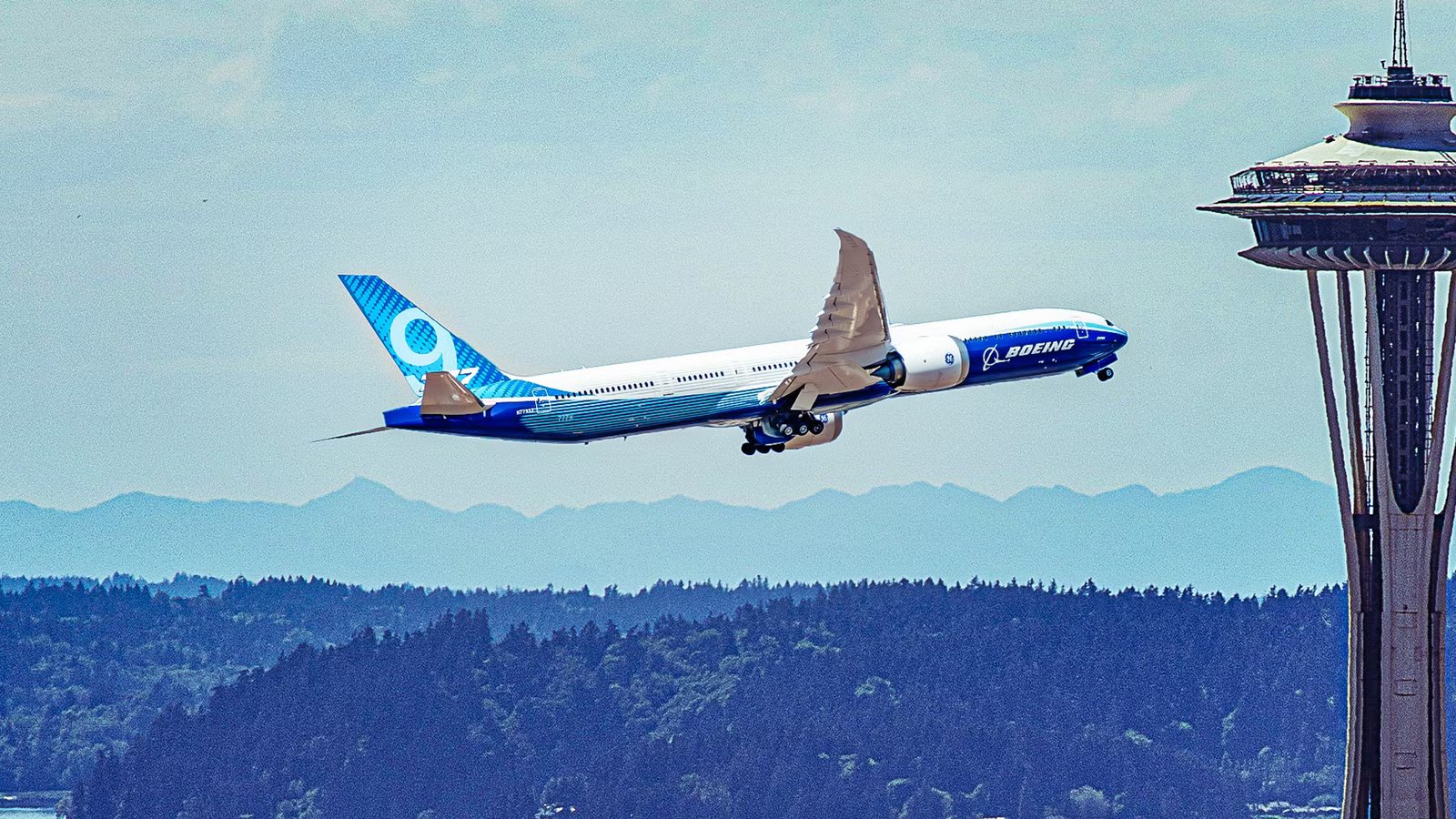
In contrast, United does not currently operate any Airbus widebody aircraft, although it does have A350s on order. Instead, the airline operates both variants of the 767, with Delta and United being the only two airlines in the world to fly the 767-400, along with the 777-200, 777-200ER, and 777-300ER, and all variants of the 787, including the 787-8, 787-9, and 787-10.
United’s average widebody fleet age is 18 years, largely weighed down by its older 767 and 777 fleets. The airline’s most common widebody is the 777-200ER, with 48 aircraft, followed by the 767-300ER with 34 aircraft.
Aircraft Orders

Hot off the press, Delta announced an order for the Boeing 787-10 this past week. As mentioned earlier, this will add a second Boeing widebody type back into the airline’s fleet. The initial order is for 30 Boeing 787-10s, with options for 30 more, and deliveries are set to begin in 2031. Delta’s chief financial officer (CFO) noted the following earlier this week.
“Today’s 787 order adds diversity to our widebody order book, while creating cost-efficient scale across all widebody fleets. Our fleet strategy is positioning Delta for the future by enhancing the customer experience and driving operational improvements.”
Including the 787 order, Delta currently has 286 aircraft on order. This orderbook consists of A220-300s, A321neos, A350-1000s, A350-900s, and its largest single order, 100 Boeing 737 MAX 10s.
United clearly leads in this category, with a total of 652 aircraft on order. The A321neo, 737 MAX 10, and 787-9 each have more than 140 aircraft still to be delivered. The airline also has smaller orders for the A321XLR and the A350-900, both of which will be new additions to the fleet, along with roughly 100 737 MAX 9s.

United Airlines Will Retire Its Boeing 767s By 2030 & Consider Taking Its Airbus A350s
United’s A350 order may be taken up after all.
Most Frequent And Longest Routes In 2026

According to Cirium data, Delta’s most frequent route in 2026 is Atlanta to Orlando, with 15 daily departures, all operated by the Boeing 757-200. Coming in second is Atlanta to LaGuardia in New York, with 14 daily departures, all operated by the A321-200. The next three most frequent routes are also from Atlanta to Florida, serving Tampa, Fort Lauderdale, and Jacksonville, respectively.
United’s most frequent mainline route is Newark to Orlando. Although Chicago to LaGuardia has more daily flights, that route is partially served by the airline’s regional network.
Delta’s longest route in 2026 is Atlanta to Johannesburg, covering 7,327 nautical miles (13,570 km) with a block time of 16 hours and 50 minutes in the longer direction, operated by the A350. The second-longest is also to South Africa, with service from Atlanta to Cape Town on the A350, taking 16 hours and 25 minutes in the longer direction. After that, Los Angeles to Melbourne and Los Angeles to Sydney follow as Delta’s next longest routes.
United operates a marginally longer route, from Houston to Sydney, covering 7,461 nautical miles (13,818 km) with a block time of 17 hours and 30 minutes. The airline’s next longest routes are San Francisco to Singapore, San Francisco to Adelaide, and Newark to Johannesburg.
The Bottom Line

When looking strictly at today’s numbers, United clearly holds the advantage in total mainline fleet size and also has a much larger orderbook. Delta’s fleet is slightly smaller but younger in key areas, especially on the widebody side. Both airlines are investing in extremely premium-heavy cabins, as business and premium economy travel continues to grow.
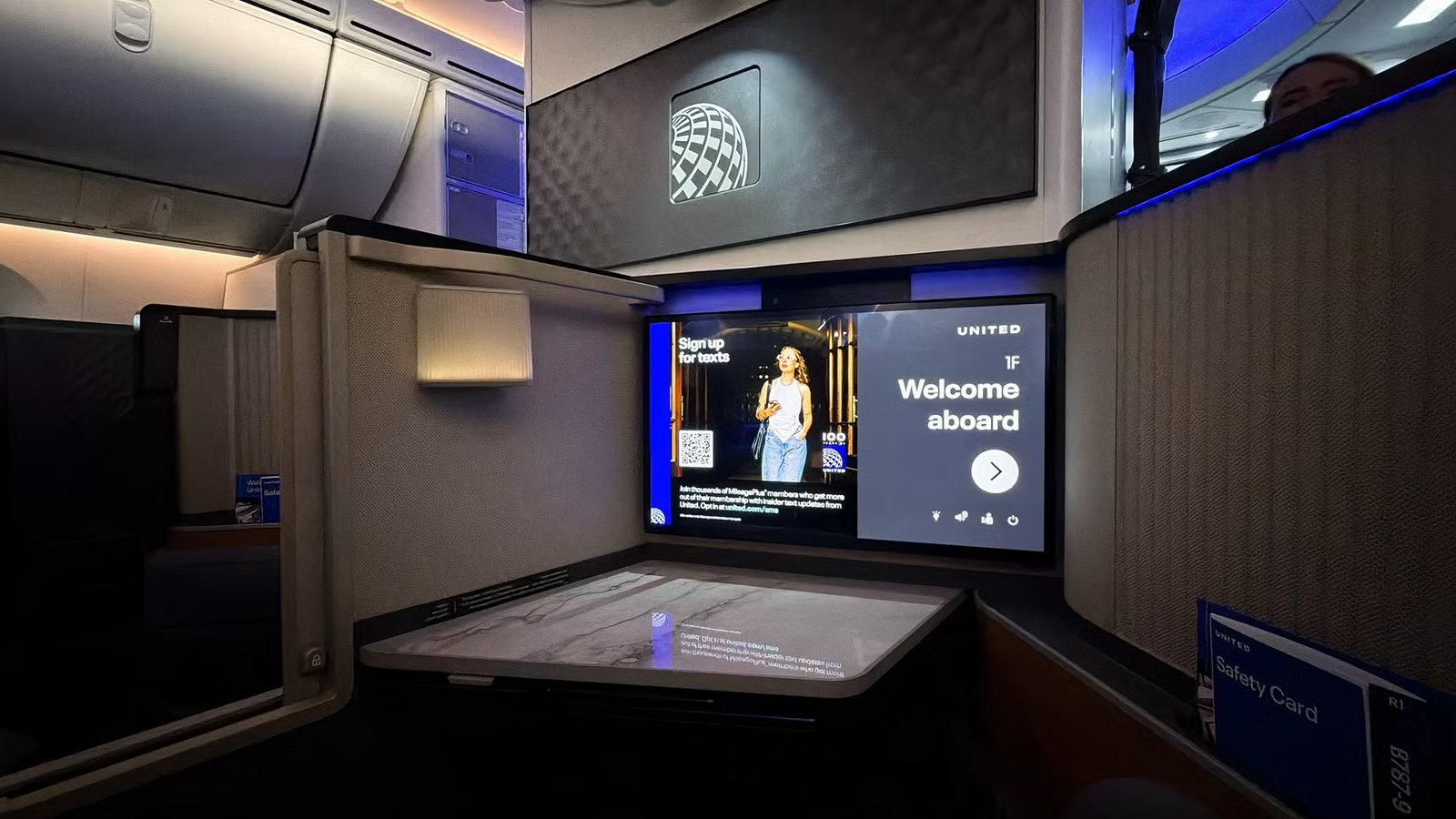
That said, United’s strategy points toward a much more aggressive expansion, particularly in long-haul flying, where new 787s, A321XLRs, and eventually A350s will reshape its international network. This growth will also coincide with product upgrades, including the debut of United’s new Polaris business class on select Pacific routes from San Francisco aboard the 787-9 this year.
While Delta remains exceptionally strong and disciplined in how it manages its fleet, all signs point to United continuing to widen the gap and firmly holding the title of the largest fleet among the two carriers as 2026 continues.