dailynewsnblog
If you’re planning your next trip and have your sights set on an IHG hotel, it’s natural to assume the best way to pay for your stay is with an IHG One Rewards cobranded card.
That’s not a bad idea, since you will automatically receive high earning rates and program-specific perks, such as elite status, when you hold an IHG credit card.
But here’s some expert-level advice: A cobranded card may not always be the best way to pay for an IHG stay. There are some instances in which another card in your wallet may help you maximize your earnings.
Let’s take a look at this list of cards to consider when booking with IHG. Some of the options may surprise you.
Comparing credit cards for an IHG stay
Sure, there are plenty of times when an IHG cobranded card may be the right choice for booking an IHG hotel.
However, you could receive more value from paying with an all-around travel rewards card that earns transferable points, which are often more valuable in the long run.
Here are some cards you might want to pay with, and what you could get when using these cards:
*Value is based on TPG’s April 2026 valuations.
**The information for the American Express Green Card has been collected independently by The Points Guy. The card details on this page have not been reviewed or provided by the card issuer.

Reward your inbox with the TPG Daily newsletter
Join over 700,000 readers for breaking news, in-depth guides and exclusive deals from TPG’s experts
Which credit card should you use for IHG stays?
It’s still good practice for IHG loyalists to keep their cobranded credit cards to enjoy elite status and card perks.
However, there are many instances when it’s better to pull out another card from your wallet to pay for the actual stay.
When you’re making this decision, you’ll want to weigh two factors:
- The benefits you’ll receive from the card you use to pay
- The value of the points you’ll earn from paying with that card

Consider these calculations:
- If you pay with the IHG One Premier or IHG One Premier Business, you’ll earn 10 points per dollar spent on your stay. IHG points are worth 0.6 cents apiece, per TPG’s valuations. So, those 10 points are worth 6 cents.
- If you pay with the Chase Sapphire Reserve, you’ll earn 4 points per dollar spent on your stay (or 8 points per dollar spent if you book via Chase Travel). Chase Ultimate Rewards points are worth 2.05 cents each, per TPG’s valuations. So, those 4 points are valued at 8.2 cents (or the 8 points are worth 16.4 cents if you book through Chase Travel).
When you break it down like this, it actually makes more sense to pay with the Sapphire Reserve, since those points are more valuable. We value Ultimate Rewards points more than IHG points because they can be redeemed with a wide range of hotel and airline partners.
Of course, it’s worth considering that non-cobranded cards don’t unlock benefits like room upgrades on their own. However, you don’t have to worry about this if you already hold an IHG cobranded card.
That’s because simply having the card unlocks these perks. You don’t have to pay with your IHG card to receive these benefits.
So, it makes sense to hold an IHG card simply to qualify for elite status and receive benefits, and, in some cases, use a different card with a more valuable currency to pay.

It is also worth noting that the Sapphire Reserve provides IHG Platinum status (through Dec. 31, 2027) as part of its benefits for certain cardholders. High-spending individuals who put at least $75,000 on the card in a calendar year unlock IHG Diamond status.
That said, using a card like the Sapphire Reserve to pay for an IHG stay through Chase Travel may not be the best option. These reservations are treated as third-party bookings and aren’t eligible to earn IHG points. However, some IHG bookings made through Chase Travel are loyalty eligible. Keep an eye out for a badge that says “Eligible for IHG One Rewards” on the hotel’s listing.
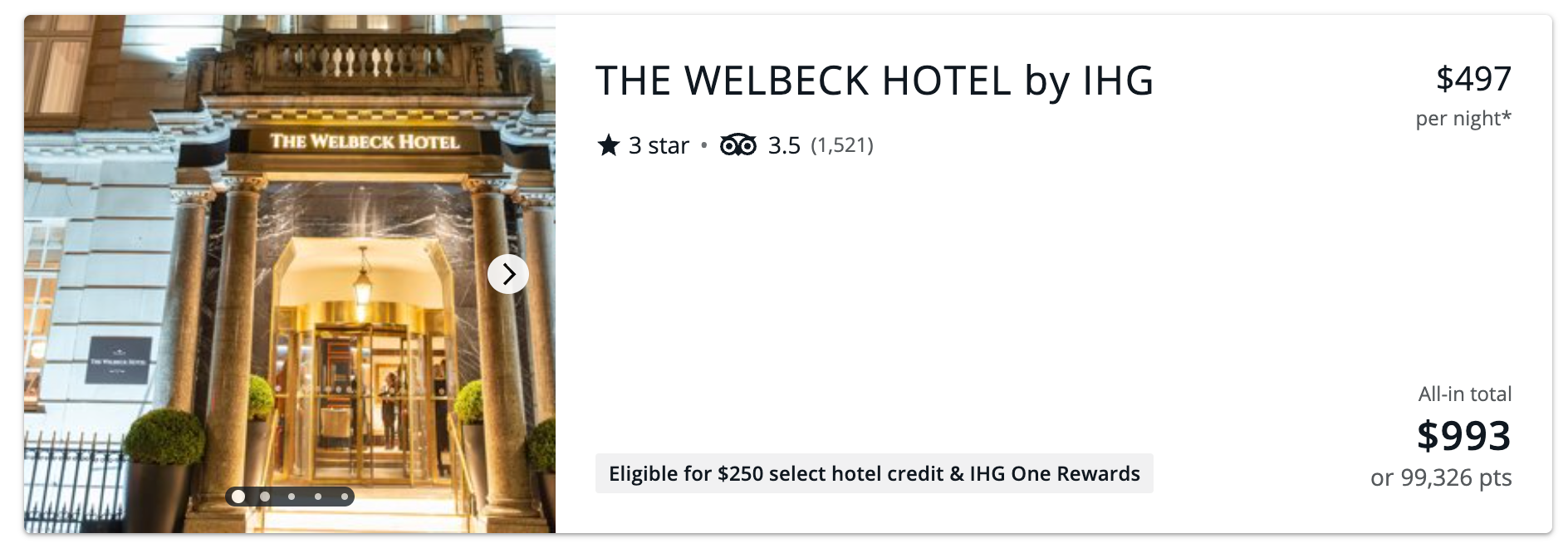
Even so, the Ultimate Rewards points you earn by swiping the Sapphire Reserve can be transferred freely and immediately to IHG if you need to top off your balance for an upcoming redemption.
While there are many other ways to maximize those points, IHG loyalists can take advantage of this. Don’t forget to consider how this card’s $795 annual fee affects your assessment of the value of these benefits.
You’ll also miss out on using any elite status perks during your stay if you book through Chase Travel, so be sure to consider that when deciding how to book (and pay).
Related: What you need to know about direct vs. third-party travel bookings
Bottom line
It’s still a good idea for IHG loyalists to hold an IHG cobranded card to receive perks like complimentary elite status. However, it’s not a given that your IHG cobranded card is the best option for paying for your stay.
We don’t value IHG points highly — and we generally recommend collecting more valuable transferable rewards. So, another card in your wallet that earns bonus points on hotel stays could be your best bet.
In general, consider keeping your IHG card on hand for the added benefits and using a more valuable travel rewards card to pay for your IHG stay.
Related: From mountain peaks to seaside getaways: 7 IHG hotels for your next vacation