dailynewsnblog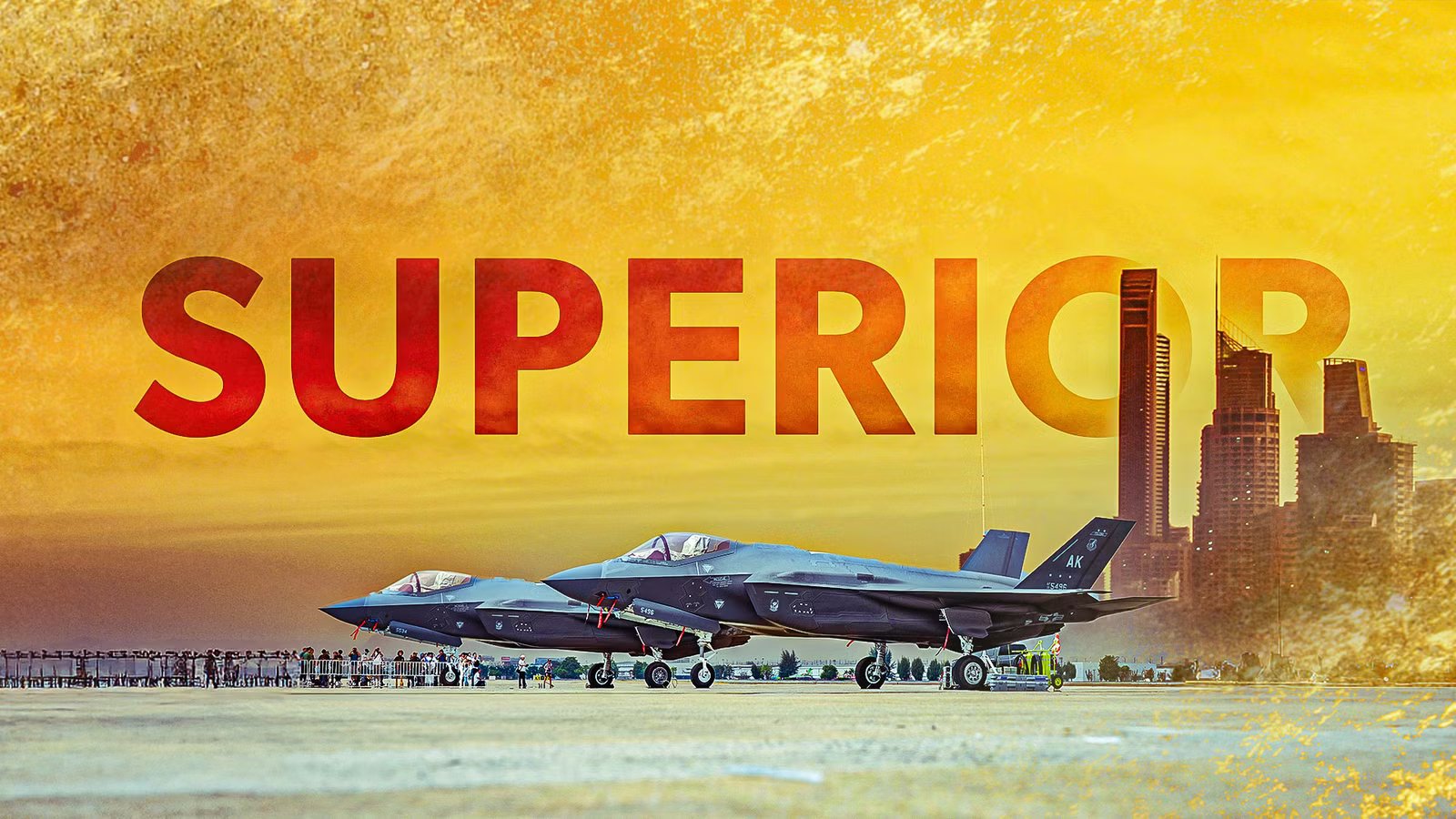
Which country has the most advanced fifth-generation fighter jets? The short answer is the US, on account of the Lockheed Martin F-35 Lightning II and the Lockheed Martin F-22 Raptor, although there is more nuance to the topic. The F-22 Raptor may have been the most advanced fighter jet in the 2000s, but its massive costs led to its early cancellation. Meanwhile, production difficulties of the Su-57 mean Russia is unable to ramp up production.
Another important factor to consider is the that role(s) these jets are used for. For example, the F-22 is superb when it comes to air superiority but is limited in other roles. Meanwhile, the F-35 is designed to fill a much larger suite of missions, and, at the same time, the Su-57 has been built for aerobatic performance, while the Chinese J-20 has been designed with a large combat range. It can be argued that the only country rising to challenge the US on this front is China.
What Is A Fifth-Generation Fighter?

Before answering which country has the most advanced fifth-generation fighters, it is necessary to first answer the question of what such a jet actually is. The concept of fighter jet generations was first proposed by air historian Richard P. Hallion, and the idea then became popular as a marketing ploy to highlight just how much more advanced the F-22 Raptor air dominance fighter was than all preceding aircraft. Interest groups were able to advertise the aircraft as the world’s first fifth-generation fighter.
There is no set definition of what a fifth-generation fighter really is. However, core attributes are typically taken to include stealth, advanced avionics, low-probability-of-intercept radar, highly integrated computer systems able to network with other fighters and elements on the battlefield for situational awareness, and C3 (command, control, and communications) capabilities. It may also include supercruise.
Only five aircraft from three countries are generally agreed to qualify as fifth-generation fighter jets. The United States with the F-22 and F-35, China with the J-20 and J-35, and Russia with the Su-57. However, putting these aircraft in the same generational grouping does not imply they have similar lethality and real-world survivability. After all, the obsolete F-14 Tomcat and the cutting-edge F-15EX Strike Eagle are both considered fourth-generation fighters.
The United States Is Home To The Most Superior Fighter Jets

The now-aging F-22 Raptor is a dedicated air superiority fighter jet and is famous for its ridiculous victory rates in military exercises. This jet is still generally considered the most lethal aircraft in the air superiority role, and the Air Force is preparing to roll out a range of new upgrades that will ensure the Raptor remains at the cutting edge well into the 2030s.
The F-35 Lightning II can either be considered a single fighter jet or three distinct fighter jets. After all, the conventional Air Force F-35A, the STOVL Marine Corps F-35B, and the Navy’s carrier-based F-35C are substantially different from each other. The F-35 is considered the most advanced fighter jet in the world today, and, while the F-22 may have an edge in the air superiority role, progressive upgrades to the F-35 have seen that advantage narrow.
|
Fifth-generation fighter jets and their roles |
|
|---|---|
|
F-22 Raptor |
Air dominance |
|
F-35 Lightning II |
Multirole |
|
J-20 Mighty Dragon |
Air superiority |
|
J-35A |
Multirole |
|
Su-57 Felon |
Multirole |
The F-35 is a true multirole fighter able to carry out a diverse range of missions, and its lethality has been on display in Iran in 2025. There, Israeli F-35s were the tip of the spear in dismantling the country’s air defense network, and an Israeli pilot recently told The War Zone that “the F-35 is the best plane technologically now in the world.” They also spoke about how the F-35 is able to enhance the situational awareness of fourth-generation fighters.
China Is The Rising Star On This Front

The speed at which the Chinese Air Force (People’s Liberation Army Air Force or PLAAF) is modernizing is breathtaking. The Cold War saw China making second-class licensed-built copies of more advanced Soviet designs, while the last couple of decades have seen China import the final fighter jets from Russia and move on to developing and bringing into service its own more advanced fighter jets.
China’s leading tactical fighter jet is the Chengdu J-20 Mighty Dragon. Like the F-22 in the US, China has an export ban on the J-20, which is considered a formidable fighter jet and comes with an impressive range. While it may not be as advanced as the F-35, its range and stealth would make it a lethal threat to the aerial tankers supplying US F-35s and F-22s. The J-20 is also believed to benefit from high production numbers.
The second Chinese 5th-generation fighter is the Shenyang J-35, a derivative of the FC-31 that lost out to the more capable J-20, although it appears that Shenyang has pressed on with developing it anyway. The aircraft was officially unveiled in November 2024, along with its production facilities in mid-2025. The J-35 is thought to be developed with an eye to export and as a naval fighter for the Chinese Navy. The PLAAF may also purchase it as a cheaper alternative to the J-20.
Russia’s Struggle To Remain Relevant

For Russia, the glory days of the Soviet Union are long gone, and it is now struggling to remain relevant in an age of increasing competition between China and the US. The Su-57 was initially jointly developed with India, and India contributed considerable amounts of money to its development. The country later withdrew from the project, however, saying that it didn’t meet Indian requirements. Russia pressed on and managed to bring the Su-57 Felon into service.
However, it has struggled to build it in significant numbers and or find any willing buyers in the world. So far, only Algeria has purchased the aircraft. While the jet has been active in Ukraine for years, it has failed to make any significant impact in Suppression or Destruction of Enemy Air Defense missions, unlike the F-35s in Israeli service. The Su-57 has a large radar cross-section, although it is a significant upgrade over the older Flanker family of jets.
|
Other fifth-gen-like fighter jets in development |
Country of origin |
|---|---|
|
Shenyang J-50 (possibly sixth-generation) |
China |
|
Sukhoi Su-75 |
Russia |
|
KF-21 Boramae |
South Korea (primarily) |
|
TAI Kaan |
Turkey |
|
Advanced Medium Combat Aircraft (AMCA) |
India |
One of the core attributes of a fifth-generation fighter is its sensing and computing power, and this is difficult to measure. Looking forward, Russia may eventually need to lean on China to field cutting-edge fighters. In July 2025, the Russian news outlet Izvestia even floated the idea that the Chinese J-35 may be a future solution for the Russian Navy. This would be a major reversal of the traditional roles of the two countries.

How Many F-35s Are In Service With The US Air Force?
The US Air Force has over 400 and perhaps closer to 500 F-35s in inventory, while Lockheed has delivered over 1,000 F-35s in total.
A Stealthy Aircraft That Can Fly

As Professor Justin Bronk has explained, it is relatively easy to build a stealthy-looking fighter jet that will fly. However, it is “incredibly difficult and unbelievably expensive to sustain the production of a weapons system that works as a low-observable fighter.” He points out that what is important are all the things that causal observers cannot see, like the integration between the weapons and the sensors.
Other fifth-generation-like aircraft in development include the Turkish Kaan, the South Korean KF-21, and the Russian Su-74. However, what makes fighter jets cutting-edge is not how much they resemble an F-35 or their ability to supercruise or wow spectators with Cobra maneuvers. Instead, the defining characteristic is the picture presented in the cockpit.
Bronk says that the integration of systems in the F-35 is where one sees the “unbearable weight (…) of sustained tens of billions of dollars every year for decades on the American side in multiple programs.” Those who fly these jets on simulation platforms like War Thunder cannot get a sense of these capabilities, as such games are based on publicly known information and not on the critical classified information.
The United States Has The Most Advanced Fighter Jets

Another indication of how advanced the F-35 is is the number of countries buying it. Even though purchasing and sustaining the F-35 is infamously expensive, almost every country that the US has allowed to see its classified capabilities goes on to buy it. Around 20 countries have purchased the F-35, with more likely to purchase it in the future. Additionally, the US has refused to sell it to at least another seven countries.
Meanwhile, Russia has found only a single buyer for its Su-57 after India walked away. Algeria maintains very close military ties with Russia, and purchasing Western jets is out of the question. Meanwhile, time will tell with China, as, until now, it has had an export ban on only its fifth-generation fighter, but the new J-35 will provide countries with an alternative to purchasing Russian fighters.
The massive and continuous investment in the F-35 and the F-22 ensures these aircraft remain the world’s top fifth-generation fighters. This is something of a virtuous circle, as, the more countries that purchase the F-35, the more money there is to further mature it. Additionally, the more countries that use it in combat, the more information is gathered to further enhance it and eliminate any design weaknesses.