dailynewsnblog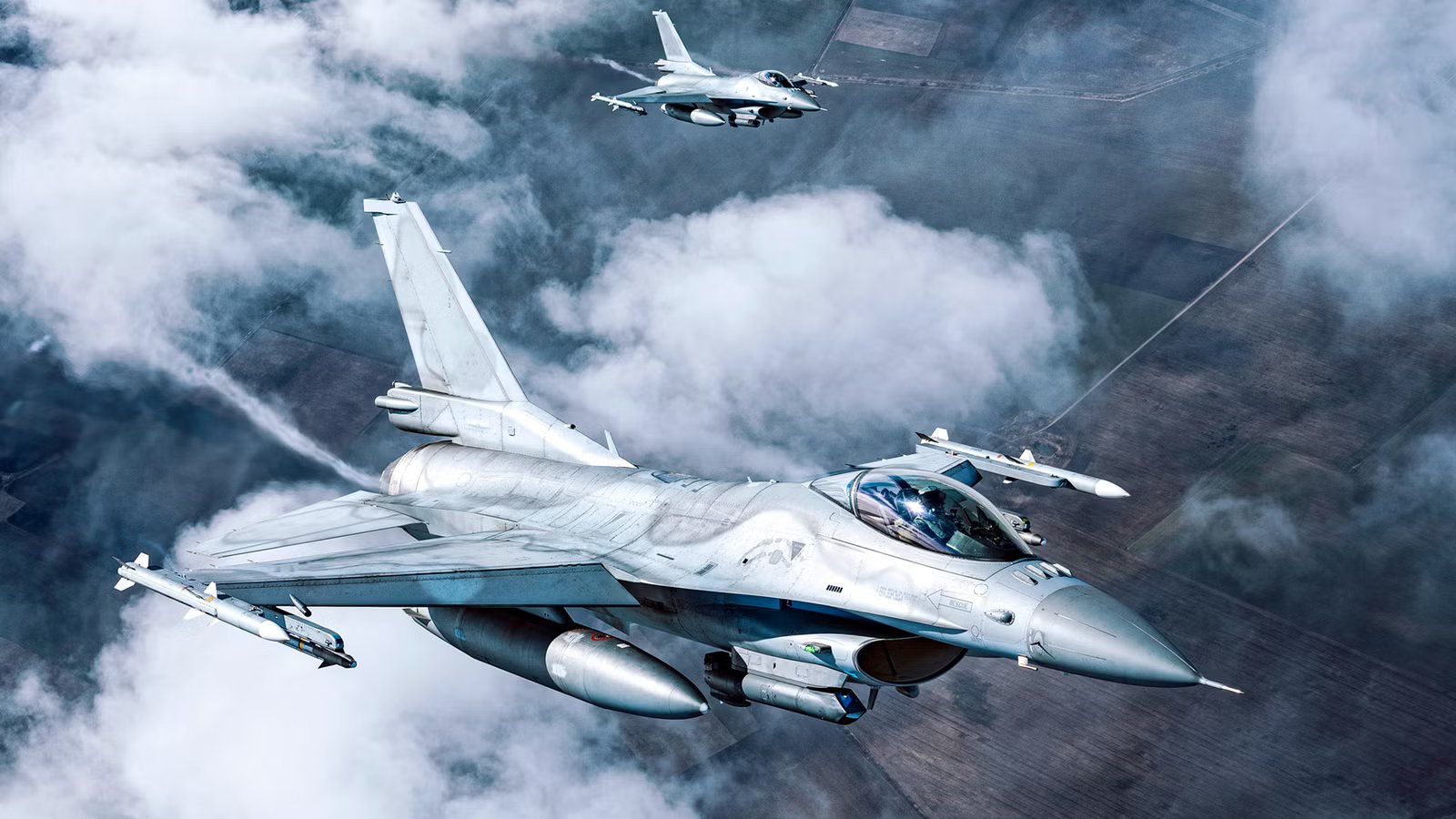
Despite being in possession of the largest armada of warplanes in the world, the United States continues to focus its defense strategy on qualitative superiority. That manifests itself in air power as a dominant force of stealth fighter jets. The American fleet of advanced warbirds is not only tactically superior to every adversary on the battlefield that it may encounter, but there are also more of them ready to fly at any time.
It is true that both China and Russia have their own stealth fighters, but the number that they have produced and the actual effectiveness that the aircraft have exhibited is inferior to the American counterparts. A notable outlier, Japan is the second-largest operator of the newest American stealth fighter outside the US. Europe has begun procuring stealth fighters made in America, but domestic designs are still in development, with the first examples not expected to fly for some years.

The United States has more military aircraft and a bigger defense budget than the next four of the top five countries combined. Statistics from World Population Review confirm that we are the world champion of air power in terms of fleet size. Russia would be the US Armed Forces’ closest near-peer adversary, but the widening gap of qualitative and quantitative advantages makes the difference enormous between the two.
An April 2025 study by an international group of researchers reported to the Stockholm International Peace Research Institute (SIPRI) that the top five military spenders in the world account for 60% of all defense spending on the planet. Those five nations, in order of biggest spender, are: the United States, China, Russia, Germany, and India. Looking past the world’s three big juggernauts, the fleets of smaller forces like India, South Korea, and Japan continue to grow and modernize.
Ultimately, the most powerful fighter jets in the world are concentrated in the hands of just a few select air forces. The contest for air power has come down to a race between who can assemble the largest fleet of 5th-generation fighters, with some militaries now beginning the development of 6th-Gen stealth warplanes in both the fighter and bomber classes.
By The Numbers: Fighter Generations

When it comes to the contest of air power, many say that the most important system is the pilot in the seat. However, giving that pilot the best tools for the job makes it a lot easier for them to succeed. The 21st century has seen the proliferation of stealth technology and advanced computerized weaponry evolving at an exponential rate. The domain in the sky has become a more complex battlefield than ever before.
A crucial element of understanding the combat power of any fighter jet is the difference between each generation, as it is defined for the global defense industry. Below is a simple breakdown of these generations going back to the first fighter jets that ever took flight, with examples of the highest-performance model produced in each generation.
|
Generation |
Key Characteristics |
Representative Leader |
|---|---|---|
|
1st Gen (1945–1955) |
Basic turbojet engines, no radar, strictly visual dogfighting with machine guns. |
F-86 Sabre (USA) or MiG-15 (USSR) |
|
2nd Gen (1955–1960) |
Introduction of air-to-air missiles, radar, and supersonic speeds in level flight. |
MiG-21 (USSR) |
|
3rd Gen (1960–1970) |
Improved maneuverability, multirole capabilities (air-to-air and air-to-ground), and advanced missiles. |
F-4 Phantom II (USA) |
|
4th Gen (1970–1990) |
Fly-by-wire controls, high agility, pulse-doppler radars, and head-up displays (HUD). |
F-15 Eagle (USA) or Su-27 (Russia) |
|
4.5 Gen (1990–Present) |
4th Gen frames upgraded with AESA radar, high-capacity data links, and reduced radar signatures. |
Eurofighter Typhoon (EU) or F/A-18 Super Hornet (USA) |
|
5th Gen (2005–Present) |
All-aspect stealth, internal weapons bays, extreme sensor fusion, and supercruise. |
F-22 Raptor (USA) |
|
6th Gen (Future) |
AI assistance, loyal wingman drones, directed energy weapons, and advanced digital cloaking. |
NGAD or GCAP (In Development) |
When it comes to analyzing air power, the numbers are just one element. The technology that goes into each airframe shapes the capability of a nation’s air power just as much as the sheer volume of equipment it can field at any given time. In addition to the advanced capabilities of 6th-Gen stealth fighters, these aircraft will be integrated with combat drones, or ‘Loyal Wingmen,’ to not only improve their survivability on the battlefield but also their lethality.
American Air Dominance

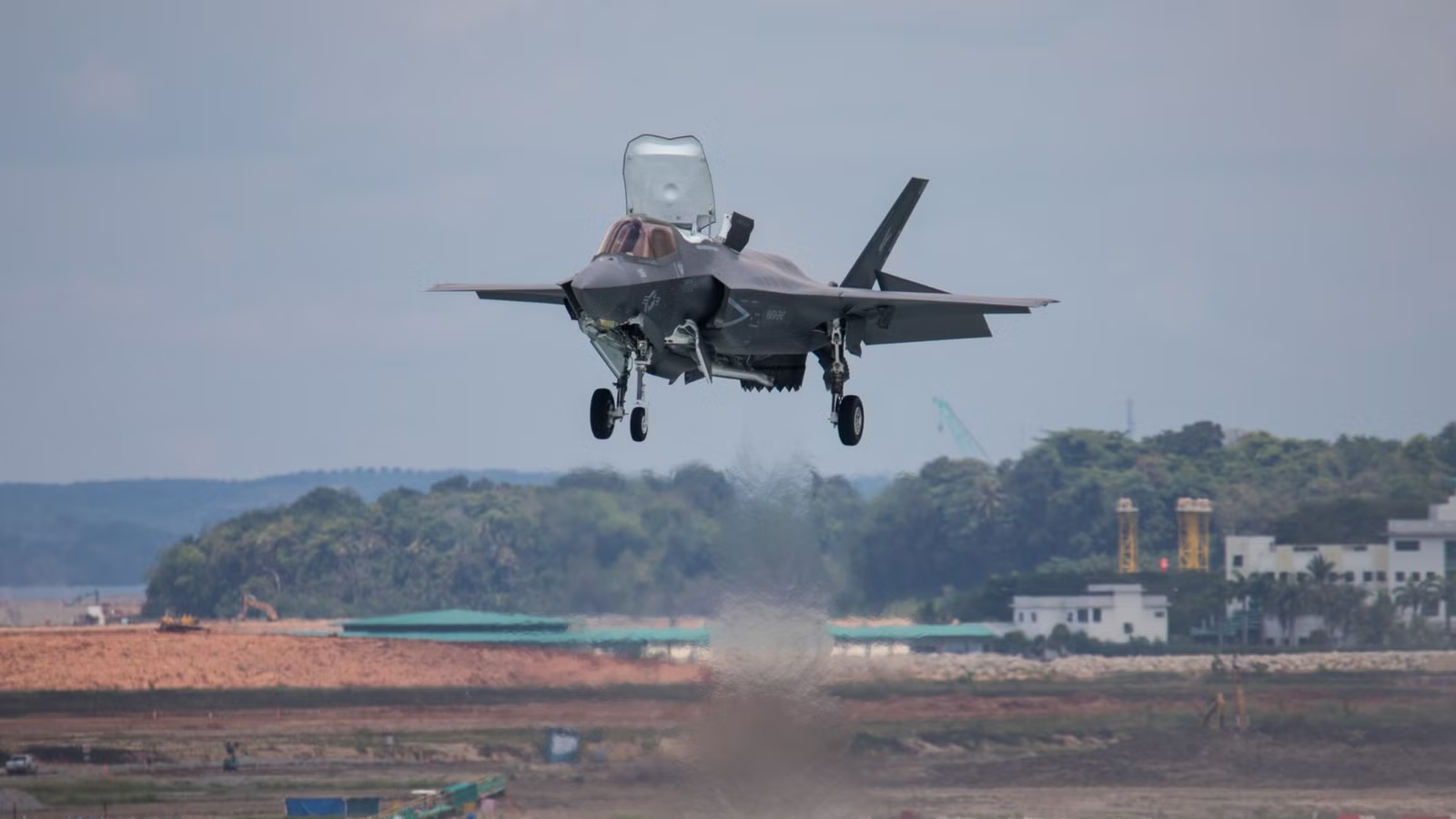
The US remains the only nation with a mature, dual-fleet 5th-Gen force. And the disparity is growing. The F-35 Lightning II made by Lockheed Martin’s Skunk Works division, is the first stealth fighter produced in truly large numbers and has given the US and its allies a major advantage.
American 5th-Gen jets don’t just fly; they act as nodes in a giant data network, sharing targeting info with other aircraft, ships, and ground troops. The US uses the F-22 Raptor stealth fighter for air dominance and the F-35 as a multirole strike platform. These are supported by a massive fleet of modernized F-15EX and F-16 (4.5-Gen) aircraft that act as ‘missile trucks’ to follow behind the stealth jets and strike targets painted by the 5th-Gens.
Currently, one-third of the American fleet is composed of 5th-Gen fighters. Less than half of the total number of F-35 fighter jets has been delivered to date, meaning that the total is continuing to grow every day. The F-35 program is the single largest defense project in American military history, overshadowing the investments and other historic programs like the Manhattan Project, Boeing B-29 Superfortress, and Northrop Grumman B-2 Spirit stealth bomber.
While 5th-generation jets (like the F-22 and F-35) focus on stealth and sensor fusion, the 6th-Gen introduces several technological leaps. The Next-Generation Air Dominance (NGAD) program represents the shift from a single fighter jet to a family of systems designed to maintain air superiority in highly contested environments, particularly the Pacific. Boeing was awarded the contract in 2025 and has designated the future jet the F-47.

Explained: The 6 Generations Of Fighter Jets
There are six generally accepted generations of fighter jets, with each leap frogging the previous generation.
Europe’s Heavy Hitters

Europe made a conscious decision in the 1990s and 2000s not to build a domestic 5th-generation stealth fighter. Nations like the UK, Italy, and the Netherlands bought the U.S. F-35 to handle stealth missions. They kept building the Eurofighter and Rafale to handle high-speed interception and bomb trucking missions where stealth isn’t required. This created a ‘High-Low’ mix using both American and European technology.
The race for the 6th Generation is where Europe is attempting to leapfrog back into leadership. There are currently two major European projects competing with the American NGAD and Chinese programs: FCAS and NGAD. Germany is participating in the 6th-gen Future Combat Air System (FCAS) with Spain and France, but disagreements over the economic aspect are problematic, according to Politico.
FCAS is being designed as a combat cloud. The fighter is just one part of a web of drones and satellites. It is France’s bid to remain industrially independent of the US. GCAP (Global Combat Air Programme) is designed to be a large fighter focused on long range and massive electrical power to support laser weapons and AI-driven loyal wingman drones. It aims to be more digitally advanced than the F-35.
The French Rafale’s SPECTRA system doesn’t make the plane invisible to radar, but it jams and spoofs enemy sensors so effectively that it achieves a similar survival rate. The US approach is passive (shape of the plane), while Europe’s is more active (software/jamming). Compared to China and Russia, European jets currently possess more combat-proven software and integration with Western-standard weaponry like the Meteor missile, which is widely considered the best long-range air-to-air missile in the world.

The Real Reason Why Boeing Is Building The F-47 Stealth Fighter And Not Lockheed
Stealth, Speed, and Strategy: Inside the F-47 Revolution.
Rising Strength In China

China’s strategy has shifted from defending its borders to projecting power deep into the Pacific. China is the only nation besides the US with a mass-produced stealth fighter, the J-20 Mighty Dragon. China is also currently flight-testing at least two distinct 6th-Gen demonstrators, supposedly aiming for service entry by 2035.
The Chengdu J-36 is a tailless, triple-engine technology demonstrator that focuses on extreme speed, high altitude, and all-around stealth. The Shenyang J-50, as seen on Chinese social media, is also a tailless design but with ‘lambda’ wings, optimized for broadband stealth and deep integration with drone swarms.
The PLAAF is almost certainly in possession of more stealth aircraft than Russia, as the J-20 is continuing to improve and potentially passed the 300 mark in total made to date. Its other aircraft, like the J-11 and J-16, are based on Russian designs like the Su-27 Flanker. China operates the world’s largest fleet of Flanker derivatives. Their domestic J-16 is a 4.5-gen powerhouse that acts as a missile truck, carrying heavy payloads while the J-20 stays hidden.
The Chengdu J-10 is China’s equivalent of the American F-16. It is a single-engine, multirole fighter characterized by its delta wing and canard design, which makes it exceptionally agile in a dogfight. The JF-17 Block III is the newest version of the PLAAF’s most affordable and simple airframe. It uses 5th-Gen avionics and helmet-mounted displays, making it a very dangerous 4th-Gen jet for its price point.

The World’s Largest Air Forces By Total Fighter Jet Numbers
Find out how the biggest fighter fleets stack up!
The Russian Menace

In 2026, the Russian Aerospace Forces (VKS) remain a formidable global power, though they increasingly trail the US and China in the volume of modern 5th-generation aircraft. While Russia excels in specialized areas like extreme maneuverability and high-speed interception, its fleet relies heavily on modernized Soviet-era airframes compared to the high-tech integrated fleets of the West. Russia is developing the MiG-41, an ambitious 6th-Gen interceptor designed to replace the MiG-31 Foxhound. Claims for the MiG-41 include Mach 4.3+ speeds, near-space service ceilings, and anti-satellite weapons.
The Su-57 Felon, made by Sukhoi, is rarely seen, and the total made is believed to be in the low tens. The Russian aerospace industry is struggling due to sanctions, which restrict numerous critical components that the country relied on and was not prepared to begin making domestically. The Su-57 has reportedly integrated the AL-51 engine, allowing it to reach full 5th-gen performance with improved stealth nozzles and supercruise capabilities.
The VKS primarily relies on a high-low mix of high-end 4.5 generation jets and a massive, aging legacy fleet from the Soviet era. These jets are heavily modernized derivatives of the original Su-27 Flanker, equipped with 5th-generation avionics, AESA or advanced PESA radars, and supermaneuverability. Examples of these platforms include the Su-35S (Flanker-E), Su-30SM / SM2 (Flanker-H), and Su-34 / 34M (Fullback) on the high-end.