dailynewsnblog
The competition between  Singapore Airlines and Cathay Pacific over long-haul dominance often centers on overall cabin experience, network coverage, and aircraft redeployment in multiple kinds of markets. In some ways, Cathay Pacific and Singapore Airlines are similar kinds of carriers that serve similar kinds of customers, as they essentially funnel passengers all across the globe through their major hubs at Singapore Changi International Airport (SIN) and Hong Kong International Airport (HKG). This means that both operate similarly, catering to different segments of the market with various premium products. The airlines also compete on frequency and overall strength of schedule, with each looking to carefully balance the overall number of flights with the needs of their long-haul schedules. This is to be expected for such massive airlines, but this dichotomy and market similarity are rarely seen outside of Asia.
A key battleground for these two carriers is how they deploy the  Boeing 777-300ER, a workhorse long-haul widebody aircraft that has become a core pillar of each respective airline’s fleet strategy. The aircraft itself is the most popular variant of the Boeing 777 family, and the one that has been the most commercially successful. Many airlines have slowly turned this jet into their long-haul flagship, and these two carriers are among the largest and most important Boeing 777-300ER operators not just in Asia but in the entire world. We will analyze the Boeing 777-300ER fleets of both of these carriers. Based on the latest data and a broader industry context, this article will compare which of the two airlines has the most Boeing 777-300ERs, and explore why the type remains so valuable for both airlines’ long-haul ambitions.
An Overview Of The Boeing 777-300ER

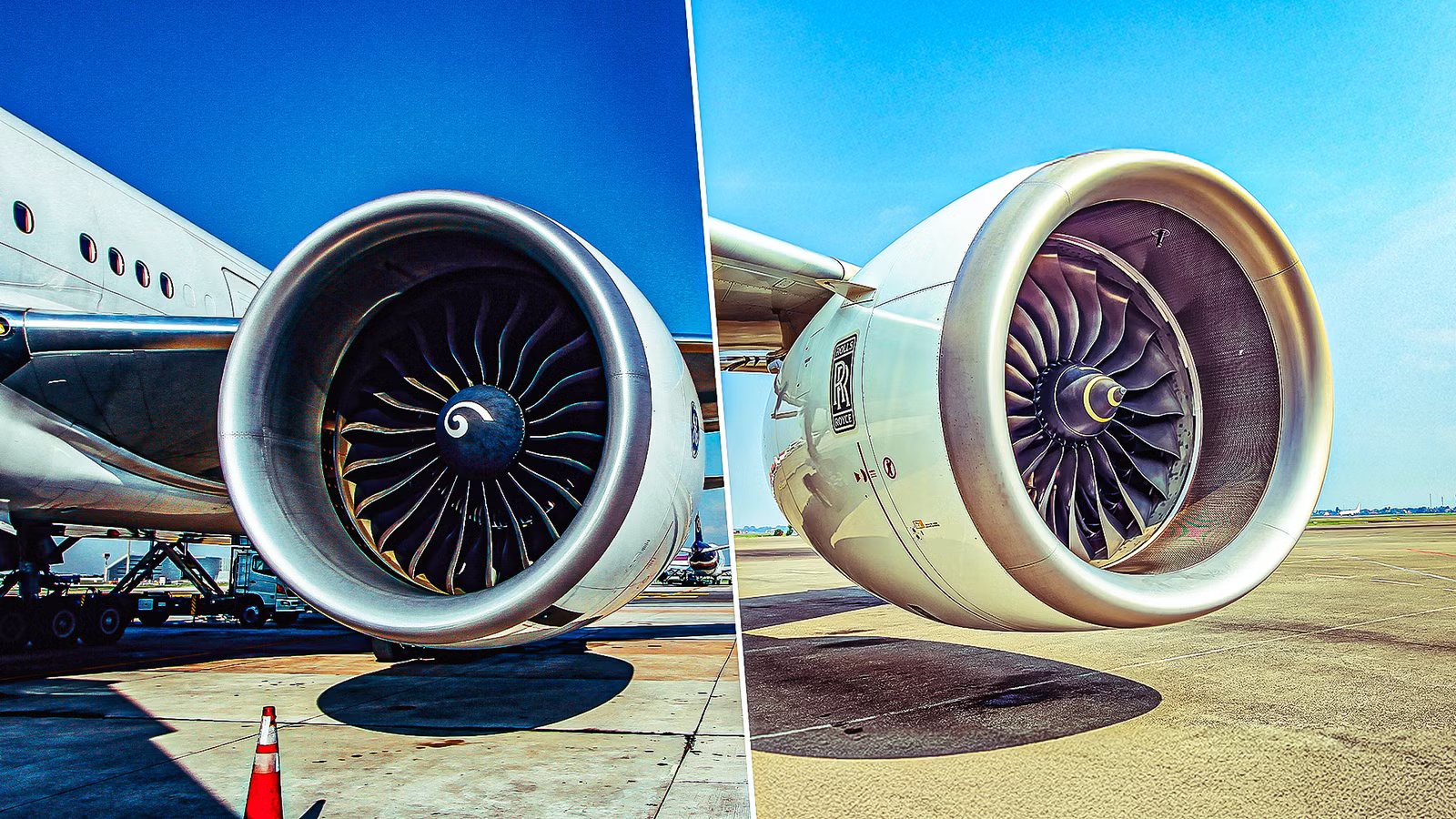
The Boeing 777-300ER is an extended-range variant of the Boeing 777-300, and it features a strengthened aircraft structure, extra fuel tanks, raked wingtips, and powerful engines. These are all technical upgrades that help give the aircraft an impressive range. These features allow it to serve ultra-long-haul sectors while carrying substantial payloads. As a twin-aisle, twin-engine widebody aircraft, the Boeing 777-300ER offers an exceptional balance between range, capacity, and fuel efficiency.
When compared with older four-engine jets or smaller narrowbody models, the Boeing 777-300ER is likely the sweet spot, as it offers enough seats and cargo capacity for high-demand routes. It also avoids having excessive fuel burn per seat or the complex operational requirements of larger jet aircraft. This allows the plane to offer excellent reliability, operational flexibility, and a versatile cabin layout that can be suitable for all kinds of services. This balance is what made the aircraft the most successful member of the Boeing 777 family.
Airlines have used the 777-300ER to replace older, fuel-hungry aircraft like the Boeing 757 while still operating long-haul nonstop flights efficiently. For airlines needing to link major hubs across continents with high demand, the Boeing 777-300ER remains an obvious choice given its range, high capacity, proven operating economics, and operator-friendly layout. This is why airlines such as those in Asia, the Middle East, and transatlantic markets heavily rely on the jet, even as newer twin-engine widebodies slowly begin to enter service.
A Look At Singapore Airlines’ Boeing 777-300ER

According to the latest fleet data provided to Simple Flying by aviation industry database ch-aviation, Singapore Airlines currently operates 22 Boeing 777-300ER models. These aircraft serve as core long-haul workhorses for the carrier. The airline blends the Boeing 777-300ER with its Airbus A350 and Boeing 787 models on long-haul routes, enabling operating flexibility across route demand and cabin offerings. For long-haul, high-capacity routes with high premium demand, such as those between Asia and Europe, or Asia and Africa, the Boeing 777-300ER is ideal.
On this aircraft, Singapore Airlines offers a full suite of cabin classes ranging from economy to first class, all while maintaining extremely efficient operations. While SIA has fewer Boeing 777-300ERs than Cathay, this number is still sufficient to sustain several major long-haul services, manage maintenance downtime, and adjust jet deployment based on demand fluctuations. Here is a complete cabin breakdown for the aircraft, according to airline documents:
|
Cabin |
Number of Seats |
|---|---|
|
First |
4 |
|
Business |
48 |
|
Premium Economy |
28 |
|
Economy |
184 |
Given that the Singapore Airlines network emphasizes frequent long-haul flights with premium service, the Boeing 777-300ER is likely to remain a flagship for the airline until it is able to fully cycle in newer widebody models. The 22-aircraft fleet is large enough to support Singapore’s long-haul ambitions while also being compact enough for careful yield and capacity management, avoiding surplus supply even during periods of lower overall demand.

Is A Boeing 777-300ER Bigger Than An Airbus A380?
Which aircraft is bigger? Airbus A380 or Boeing 777? Discover the surprising facts and specs behind these two iconic jumbos in our full comparison.
A Look At The Cathay Pacific Boeing 777-300ER

Cathay Pacific operates a slightly larger fleet of 35 Boeing 777-300ER models. This larger fleet reflects the airline’s long-haul strategy, which is centered on operating a connecting hub in Hong Kong. The Boeing 777-300ER enables the airline to maintain an extremely dense schedule on many of its highest-yielding intercontinental routes, including services to North America, Europe, and major Asian markets.
At the same time, the aircraft lets the carrier offer competitive cabin experiences and schedule flexibility. With 35 aircraft in its rotation, the airline can comfortably rotate the jets for refurbishment, maintenance, or redeployment without severely disrupting its long-haul network. The Boeing 777-300ER is part of the airline’s growing long-haul inventory alongside Airbus A350 and Airbus A330 models. For Cathay, the challenge is balancing premium demand, cargo, and seat volume alongside network breadth. Cathay Pacific operates the aircraft in multiple different configurations, with the latest featuring the airline’s new Aria Suite business-class product.
The aircraft allows Cathay to comfortably absorb demand surges or seasonal demand peaks. As newer aircraft continue to arrive, Cathay can keep Boeing 777-300ERs operational rather than choosing to immediately retire them, highlighting their continued commercial importance and overall operational flexibility.
Which Fleet Is Larger?

Shutterstock
Based on the numbers, it is fairly clear that Singapore Airlines operates a smaller Boeing 777-300ER fleet, with Cathay Pacific operating 13 more aircraft. This difference indicates that Cathay Pacific operates a roughly 60% larger fleet. This allows Cathay to serve more long-haul flights, maintain backups during maintenance or refurbishment processes, and scale capacity across varying demand cycles.
For Singapore Airlines, holding fewer aircraft comes along with trade-offs. While SIA may have lower fixed costs and avoid excess capacity, the airline has less spare parts availability to handle unexpected demand spikes or to substitute aircraft during maintenance downtime. However, a smaller fleet means that SIA can optimize utilization, but fewer jets does mean that a smaller amount of revenue can be generated across the board.
In terms of pure numbers, Cathay Pacific is the clear winner. Purely comparing fleet size misses other important dimensions, such as aircraft utilization, load factors, route networks, cabin configurations, and yield management strategies. A smaller but highly utilized fleet can perform comparably in revenue yield to a larger but under-utilized fleet.

Airbus A350 Vs Boeing 787: How Do They Compare On Ultra-Long-Haul Flights?
The A350 and Boeing 787 serve some of the world’s ultra-long-haul flights and complement each other in many airlines.
What Makes The Boeing 777-300ER Valuable To Both Carriers?

The Boeing 777-300ER is exceptionally valuable for both carriers due to its impressive combination of operating economics, flexibility, and ability to fit the airline’s network. The jet’s twin-engine design, raked wingtips, structural reinforcement, and efficient engines give it long-range capabilities and significant payload capacity, all of which make it ideal for nonstop intercontinental routes. For airlines like Singapore and Cathay, operating long-haul flights linking Asia to Europe, North America, and Africa, the Boeing 777-300ER offers a needed balance.
The jet can offer enough seats and cargo capacity to meet demand, all while remaining more fuel-efficient on a per-seat basis than older four-engine models or less efficient widebody jets. The aircraft’s widebody cabin can accommodate multiple cabin classes, allowing flexible yield management across passenger segments. Furthermore, the Boeing 777-300ER benefits from a mature operational history, with maintenance procedures already well-established and dispatch reliability being exceptionally high.
This reduces overall operational risk compared to introducing newer or less common aircraft. Lastly, for carriers with global networks and diverse route profiles that range from high-density long-haul to medium-haul premium flights, the Boeing 777-300ER remains a versatile backbone and helps bridge the gap between capacity-heavy volume demand and premium-class service requirements. This is why, even as airlines introduce the Airbus A350, the Boeing 787, or the Boeing 777-9, they will continue to depend on the model.
What Is Our Bottom Line On This?

Cathay Pacific is undoubtedly the airline of these two that operates the larger Boeing 777-300ER fleet, with roughly 35 aircraft in service versus 22. This gives the airline a clear edge in long-haul capacity and overall operational flexibility. This fleet advantage lets Cathay absorb some maintenance downtime while scaling demand in a seasonal capacity.
The aircraft is still a vital asset for Singapore Airlines, albeit not the largest aircraft in its fleet. That honor would go to the Airbus A380. The aircraft is still used to serve high-yielding destinations, with its range, capacity, fuel efficiency, and flexible cabin configurations making it ideally suited for long-haul international travel and mixed premium-economy deployment.
For Singapore Airlines, a lean fleet supports efficient utilization and disciplined capacity management. For Cathay, a larger fleet underpins overall network breadth and resilience. As long as demand for long-haul travel persists, the aircraft will remain a backbone of both carriers’ long-haul strategies.