dailynewsnblog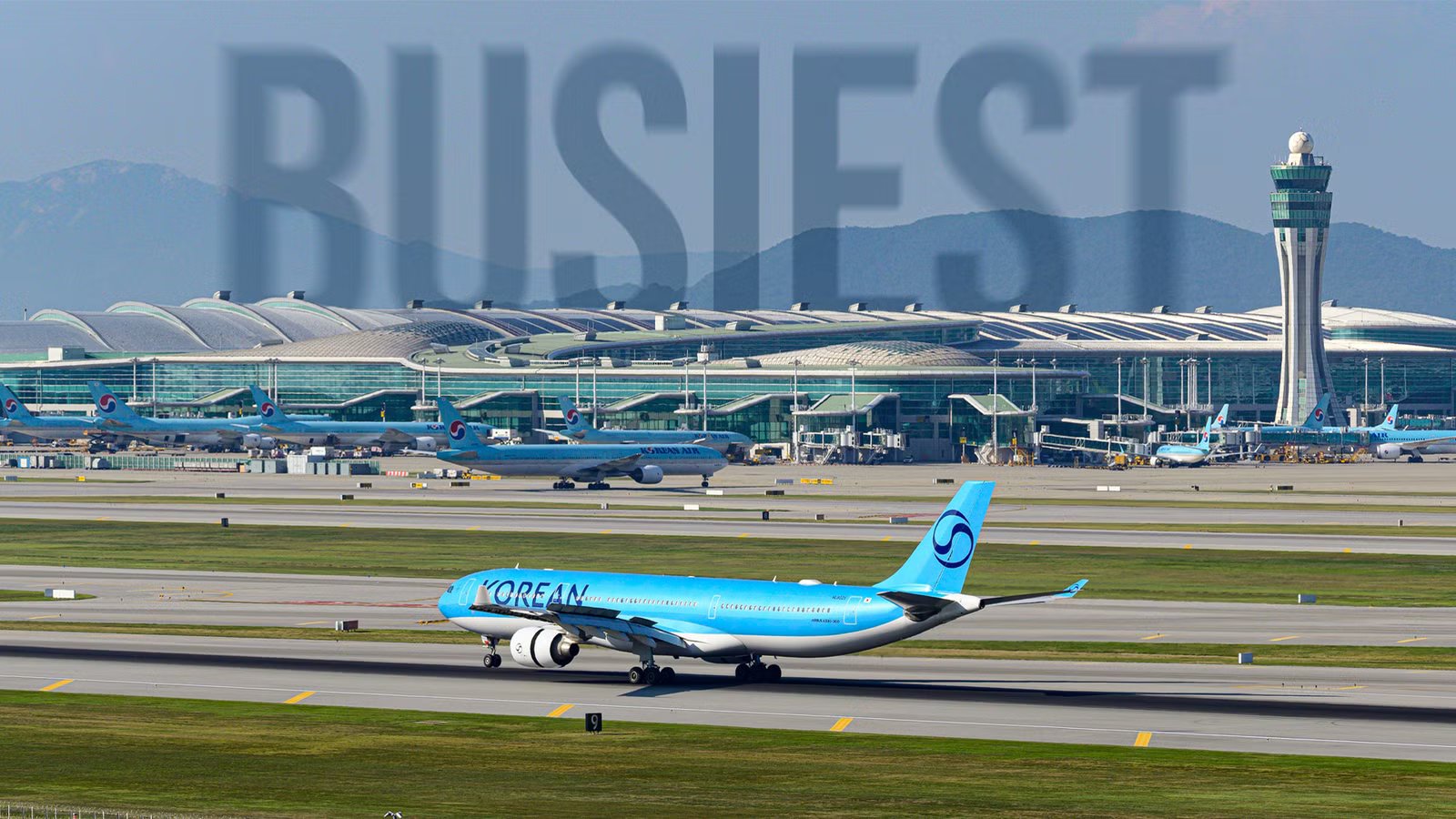
The transpacific market is one of the most lucrative and competitive sectors in the industry, connecting the manufacturing powerhouses of East Asia and the rising economies of South Asia with the massive consumer markets of North America. Some regions have far more connections and flights than others across the Pacific, so which airports see the most traffic through this corridor?
The landscape today is vastly different from the pre-pandemic era, defined by a renaissance of long-haul travel powered by fuel-efficient, next-generation aircraft like the Airbus A350-1000 and the Boeing 787-9. This article will explore the latest data from Cirium to identify the kings of the Pacific. We will look into the specific flight frequencies, available seat miles, and the strategic alliance shifts that have allowed certain airports to surge while others find themselves in a state of transition.
Which Airport Leads The Transpacific Corridor?

 Seoul Incheon International Airport is currently leading the way, hosting 1,141 scheduled transpacific flights to the US, according to Cirium data. It is followed closely by
  Tokyo Haneda Airport with 1,061 departures, establishing a clear hierarchy in which these two northern East Asian hubs serve as the primary engines of transpacific travel. Together, they offer the highest frequency of options for both direct and connecting passengers moving across the corridor.
The lead held by Incheon is largely a result of the massive joint venture between Korean Air and  Delta Air Lines, which has turned Seoul into the most streamlined transit point for US travelers heading to Southeast Asia. Tokyo Haneda maintains its 2nd-place status as the premium choice for business travelers, despite being significantly more slot-constrained than its Korean rival. Further south, Taipei has solidified its 4th-place position with 782 flights, bolstered by the rapid expansion of Starlux Airlines, which added Phoenix to its network in January 2026.
This data marks a definitive shift away from the era when  Tokyo Narita Airport was the sole dominant gateway. Narita now sits in 3rd place with 863 flights, well behind the more centrally located Haneda. While Seoul and Tokyo win on sheer flight frequency, airports like Taipei and Hong Kong are increasingly competitive in terms of capacity, using larger aircraft to maximize seat counts on high-demand routes to the US West Coast.
Behind The Numbers

There are a variety of reasons why specific airports like Seoul Incheon and Tokyo Haneda have risen to the top of the transpacific rankings. Notably, both airports sit closest to North America when taking into account great circle distance, which is the shortest typical route an aircraft can take. This geographic advantage makes them natural pinch points for passenger traffic. Additionally, the strength of airline alliances and joint ventures plays a massive role. For example, a traveler from Atlanta heading to Bangkok is far more likely to be routed through Incheon because of the seamless coordination between Delta and Korean Air, which treats the airport as a unified secondary hub.
Slot availability has also played its own part in shaping the rankings. Tokyo Haneda is the preferred airport for its proximity to central Tokyo, but its limited takeoff and landing slots mean that Narita and Incheon often pick up the overflow for cargo and leisure-heavy routes. What airlines use to get their passengers across the Pacific has also evolved with modern aircraft like the Airbus A350-1000 and Boeing 787-9, which have the range to bypass traditional stopovers, allowing hubs like Taipei and Hong Kong to maintain high available seat miles by flying directly to the US East Coast with high-capacity widebody jets.
|
Rank |
Airport |
Total ASMs (March 2026) |
Flight Frequency |
|
1 |
Seoul Incheon (ICN) |
1,933,837,280 |
1,141 |
|
2 |
Taipei (TPE) |
1,659,451,556 |
782 |
|
3 |
Tokyo Haneda (HND) |
1,532,442,156 |
1,061 |
|
4 |
Tokyo Narita (NRT) |
1,213,222,096 |
863 |
|
5 |
Hong Kong (HKG) |
866,974,510 |
345 |
|
Data source: Cirium (March 2026) |
The discrepancy between flight frequency and ASM is best illustrated by Taipei. While it has fewer total flights than Tokyo Haneda, it ranks 2nd in total ASMs. This is because carriers operating out of Taiwan, such as EVA Air and China Airlines, utilize high-capacity aircraft on exceptionally long routes to cities like New York and Houston. A single flight from Taipei to New York generates significantly more capacity than a shorter hop from Tokyo to Seattle. This has allowed Taipei to become a quiet giant in the Pacific, especially as Starlux Airlines continues to add unique US destinations like Phoenix, to cater to the growing semiconductor trade corridor between Arizona and Taiwan.

The 22 Surprising US Airports With Nonstop Flights To Asia In 2026
Can you name them all?
Newfound Strategies

Aviation analysts and airline executives are increasingly viewing the transpacific corridor as an integral part of growth as well as industrial synergy and alliance strength. The rise of Seoul-Incheon to the #1 spot is no accident; it is the crowning achievement of the Delta-Korean Air joint venture. According to recent industry reports, this partnership now accounts for 18 daily flights between the US and Seoul, offering seamless connections to 80 destinations across Asia. By funneling traffic from US hubs like Atlanta, Detroit, and even Salt Lake City, which launched its direct Seoul service in June 2025, Delta has turned Incheon into its primary Asian gateway.
The strategy behind Taipei’s surging seat capacity is of equal importance to consider. While Tokyo and Seoul focus on frequency, Taiwanese carriers are betting on the Arizona connection. Starlux Airlines CEO Glenn Chai highlighted this during the launch of their Phoenix-Taipei nonstop service in January 2026, noting:
“As the 5th largest city in the US, Phoenix presents tremendous potential for both business and leisure travel… TSMC’s presence has further encouraged the development of surrounding industries and deepened the exchange between Taiwan and Phoenix.”
This route, which increased to 4 weekly flights in March 2026, is a prime example of how specialized trade, specifically the $165 billion investment by TSMC in Arizona, is rewriting flight maps. Analysts at Cirium suggest that this corporate-shuttle model is why Taipei can maintain high available seat miles despite having fewer total departures than Tokyo. The planes are larger, the routes are longer, and the cabins are increasingly filled with high-yield tech executives rather than just budget-conscious tourists.
Global Routings Are Changing

The northern gateways of Seoul and Tokyo dominate in terms of sheer flight frequency, but the leaderboard shifts significantly when we look at alternative hubs in Southeast Asia and India. The best hub is really just a subjective concept, depending on what ‘best’ is for an individual passenger’s needs and wants. Hubs like  Singapore Changi and
  Hong Kong may have fewer total flights to the US compared to Incheon, but they often serve a different strategic purpose. Singapore, for example, specializes in ultra-long-haul direct flights, such as the 18-to-19-hour routes to
  JFK and
  Newark, which maximize efficiency for passengers who want to avoid a connection altogether.
The pros and cons of these alternative hubs are largely dictated by geography. A flight from Singapore to San Francisco is a direct 15-hour hop, whereas a connection through Seoul might add 4 to 6 hours to the total journey. However, the data for March 2026 shows that Singapore only has 253 US-bound flights, a fraction of Incheon’s 1,141. This reflects the reality that while ultra-long-haul flying is prestigious, it is also expensive to operate. Most travelers still prefer the higher frequency and lower price points offered by the high-volume transit hubs in the north.
By contrasting these options, we see that Taipei actually acts as a middle ground between the high-frequency model of Seoul and the ultra-long-haul model of Singapore, mainly because Taipei generates nearly as much capacity as Seoul despite having 359 fewer flights. For travelers on the US East Coast, hubs like Delhi are also becoming viable alternatives as  Air India continues its massive fleet expansion, aiming to capture the market that previously had to connect through Europe or the Middle East.

The 10 Busiest Routes By Seats Between North America & Asia
The transpacific market is a very busy one!
Potential Market Shifts

The state of the Mainland Chinese market is something that cannot be understated; it has the potential to grow beyond any of the current leaders, but its current reality isn’t quite reaching that potential. Before 2019, airports like  Shanghaiand
  Beijing were often neck-and-neck with Tokyo and Seoul. In 2026, Shanghai sits at 462 flights and Beijing at 301, respectable numbers, but still far below their historical potential. This is largely due to ongoing bilateral flight caps and the significant operational penalty US carriers face by avoiding Russian airspace, which adds up to 3 hours of flight time and massive fuel costs on routes to the US East Coast.
The surge in capacity at airports like Taipei is, of course, heavily tied to the semiconductor industry’s Silicon Desert corridor. While the investment by TSMC in Arizona currently supports 4 weekly flights to Phoenix, these specialized routes lack the broad, multi-sector tourism base that stabilizes a hub like Tokyo Haneda. If the tech sector faces a downturn or if production timelines shift, these highly specific routes could see rapid frequency reductions.
Seoul-Incheon’s success has led to significant infrastructure strain; even with the Phase 4 expansion complete, the airport faces bank congestion where 15 to 20 widebody flights arrive from the US within a 60-minute window. This can lead to longer lines at security transit points. Additionally, the rapid rollout of high-tech amenities, such as the free Starlink Wi-Fi being pioneered by  United Airlines and Hawaiian Airlines, comes with a hidden drawback of increased weight and maintenance costs for the aircraft.
A Lot Of Movement To Come

Seoul-Incheon is the frequency king with 1,141 flights, while Taipei has emerged as the capacity powerhouse. The era of Tokyo-Narita’s solo dominance has ended, replaced by a 2-pronged strategy where Haneda serves as the premium gateway and Incheon acts as the primary transit engine for the rest of Asia. This shift means more options, but it requires balancing the convenience of a direct flight against the high frequency and connection reliability found in the northern hubs.
Looking toward the end of 2026, the new link between Taipei and the US Southwest remains the most significant trend to watch as travelers heading to cities like Phoenix or Houston will find some of the most consistent widebody service on the market. Meanwhile, the Delta-Korean Air partnership at Incheon continues to offer the major frequency for those connecting to Southeast Asia.
The outlook for 2027 suggests further shifts as the Boeing 777X enters wider service and Mainland Chinese carriers continue their gradual recovery. Additionally, the aggressive expansion of Air India from Delhi may soon challenge the traditional East Asian stopovers entirely. For now, Seoul and Tokyo are the gatekeepers of the Pacific, and the strategic growth in Taipei serves as a reminder that industrial ties and seat capacity are just as vital to the leaderboard as flight counts.