dailynewsnblog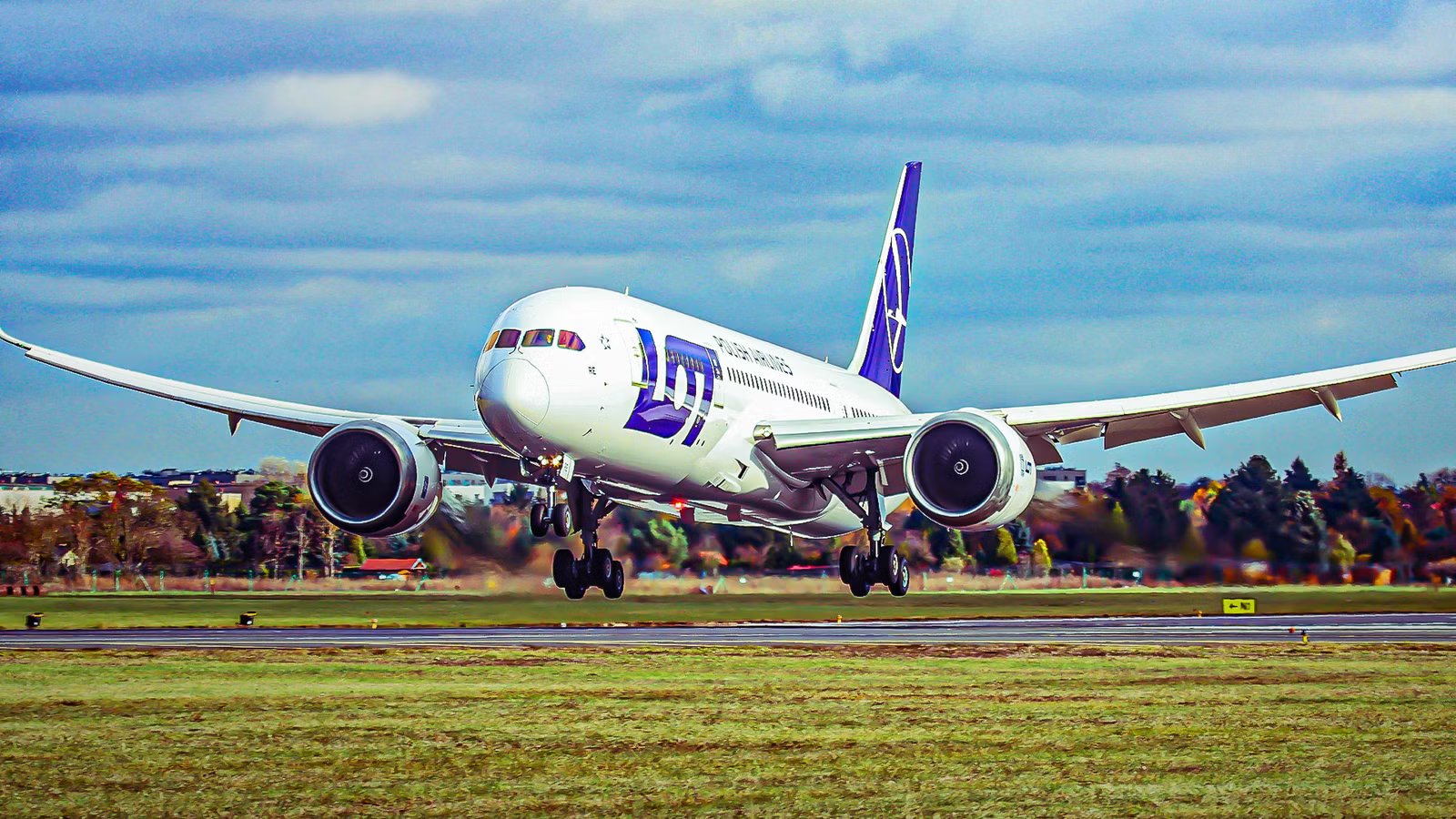
Since entering service in 2011, the Boeing 787 Dreamliner has reshaped long-haul air travel by combining improved fuel efficiency with enhanced passenger comfort. Built using advanced composite materials and modern aerodynamics philosophies, the aircraft quickly became a favorite among airlines looking to reduce operating costs while expanding their international networks.
Although the larger Boeing 787-9 and Boeing 787-10 models often dominate the headlines, the smallest 787-8 variant continues to play a crucial role across the industry. With its lower seating capacity and impressive range, the Boeing 787-8 is ideally suited for long, thinner routes in secondary markets, making it a key asset for airlines seeking flexibility without sacrificing the benefits of a widebody aircraft.
The Dreamliner Family

Boeing formally launched the 787 Dreamliner program in 2004, aiming to create a next-generation widebody that would significantly reduce fuel consumption while improving passenger comfort. Development proved challenging, with production delays and technical hurdles pushing the aircraft’s first flight to 2009. This marked a major milestone in modern aviation, and it turned a lot of heads in the industry. Airbus, in particular, took notice and was swift to respond with its own Airbus A350 XWB program. The Dreamliner ultimately entered commercial service in October 2011 with All Nippon Airways.
The 787 family was designed around a common platform, using advanced composite materials for roughly half of the aircraft’s weight, along with new-generation engines and flight control systems. These innovations allowed the aircraft to fly longer distances with lower operating costs than previous-generation airliners. Boeing planned multiple variants from the outset, giving airlines flexibility to choose different sizes while maintaining cockpit and operational commonality.
The Dreamliner family today consists of three main variants: the 787-8, 787-9, and 787-10. The 787-8 is the smallest and original version, tailored for long-range routes with lower passenger demand. It was followed by the stretched 787-9, which entered service in 2014, and the even larger 787-10, which joined airline fleets in 2018. Together, these aircraft enable airlines to match capacity to route demand while benefiting from the same core Dreamliner technology. In April 2025, the 787 Dreamliner fleet surpassed one billion passengers in less than 14 years, faster than any widebody airliner in history. Today, there are more than 1,175 total aircraft in the global Dreamliner fleet.
787-8 Specs

As mentioned, the Boeing 787-8 is the smallest member of the Dreamliner family, but it still offers true long-haul capability. It is typically configured to seat between 210 and 250 passengers, and can even be configured under the Boeing Business Jet name with the Boeing 787-8 BBJ variant. The aircraft balances widebody comfort with a capacity well-suited to thinner international routes. Its size allows airlines to operate long-distance services without the risk of overcapacity associated with larger widebodies.
|
787-8 Dimensions |
|
|---|---|
|
Length |
186 |
|
Wingspan |
197 |
|
Height |
55.5 |
|
Internal cabin width |
18 |
Source: Boeing
In terms of performance, the 787-8 has a range of approximately 7,300 nautical miles, enabling nonstop flights between distant airports across continents. The 787-8 is powered by either the Rolls-Royce Trent 1000 or General Electric GEnx-1B engines. Thanks to these newer, more efficient engines, the 787 delivers significant fuel savings compared with older aircraft such as the Boeing 767 and Airbus A330, which it was designed to ultimately replace. These efficiency gains have made the 787-8 particularly attractive for route development and fleet renewal.
|
787-8 Performance Overview |
|
|---|---|
|
Max. takeoff weight (pounds) |
502,500 |
|
Max. payload weight (pounds) |
90,500 |
|
Fuel capacity (US gallons) |
33,340 |
|
Cruise (Mach) |
0.85 |
|
Service ceiling (feet) |
43,100 |
|
Range (nautical miles) |
7,305 |
Source: Boeing
Overall, the 787-8 is optimized for efficiency rather than capacity. Its lower maximum takeoff weight compared with larger Dreamliner variants allows for reduced fuel burn on long sectors, while its aerodynamic design and advanced systems contribute to strong climb performance and improved reliability. These characteristics make the aircraft well-suited for long, thin routes, hot-and-high airports, and missions where range and efficiency are prioritized over passenger volume.

787-8 Vs 787-9 Vs 787-10: How The Dreamliner Variants Differ
The three 787 variants are tailored to different market segments to fill niches and offer a placement for different previous-generation aircraft.
Top 787-8 Airlines

The 787-8 is an extremely popular aircraft operated by airlines all over the world. This smaller variant has proven especially popular with full-service carriers seeking to replace older mid-size widebody aircraft while maintaining long-range capability. Its flexibility has allowed airlines to expand into new international markets or increase frequency on established routes. Some of the most prominent operators of the 787-8 include  American Airlines and All Nippon Airways, the launch customer and the largest Dreamliner family operator overall.
In the United States, American is the largest operator, followed by  United Airlines, which operates more Dreamliners in total than American, but fewer of the 787-8 variant. Carriers have relied on the 787-8 to connect their hubs with secondary long-haul destinations. These airlines often deploy the aircraft on routes where demand fluctuates seasonally.
|
Top 787-8 Operators |
|
|---|---|
|
Airline |
Number of Aircraft |
|
American Airlines |
37 |
|
All Nippon Airways |
34 |
|
Qatar Airways |
31 |
|
Air India |
26 |
|
Japan Airlines |
23 |
|
Ethiopian Airlines |
19 |
|
Avianca |
16 |
|
Scoot |
13 |
|
United Airlines |
12 |
|
British Airways |
12 |
Source: Boeing
 Emirates is slated to receive 20 787-8 aircraft, which are in the process of being delivered. This was an order from 2023 originally for the 787-9 variant, but later converted to the smaller -8 variant. Once delivery is complete, Emirates will become one of the largest operators of the 787-8. This aircraft is popular among Middle East airlines, as it offers the perfect size and range combination for where most of these airlines are based. It enables them to fly routes to Europe, Africa, and Eastern Asia with ease and flexibility.
The 787-8 Passenger Experience

Even though the 787-8 is the smallest member of the Dreamliner family, it delivers the same modern passenger experience found on its larger counterparts. Airlines benefit from a widebody cabin that allows for multiple class configurations, while passengers enjoy a quieter ride, improved air quality, and a more comfortable long-haul environment compared with older-generation aircraft.
Key features include larger windows that forgo shades for automatic electronic dimmers, higher cabin humidity, and a lower cabin altitude, all of which help reduce fatigue on long flights. These elements are particularly noticeable on ultra-long routes often flown by the 787-8, where comfort plays a significant role in overall passenger satisfaction. Overhead bins are also larger than those on previous widebodies, improving the boarding and storage experience.
Cabin layouts vary widely by airline, with most operating the 787-8 in two- or three-class configurations. While seat width and pitch depend on individual carrier choices, the aircraft’s design allows airlines to offer competitive premium cabins and modern in-flight entertainment systems. For passengers, the smaller size of the 787-8 rarely feels like a drawback, as the aircraft retains the same core comfort advantages that define the Dreamliner brand.

How Much Does A Boeing 787 Dreamliner Cost?
The aircraft is powered by General Electric GEnx or Rolls-Royce Trent 1000 high-bypass turbofan engines.
Most Frequent Routes

The Boeing 787-8 is most commonly deployed on long, thin routes where demand does not warrant larger widebody aircraft. Airlines frequently use the smallest Dreamliner to connect secondary cities with major hubs, enabling nonstop service that would have been impractical with previous-generation aircraft. These routes often span continents, but not the same way as ultra-long-haul aircraft do.
The aircraft is widely used on Asia–Pacific routes, where its range allows carriers to maintain nonstop connectivity while managing capacity carefully. In fact, these routes comprise most of the aircraft’s top routes, with Japan Airlines dominating the list. In regions such as Africa and the Middle East, the 787-8 is often tasked with linking distant markets to global hubs.
|
Most Frequent 787-8 Routes |
||
|---|---|---|
|
Route |
Airline |
Flights per Year |
|
ITM-HND |
Japan Airlines |
2,733 |
|
HND-ITM |
Japan Airlines |
2,732 |
|
BOG-MAD |
Avianca |
1,369 |
|
MAD-BOG |
Avianca |
1,366 |
|
BKK-SIN |
Scoot |
881 |
|
SIN-BKK |
Scoot |
881 |
|
CTS-HND |
Japan Airlines |
788 |
|
HND-CTS |
Japan Airlines |
787 |
|
FUK-HND |
Japan Airlines |
767 |
|
HND-FUK |
Japan Airlines |
767 |
Source: Cirium
In addition to long-haul operations, the 787-8 is regularly used on medium- to long-haul routes with fluctuating seasonal demand. Airlines can adjust frequency more easily with the smaller Dreamliner, maintaining year-round service without the risk of oversupply. This flexibility has made the 787-8 a preferred choice for route development, network optimization, and maintaining consistent global connectivity. Thus, if the most frequent routes were analyzed by season, the above list may change due to the seasonality of some operations.
Final Thoughts

The Boeing 787-8 may be the smallest member of the Dreamliner family, but its impact on global airline networks has been significant. By combining true long-haul range with a relatively modest passenger capacity, the aircraft has enabled airlines to serve routes that would otherwise be difficult to operate profitably.
This balance has made the 787-8 especially valuable for network growth, fleet renewal, and replacing older mid-size widebody aircraft. Its flexibility has proven to be a particular asset to airlines, enabling its diverse deployment across various route types and networks. Although it lacks the capacity of its larger Dreamliner siblings, it is still able to bring considerable seat capacity paired with lower operating costs.
As airlines continue to fine-tune capacity and adapt to changing travel demand, the 787-8 remains an increasingly relevant and versatile tool. While newer and larger variants may dominate future deliveries, the smallest Dreamliner variant continues to prove that size is not the sole measure of capability. Rather, it highlights that efficiency, flexibility, and range are the new priorities of airlines around the world.