dailynewsnblog
The Airbus A350 has become one of the defining aircraft of modern long-haul aviation. Known for its fuel efficiency, advanced aerodynamics, and passenger comfort, the A350 has reshaped airline fleet strategies since it entered service. As more airlines expand their long-haul networks and replace older aircraft, the A350 has been one of the most popular additions to current fleets. This article will profile the A350’s presence in the global airline market today and highlight the largest operator,  Singapore Airlines.
As of early 2026, Singapore Airlines holds the distinction of operating the largest A350 fleet worldwide. Its mix of A350 family variants allows the airline to serve a diverse range of markets, from regional routes to some of the world’s longest nonstop flights. Understanding why Singapore Airlines is the largest operator sheds light not only on global fleet size but also on strategic choices, route planning, and the competitive positioning of the airlines and manufacturers.
A Brief History Of The A350

The Airbus A350 was born out of a shifting long-haul market in the early 2000s, as airlines began demanding aircraft that combined long range with significantly lower operating costs. Initially conceived as an upgraded response to the Boeing 787 Dreamliner, the original A350 concept was quickly reworked after airline feedback made it clear that incremental changes would not be enough. Airbus ultimately chose a clean-sheet approach, redesigning the aircraft from the ground up to compete directly in the next-generation widebody segment.
That decision led to the A350 XWB (Extra Wide Body), which featured extensive use of carbon-fiber composites, new-generation Rolls-Royce Trent XWB engines, and a wider fuselage than its competitors. The fresh XWB program was officially launched at the Farnborough Airshow in 2006, and the A350-900 entered service with  Qatar Airwaysin January 2015. From the outset, the aircraft was positioned as a replacement for older long-haul types such as the A330, A340, and early Boeing 777 models, offering double-digit improvements in fuel efficiency and range.
The Airbus A350-1000 followed in 2018, completing the family and giving Airbus a credible competitor to larger widebody aircraft. In the years that followed, the A350 steadily gained traction, particularly among airlines focused on long-haul efficiency and fleet modernization. In today’s market, the aircraft has established itself as a cornerstone of many global fleets, setting the stage for operators across the world to build large, strategically important A350 fleets.
A350 Family: Variants And Capabilities

The Airbus A350 family was designed to cover a broad range of long-haul missions, with each variant optimized for a specific balance of capacity and range. At the core of the family is the A350-900, the most widely operated version and the backbone of many airline fleets. With seating typically ranging from 300 to 350 passengers and intercontinental range, the -900 is flexible enough to serve everything from high-density regional routes to ultra-long-haul sectors, making it the most popular choice among global operators.
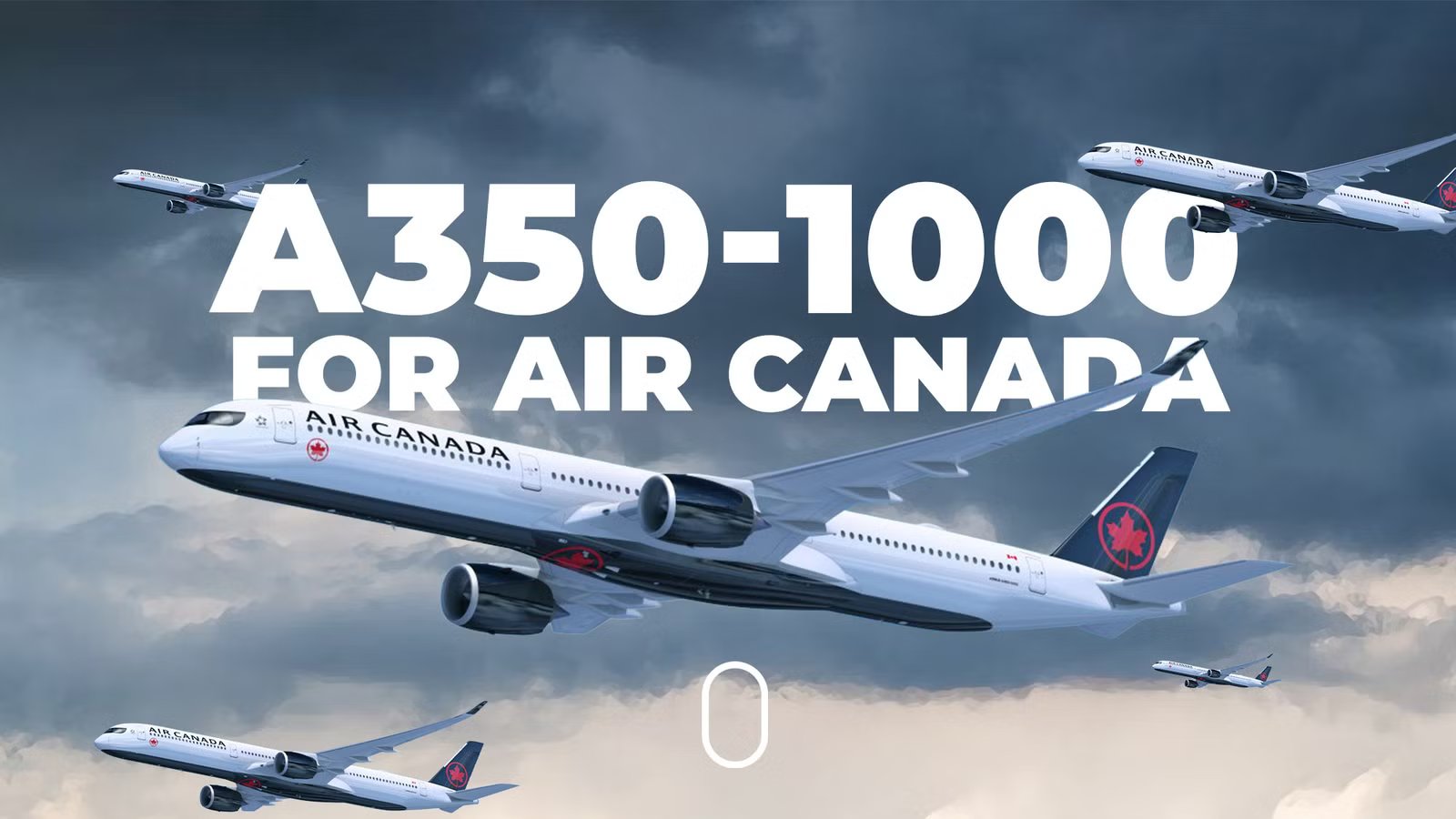
Building on that platform, Airbus developed the A350-1000, a larger and more powerful variant intended to replace older high-capacity widebodies such as the Boeing 777-300ER. The -1000 offers increased seating capacity, higher maximum takeoff weight, and improved performance on long-haul routes, while retaining the same cockpit commonality and efficiency gains of the -900. For airlines operating premium-heavy long-haul networks, the A350-1000 provides scale without sacrificing fuel efficiency or range.
|
A350 Family Comparison |
|||
|---|---|---|---|
|
A350-900 |
A350-900ULR |
A350-1000 |
|
|
Length (feet) |
219.2 |
219.2 |
242.1 |
|
Max. passenger count |
440 |
440 |
480 |
|
Max. takeoff weight (pounds) |
623,908 |
620,000 |
710,000 |
|
Max. payload weight (pounds) |
118,000 |
~105,000 |
150,000 |
|
Range (nautical miles) |
8,500 |
9,700 |
9,000 |
|
Service ceiling (feet) |
43,100 |
43,100 |
41,450 |
Source: Airbus
A unique sub-variant within the family is the Airbus A350-900ULR (Ultra Long Range), designed specifically for the world’s longest nonstop flights. Optimized for extreme range rather than payload, the ULR enables missions exceeding 18 hours, pushing the limits of what is possible not only for the plane but for the passenger as well. Singapore Airlines was the launch customer and is still the primary operator of this variant, using it primarily to operate nonstop flights between its Singapore base and North America. Together, these variants give the A350 family exceptional versatility, allowing airlines to tailor the aircraft to their networks while maintaining a high degree of fleet commonality.

Airbus A350-900 Vs A350-1000: Features Compared
Comparing and contrasting the modern widebody variants.
Global A350 Fleet Today

Currently, the A350 is one of the world’s most widely adopted modern long-haul aircraft, with hundreds of aircraft in service across dozens of airlines worldwide. As of the end of January 2026, Airbus has delivered 700 A350 aircraft and has over 1,500 total orders. Momentum has been strong, and the aircraft’s popularity continues to grow as deliveries roll out, and new airline customers bring it into service.
|
Top 10 A350 Operators |
|
|---|---|
|
Airline |
Total Aircraft |
|
Singapore Airlines |
65 |
|
Qatar Airways |
58 |
|
Cathay Pacific |
48 |
|
Air France |
38 |
|
Delta Air Lines |
37 |
|
Air China |
30 |
|
Lufthansa |
30 |
|
Japan Airlines |
25 |
|
Turkish Airlines |
25 |
|
Thai Airways |
23 |
The global fleet spans a diverse set of carriers, from major Asian and Middle Eastern flag carriers to established European and North American airlines. Leading the list is Singapore Airlines with 65 A350 family aircraft, followed closely by Qatar Airways with 62 and Cathay Pacific with 48 aircraft. Other significant operators include Air France, Delta Air Lines, Lufthansa, Turkish Airlines, and Air China, each with sizable A350 fleets that reflect their long-haul network strategies. In particular, Asian carriers make up a significant share of the top ten, highlighting that the A350 is well-equipped for the Asia-Pacific market. These numbers illustrate how the A350 has become a cornerstone of modern long-haul operations, valued for its efficiency, range, and passenger comfort.
Looking beyond the top tier, a broad range of carriers operate smaller A350 fleets tailored to their specific network needs. Airlines such as French bee and eventually  IndiGo configure the A350 as a budget carrier, further expanding the aircraft’s worldwide presence and underscoring its flexibility across diverse markets. Taken together, the global A350 fleet is both mature and expanding, with continued deliveries and strong order backlogs pointing to further growth in the years ahead.
The Largest A350 Operator: Singapore Airlines

Singapore Airlines clearly stands at the top of the global A350 fleet size rankings. With the largest active fleet of the family in the world, the airline has made the aircraft central to its long-haul and ultra-long-haul strategy. Unlike operators that deploy the A350 in a limited or transitional role, Singapore Airlines uses the type across a wide spectrum of missions, making it one of the most deeply integrated aircraft families in any major airline fleet.
The airline’s A350 fleet spans multiple variants, including the A350-900 and the specialized A350-900ULR, with planned deliveries of the freighter variant, Airbus A350F. This mix allows Singapore Airlines to match aircraft precisely to route requirements, from high-demand intercontinental services to the longest nonstop commercial flights in the world. Rather than concentrating the A350 on a single market or region, the carrier has built its global network around the aircraft’s flexibility, range, and efficiency.
|
Aircraft Variant |
Active |
Inactive |
Total |
To be Delivered |
|---|---|---|---|---|
|
A350-900 |
55 |
3 |
58 |
|
|
A350-900ULR |
6 |
1 |
7 |
|
|
A350F |
7 |
Source: ch-aviation
Singapore Airlines’ leadership in the A350 fleet size is also a reflection of timing and commitment. As an early adopter and as the launch customer of the -900ULR, the airline steadily expanded its A350 operation over more than a decade. It replaced older widebodies while avoiding excessive dependence on multiple aircraft types. The result is not just the largest A350 fleet in 2026, but one that plays a core role in defining how the airline operates, competes, and presents itself in the long-haul market.

Here’s How Far The Ultra-Long-Range Airbus A350s Can Fly
Find out the exact ranges for each A350 variant. You can then learn more about how advanced materials and design decisions facilitate the range.
Why Singapore Airlines Invested So Heavily In The A350

Singapore Airlines’ commitment to the A350 is closely tied to how it has built its network. Operating from a small, highly competitive hub, the airline relies on long-haul connectivity to remain relevant in global markets. The A350’s range and efficiency allow Singapore Airlines to serve distant destinations nonstop or with fewer capacity compromises. This helps keep operating costs under control on routes where margins are often thin. For an airline whose business model depends on linking Southeast Asia with Europe and North America, the aircraft is a natural fit.
The A350 also supports Singapore Airlines’ long-standing emphasis on fleet discipline and product consistency. By adopting multiple variants within the same aircraft family, the airline has modernized its widebody fleet without excessive complexity. Commonality across the A350 fleet simplifies pilot training, maintenance, and scheduling, while still allowing the airline to scale capacity up or down depending on route demand. The A350-900ULR, in particular, gave Singapore Airlines a unique tool to sustain ultra-long-haul nonstop services that reinforce its premium positioning in the market. Throughout the A350 family’s history, Singapore Airlines has remained a close partner with Airbus for these reasons.
More broadly, the investment reflects a conservative, long-term approach to fleet planning. Singapore Airlines is known for operating aircraft deliberately and extracting value over long service lives rather than chasing rapid fleet turnover. The A350 provides a stable, future-proof platform that aligns with that philosophy. The aircraft is modern enough to meet regulatory and passenger expectations, yet versatile enough to adapt as network needs evolve. In that sense, the size of Singapore Airlines’ A350 fleet is less about scale for its own sake and more about strategic alignment between aircraft capability and airline identity.
Final Thoughts

With the largest A350 fleet in the world, Singapore Airlines stands out not just for the number of aircraft it operates, but for how central the A350 is to its global network and long-term strategy. Rather than using the A350 as a transitional solution, Singapore Airlines has built its widebody operation around the aircraft’s strengths. That deliberate approach explains why it leads the global A350 rankings today, and why the aircraft will likely remain a cornerstone of the airline’s fleet well into the next decade.