dailynewsnblog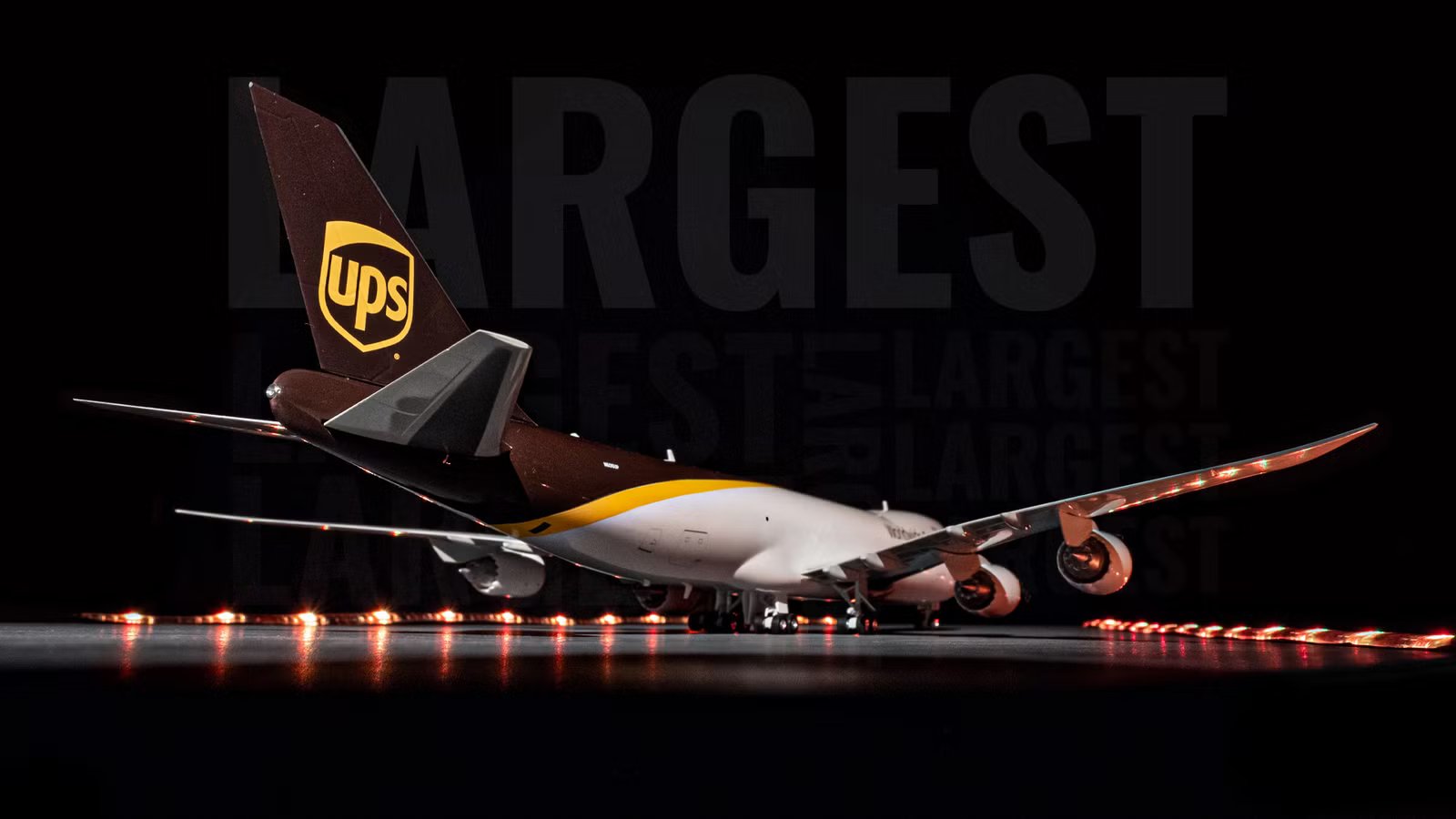
 UPS Airlines operates one of the largest and most sophisticated air cargo networks in the world, transporting millions of shipments daily through a tightly coordinated system of global hubs. Its long-haul operation is designed around moving high volumes of freight quickly and reliably between major economic regions, with aircraft cycling across continents overnight to keep global supply chains running. While much of the aviation industry has shifted toward smaller or more flexible aircraft, UPS has continued to invest heavily in high-capacity freighters to anchor its international network.
Within that fleet, however, one aircraft type stands out. UPS operates more of it than any other airline worldwide, giving the company a level of scale and influence unmatched by competitors. Which aircraft is it, and what does UPS’ unmatched commitment to that type reveal about the routes it prioritizes, the cargo it carries, and the long-haul markets it believes will matter most in the years ahead?
The Aircraft That Wears The Crown

The aircraft that wears the crown is the last edition of the ‘Queen of the Skies’, the Boeing 747-8. UPS Airlines is the largest operator of the type in the world, with a fleet size that surpasses every other carrier using the aircraft, including Lufthansa, CargoLux, and Korean Air, among others. UPS specifically operates the 747-8F (Freighter), but its fleet figures surpass those of both fellow 747-8F operators, as well as operators of the passenger variant, the Boeing 747-8I (Intercontinental). In an era when four-engine jets have largely disappeared from passenger service, UPS has embraced the 747-8F as a cornerstone of its long-haul freight operation.
That dominance is no accident. The 747-8F offers a unique combination of payload capacity, volume, and range that allows UPS to consolidate massive amounts of cargo onto a single aircraft while maintaining nonstop or near-nonstop capability. This makes it ideally suited to the carrier’s busiest global lanes, where demand is dense, time-sensitive, and consistent enough to justify operating the world’s largest production freighter.
UPS’ unmatched commitment to the 747-8F reflects how the company views global air cargo. Rather than chasing flexibility alone, it has prioritized scale and efficiency on core routes where moving more freight on fewer flights delivers long-term network advantages. As a result, while many airlines have moved on from very large aircraft, UPS has ensured that the 747-8F not only survives—but wears the crown.
Boeing 747-8F Fleet Scale And Structure

According to data from ch-aviation, UPS Airlines’ Boeing 747-8F fleet totals 30 aircraft, making it the largest single concentration of the type operated by any airline worldwide. All aircraft are listed as active, underscoring that the fleet is not a transitional or secondary asset but a core component of UPS’ long-haul cargo operation. The registrations, ranging from N605UP through N635UP, reflect a deliberately built subfleet rather than random or opportunistic acquisitions.
From a structural standpoint, the fleet is relatively young by cargo industry standards. The oldest aircraft are just over 12 years old, while the youngest examples are under four years of age, as of early 2026. This creates a narrow age spread across the entire group. This uniformity simplifies maintenance planning, crew training, and operational reliability, while also allowing UPS to benefit from the performance and efficiency improvements built into the latest-generation freighter design.
Most notably, the fleet is clearly intended for long-term service. Many of the aircraft carry projected retirement timelines extending to around 2040, signaling UPS’ expectation that the 747-8F will remain central to its network for years to come. Rather than winding down very large freighter operations, UPS has structured the 747-8F fleet as a durable, long-life asset designed to anchor its highest-density intercontinental cargo routes well into the future.

Why Does UPS Airlines Rely On Older Widebody Aircraft?
A secret strategy behind UPS Airlines’ aging fleet revealed.
Why Does UPS Use The 747?

UPS uses the Boeing 747 because it offers a combination of range, payload, and volume that no other production freighter can match. The aircraft is capable of flying roughly 4,200 nautical miles (about 7,780 km) with a full payload, allowing UPS to connect major cargo hubs across the Pacific and Atlantic while carrying extremely heavy and dense freight. With a maximum structural payload of around 307,600 lbs (139,500 kg) and a vast main-deck cargo area, the aircraft enables UPS to consolidate shipments that would otherwise require multiple smaller freighters.
That scale translates directly into network efficiency. The aircraft’s large cargo hold and nose-loading capability allow UPS to move outsized and palletized freight with ease, while reducing the number of frequencies needed on high-demand routes. This is particularly important at slot-constrained airports, where operating one very large aircraft can be more efficient than several smaller ones. Combined with its long range, the aircraft gives UPS flexibility to operate nonstop or near-nonstop intercontinental sectors that align with overnight delivery schedules.
Beyond raw performance, the aircraft fits UPS’ long-term operating model. Cargo carriers typically keep aircraft in service for decades, and the type’s robust design, proven reliability, and global maintenance support make it well-suited for that role. While twin-engine freighters may offer lower fuel burn per flight, the ability to move more cargo per departure often outweighs that advantage on dense global trade lanes. For UPS, the aircraft’s range and capacity make it the most effective tool for anchoring its highest-volume long-haul routes.
Where UPS Actually Uses The 747-8F

UPS primarily uses the Boeing 747 on its longest, densest international cargo routes, where demand is high enough to justify operating the world’s largest production freighter. The aircraft is most commonly deployed on transpacific services, linking major Asian manufacturing and logistics hubs with North America. These flights often connect East Asia with key UPS gateways and sorting centers, sometimes via intermediate stops such as Anchorage, where the 747’s payload and range advantages are fully utilized.
The aircraft is also used on select Europe–North America and Asia–Europe routes, particularly where cargo volumes are consistently strong and time-critical. In these markets, UPS relies on the 747 to move large blocks of freight overnight between major hubs rather than serving secondary cities. This hub-to-hub deployment aligns with UPS’ broader network strategy, which emphasizes consolidation and efficient onward distribution using smaller aircraft.
Within the United States, the 747 is used far more sparingly. Domestic flights typically occur for aircraft positioning, maintenance rotations, or peak-season demand, rather than routine scheduled service. In day-to-day operations, the aircraft is firmly an international workhorse, reserved for the routes where its scale, range, and payload provide clear advantages over smaller freighters.

How Many Miles Per Gallon Does A Boeing 747-8 Get?
The newest version of the jumbo jet gets through a lot of fuel, but its high capacity means that the consumption is spread across more passengers.
How Long Will UPS Operate The 747?

UPS is expected to operate the Boeing 747-8F well into the 2040s, making it a long-term pillar of the carrier’s global cargo network. Based on fleet planning data and typical freighter lifecycles, many of UPS’ aircraft are projected to remain in service until around 2040 or later, which would give them operational lives exceeding 25 years. For a cargo aircraft, this is entirely normal, particularly for a type designed specifically for freight operations.
Several factors support this long service horizon. The fleet is relatively young, with most aircraft delivered within the past decade, and the 747-8F benefits from modern avionics, efficient engines for its size, and strong structural margins. UPS also operates the type on routes where demand is stable and dense, reducing the risk that changing market conditions will make the aircraft uneconomical before it reaches midlife.
Ultimately, UPS’ continued use of the 747 will depend less on age and more on network economics. As long as global trade lanes – especially across the Pacific – continue to require very large, long-range freighters, the aircraft will remain valuable. Given the current fleet age and strategic intent, it is reasonable to expect UPS’ 747-8Fs to remain flying through the late 2030s and into the 2040s.
UPS Future Fleet Plans

UPS’ fleet plans for the future center on modernization, efficiency, and long-term stability rather than radical transformation. The company continues to invest heavily in aircraft that support its core hub-and-spoke cargo model, prioritizing reliability and lifecycle value over short-term fuel or technology shifts. This approach reflects the realities of express cargo flying, where consistency, dispatch reliability, and fleet commonality matter as much as headline efficiency gains.
A major pillar of this strategy is the continued expansion of the Boeing 767-300F fleet, which UPS views as its most flexible workhorse. New deliveries will gradually replace older aircraft while supporting both regional and medium-haul international routes. At the same time, UPS is methodically retiring legacy types such as the McDonnell Douglas MD-11, whose early retirement has been announced recently, following the accident involving a UPS MD-11 engine separation on take-off from Louisville International Standiford Field in November 2025, as well as planning for the eventual phase-out of older Airbus A300 freighters later in the 2030s, ensuring the fleet remains young and operationally efficient.
At the top end of the network, UPS shows no sign of abandoning large long-haul freighters. Its Boeing 747-8Fs are expected to remain in service well into the 2040s, anchoring the carrier’s highest-density intercontinental routes. Rather than betting on an all-new aircraft category, UPS’ future fleet plan is evolutionary: renew smaller aircraft, retain proven heavy lift where it makes economic sense, and maintain a balanced fleet capable of moving global commerce at scale for decades to come.