dailynewsnblog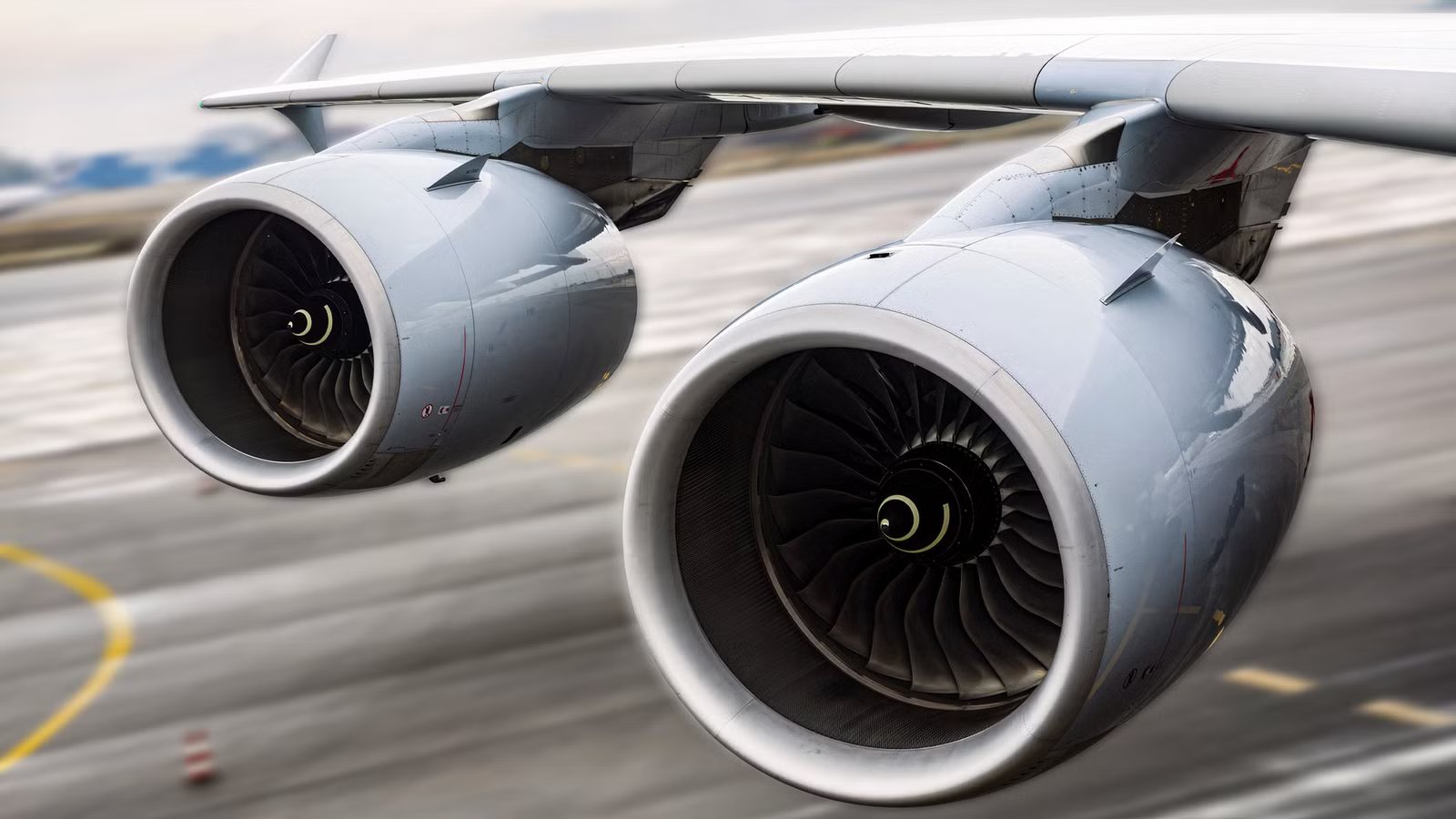
The Airbus A380 is no longer in production, but the debate surrounding its design choices remains active, especially regarding the four engines that power the world’s largest passenger aircraft. Not many people know that the Airbus A380 comes with two engine options. What are these, and which Airbus A380 engine type is more popular? Understanding engine popularity on the A380 is relevant even today as airlines decide whether to extend the aircraft’s service life or accelerate retirement plans. With rising maintenance costs, tightening emissions regulations, and a renewed focus on efficiency, the engines hanging beneath the A380’s massive wings have become a critical factor in fleet planning decisions. The choice between Rolls-Royce and Engine Alliance ultimately shaped how the aircraft was operated across continents—and how it is remembered.
When Airbus launched the A380 program, the manufacturer made a rare strategic decision: offering airlines a choice between two completely different engine families. Operators could select the Rolls-Royce Trent 900 or the Engine Alliance GP7200, a joint venture between GE Aviation and Pratt & Whitney. On paper, both engines promised similar thrust, efficiency, and performance. In practice, however, their market adoption diverged significantly. We will explore which engine ultimately proved more popular, why airlines gravitated toward that option, and how operational realities influenced long-term outcomes.
Why the Rolls-Royce Trent 900 Dominated Airbus A380 Engine Orders

The short answer is clear: the Rolls-Royce Trent 900 is the more popular engine for the Airbus A380. According to Air Data News, of the 251 A380s delivered worldwide, a majority were powered by Rolls-Royce engines rather than the Engine Alliance GP7200.
Although both engines are technically capable, airline ordering patterns reveal a consistent tilt toward Rolls-Royce. Major global carriers, including  Emirates,
  Singapore Airlines, and Qantas, either selected or remained loyal to the Trent-powered variant for most of their fleets.
According to delivery data summarized by Air Data News, roughly 60% of all Airbus A380s entered service with Rolls-Royce Trent 900 engines, while the remaining 40% used the GP7200. That split is significant given the A380’s relatively small production run, where even a handful of airline decisions could dramatically alter market balance.
Emirates split its large fleet but ordered more Trent 900s overall. Airlines like Singapore Airlines and  British Airways selected the Trent 900, while Korean Air uses the GP7200.
Historically, Rolls-Royce entered the A380 program with a strong reputation built on its Trent family, which had already powered other popular aircraft, such as the Boeing 777, Airbus A330, and A340. This existing track record gave airlines confidence in maintenance predictability and long-term support. By contrast, the GP7200, even if technologically advanced, was a tailor-made solution and the only engine in its series created solely for the A380, limiting its cross-platform appeal.
Over time, that difference mattered. As the A380 fleet aged and production ceased, airlines increasingly valued engines backed by a broader support system and long-term parts availability, reinforcing the Trent 900’s popularity.
What Factors Determined Airbus A380 Engine Popularity Among Airlines?

Engine popularity is rarely driven by a single factor. Airlines evaluating propulsion options considered a complex mix of operating economics, maintenance strategies, manufacturer relationships, and fleet commonality. These considerations often outweighed minor differences in advertised performance metrics.
For a superjumbo designed to operate at the highest end of capacity and range, even marginal cost differences could translate into millions of dollars over an aircraft’s lifetime. As such, engine selection became a strategic decision rather than a purely technical one.
Airlines already operating Rolls-Royce–powered widebodies could more easily integrate the Trent 900 into their existing maintenance and training frameworks. Another consideration was aftermarket support, where Rolls-Royce’s TotalCare service model offered predictable long-term costs.
Fuel efficiency and thrust were largely comparable between the Trent 900 and GP7200, but dispatch reliability and maintenance intervals gradually emerged as differentiators. Airlines also weighed the financial stability and long-term commitment of the engine manufacturers themselves, especially for an aircraft expected to remain in service for decades.
|
Feature / Specification |
Rolls-Royce Trent 900 |
Engine Alliance GP7200 |
|
Manufacturer |
Rolls-Royce plc (UK) |
Engine Alliance (GE Aviation + Pratt & Whitney, USA) |
|
Type |
High-bypass turbofan (three-shaft) |
High-bypass turbofan (two-shaft) |
|
First Service Entry |
2004 |
2006 |
|
Fan Diameter |
~116 inches (2.95 meters) |
~116 inches (2.95 meters) |
|
Thrust Range |
~75,000–84,000 lbf (334–374 kN) |
~76,500–81,500+ lbf (340–363 kN) |
|
Shaft Design |
Three-shaft (LP, IP, HP) |
Two-shaft (LP + HP) |
|
Core Derivation |
Scaled-down Trent 800/500 family |
GE90 + PW4000 core collaboration |
|
Bypass Ratio |
~8.5–8.7:1 |
~8.7:1 (varies with variant) |
|
Weight (Approx) |
~ (13,770 lb) 6,246 kg |
~(14,798 lb) 6,712 kg |
|
Operational Notes |
Proven Trent family reliability; broad support network |
Tailored A380 engine; claimed improved specific fuel burn early in service |
|
Maintenance Ecosystem |
Integrated with Rolls-Royce global MRO |
Supported by Partner networks of GE & Pratt & Whitney |
|
Market Adoption |
More A380 orders overall historically |
Many A380 orders but fewer than Trent historically |
Qantas provides a useful case study. While the airline initially operated Trent-powered A380s, it encountered well-publicized issues during the early years of service. Rather than switching engine suppliers, Qantas worked closely with Rolls-Royce to address the problems, underscoring the importance of manufacturer partnerships in long-term fleet decisions. Similarly, Singapore Airlines valued Rolls-Royce’s global support network and experience with ultra-long-haul operations. These examples highlight how engine popularity is shaped not just by hardware but by relationships and trust built over time.

The Real Reason Why US Airlines Passed On The Airbus A380
Unfit for the American Dream: The Surprising Truth About the A380’s US Snub.
Rolls-Royce Trent 900 Vs Engine Alliance GP7200: Key Differences That Shaped Airline Choices

Industry experts often highlight Rolls-Royce’s widebody lineup as a significant advantage. Unlike the GP7200, which was a standalone engine, the Trent 900 is part of a family of engines with shared technologies and maintenance strategies. This consistency reassured airlines that were cautious about specialized solutions. From an airline perspective, executives often emphasized predictability over novelty. In an aircraft as operationally complex as the A380, minimizing variables was seen as a path to cost control.
Rolls-Royce itself highlights the Trent 900’s role in enabling the A380’s longest routes, noting its high thrust capability and durability under sustained heavy loads. The manufacturer also emphasized continuous improvement programs that enhanced fuel burn and reliability throughout the engine’s life. Engine Alliance, for its part, promoted the GP7200’s efficiency and GE-Pratt & Whitney heritage, noting its strong performance with operators like  Air France and Korean Air. However, these endorsements did not translate into broader market penetration.
The divergence in expert and airline sentiment ultimately reinforced the Trent 900’s popularity. As more airlines committed to Rolls-Royce, secondary markets and leasing considerations also began to favor Trent-powered aircraft. This created a feedback loop in which popularity itself became an advantage. For lessors and operators, the ability to place or reassign aircraft more easily became increasingly important, especially as A380 retirements accelerated. In that environment, the engine with broader adoption naturally gained the upper hand.
Why The Engine Alliance GP7200 Fell Behind Despite Comparable Performance

At first glance, one could argue that the Engine Alliance GP7200 was every bit as capable as the Trent 900, and even slightly more powerful. In fact, some operators reported strong fuel efficiency and reliability from the GP7200, particularly in high-utilization environments. So why didn’t it achieve the same level of popularity?
The answer lies not in performance shortcomings, but in strategic positioning and market timing. The GP7200 entered service slightly later and lacked a broader family of related engines, which cost it momentum. Additionally, as Airbus ended A380 production, concerns about long-term support loomed larger. An engine tied to a single, discontinued platform naturally faced greater scrutiny.
When compared side by side, the Trent 900’s popularity appears to be more about risk mitigation than outperforming the GP7200. Airlines favored the option that aligned with existing systems and promised continuity beyond the A380 itself. This contrast underscores a broader industry lesson: in commercial aviation, the most popular choice is often the one that fits best into a larger operational puzzle, rather than the one that excels in isolation.

20 Years Of The Airbus A380: A Look At The Life Of The World’s Largest Commercial Aircraft
The Superjumbo remains as a marvel of the aviation industry.
Risks, Reliability Issues, And Early Problems With A380 Engines

Despite its popularity, the Trent 900 was not without challenges. Early in-service issues, including uncontained engine failures, raised serious concerns and temporarily grounded parts of the A380 fleet. These incidents highlighted the risks inherent in introducing new engine technology at an unprecedented scale.
However, Rolls-Royce’s response played a crucial role in maintaining airline confidence. Through redesigns and compensation agreements, the manufacturer demonstrated a willingness to stand behind its product. In certain operational contexts, the GP7200 proved highly effective. Airlines like Korean Air and Air France reported satisfactory performance and reliability, suggesting that engine popularity does not necessarily equate to universal superiority. For carriers with strong relationships with GE or Pratt & Whitney, the GP7200 remained a logical choice. That said, these cases were exceptions rather than the norm, and they did little to shift the overall balance of market preference.
Readers should be cautious not to conflate popularity with absolute technical merit. Both A380 engine options met stringent certification requirements and delivered impressive performance. The difference lay in how well each engine aligned with airline strategies. As such, the Trent 900’s popularity reflects broader industry dynamics as much as engineering outcomes.
Final Verdict: Which Airbus A380 Engine Truly Won The Market?

So, which Airbus A380 engine type is more popular? The evidence points decisively to the Rolls-Royce Trent 900. Its higher adoption rate, broader airline support, and integration into a wider engine family gave it a lasting edge over the Engine Alliance GP7200. This popularity was shaped by factors extending well beyond thrust and fuel burn, encompassing maintenance philosophy, manufacturer relationships, and long-term risk management.
For aviation enthusiasts, the A380’s engine story provides an intriguing look into how airlines make decisions on a larger scale. The superjumbo was never just about its size; it was about handling complexity in a tough economic climate. In that context, the Trent 900 proved to be the safer, more flexible option.
As the remaining A380s continue to fly, engine selection will remain a key determinant of which aircraft stay airborne the longest, and the A380’s legacy will likely influence future widebody programs, reinforcing the value of engine commonality and long-term support.