dailynewsnblog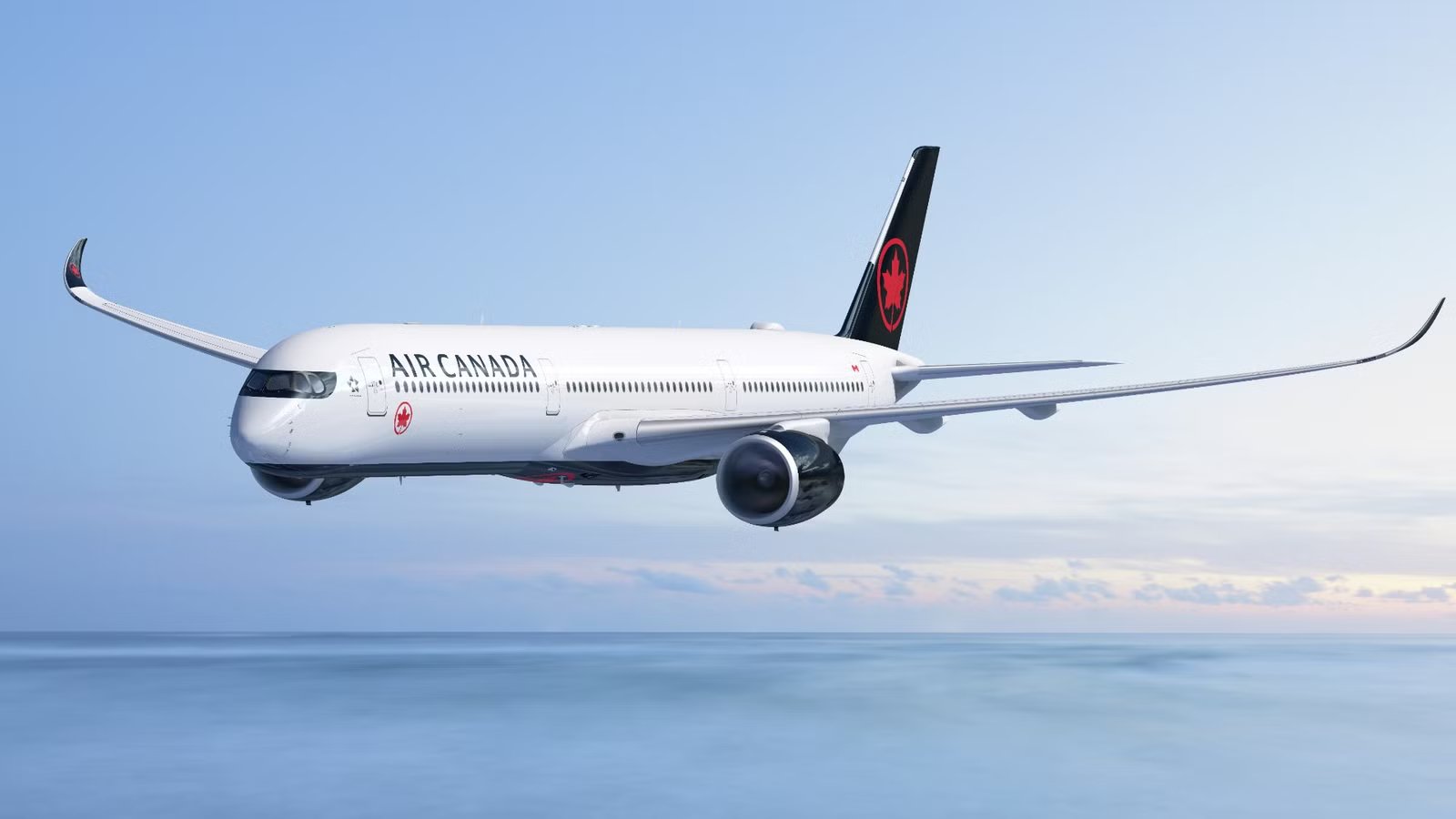
Last week, Air Canada announced an exciting expansion to its long-haul fleet, with the Montréal-based Canadian flag carrier and Star Alliance member having shaken hands with multi-national European planemaker Airbus on a deal for eight A350-1000s. These modern widebody twinjets will begin arriving at the airline at the start of the next decade to support its growth on an international level.
With more than four years to go until deliveries of the type commence in the second half of 2030, this leaves plenty of time for the aviation community to speculate with regards to the kinds of routes on which Air Canada might deploy its Airbus A350-1000s. Let’s take a closer look at the specifics of the deal, and some of the markets where these aircraft could be particularly well-suited for the Canadian airline.
New Long-Haul Possibilities

You only have to look at the language of Air Canada’s statement announcing its order for eight examples of the Airbus A350-1000 to see that the carrier has its sights set on using the type to expand its foreign footprint. For instance, Mark Galardo, the EVP, CCO, and President of Cargo at Air Canada, has said that the type’s presence will “unlock new possibilities for long-haul flying for our customers.”
According to Airbus, the A350-1000 has a range of 8,900 NM (16,480 km), compared to 8,500 NM (15,740 km) for the A350-900. What it is interesting about this is the fact that it also has a higher capacity (350-410 seats across three classes compared to 300-350), with this normally meaning a compromise in range. As such, the type will unlock longer routes for more passengers, with Galardo adding that:
“These highly capable aircraft complement our existing fleet by providing flexibility in support of a growing, resilient, and diversified future network. The Airbus A350-1000 will play a central role in defining Air Canada’s next era.”
Asia Stands Out As A Prime Target

Among Air Canada’s various long-haul markets, Asia is among the most important, with the Canadian flag carrier primarily serving such destinations from its transpacific hub in Vancouver (YVR). On this front, a recent LinkedIn post by Behramjee Ghadially highlighted Bangkok (BKK) as a potential spot where the A350-1000 could shine, thanks to its combination of range and passenger capacity.
Ghadially specifically notes that round-trip demand from Canada to Bangkok and back grew from 142,000 passengers in 2023 to 231,000 passengers in 2024, with 2025 heralding a further rise to 259,000. While Vancouver saw the most demand, Toronto (YYZ) and Montréal (YUL) also had fair shares: the latter two don’t currently have nonstop flights to the Thai capital, but the A350-1000 could enable these.
Elsewhere in Asia, The Airline Observer highlighted last summer that changing migration trends in Canada could also unlock new long-haul demand. On this front, India, the Philippines, and China were the three top origins for new Canadian permanent citizens in H1 of 2025: if LA’s huge demand for flights to South Korea is anything to go by, the A350-1000’s capacity could be a useful tool here too.

New Routes & Stronger Economics: Why Air Canada’s A350-1000 Order Is A Game Changer
The carrier has big plans for its next generation of widebody jets.

When it comes to Air Canada’s Asian operations, although it is far from the only carrier currently facing such a situation, Russian airspace restrictions have been a major sticking point in recent years. Since the country closed its airspace as a reciprocal response to countries shutting theirs to Russian aircraft in response to its military action in Ukraine, long-haul flights to Asia have got longer and pricier.
In this respect, the A350-1000’s metrics could help Air Canada to serve new Asian routes where it would have to fly the long way round, as well as adding capacity (and reducing per-seat cost) on existing corridors that currently have rather fine margins. Given that Air Canada also captures its fair share of US transit guests on long-haul routes, a potential Asian expansion with the A350 could be very lucrative.