dailynewsnblog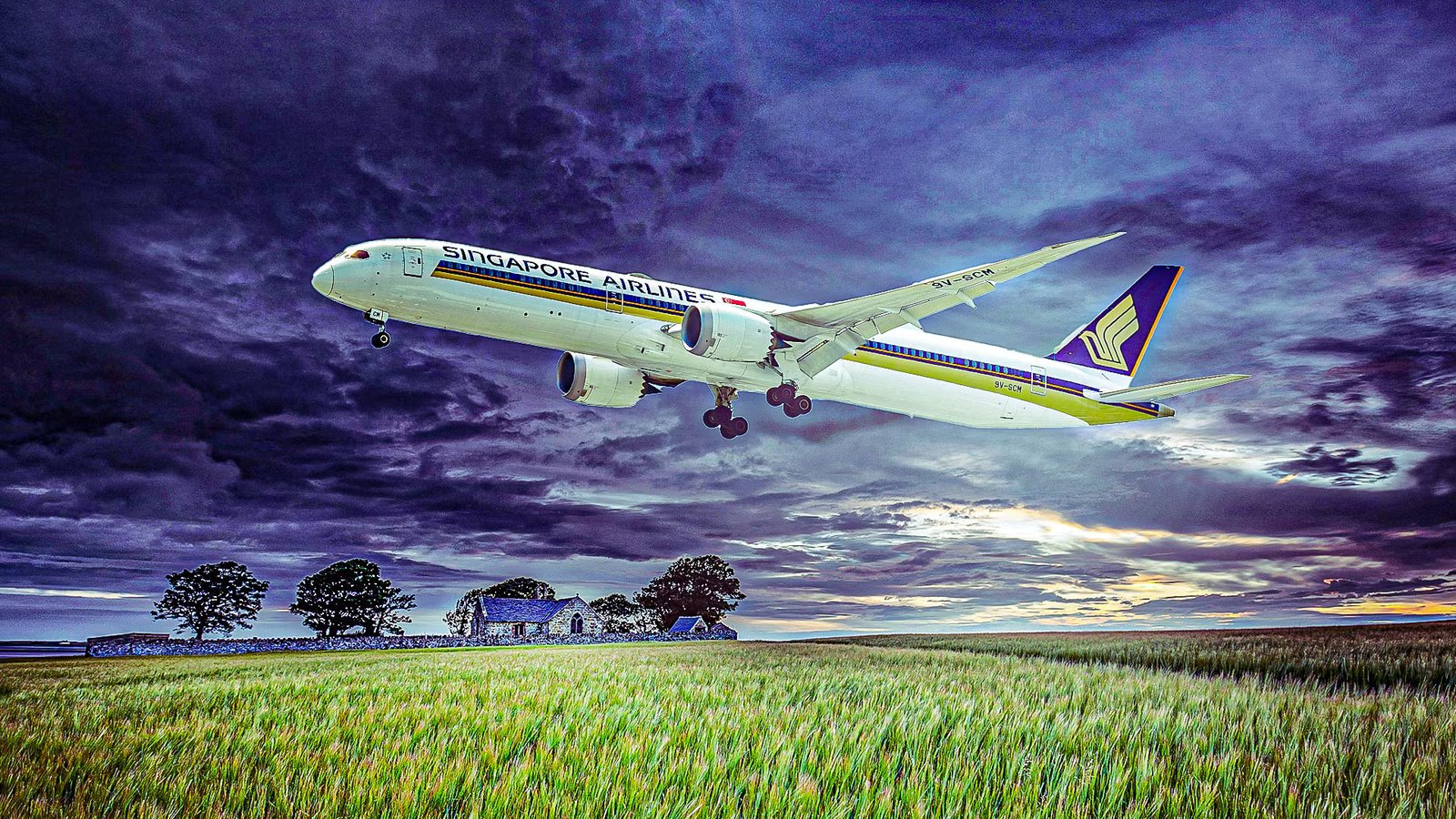
Hundreds of thousands of people remain stranded due to the ongoing conflict between US-Israeli forces and Iran, and it is becoming very expensive to book flights. With airports around the Middle East shutting down before slowly reopening in recent days, capacity remains limited for passengers looking to return home to Europe.
As direct flights to Europe from the region are in such scarce supply, the most common escape pipeline has been to fly to Asia, before catching a long-haul flight. However, this has led to rapidly surging prices, with one-way economy fares now costing up to ten times more than their usual price.
Fares Skyrocket On Asia-Europe Corridor

With Gulf carriers Emirates, Etihad Airways and Qatar Airways severely disrupted by the ongoing war in the Middle East, Asian airlines have proven to be one of the most popular lifelines for passengers seeking a return home. The big three Middle East airlines account for approximately one-third of passenger flow between Asia and Europe, so their removal from the board has had a huge impact on this travel corridor. This is why travelers are turning to the likes of Cathay Pacific and  Singapore Airlines , which offer a wide range of long-haul destinations, making them ideal choices for a direct flight to Europe.
However, this has unfortunately led to a massive surge in prices, with ticket websites showing some fares priced up to ten times higher than average. With capacity on flights almost maxed out due to the sudden rise in demand, many key routes have no seats available for several days, while others have limited space available for a massive premium. As quoted by Bloomberg, Subhas Menon, Director General of the Association of Asia Pacific Airlines, said,
“Clearly the Middle East airlines are under pressure. They definitely will be quite badly affected if this situation is prolonged, while Asian carriers don’t have a security situation so their hubs are in a good place.”
Will Prices Normalize Soon?

Fares appear to be normalizing in the coming days as the pressure eases, but they are still significantly overpriced compared to their baseline level. For example, an economy seat on Singapore Airlines’ service between  Singapore Changi Airport (SIN) and
  London Heathrow Airport (LHR) this Monday (March 9) is currently priced at over $2,500.
However, as reported by Bloomberg, an economy seat on the same flight on March 5 was priced at a whopping $8,500. In other cases, airlines are completely sold out for days or weeks ahead. For example, Qantas has sold out economy fares on its flagship Perth-London route for at least the next 10 days, and there is similar scarcity with most other Asian airlines.
According to Linus Benjamin Bauer, founder of aviation consultancy BAA & Partners, the fare hikes could persist in the days and weeks ahead, depending on the progress of the conflict. Bauer added that, while Asian airlines will benefit in the short-term, it is highly unlikely to signal a permanent shift in customers once the current crisis subsides.

A 5-Hour Flight Now Takes 7.5: The Massive New ‘Dead Zone’ Redrawing The World’s Flight Maps
Geopolitical tensions have left a gaping hole in one of the busiest aviation markets in the world.
The Long Journey Home

The sudden airspace shutdowns in the Middle East caused all kinds of trouble for passengers transiting through the Middle East, whether transferring at an airport or flying through regional airspace. The three largest carriers in the region — Emirates, Etihad and Qatar Airways — rely heavily on hub-and-spoke flights that shuttle passengers into their respective hubs, but have not been able to conduct full operations.
|
Day |
Flights |
Cancelled |
Cancelled % |
|---|---|---|---|
|
February 28 |
3,759 |
1,395 |
37.11% |
|
March 1 |
3,830 |
2,504 |
65.38% |
|
March 2 |
3,584 |
2,330 |
65.01% |
|
March 3 |
3,560 |
2,341 |
65.76% |
|
March 4 |
3,663 |
2,238 |
61.10% |
|
March 5 |
3,798 |
2,178 |
57.35% |
|
March 6 |
3,646 |
2,077 |
56.97% |
|
March 7 |
3,503 |
1,430 |
40.82% |
|
Total |
29,343 |
16,493 |
56.21% |
* Data from Cirium
This left tens of thousands of passengers stuck in Gulf airports with no direct route home. In the UAE alone, there were over 20,000 people stranded in airports, with the UAE government footing the bill for hotel accommodation and food. Many resorted to lengthy bus rides across the border to neighboring countries, such as Oman or Saudi Arabia, before catching a flight out.