dailynewsnblog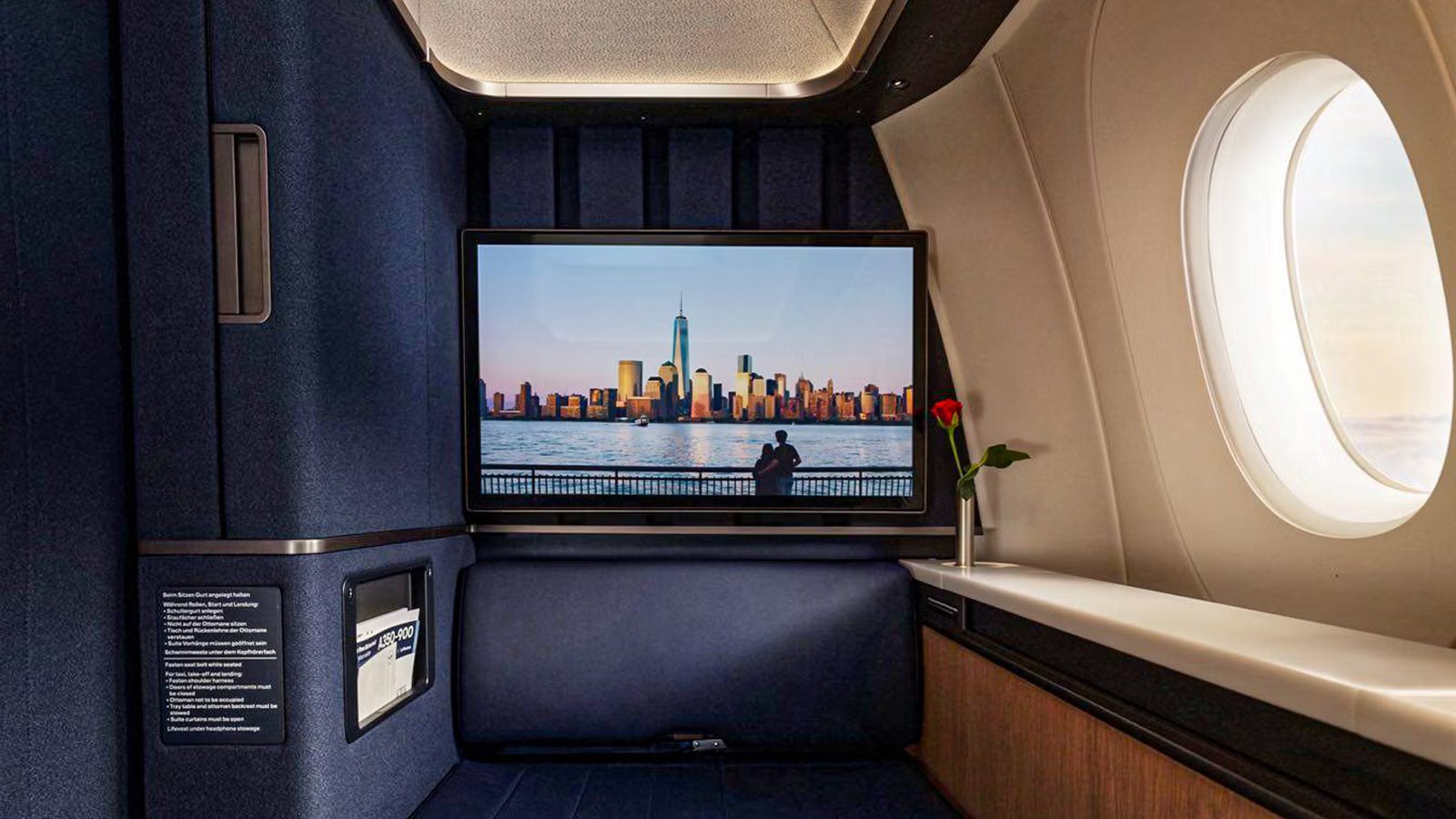
The Airbus A350 has solidified its position as the ultimate vessel for extreme long-haul travel. While many carriers have used the aircraft’s incredible range and fuel efficiency to cram more seats into the cabin, a handful of elite airlines are doing the opposite, transforming the A350 into a high-altitude luxury for first class passengers. This guide explores the most prestigious long A350 routes currently in operation, breaking down the staggering costs and the bespoke engineering that justifies a five-figure ticket price for a single journey across the globe.
The industry consensus was that business class suites would eventually render first class obsolete. However, as flights push past the 14-hour mark, the demand for true privacy, dedicated bedding, and Michelin-star dining has surged among high-net-worth travelers. Whether it is the cultural precision of Japan Airlines or the disruptive luxury of Starlux, these routes are maintaining a seamless lifestyle at 35,000 feet, where the cost of entry reflects the rare privilege of personal space in the sky.
Transpacific Tester: Japan Airlines HND-JFK

The  Tokyo Haneda (HND) to
  New York (JFK) route is a true testing ground for the Airbus A350-1000. Spanning 6,773 miles, this flight is the flagship service for Japan Airlines (JAL), featuring their most advanced first class product to date. For a round-trip ticket in March 2026, travelers can expect to pay between $22,000 and $26,000. This pricing places the route at the very top of the global luxury market, reflecting a product that is often booked out months in advance by corporate executives and luxury aficionados who prioritize the airline’s legendary ‘omotenashi’ service.
Inside the cabin, the JAL A350-1000 offers just six first class suites, ensuring an environment of absolute exclusivity. Each suite features a massive 43-inch 4K monitor and a seat that transforms into a choice of a single or double bed, a first for the carrier. The technical luxury extends to the audio experience as well, as JAL has pioneered the world’s first headphone-free seat, utilizing built-in headrest speakers that create a private sound shell for the passenger. This eliminates the physical discomfort of wearing headphones for 14 consecutive hours, a minor detail that becomes a major selling point on a transpacific crossing of this length.
The cost of this ticket also grants access to a culinary program that rivals the best restaurants in Ginza. Passengers are treated to a choice of Western or traditional Japanese ‘Sextet’ menus, featuring seasonal ingredients like Hokkaido scallops and Miyazaki Wagyu. When broken down by the hour, a $24,000 round trip equates to roughly $850 for every hour spent in the air. While the price is undeniably steep, the value proposition is built on the fact that the A350-1000 provides a pressurized cabin altitude significantly lower than older aircraft, meaning passengers arrive in Manhattan feeling physically refreshed rather than depleted by the journey.
Boutique Luxury: Starlux TPE-PHX

Starlux Airlines’ expansion into  Phoenix (PHX) is an interesting insight into how boutique carriers approach the US market. The PHX to Taipei (TPE) route, spanning approximately 7,104 miles, is currently the longest Airbus A350 service in the Starlux network that offers a dedicated first class cabin. By choosing Phoenix as a primary gateway alongside
  Los Angeles and
  San Francisco, Starlux is targeting the tech-sector elite moving between the Silicon Desert and Taiwan’s semiconductor hubs, where time is the only currency that matters more than the ticket price.
The first class experience on Starlux’s A350-900 is defined by zero-compromise engineering. Each of the four private suites is enclosed by 60-inch walls, creating a level of acoustic isolation rarely found on twin-engine aircraft. Unlike many competitors who use a standard seat frame, Starlux utilized NASA-grade Zero-G technology to allow the seat to tilt into a position that minimizes pressure on the passenger’s circulatory system during the 15-hour trek. This technical edge is a response to the ultra-long-haul fatigue that typically plagues transpacific travelers, making the $15,000 price tag as much a medical investment as a luxury one.
|
Route |
Distance (Miles) |
Round-Trip Fare (First) |
Cost Per 1,000 Miles |
|
Phoenix (PHX) – Taipei (TPE) |
7,104 |
$15,850 |
$2,231 |
|
Los Angeles (LAX) – Taipei (TPE) |
6,786 |
$14,599 |
$2,151 |
|
San Francisco (SFO) – Taipei (TPE) |
6,450 |
$14,600 |
$2,263 |
|
Seattle (SEA) – Taipei (TPE) |
6,050 |
$14,599 |
$2,413 |
Starlux uses its Taipei hub to offer a seamless luxury transition for passengers connecting to Southeast Asia. First class passengers are met at the jet bridge by a personal concierge who navigates the airport formalities on their behalf, a service included in the base fare. This level of intervention is designed to mirror the private jet experience, catering to travelers who want to bypass the friction of international transit entirely. As Starlux continues to take delivery of more A350-1000 airframes, this hub-and-spoke luxury model may well become the norm for high-yield transpacific aviation.

Starlux Airlines’ Premium Cabins: A Complete Guide
Passengers traveling in Starlux Airlines’ premium cabins can expect considerable inflight luxury.
Road Back To The Top: Lufthansa MUC-SIN & MEX

While Frankfurt remains  Lufthansa’s primary operations center, the airline has strategically pivoted its Airbus A350 first class flagship service from
  Munich (MUC). This move is centered around the rollout of the Allegris cabin, a $2.7 billion investment designed to restore Lufthansa’s status as a five-star carrier. On ultra-long-haul routes such as Munich to
  Singapore (6,389 miles) and Munich to
  Mexico City (5,888 miles), the A350-900 is a showcase for the suite plus, a private room in the sky that can be booked for a single traveler or a couple.
The technical specifications of the Allegris First Class suite represent a massive leap in cabin engineering. Each of the three to four suites features ceiling-high walls and a lockable door, addressing the primary demand of the modern luxury traveler for absolute acoustic and visual privacy. For the 12-hour route to Singapore, which currently carries a first class round-trip price tag of approximately $14,500, Lufthansa has integrated individual climate control into the seat. This allows passengers to adjust the temperature of their own micro-environment and a smart-seat feature significantly reduces the physical toll of dehydration and temperature fluctuations common in long-haul cabins.
The decision to focus the A350 first class product in Munich serves a dual purpose for both the airline and passengers. For the airline, it differentiates the Munich hub as the premium boutique alternative to the high-volume chaos of Frankfurt. For the passenger, it offers access to the dedicated first class lounge in Munich’s satellite terminal, which features open-air terraces and private sleeping pods. When navigating a route like MUC-MEX, where the return leg is a grueling overnight flight, the ability to transition from a private terminal suite to an Allegris bed creates a frictionless travel loop that justifies the $12,000+ investment for corporate travelers and luxury tourists alike.
Cost Efficiency

The technical specifications of a 7,000-mile flight are impressive, but the true metric of value for a first class passenger in 2026 is the price of silence and the preservation of physical health. On routes like Phoenix to Taipei or Tokyo to New York, the ticket price includes what the traveler pays to avoid the physiological debt of ultra-long-haul travel. As flight times push toward the 15-hour mark, the gap between business and first class pricing widens, driven by the scarcity of cabin real estate and the rising costs of ultra-premium soft products.
From a data perspective, analyzing the cost per hour reveals a fascinating hierarchy of luxury. A traveler on the JAL A350-1000 pays approximately $900 for every hour spent in their suite, making it one of the most expensive hourly rates for a first class product. In contrast, Starlux offers a lower cost per hour of roughly $545 on its Phoenix route, despite the flight being longer. This pricing discrepancy highlights how there is pricing for an established, ultra-loyal corporate base in Manhattan with Japan Airlines, whereas Starlux is using aggressive pricing to capture the emerging tech-luxury market in the Silicon Desert.
The persistence of these high prices is a direct result of artificial scarcity. By limiting first class to just four or six suites per aircraft, airlines ensure that the product never becomes commoditized. This scarcity allows them to maintain a rigid pricing floor, even during off-peak travel periods. Additionally, the Airbus A350 airframe allows for a quieter cabin environment compared to the older Boeing 777 fleet.

Insanely Modern: Inside The Airbus A350’s Secret Room Below The Flight Deck
The Airbus A350 is one of the most modern commercial aircraft in the skies today.
A Focus On Soft Product

The competition among A350 operators has moved into the realm of extreme curation. On a 14-hour journey, the value is found in the ability to enjoy a restaurant-grade experience at 35,000 feet, where the dry cabin air usually dulls the senses. To combat this, airlines like Japan Airlines and Starlux have redesigned their entire catering concepts, focusing on high-acidity ingredients and umami-forward dishes that maintain their profile in a pressurized environment.
The liquid assets on board are perhaps the most visible indicator of the ticket’s value. Japan Airlines, for instance, is known for pouring Champagne Salon 2015, a prestige cuvée that retails for upwards of $1,200 per bottle and is produced in extremely limited quantities. Meanwhile, Lufthansa has introduced its Project FOX service, ready for Spring 2026, which includes a dedicated caviar course served from a traditional trolley. These are carefully timed interventions intended to break up the monotony of a transpacific flight and provide a sense of occasion that business class simply cannot replicate.
The engineering of sleep is the final pillar of the soft product. JAL provides a dual-mode Airweave mattress that allows passengers to choose between a hard or soft surface, while Starlux has partnered with Paul Smith for its 2026 pajama collection, emphasizing that the luxury experience should extend to the very fabric touching the passenger’s skin. This level of detail ensures that by the time the A350 begins its descent, the traveler has not just been transported, but pampered.
The Perfect Vessel For Luxury?

As we look toward the end of 2026 and into 2027, the definition of ultra-long-haul is set for its most radical expansion since the jet age began. The Airbus A350-1000ULR is the final piece of the puzzle for Qantas and its Project Sunrise. These aircraft, currently on the assembly line in Toulouse, are engineered with an additional 20,000-liter fuel tank to conquer the final frontier of aviation.
The Project Sunrise A350 will be the lowest-density aircraft of its kind, carrying only 238 passengers, a stark contrast to the 300+ seats found on standard configurations. For first class passengers, this means a level of space previously reserved for private aviation. The six mini-apartment suites will feature a separate lounge chair and a permanent two-meter bed, allowing travelers to transition from day to night mode without waiting for a flight attendant to convert their seat. This hardware is paired with a wellbeing zone, a dedicated space at 35,000 feet for stretching and hydration, specifically designed to mitigate the physical toll of a 22-hour journey.
The economic and technical success of these routes will determine the future of the first class cabin. As carriers like  Air Canada place massive orders for the A350-1000 and Lufthansa continues its Allegris retrofit through 2027, it is clear that the scarcity model of luxury is here to stay. The Airbus A350 has proven that with the right combination of fuel physics and cabin curation, airlines can convince travelers to pay five-figure sums for the privilege of a nonstop flight.