dailynewsnblog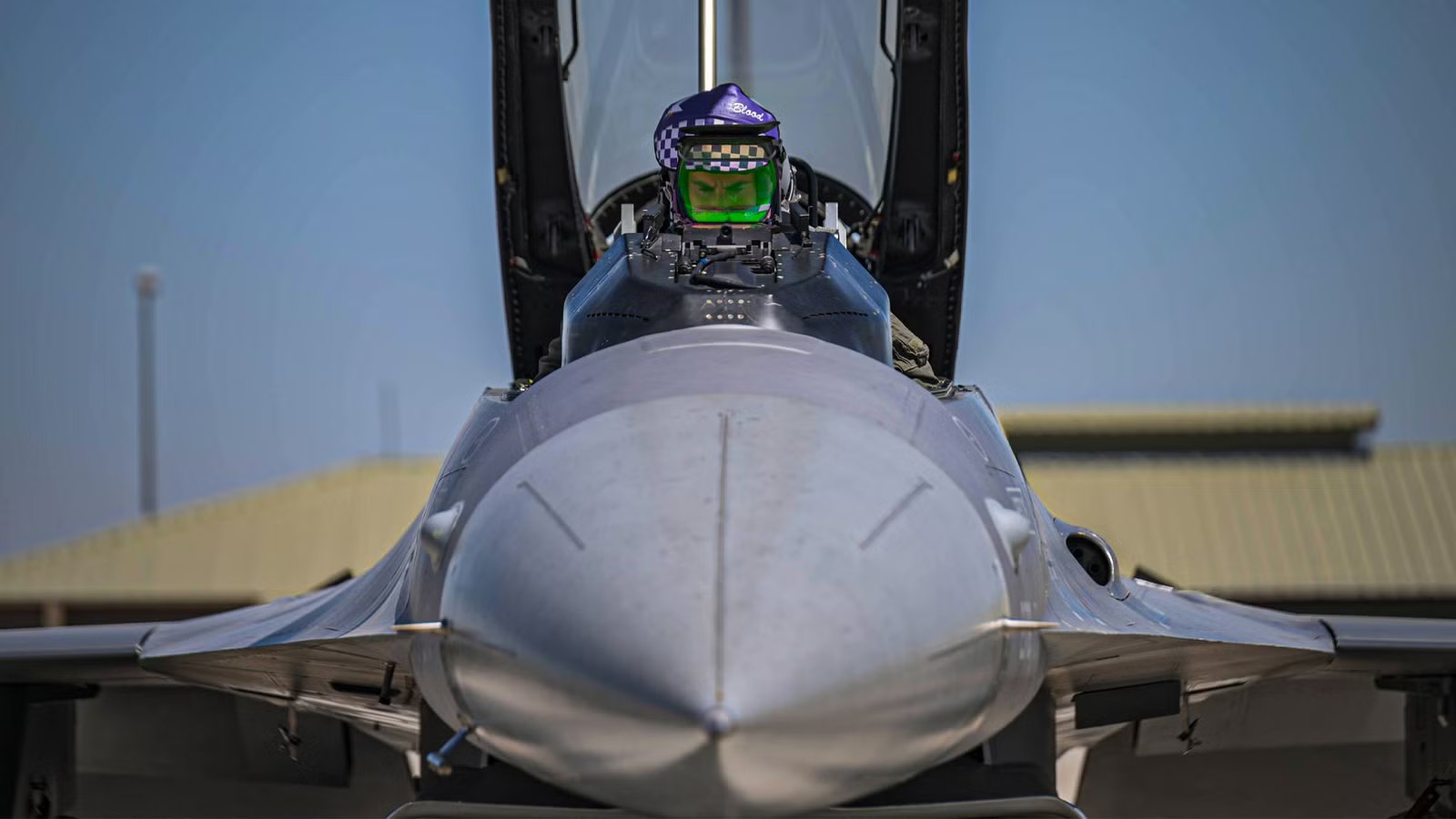
First introduced in the late 1970s, the General Dynamics F-16 was designed as a lightweight, highly maneuverable fighter that could dominate in air-to-air combat while also performing ground attack missions. Over time, its role expanded dramatically, transforming the aircraft into one of the most adaptable multirole fighters ever built. Today, more than 4,600 F-16s have been produced, including those built by LockheedCorporation after it acquired General Dynamics’ aircraft manufacturing systems.Hundreds remain in service with the US Air Force, and thousands more continue to fly with allied nations. This article explores why the F-16 became the most popular fighter jet in the US Air Force, what factors shaped its success, how it compares with other American fighters, and why it continues to play an important role in modern air warfare.
Why Is The F-16 The Most Popular Fighter Jet In The US Air Force?

At its peak, the United States Air Force operated over 1,000 F-16s, making it one of the most widely deployed combat aircraft in the service’s inventory. The aircraft can reach a top speed of Mach 2.0, around 1,500 mph (2,414 km/h), with relatively low operating costs compared with larger fighters. This balance allowed the Air Force to purchase the aircraft in large numbers while maintaining high sortie rates during sustained operations.
The F-16 Fighting Falcon is considered the most popular fighter jet in the US Air Force primarily because of its large fleet size, multirole versatility, and cost-effective performance. Since entering service in 1978, the aircraft has been used for a wide range of missions including air superiority, ground attack, suppression of enemy air defenses (SEAD), reconnaissance, and close air support. This adaptability allowed the Air Force to rely on a single aircraft type for many operational roles.
This combination of operational flexibility and sustained relevance is what ultimately distinguishes the F-16 within the US Air Force inventory. Rather than being limited to a single specialty, the aircraft was designed to perform across the full spectrum of tactical missions, allowing commanders to deploy it in diverse combat scenarios without requiring multiple airframe types. That breadth of capability is a major reason it has remained central to the service’s fighter force structure for decades.
What Factors Influenced The F-16’s Popularity?

The F-16’s rise within the US Air Force was the result of a combination of design choices and long-term adaptability. Its origins, cost structure, operational flexibility, and continuous upgrades all contributed to its sustained prominence. These include its design philosophy, affordability, export success, and long service life. Together, these elements helped the aircraft evolve from an experimental lightweight fighter into one of the most successful combat aircraft programs in aviation history. That success can be traced to a combination of operational design choices and long-term adaptability.
- Agility as a design priority: The aircraft was developed under the US Air Force’s Lightweight Fighter Program in the early 1970s, with a clear emphasis on maneuverability and air combat performance rather than size or payload capacity. This focus resulted in a fighter capable of sustaining up to 9G maneuvering loads, giving it strong performance in close-range engagements.
- Pilot-centric engineering: The frameless bubble canopy improves external visibility, while the fly-by-wire flight control system provides stability and precision during high-G maneuvering. The cockpit was also designed around human-factors principles, including a 30-degree reclined seat position that helps pilots withstand sustained high-G forces and reduces fatigue during extended missions.
- Fleet scalability: Early variants were structured to be more economical to procure and operate than larger twin-engine fighters, enabling large-scale deployment across the force. This scalability allowed the US Air Force to field the aircraft in numbers exceeding 1,000 active units at peak strength.
- Maintenance efficiency: The single-engine configuration and compact airframe help smooth sustainment requirements and support high sortie generation rates during extended operations. Lower maintenance complexity contributes to strong mission readiness rates during sustained deployments.
-
Continuous capability upgrades: Successive modernization programs have integrated AESA
radar
, digital avionics, helmet-mounted targeting systems, and compatibility with modern precision-guided weapons such as JDAM and AIM-120 missiles.
International adoption has further strengthened the aircraft’s standing. More than 25 countries operate the F-16, including Israel, Turkey, Greece, Poland, South Korea, and the Netherlands. In many of these air forces, it serves as a core platform for air defense and tactical strike missions, reinforcing its status as one of the most widely fielded fighter aircraft in the world. The aircraft’s global success also strengthened its position within the US Air Force. Because many allied nations operate the F-16, joint training exercises and coalition operations are easier to coordinate. Pilots from multiple countries can train using similar aircraft, tactics, and weapons systems.

How Lockheed Martin Fighters Stack Up Against Each Other In 2026
Lockheed Martin’s fighters continue to define the shape of Western airpower, but how do the F-22, F-35, and F-16 compare in evolving scenarios?
What Do Experts And Military Leaders Say About The F-16?

Military analysts and pilots often praise the F-16’s pilot-friendly design and adaptability as the main reasons for its enduring success. From the beginning, the aircraft was designed around pilot performance. Its side-mounted control stick, reclined seat, and wide field of view were intended to reduce fatigue while improving situational awareness. US Air Force Capt. Rhett Spongberg, 510th Fighter Squadron, F-16 Fighting Falcon pilot, used these words to describe his ride:
“It’s obviously the most beautiful fighter that was ever created, sleek and classic (…) From the capability perspective, it is extremely versatile.”
Combined with its powerful engine, such as the Pratt & Whitney F100 or General Electric F110, the aircraft achieves a thrust-to-weight ratio close to 1:1 in many configurations. Military planners have also highlighted the F-16’s impressive combat record. The aircraft has participated in numerous conflicts since the 1980s, including operations in the Balkans, Iraq, Afghanistan, Libya, and Syria. During these missions, it performed a wide variety of tasks, from enforcing no-fly zones to conducting precision strike operations.
One of the aircraft’s most significant strengths is its ability to carry a wide range of weapons. Modern F-16 variants can deploy AIM-120 AMRAAM air-to-air missiles, AIM-9X Sidewinders, laser-guided bombs, JDAM GPS-guided bombs, AGM-88 HARM anti-radiation missiles, and AGM-65 Maverick missiles. The aircraft’s adaptability is also evident in its continued production. The newest variants, such as the F-16 Block 70/72, incorporate the AN/APG-83 AESA radar, advanced electronic warfare systems, and improved mission computers. These upgrades are designed to keep the aircraft operationally competitive into the 2030s and potentially beyond.
How Does The F-16 Compare To Other US Fighter Jets?

While the F-16 is the most widely used fighter in the US Air Force, it is not the only significant aircraft in the fleet. Other fighters, such as the McDonnell DouglasF-15 Eagle, Lockheed Martin F-22 Raptor, and F-35 Lightning II each serve different roles within the Air Force’s broader strategy. The F-15 Eagle, for example, was designed primarily as an air superiority fighter. It has greater range, payload capacity, and twin engines for redundancy.
However, it is also more expensive to operate. This meant the Air Force could not deploy it in the same numbers as the F-16. The F-22 and F-35 represent the newest generation of stealth fighters. These aircraft incorporate advanced sensors, low-observable technology, and networked warfare capabilities. However, they are far more expensive than the F-16, both in procurement and maintenance costs.
Because of this, the F-16 continues to fill a critical niche. It offers strong performance and combat capability at a fraction of the cost of fifth-generation fighters, making it ideal for routine missions and large-scale deployments.

How The NATO Fighter Fleets Stack Up Against Russia’s In 2026
NATO vs Russia in 2026: Fighter fleets size, and the real balance of air power in Europe explained.
What Role Does The F-16 Play In The Current Iran Crisis?

The F-16 remains one of the most widely used combat aircraft in the Middle East, where both the United States and several regional air forces rely on it for strike missions, air defense patrols, and suppression of enemy air defenses. During the escalating 2026 Iran Crisis, F-16 fighters have been involved in several phases of the air campaign targeting Iranian military infrastructure, and
Israeli F-16 aircraft have played a visible role in these operations.
The Israeli Air Force’s F-16I “Sufa” variant, an extensively modified version of the aircraft, has been photographed preparing for long-range strike missions armed with RAMPAGE stand-off missiles, AIM-120 AMRAAM air-to-air missiles, and large external fuel tanks to extend range. This configuration allows the aircraft to conduct deep-strike missions while maintaining the ability to defend itself against enemy aircraft.
Israeli officials have stated that thousands of precision munitions were dropped during the early phase of the campaign, targeting missile facilities, drone launch sites, and command infrastructure. Fighter aircraft such as the F-16 were central to these operations because they can deliver precision weapons while operating at high sortie rates.
The United States Air Force is also relying on the F-16 in the region, particularly for suppression of enemy air defenses (SEAD) missions. Specialized F-16CJ “Wild Weasel” aircraft are equipped with the AGM-88 HARM anti-radiation missile and the AN/ASQ-213 HARM Targeting System (HTS) pod, allowing them to detect and destroy radar systems used by surface-to-air missile batteries.
Why The F-16 Remains Relevant In Modern Warfare

Despite being introduced nearly five decades ago, the F-16 continues to play a major role in modern airpower because of its adaptability and ongoing modernization. Through multiple upgrade programs, the aircraft has been equipped with modern sensors, digital avionics, and compatibility with a wide range of precision weapons.
One of the most significant improvements in recent variants is the introduction of Active Electronically Scanned Array (AESA) radar, particularly the AN/APG-83 Scalable Agile Beam Radar (SABR) system used on the newest F-16 Block 70/72 models. This radar significantly improves target detection, tracking capability, and resistance to electronic warfare compared with earlier mechanically scanned radars.
Modernization programs have also extended the structural lifespan of many aircraft to 12,000 flight hours, allowing upgraded F-16s to remain operational into the 2030s and potentially beyond. At the same time, new production models such as the Block 70/72 continue to be manufactured for international customers.
For these reasons, the F-16 remains one of the most relevant fourth-generation fighters in service today. Its combination of agility, advanced avionics, and multirole capability ensures that it continues to complement newer aircraft such as the F-35 while still performing a wide range of combat missions.