dailynewsnblog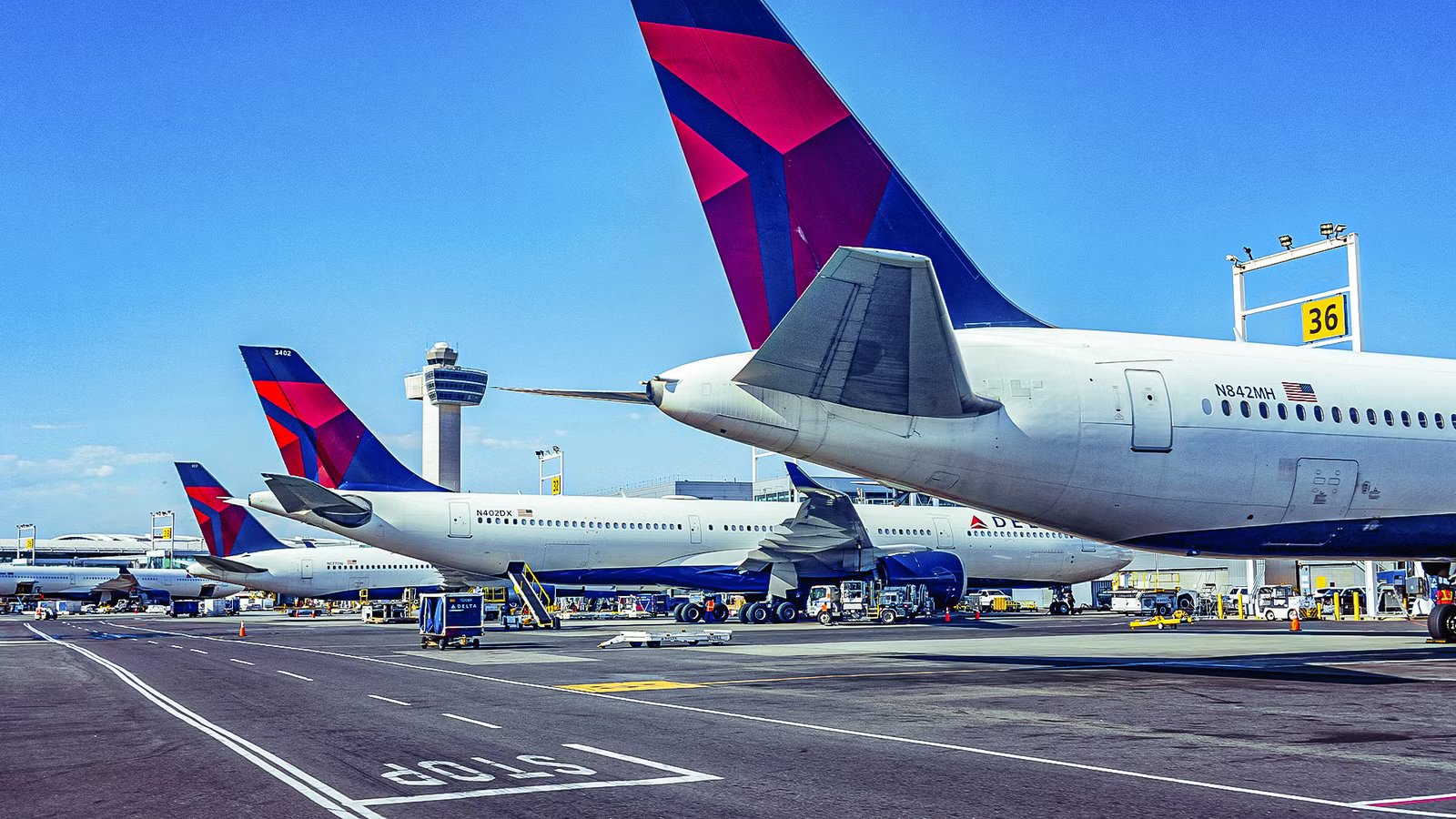
Navigating the New York metropolitan airspace is a complex feat of logistics, involving three primary hubs that collectively handle more than 140 million travelers annually. Being awarded the cities’ busiest airport title impacts everything from connecting flight availability to the likelihood of tarmac delays in one of the world’s most congested flight corridors. Whether you are a business traveler eyeing a quick dash from Manhattan or an international explorer landing on US soil for the first time, understanding the hierarchy of these airfields is essential for a smooth itinerary.
The airports of  John F. Kennedy International Airport (JFK),
  Newark Liberty International Airport (EWR), and
  LaGuardia Airport (LGA) each serve distinct roles within the regional ecosystem. While JFK functions as the primary international gateway, Newark provides a critical alternative for travelers on the west side of the Hudson, and LaGuardia remains the preferred choice for domestic point-to-point travel. This article explores the current traffic rankings, examining how massive modernization projects and shifting airline schedules are reshaping the leaderboard in 2026 and beyond.
Busiest Airspace In North America

New York-JFK is currently the busiest gateway of the New York airport system. According to official 2025 data released by the Port Authority of New York and New Jersey, the regional airport system handled a staggering 142.7 million passengers last year. While this was a slight dip from the all-time 2024 record, largely due to FAA staffing challenges and runway maintenance, JFK maintained its lead, consistently processing more international and domestic travelers than its neighboring hubs.
The scale of operations at JFK is best understood through its connectivity; it serves as a global junction where over 90 airlines link New York to every inhabited continent. In 2025, while EWR saw its volume settle at 47 million passengers and LGA hovered around 33 million, JFK’s steady performance ensured it remained the anchor of the overall airspace. The new JFK terminal redevelopment is currently underway and will aim to help the airport keep on top of further growing passenger numbers.
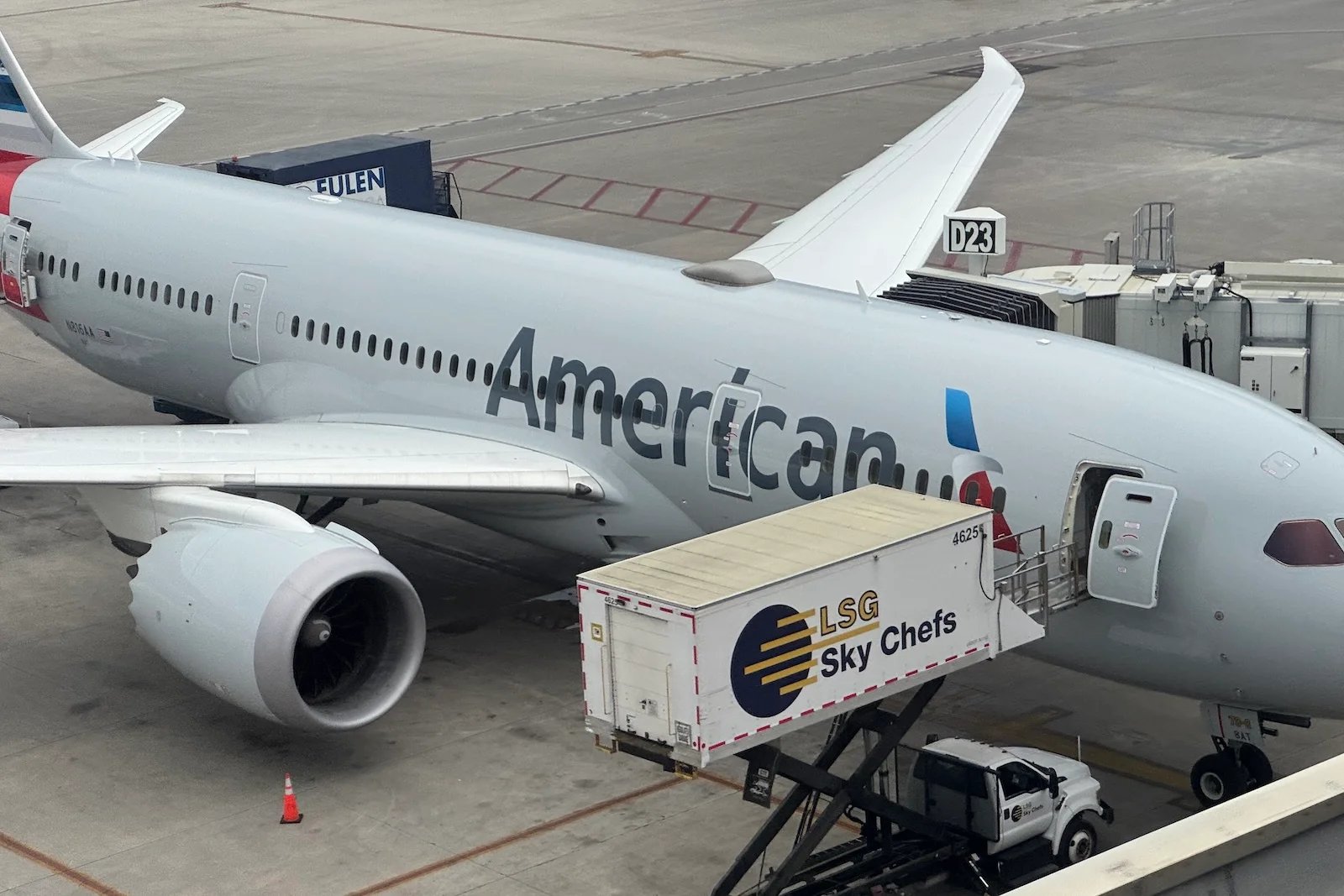
Recent data from Cirium regarding airline activity for JFK in 2026 highlights the massive scale of operations funneling through these hubs.  American Airlines leads the pack with 199,059 scheduled flights, followed by
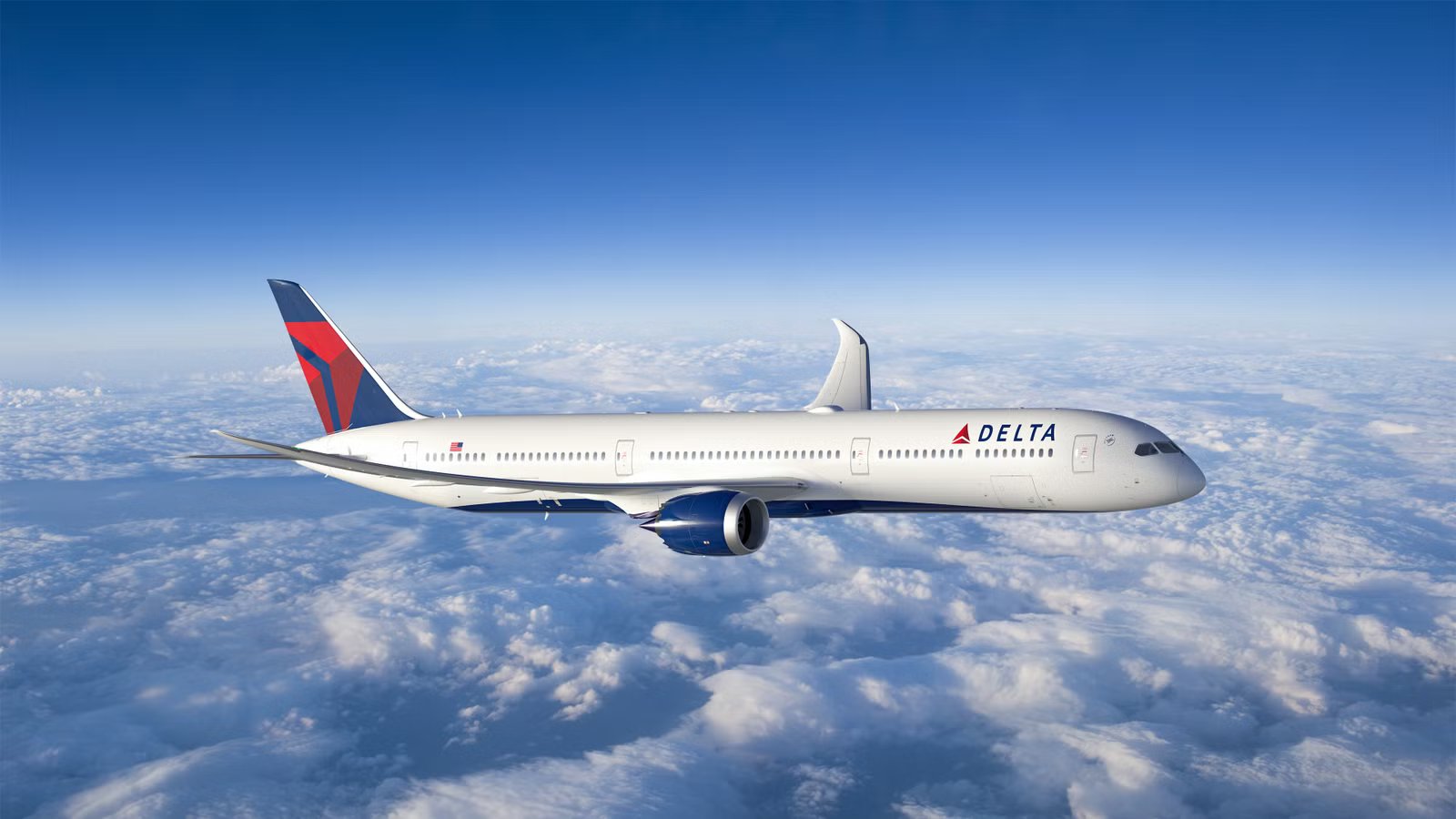
  Delta Air Lines with 156,414 and
  United Airlines with 152,406. These figures help demonstrate the sheer volume of carrier capacity that allows JFK and its sister airports to maintain their collective status as the most active airspace in North America.
Limits On Growth

Moving from simple passenger totals to the operational mechanics of New York’s airspace reveals why these rankings are in constant flux. The FAA’s stringent slot management, which regulates the number of takeoffs and landings allowed per hour to prevent total gridlock in the Northeast corridor, has had a noticeable effect on passenger flow. Additionally, the physical footprint of each facility, ranging from JFK’s sprawling 4,930-acre campus to LaGuardia’s compact 680-acre layout, limits how many wide-body aircraft can be handled simultaneously.
The geographic positioning and carrier hub status of each site also play a decisive role in their daily activity levels. JFK serves as the choice for Delta and American, while Newark remains the indispensable East Coast hub for United’s global network. LaGuardia, restricted by the perimeter rule that limits most flights to a 1,500-mile radius, operates as a high-frequency domestic shuttle outpost, catering to business travelers who prioritize its proximity to Manhattan over international connectivity.
|
Feature |
John F. Kennedy International Airport (JFK) |
Newark Liberty International (EWR) |
LaGuardia Airport (LGA) |
|
2025 Passenger Volume |
~62 Million |
~47 Million |
~33 Million |
|
Primary Role |
Global International Gateway |
Transatlantic & Regional Hub |
Domestic & Short-Haul Shuttle |
|
Physical Size |
4,930 Acres |
2,027 Acres |
680 Acres |
|
Primary Carriers |
Delta, American, JetBlue |
United |
Delta, American, JetBlue |
|
Key Advantage |
Unmatched global connectivity |
Access to West Side/NJ |
Proximity to Manhattan |
|
Current Status |
Mid-redevelopment ($19B) |
High-stress operations |
Fully modernized ($8B) |
|
Best For |
Long-haul international travel |
Avoiding East Side traffic |
Fast, domestic business trips |
The massive $19 billion redevelopment of JFK is currently the most significant factor impacting its immediate capacity and passenger flow. With construction crews working on New Terminal 1 and Terminal 6, certain gates have been temporarily removed from service, resulting in a slight 1% dip in volume in 2025 compared to the previous year. In contrast, LaGuardia’s completed transformation has turned what was once a lackluster facility into a modern hub, though its lack of international long-haul service ensures it will always remain third in passenger traffic behind JFK and Newark.

Forget JFK: Fly To New York’s Most Underrated Airport Instead
LaGuardia Airport was recently named the best airport in North America for domestic and short-haul international travel.
The Hot Topic Of The US?

Aviation experts and airline executives increasingly view the New York market as a point of serious contention, especially for international airlines wanting to gain presence in the US market. According to Cirium and CAPA analysts, the main US carriers of American, Delta, and United have spent the early part of 2026 pivoting their strategies to maximize the yield of every flight in this slot-constrained environment. This shift has triggered a massive lounge war across the area, highlighted by Delta Air Lines and American Airlines expanding ultra-premium offerings at JFK to secure high-paying transatlantic business, while JetBlue has recently disrupted the status quo by opening its first BlueHouse lounge at Terminal 5 to defend its home-turf advantage.
Expert consensus suggests that the massive $19 billion investment in JFK and the completed transformation of LaGuardia act as critical competitive landmarks for the carriers holding long-term leases. Analysts from Vantage Group note that these modernized facilities allow airlines to offer a seamless passenger experience that older, congested hubs simply cannot match. Given the FAA’s current flight-cap limit, this infrastructure expansion is a crucial step to ensure the New York area can keep up with demand from airlines and passengers.
Despite these luxury upgrades, industry insiders point to a stress paradox that continues to plague the region’s operational reliability in 2026. Recent research published by Condé Nast Traveler ranked Newark as the most stressful airport globally, with JFK also appearing in the top 5 due to its fragmented terminal layout and ongoing construction bottlenecks. Despite the physical buildings becoming world-class, the busiest title remains a double-edged sword. Until federal staffing levels for air traffic controllers reach 2019 benchmarks, even the most technologically advanced terminals will struggle with the constant delays that have historically defined the New York corridor.
Small On A Global Scale?

JFK may be the international crown jewel of New York, but its standing shifts significantly when compared to the broader North American landscape. Domestically, JFK is often outpaced in sheer volume by mega-hubs like  Hartsfield-Jackson Atlanta International Airport(ATL), which remains the world’s busiest airport by total capacity in early 2026 with over 63 million scheduled seats. Additionally,
  Chicago O’Hare International Airport (ORD) recently reclaimed the title for the most active airfield in the US, averaging nearly 815 daily aircraft movements. These hubs thrive on massive domestic spoke networks, whereas JFK’s volume is split across a much more complex, and often more delayed, international grid.
On the international stage, JFK faces a different set of rivals as Middle Eastern and European hubs expand their reach.  Dubai International Airport (DXB) has officially surged toward the 100 million passenger mark, solidifying its position as the world’s busiest airport for international traffic. While JFK remains the primary US gateway to Europe, it now contends with
  London Heathrow Airport(LHR) and
  Istanbul Airport(IST), both of which have utilized massive 2025 infrastructure developments to capture larger shares of connecting traffic and increase passenger flow inside the terminals. For travelers, JFK’s busiest designation represents a unique density. The airport is a concentration of different global airlines rather than the dominance of a single carrier’s network.
Ultimately, choosing JFK over alternatives like Newark or international hubs depends on which metric of busy matters most. From a pilot’s perspective, airports like Chicago or Dallas offer more daily flight operations and less ocean-constrained airspace, making them more active airfields for flight crews. However, for a passenger, JFK’s diversity remains unmatched in the Western Hemisphere, providing direct links to every inhabited continent. This ensures that while JFK may rank 6th in total US passenger numbers, it remains the most strategically important node for global connectivity, prioritizing international breadth over domestic volume.

Flying Through A New York-Area Airport? Here’s What You Need To Know
There are factors to consider when flying from one of the metropolitan area’s three airports.
Under Threat

While the rankings paint a picture of operational scale, they often mask significant risks that can derail travel in the New York corridor. The most persistent challenge for the time being is the ongoing air traffic control staffing crisis, particularly at the N90 facility. Although the FAA has relocated Newark’s airspace control to Philadelphia to alleviate pressure, staffing remains below the 70% threshold required for full efficiency. Consequently, the FAA has extended slot-usage waivers through October 24, 2026, allowing airlines to trim schedules by up to 10% without penalty. For travelers, this means that even on clear-weather days, the busiest airport title comes with a baseline 22% delay risk purely due to the lack of available controllers.
The physical transformation of the airports presents a significant ground-side drawback. The $19 billion redevelopment of JFK has entered its most intense phase, leading to frequent roadway closures and the relocation of for-hire vehicle pickups to the Howard Beach and Lefferts Blvd AirTrain stations. These detours can add 30 to 45 minutes to a commute, effectively neutralizing the time-saving benefits of the modern terminals. Also, the temporary removal of gates at Terminal 1 and Terminal 6 has created a capacity bottleneck, meaning the airport is currently operating with a smaller available footprint than its pre-construction peak.
Weather, as is the case for any airport, plays a major role in airport disruption. Most recently, a major winter storm forced ground stops across all three hubs, resulting in disruptions that affected not only the New York area but across various states. The airspaces of JFK, LaGuardia, and Newark are so interdependent that a single localized weather event can paralyze the entire system. Travelers flying on regional feed carriers or budget airlines should be particularly wary. With minimal operational slack in the system, a storm at one New York hub can trigger a multi-day schedule collapse across the entire East Coast.
A Complex Aviation Network

Putting the hierarchy of New York’s airports aside, the combination of all three key hubs allows New York to connect to the entire world. As of early 2026, JFK International leads for global connectivity, LaGuardia’s completed $8 billion transformation makes it the premier choice for speed and proximity to Manhattan, and Newark Liberty continues to serve as the indispensable hub for those utilizing United’s expansive transatlantic network.
Looking ahead, the landscape will continue to shift as the $19 billion JFK Vision Plan hits major milestones later this year. While current work has caused a temporary 1.6% dip in holiday volume, the first new gates at Terminal 1 and Terminal 6 are slated to open by late 2026. These facilities will specifically cater to next-generation widebody aircraft, ensuring JFK remains the primary node for North American international traffic through 2030.
Whether you are a pilot navigating the restricted N90 TRACON airspace or a passenger stepping into a brand-new terminal, truly understanding the differences between each airport is the key to mastering one of the most complex aviation markets in the world. As the FAA works to stabilize staffing levels through October 2026, proactive planning remains the most valuable tool in any traveler’s arsenal.