dailynewsnblog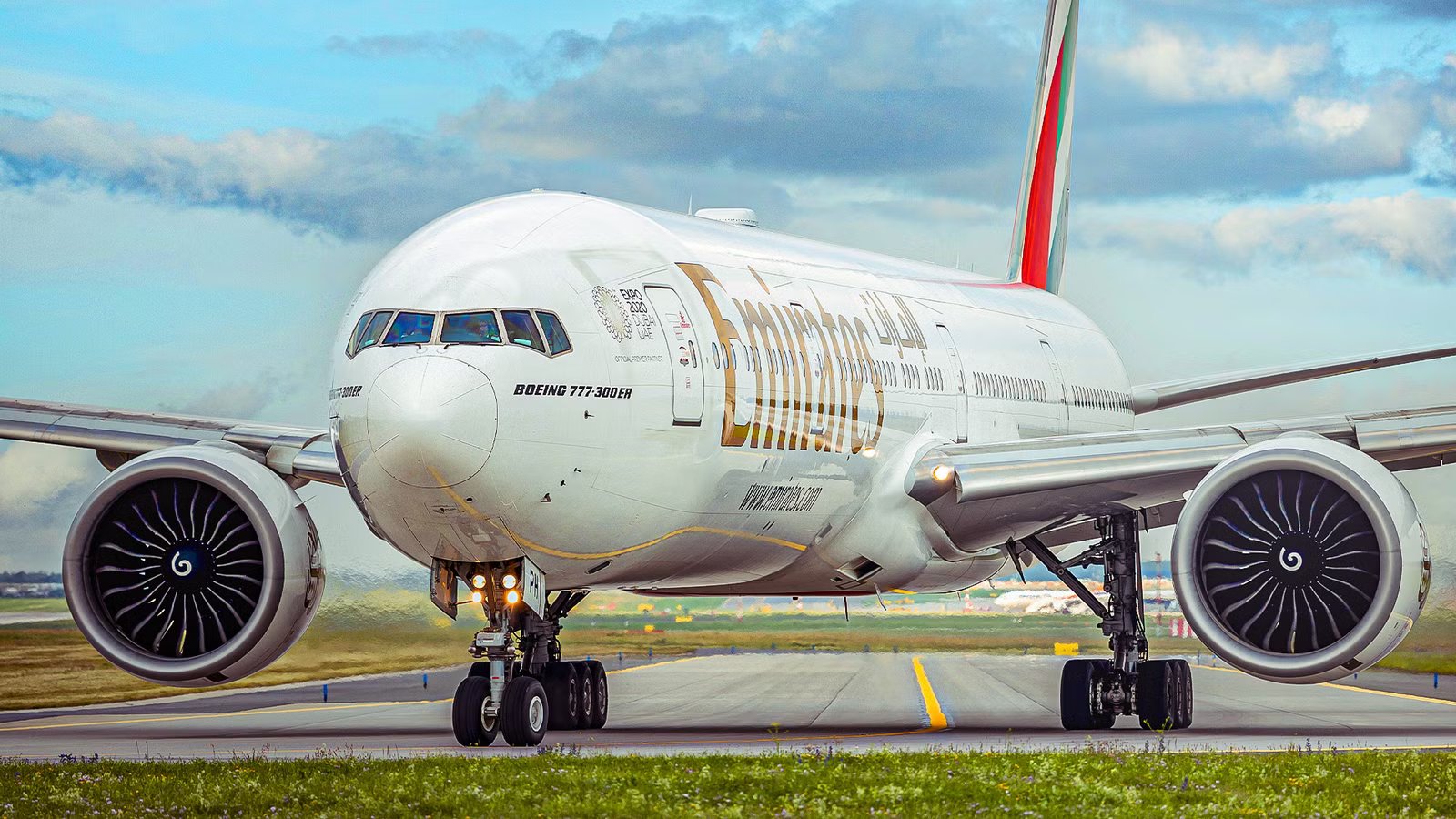
The Boeing 777-300ER enjoyed a resoundingly successful run as a staple of long-haul travel before  Boeing finally called it quits on production just over a year ago. First flown commercially by Air France in 2004, the 20 years that ensued saw in excess of 830 models delivered to dozens of airlines from all corners of the world. Now, as the industry awaits the highly anticipated rollout of Boeing’s 777X, its predecessor serves as a benchmark to build on after one of the last big leaps in long-distance aviation.
Luckily, for those hoping to catch a glimpse of the workhorse, or even better, fly aboard one, thousands of flights will still be operating for years to come. Indeed, Boeing stopped production in late 2024, but some 818 remained in existence as of mid-year last year, according to ch-aviation. As such, the 777-300ER still features heavily across carriers’ fleets and is not going anywhere anytime soon.
Dubai A Clear Winner For 777-300ER Traffic

If wondering where is best to look for the 777-300ER, one airport stands out as a clear front-runner: Dubai. Based on departure data provided by aviation analytics firm Cirium, Dubai is set to see almost 50,000 777-300ERs depart over the course of 2026. No other airports will enjoy anywhere near as much traffic from 777-300ERs over the year, and that is largely thanks to none other than  Emirates (more on this later).
For context, Dubai’s 777-300ER departures are in line to be nearly two-and-a-half times higher than Doha’s, which, as the second on the list, will wave off just under 20,000 of the aircraft over the period. Like Dubai with Emirates, Doha’s position as one of the busiest for 777-300ER flights is supported by  Qatar Airways.
Top 10 airports by 777-300ER departures (2026):
|
Rank |
Airport |
City |
Flights |
|
1 |
Dubai International (DXB) |
Dubai |
49,277 |
|
2 |
Hamad International Airport (DOH) |
Doha |
19,636 |
|
3 |
Charles de Gaulle Airport (CDG) |
Paris |
14,571 |
|
4 |
Heathrow Airport (LHR) |
London |
13,834 |
|
5 |
Taiwan Taoyuan International Airport (TPE) |
Taipei |
13,539 |
|
6 |
Hong Kong International Airport (HKG) |
Hong Kong |
11,710 |
|
7 |
Suvarnabhumi Airport (BKK) |
Bangkok |
11,565 |
|
8 |
Singapore Changi Airport (SIN) |
Singapore |
11,395 |
|
9 |
Istanbul Airport (IST) |
Istanbul |
10,210 |
|
10 |
John F. Kennedy International Airport (JFK) |
New York |
8,292 |
Third in the rankings is Charles de Gaulle in Paris. Itself a major European hub for long-haul widebodies, it will see nearly 15,000 777-300ERs take off over the year.  Air France naturally accounts for many of these, alongside foreign carriers such as Emirates, Cathay Pacific and Korean Air.
Emirates Largest 777-300ER Operator By A Stretch

As mentioned, Dubai’s place as the busiest for 777-300ER flights is in no small part due to Emirates. The UEA flag carrier currently has 119 of the jets in its fleet, as per Planespotters.net. Of these, 29 are parked, leaving 90 in active service as it stands. This makes it the largest operator of the 777-300ER worldwide, so it is no surprise that Dubai is the best place to catch sight of the aircraft.
Qatar Airways is the next-closest operator of the 777-300ER, but its own fleet is dwarfed by Emirates. Per Planespotters.net, it has a total of 57 of the variants. Just 14 of these are in service currently, while the remaining 43 are parked.
Other key 777-300ER operators include Air France, with a total of 43, as well as  Turkish Airlines and Cathay Pacific, which fly 36 and 35 of the variant, respectively. Others in the top ten include Saudia, EVA Air, Air China, Korean Air, and Singapore Airlines.

How Many Boeing 777-300ERs Were Built?
A total of 831 Boeing 777-300ERs were delivered, with the final example likely delivered in 2024 ahead of the 777-9’s expected launch in 2026.
What Is It About The 777-300ER That Draws Airlines?

The 777-300ER’s versatility has made it a popular choice for airlines over the years, given it can be utilized for a variety of routes thanks to both high capacity and long range. What is more, Boeing boasts that its superior operating costs against rivals such as the Airbus A350-1000 can aid in maximizing profitability for airlines. As the manufacturer notes, “[it] carries 38 more passengers, flies 150 nautical miles farther and has similar operating cost per seat” to the Airbus alternative.
For major hub-and-spoke operators like Emirates, this makes the aircraft a useful tool for flying various routes in and out of hubs like Dubai. According to the airline, some 100 cities across six continents are served by its 777-300ERs. These are set up with 364, 358, or 354 seats in a three-class configuration, or between 427 and 442 seats in two classes.
Emirates’ 777-300ERs look set to remain integral to its operations for a while yet, too, with the airline currently in the midst of a huge refurbishment program. Whilst also stretching to the likes of its A380s, the upgrades will see interiors upgraded to improve passenger offerings.
What Will Come After The 777-300ER?

Variants of Boeing’s 777 actually account for the majority of Emirates’ fleet, with the airline also operating seven 777-200s and 12 777Fs. This brings the total number of 777 flown by Emirates to 109, against the 85 A380s and 14 A350s that make up the remainder of its fleet.
Little is set to change, either, with Emirates due to be the largest buyer of Boeing 777X aircraft when it finally comes out, following years of delay. As of November, Emirates had penned orders for some 270 777X variants, including both the smaller 777-8 and larger 777-9. These will each offer increased capacity in two class configurations against their predecessors, with the 777-8 also due to boast a higher range of 8,745 nautical miles.
|
Specifications |
777-200LR |
777-300ER |
777-8 |
777-9 |
|
Seats (2 class) |
317 |
392 |
395 |
426 |
|
Range |
8,555 nmi |
7,370 nmi |
8,745 nmi |
7,285 nmi |
|
Length |
63.7 m |
73.9 m |
70.9 m |
76.7 m |
|
Wingspan |
64.8 m |
64.8 m |
71.8 m (extended) 64.9 m |
71.8 m (extended) 64.9 m |
|
Height |
18.6 m |
18.5 m |
19.5 m |
19.5 m |
|
Engine |
GE90-115BL |
GE90-115BL |
GE9X |
GE9X |
However, Boeing’s 777X program has been far from a success so far, with a string of incidents pushing back the aircraft’s first commercial flight. As of late last year, Boeing anticipated the new models would take to the skies come 2027. Originally, the launch date was set for 2020, so whether Boeing can finally get the project over the line once and for all remains clouded in uncertainty. As a result, don’t be surprised if we still see older models such as the 777-300ER regularly making appearances across airports worldwide for years to come.

End Of An Era: How The Boeing 777-300ER Revolutionized Commercial Aviation
The aircraft that connected continents and redefined efficiency takes its final bow, marking the end of an era.
Troubles In The Middle East

Whilst the Middle East dominates in terms of 777-300ER traffic, the Iranian conflict of early 2026 has already had a major impact on the region. From diversions around certain airspace to full airport closures, the fighting has already wreaked havoc on local traffic.
Now, it is difficult to quantify the impact over the long term, given the conflict’s early stages. What we do know, though, is that some 23,000 flights have faced cancellation since the outbreak of the conflict, according to Cirium. This has included flights from the major hubs of Abu Dhabi, Doha, and Dubai, which itself has been the target of drone strikes.
Time will tell if a ceasefire emerges and airport authorities and airlines alike can return to normal service on a consistent basis. But it goes without saying that travel to the region has become far more dangerous in recent weeks, and when that will change remains unclear.
777-300ER Not Going Anywhere Anytime Soon

So Dubai’s position as the busiest for 777-300ER traffic over the course of 2026 will no doubt depend on developments of the Iranian conflict. For full, unchecked schedules, Charles de Gaulle in Paris and London’s Heathrow appear as the next best alternatives for a view of the legendary aircraft for the time being, with a combined 28,405 departures planned for the year.
Whilst it is a case of time will tell with the ongoing conflict, the Middle East has previously been identified as a huge market for manufacturers over the coming years. As Boeing noted in its 2025 Commercial Market Outlook, “sustained Middle East demand” meant the region would require “nearly 3,000 new widebody jets over the next 20 years”.
For the 777-300ER, canceled production will inevitably see its numbers reduced as newer, more efficient models emerge. However, as such a vital part of airlines’ fleets to this day, particularly in the Middle East, plane spotters can rest assured that there will be plenty of time yet to enjoy the aircraft before it is too late.