dailynewsnblog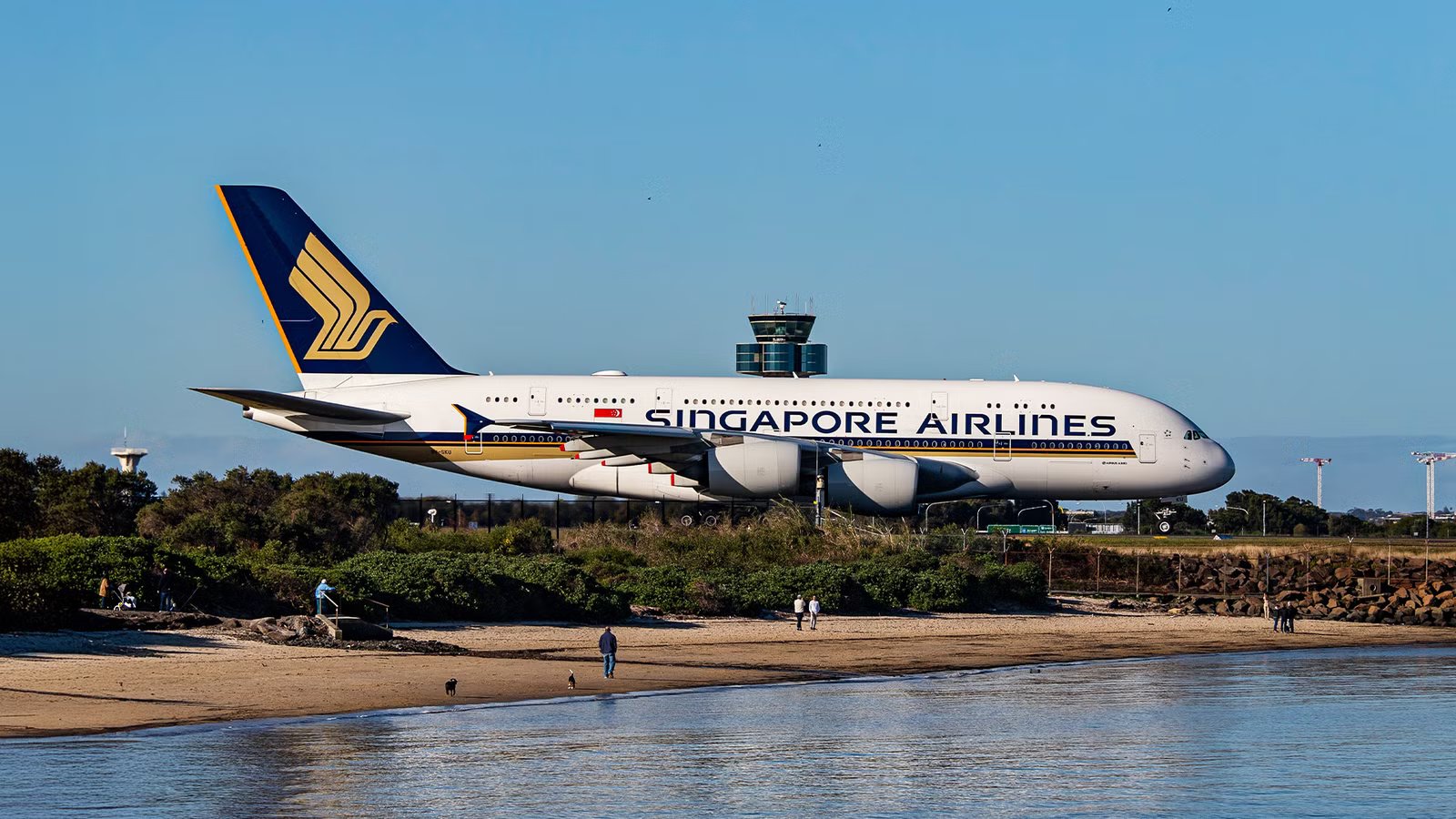
The curious question of which airport is the busiest for Airbus A380 flights, some travelers and planespotters might have, speaks to how global aviation networks are structured around the world’s largest passenger aircraft. With only a handful of airlines still operating the double-decker superjumbo in significant numbers, the A380’s presence has become concentrated at select global hubs we’ll discuss today. Understanding where it flies most frequently reveals not just traffic volumes, but also airline strategy, infrastructure investment, and long-haul demand patterns.
Using data from Cirium, an aviation analytics company, alongside airline fleet and network information from the A380 current operators, this article examines three key airports: Singapore Changi, London Heathrow, and Dubai International. Together, they represent the core bases of A380 operations. At the center of it all stands  Emirates, the world’s largest A380 operator, supported by
  Singapore Airlines,
  British Airways, and Qantas. But which airport truly claims the crown as the busiest for A380 movements?
Who Is The King Of All Airports?

The short answer is clear:  Dubai International Airport (DXB) is the busiest airport in the world for Airbus A380 flights. Dubai leads by a wide margin.
According to Cirium data for 2026, Dubai records 29,626 A380 flights, offering over 15.1 million seats and generating nearly 58.7 billion Available Seat Miles (ASMs) during the measured period. That figure places it far ahead of its nearest competitors.
By comparison,  London Heathrow Airport (LHR) logs 6,974 A380 flights, while
  Singapore Changi Airport (SIN) records 5,684. The gap between Dubai and the other two is dramatic. Dubai operates more than four times as many A380 flights as Heathrow and over five times as many as Singapore and Emirates’ dominance explains much of the gap.
The Dubai-based carrier operates the world’s largest A380 fleet, larger than the rest of the global A380 fleet operated by other airlines combined. When the A380 first entered service with Singapore Airlines in 2007, it was widely adopted by major global carriers. At its peak, 15 airlines operated the type. However, post-pandemic fleet restructurings and retirements have concentrated operations among a smaller group, just ten airlines, including ANA, Asiana Airlines, British Airways, Korean Air, Lufthansa, Singapore, Qantas,  Qatar Airways, Etihad, and with Emirates taking the lion’s share.
The Dubai-based carrier has built its global network around this aircraft. With 116 A380s in service and routes spanning Europe, Asia, North America, and Australia, the airline uses Dubai as a superhub for high-capacity long-haul operations, according to planespotters.net. Other airlines contribute to A380 traffic at Heathrow and Singapore, but none approach the scale of Emirates’ operation in Dubai.
Additionally, the concentration of the A380 has increased at only a few hubs, as clearly shown by Cirium data. Today, the aircraft’s activity is more and more centered at airports where infrastructure, demand, and airline strategies align, further reinforcing Dubai’s dominance.
Factors Influencing The Statistics

There are many factors that determine which airport emerges as the busiest for A380 flights. Chief among them is the hub strategy and airline fleet concentration. Emirates alone operates more A380s than all other airlines combined, and it bases virtually all of them in Dubai.
In contrast, British Airways operates a fleet of 12 A380s based at Heathrow, while Singapore Airlines has a smaller but premium-configured fleet operating from Singapore. Qantas uses the aircraft on select long-haul routes, including services that often touch Heathrow and Singapore, while  Sydney Kingsford Smith Airport (SYD) is also the fourth-largest airport for A380 operations.
Fleet size directly impacts frequency. An airline with over 100 aircraft flying multiple daily rotations will naturally generate far more movements than a carrier with a smaller fleet.
Infrastructure and airport readiness are also vital for successful A380 operations. The A380 needs specialized infrastructure: reinforced taxiways, dual boarding bridges, and suitable gate spacing. Not all airports can handle it on a large scale.
Dubai invested heavily in A380-ready gates, including a dedicated concourse (Concourse A) built specifically for Emirates’ superjumbo operations. Heathrow also upgraded multiple gates to handle the aircraft, reflecting its status as a slot-constrained but premium-heavy market. Singapore Changi likewise built A380-capable facilities early on, as it was the launch customer hub.
|
A380 Flights & Capacity |
|||
|
Airport |
A380 Flights |
Seats |
ASMs |
|
Dubai (DXB) |
29,626 |
15,145,052 |
58,665,445,500 |
|
London Heathrow (LHR) |
6,974 |
3,369,199 |
14,936,500,466 |
|
Singapore (SIN) |
5,684 |
2,727,719 |
11,605,860,486 |
The scale difference is striking. Dubai handles nearly 15 million A380 seats, which is more than Heathrow and Singapore combined.
Another important factor includes network geography and connecting traffic. For instance, Dubai’s geographic position between Europe, Asia, Africa, and Oceania enables it to funnel massive connecting traffic flows through a single hub. Emirates uses the A380 on trunk routes such as London, Sydney, Singapore, and New York, as these markets consistently fill 500+ seats per flight.
Heathrow, by contrast, sees A380 traffic from multiple airlines, but slot limitations restrict growth. Singapore serves as both an origin-destination market and a connecting hub, though on a smaller scale than Dubai’s mega-hub model.

Which Airlines Operate The Most Weekly Airbus A380 Flights Out Of Heathrow?
Six airlines are operating a total of 138 weekly A380 flights out of Heathrow, with British Airways and Emirates in the lead.
Airlines That Love A380

For the biggest player, Emirates, the A380 is a flagship strategy. Emirates has repeatedly reaffirmed its commitment to the A380 in numerous interviews. The airline’s official materials describe the aircraft as its flagship product, featuring onboard lounges, shower spas in First Class, and high-density configurations capable of carrying more than 500 passengers.
The airline’s President, Sir Tim Clark, has long argued that high-capacity aircraft are essential for slot-constrained global hubs. Dubai’s growth model relies on efficiently transporting large volumes of connecting passengers, and the A380 fits that strategy perfectly.
Meanwhile, for Singapore Airlines, the A380 is for premium positioning. Singapore Airlines, the launch customer of the A380, has reconfigured its aircraft to emphasize premium cabins. Its official fleet information highlights ultra-luxurious Suites and enhanced Business Class seating. Rather than maximizing density, Singapore Airlines strategically deploys aircraft on high-demand long-haul routes such as London and Sydney. This explains why Singapore Changi sees substantial A380 activity, contributing to both London Heathrow and Sydney operations, but not at the scale of Dubai.
|
Major A380 Operators |
||
|
Airline |
Primary A380 Hub |
Fleet Size |
|
Emirates |
Dubai |
116 |
|
Singapore Airlines |
Singapore ( + frequent LHR/SID ops) |
12 |
|
British Airways |
London Heathrow |
12 |
|
Qantas |
Sydney (+ frequent LHR/SIN ops) |
10 |
British Airways uses the A380 primarily on long-haul routes from Heathrow, including services to Los Angeles and Johannesburg. Qantas deploys the aircraft on flagship routes linking Australia with London and Singapore.
Airline strategy directly shapes airport statistics. Emirates’ concentration in Dubai creates a self-reinforcing cycle: more aircraft, more routes, more A380-capable gates, and more connecting passengers. Meanwhile, Heathrow and Singapore benefit from multi-airline operations, but without a single carrier operating triple-digit A380 fleets, their totals remain comparatively modest.
Airports Overview

At first glance, Heathrow might seem like a contender. It hosts multiple A380 operators—Emirates, British Airways, Singapore Airlines, and Qantas all operate the type there.
However, Heathrow is heavily slot-constrained. Even if demand exists, airlines cannot simply add more frequencies. Dubai, on the other hand, was designed with expansion in mind and continues to handle enormous connecting volumes.
Singapore is also strong but has a focused role. Singapore Changi plays a crucial role in A380 history. It was the first airport to welcome commercial A380 service. Its infrastructure is world-class, and it remains a key stop on kangaroo routes linking Australia and Europe.
|
Relative Scale Comparison |
||
|
Airport |
Airlines Operating A380 |
Dominant Carrier |
|
Dubai |
Primarily Emirates |
Emirates |
|
Heathrow |
Multiple |
Mixed |
|
Singapore |
Multiple |
Singapore Airlines |
But despite its prestige and history, Singapore’s total A380 flight count remains a fraction of Dubai’s. The difference comes down to the network model and fleet scale.
Overall, the data reinforces Dubai’s supremacy. With nearly 30,000 A380 flights recorded versus fewer than 7,000 at Heathrow and around 5,600 at Singapore, Dubai’s lead is overwhelming. If you want to fly on an A380, your best bet is a flight via the DXB hub.

How Do The 3 Airlines That Fly The Airbus A380 Between London & Singapore Compare?
This route is one of the top corridors for the superjumbo.
The A380’s Future

In the not-so-distant future, fleet retirements could shift rankings. The A380 program officially ended production in 2021. Several airlines either retired (like  Air France) or reduced their fleets (like
  Lufthansa). Any further fleet changes among current operators could affect airport rankings.
If Emirates were to accelerate retirements or shift capacity toward newer twinjets like the Airbus A350 or Boeing 777X, Dubai’s dominance could narrow.
There are also seasonal fluctuations to consider, since A380 deployment is often seasonal. Airlines may increase aircraft usage during peak travel times and cut back on flights during slower months. Temporary maintenance or retrofitting programs can also affect statistics.
Dubai is also planning long-term expansion at  Al Maktoum International Airport, which could eventually redistribute traffic. If Emirates relocates its operations in the future, the title of “busiest A380 airport” might technically shift within the Dubai Airport system.
For now, however, Dubai International remains the clear epicenter.
The Overall Takeaway

The data leaves little room for debate: DXB is the busiest airport in the world for Airbus A380 flights by a substantial margin. With nearly 30,000 recorded flights, more than 15 million seats, and almost 59 billion ASMs, it outpaces all other hubs by several multiples.
The dominance stems primarily from Emirates’ fleet size and hub strategy. While Singapore Airlines, British Airways, and Qantas continue to operate the A380 at significant global airports, none replicate the scale seen in Dubai.
The A380’s future may become more focused on a few major hubs. As airlines consider efficiency and fleet upgrades, the superjumbo’s role could shrink further. However, as long as Emirates continues to deploy its flagship aircraft widely, Dubai will likely remain the world’s top A380 airport.