dailynewsnblog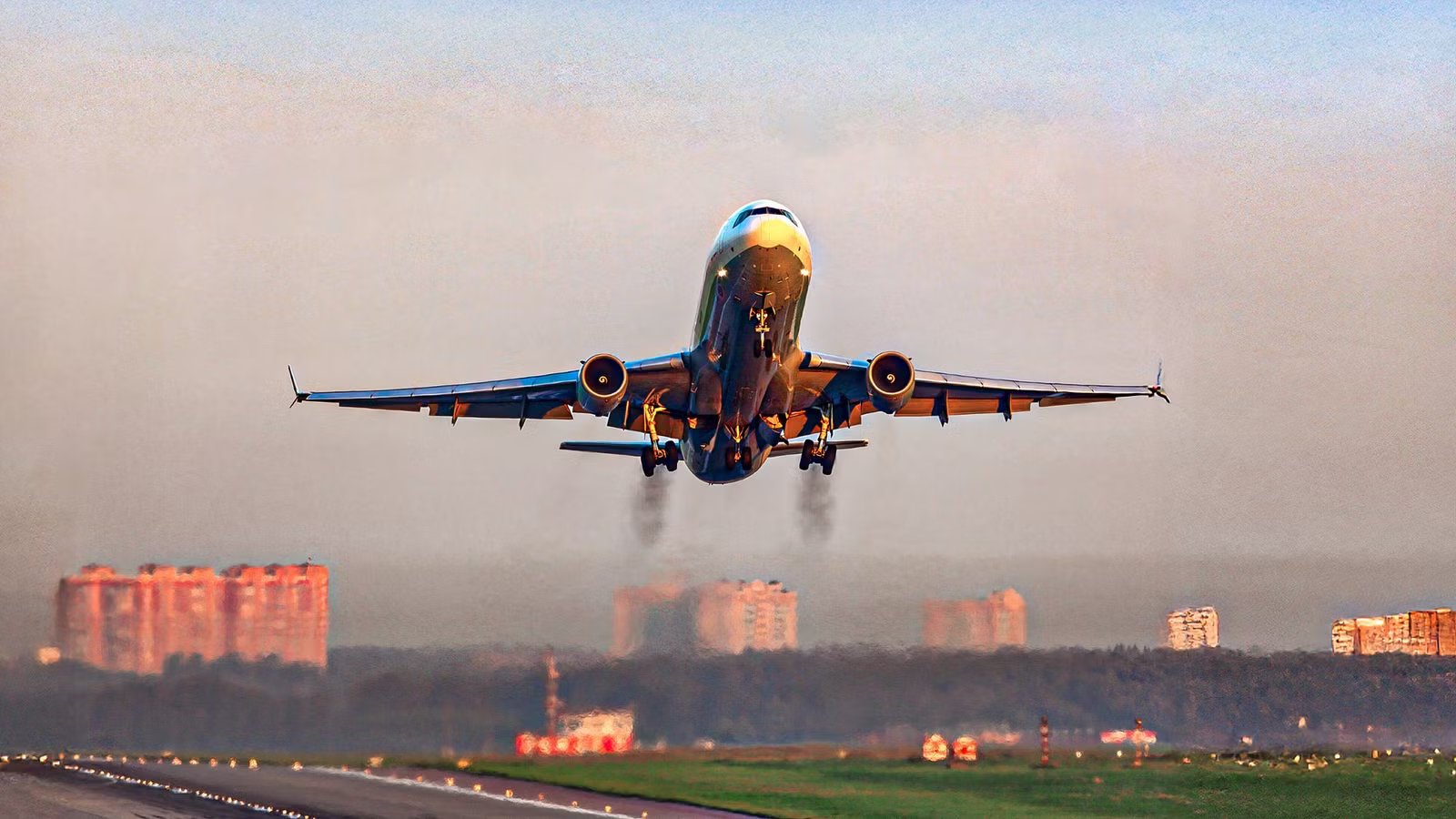
There’s a saying in aviation that while taking off is optional, landing is mandatory. On the other hand, committing to a landing when the approach is unstable is not mandatory. One of the most crucial skills every pilot learns early in training — and repeatedly practices throughout their career — is the rejected landing, more commonly known as a go-around. A smooth landing is important, but a timely go-around can be far more critical.
Although the maneuver sounds as simple as pushing the TO/GA switches or advancing the thrust levers, a last-second rejected landing is far more nuanced than it appears. It demands situational awareness, precise aircraft handling, and coordination between both pilots and air traffic control.
Go-Arounds Are Normal — But Every Occurrence Is Different

A common misconception outside the flight deck is that a go-around is a “non-normal” or emergency procedure. In reality, it’s a standard maneuver — every bit as routine as configuring the aircraft for landing.
Go-arounds can occur in several forms, and the terminology used to describe them can vary depending on whether it comes from ICAO, the FAA, or the aircraft manufacturer.
|
Boeing |
ICAO |
|
|
Balked Landing |
Landing is discontinued and go-around is initiated after the aircraft makes contact with the runway but before reverse thrust is used |
Landing is discontinued below OCA/H |
|
Rejected Landing |
Landing is discontinued, and a go-around is initiated at low altitude (below DA(H) or MDA(H)) but prior to touchdown |
– |
Also, when flying an instrument approach, there is a high likelihood that the appropriate action will be to execute the published missed approach procedure. A missed approach is performed when a landing cannot be completed during an instrument approach. Pilots follow the published procedure and altitude unless given radar vectors by ATC, and must continue to the missed approach point if initiating early. The term is also used to notify ATC that the maneuver is being executed.

Have You Ever Had To Go-Around?
Go-around procedures may catch passengers by surprise, given that they do not happen that frequently. After the fact, pilots will typically inform passengers why they had to perform a go-around which can be caused by a variety of factors.
Have you ever had to go-around during a flight? If so, what was the experience like? Let us know in the comments!
Why Pilots Go-Around

Shutterstock, Simple Flying
Regardless of whether the aircraft is powered by a Lycoming piston engine or large turbofans like a CFM56, the reasons for a go-around are consistent across all flying:
- ATC Instructions
- Unstable Approach
- Windshear
- Wake Turbulence
- Runway Incursions or Unexpected Hazards
- Mechanical or System Issues
At busy hubs where aircraft are sequenced tightly, maintaining proper spacing is critical. For example, if you’re flying a Boeing 737 on final behind an Airbus A320, the approach speed differences can quickly compress spacing. The 737 often flies a slightly higher final approach speed, meaning if you fail to decelerate early enough or configure in time, ATC may instruct a go-around. To prevent this, pilots might configure earlier. On the 737, flaps 30 and flaps 40 are both landing settings, but selecting flaps 40 can help reduce the final approach speed and maintain separation.
Another possible scenario is when the preceding aircraft vacates the runway more slowly than expected. At major airports, high-speed taxiways allow aircraft to exit at up to 60 knots, but if a landing aircraft misses that exit and has to slow for a standard 90-degree turnoff, the aircraft behind it may have no choice but to go around. A firsthand example of this unfolded on a short final, when a delayed runway exit ahead prompted the tower to instruct a go-around.
Sometimes, A Go-Around Might Even Require Descending

Many people associate a go-around with simply adding thrust and climbing, but that is not always the case. During recurrent simulator training, airline pilots routinely practice go-arounds with both all engines available and with one engine inoperative. In most scenarios, the maneuver is initiated at decision altitude and follows a standard go-around, which includes pressing the TO/GA switches. On many modern turbofan aircraft, this action commands the autothrottle to increase thrust to go-around thrust and engages pitch guidance for the go-around mode.
However, in the dynamic “Serengeti” of aviation, you may need to descend when executing a missed approach. If you’re flying an instrument approach and ATC instructs “go around, fly the published missed approach,” you must comply with the vertical profile of that procedure. At some airports, the missed approach altitude may be as low as 2,000 feet. In those cases, aggressively pushing the TO/GA switches and advancing the thrust levers could cause you to overshoot the assigned altitude and potentially conflict with traffic or terrain.
One possible scenario occurs when two aircraft on final approach are too closely spaced. In this case, the air traffic controller may instruct the following aircraft to go around before reaching the final approach fix.
A video demonstration of this scenario can be seen below.
The video highlights a technique that can be used when the aircraft is already above the missed approach altitude. If the TO/GA switch is pressed and a standard go-around is initiated, the aircraft will almost certainly be unable to follow the published missed approach profile. This is a clear example of why a go-around is not always a simple maneuver. Aircraft energy state matters a lot.
Why Thorough Briefing Matters

Because a rejected landing can come from multiple situations, flight crew members brief the go-around and missed approach during every approach briefing. The briefing ensures both pilots have the same mental model of what to do, reducing workload during the actual maneuver.
Key briefing elements include:
- Missed approach altitude and routing
- Navigation modes (e.g., when to follow LNAV and when to transition to heading mode)
- Threats like windshear and the required escape maneuvers
- Terrain considerations
- Low missed approach altitudes and how to protect them
- Fuel considerations
A go-around burns a substantial amount of fuel. That is why airline pilots often brief the max number of go-around attempts they can make before diverting to an alternate airport.

What Are Pilot Briefings & Why Are They Important?
In a multi-crew aircraft, pilots are expected to brief the other pilots on what they will do in critical phases of flight.
Furthermore, if windshear is reported on ATIS, pilots may review the windshear escape maneuver, which differs from a normal go-around. These details matter because the correct procedure changes depending on the specific hazard. To elaborate, on the Boeing 737, a windshear escape maneuver does not call for retracting the landing gear after a positive rate of climb—something that differs notably from a standard go-around procedure.
The video reveals the landing gear remaining down throughout the maneuver. Details like this are covered during the approach briefing, and understanding them is essential.
How Pilots Actually Perform A Go-Around

While procedures differ between aircraft types and operators, the fundamentals of a go-around remain remarkably consistent. In a Cessna 172, the sequence is typically:
- Advance thrust to full power
- Pitch to an appropriate climb attitude
- Retract flaps in stages
- Establish Vx or Vy
- Re-trim
- Sidestep the runway if needed
Regardless of the aircraft you fly, it is important to understand its aerodynamic characteristics. For example, during a go‑around in a single‑engine airplane, you must avoid pitching up too aggressively, as this can lead to a stall. In addition, understanding the ground effect and how it influences lift, drag, and control inputs is essential for maintaining proper control, especially close to the ground.
For airliners, a last‑second go‑around after a bounced landing can be particularly tricky. Many jets use automatic logic that deploys the speed brakes after touchdown when the thrust levers are at idle. However, if the thrust levers are not at idle during the initial touchdown, the speed brakes may not deploy automatically, which can contribute to a bounced landing. During this bounce, if the pilot then retards the thrust levers to idle, the speed brakes may deploy, causing a sudden loss of lift and a nose‑up pitching moment that can lead to a tail strike.
In addition, when initiating a go‑around after a bounced landing, there is also a risk of tail strike if the pitch attitude becomes excessive. Understanding how the aircraft behaves in ground effect, during bounced landings, and in various configurations is imperative for conducting a safe go‑around.
Common Errors During A Go-Around

Pilots must recognize early when a landing should be aborted and commit to a go-around. Some common errors, as listed in the FAA’s Airplane Flying Handbook, include:
- Failure to recognize a condition that warrants a rejected landing
- Indecision
- Abrupt power application
- Improper pitch attitude
- Failure to apply maximum allowable power in a timely manner
- Failure to configure the airplane appropriately
- Attempting to climb out of ground effect prematurely
To elaborate, when executing a go-around in a twin-engine aircraft with one engine inoperative, it is important to avoid abruptly advancing the throttles. With one engine out, the aircraft is already experiencing significant thrust asymmetry, and rapidly increasing power on the operating engine can worsen this imbalance. This sudden increase in asymmetric thrust can make directional control more difficult and may lead to excessive yaw or roll, especially at low airspeed and high angle of attack. Instead, power should be applied smoothly and in coordination with appropriate rudder and aileron inputs to maintain control throughout the maneuver.
If you are a student pilot, learning how to execute a go-around in different situations is just as important as making smooth landings. Practicing go-arounds from various flap configurations and phases—on a short final, after a bounced landing, or following an extended flare—builds confidence and ensures you can respond safely whenever an approach becomes unstable. In many ways, mastering a timely, well-executed go-around is every bit as imperative as achieving “butter” landings.

![Southwest Airlines Adds 42 New Nonstop Routes This Spring [Map]](https://dailynewsnblog.com/wp-content/uploads/2026/03/1774660872_southwest-airlines-boeing-737-max-8.jpg)