dailynewsnblog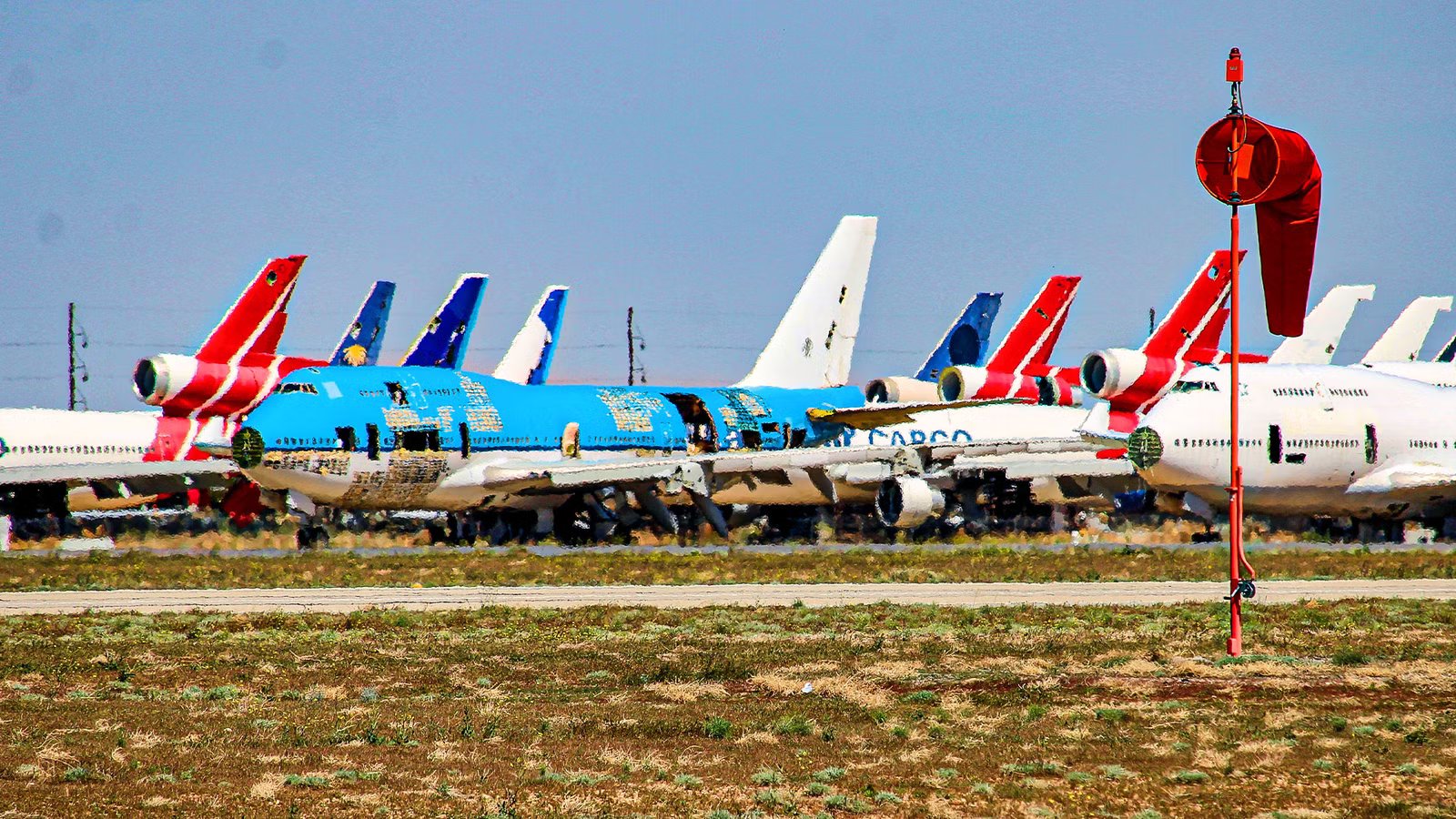
The lifecycle of a commercial jet does not simply end when it is removed from a carrier’s active schedule. The fate of these multi-million dollar machines is often seen as a mystery, yet understanding the retirement process is essential for grasping the true sustainability and economic scale of the aviation industry as a whole. This guide explains the complex journey an aircraft takes after its final commercial touchdown, from the arid storage tracks of the desert to the high-tech recycling facilities that salvage its most valuable components.
The retirement of a jet is a massive undertaking and involves several stages, often dictated by the D-Check, the most intensive maintenance overhaul, or fluctuating fuel and carbon emissions costs. The speed of these retirements has increased recently as airlines prioritize younger, more efficient fleets. This article will clarify the distinction between temporary storage and permanent scrapping, while exploring the creative second lives these airframes find in industries far removed from the runway.
The Boneyard

When a plane is officially retired, it is typically flown to a dedicated storage facility, often referred to as a boneyard, where its fate is decided based on market demand. The immediate priority is the removal of the engines and high-value avionics, which can often be worth more than the rest of the airframe combined. Once stripped of these critical parts, the fuselage either waits for a secondary buyer in the cargo or charter market or gets picked up by a recycling firm or salvage company.
This process is remarkably efficient, with modern dismantling teams able to recover around 90% of a plane’s weight for reuse or recycling. In the past, aircraft were often left to rot in remote fields, but today’s environmental regulations and the high value of aerospace-grade aluminum have turned retirement into a sophisticated industrial sub-sector. By the time a plane reaches this stage, it has usually logged between 20 and 30 years of service, carrying millions of passengers across the globe.
The speed of this transition has accelerated significantly in recent years, naturally due to increased focus on modernizing fleets. Widebody jets like the Boeing 747 were once the primary residents of boneyards, but we are now seeing a surge in middle-aged narrowbodies like the Airbus A320. This shift is driven by the rapid advancement of engine technology because if a newer model can save 15% on fuel, the older airframe becomes an economic liability almost overnight, regardless of its mechanical health.
Keeping Watch Of Cycles

An aircraft’s age in years is often less important than its cycles, or the number of times it has been pressurized and depressurized. A short-haul jet that flies six times a day will reach its structural fatigue limits much faster than a long-haul widebody that only flies once every 24 hours. An aircraft sitting on the ground is never going to make money for airlines, and so it becomes inevitable that these regularly used aircraft end up being retired.
Leaving these aircraft with no future isn’t always the case, however. If there is a high demand for freighters, a retired passenger Boeing 767 might undergo a ‘Passenger-to-Freighter’ (P2F) conversion, granting it another 15 years of life carrying parcels instead of people. Conversely, if an engine type becomes obsolete or expensive to maintain, the aircraft is more valuable as a source of USM (Used Serviceable Material) to keep other active planes in the air.
|
Factor |
Scrapping/Recycling |
Second Life (P2F or Charter) |
|
Engine Status |
Near end of life expensive overhaul due |
Recently overhauled; high remaining value |
|
Airframe Cycles |
High (near manufacturer limits) |
Low to moderate |
|
Market Segment |
Passenger demand for new tech is high |
Strong demand for cargo or regional lift |
|
Maintenance |
Major D-Check looming ($5M+ cost) |
Maintenance recently completed |
|
Material Type |
High-grade Aluminum (high scrap value) |
Composite (difficult to recycle/expensive) |
Carriers like All Nippon Airways and Japan Airlines often retire their aircraft earlier than US counterparts to maintain a young fleet image. These well-maintained jets are highly coveted in the secondary market because of their rigorous upkeep. Rather than being scrapped, a 12-year-old narrowbody is frequently sold to lessors who place them with emerging airlines in Southeast Asia or South America.

What Determines An Aircraft’s Lifespan?
When delivered from the manufacturer, an aircraft has an intended lifespan, which is not measured in years but by pressurization cycles.
New Aircraft Being Scrapped?

Aviation leadership generally views aircraft retirement not as an end, but as a critical lever for both financial liquidity and environmental compliance. According to the Aviation Leaders Report 2026, major carriers are increasingly focused on the circular economy concept, where the residual value of a retired hull provides the capital needed for next-generation replacements. Airbus has noted that as the industry pushes toward net-zero targets, the ability to recycle nearly all of a modern jet has transformed decommissioning from a logistical headache into a strategic asset.
Real-world applications of this strategy are visible in the recent actions of industry giants. For instance, Tarmac Aerosave, the European leader in aircraft storage and recycling, recently partnered with AerFin to dismantle retired Airbus A320neo aircraft. This was particularly interesting because it involved much newer aircraft, proving that even modern jets are being harvested early to feed a desperate global demand for USM. Experts like those at AFRA emphasize that this disassembly prevents environmental pollution from fluids and reduces the carbon footprint associated with mining new aerospace-grade raw materials.
The implications of these insights are profound for the global supply chain. By recovering more than a thousand high-demand parts from a single narrowbody teardown, airlines can bypass the manufacturing delays that have been a thorn in the side for many. This harvesting approach allows operators to maintain fleet reliability without waiting months for new factory components. As  Boeingand Airbus continue to face production bottlenecks, the expertise found in boneyards is becoming the secret engine that keeps the rest of the world’s active fleet in the air.
Preserving A Bit Longer

Recycling and part-outs are often the dominant fate for retired jets, but they are not the only path. The most common alternative is deep storage or preservation, where an aircraft is covered in protective materials like latex and parked in an arid environment to await a potential return to service. This option avoids the finality of the scrapyard but incurs ongoing costs for humidity control and periodic engine runs. In the volatile market today, many airlines find that the immediate cash injection from a teardown is more attractive than the wait-and-see approach of long-term storage.
Another niche but growing alternative is extreme upcycling, where fuselages are repurposed for non-aviation uses such as luxury hotels, restaurants, or even private residences. While these projects garner significant social media attention, they represent less than 1% of retired airframes. The pros of upcycling include a unique second life and high public engagement, but the cons are significant, as the logistical cost of transporting a massive fuselage over land often exceeds the value of the structure itself. For most commercial operators, the industrial recycling path remains the only scalable solution.
Ultimately, the choice between recycling and alternative reuse is driven by the material composition of the aircraft. Older aluminum jets, like the Boeing 777-200, are highly prized by recyclers because the metal can be melted down and reused with 95% less energy than creating new aluminum. Composite aircraft like the Boeing 787, however, with carbon-fiber skins, are harder to repurpose, and they are more likely to stay in secondary service or storage longer. For the majority of the global fleet, retirement is a fast track to becoming the spare parts and raw materials of tomorrow.

What Is The World’s Oldest Passenger Plane Still Flying?
While today’s aviation industry is more modern than ever, you can still find active vintage airliners if you know where to look.
Gray Areas Of Maintenance

The retirement process is often presented as a seamless industrial success, but it is not without significant risks and logistical hurdles. One of the most pressing concerns is the environmental challenge posed by next-generation composite aircraft like the Boeing 787 and Airbus A350. Unlike their aluminum predecessors, which can be melted down with ease, these carbon-fiber-reinforced polymer hulls are notoriously difficult to recycle. Currently, most retired composite sections are either downcycled into lower-grade materials for the automotive industry or, in less regulated regions, end up in specialized landfills, as the chemical bonding of the fibers makes them nearly impossible to separate without intensive energy use.
Another shadow over the retirement industry is the rise of suspected unapproved parts. As airlines face extreme pressure from supply chain bottlenecks, the temptation to source components from undocumented or gray market teardowns has led to major safety alerts. A landmark fraud case concluded in February 2026 saw a UK-based parts trader, AOG Technics, sentenced to prison for selling over 60,000 aircraft engine parts with forged safety certificates. This scandal highlighted that if the traceability of a part is lost during the chaotic dismantling of a retired jet, it can re-enter the global supply chain as a ticking time bomb that risks passenger safety across the entire aviation network.
Major facilities in the US and Europe follow strict protocols, but smaller, unregulated dismantling sites may skip the expensive hazardous material disposal steps for fluids like hydraulic oil and jet fuel. Ensuring that a retired aircraft is handled by an AFRA-certified facility is the only way to guarantee that its final landing doesn’t result in long-term environmental or safety repercussions.
Where These Jets May End Up

A retired jet is no longer seen as a piece of junk, but as a warehouse of precious raw materials and high-value components. Whether a plane is destined for a second life as a cargo freighter, harvested for parts to keep other fleets flying, or recycled into a soda can, the process ensures that very little of these massive engineering marvels goes to waste.
The aviation industry is moving toward a circular model where the retirement of an old, thirsty jet is what directly enables the purchase and operation of a cleaner, more efficient successor. Soon, the focus will shift from simply parking planes in the desert to perfecting the urban mining of composite airframes, ensuring that the carbon-fiber giants of today do not become the environmental burdens of tomorrow.
Ultimately, the lifecycle of a jet reflects the ingenuity of the industry itself. By treating the end of a flight as the beginning of a new industrial cycle, aviation is proving that it can be both a high-speed connector of worlds and a responsible participant in the global economy. As recycling technology continues to mature, the day may soon come when every single bolt of a retired aircraft finds its way back into the sky.