dailynewsnblog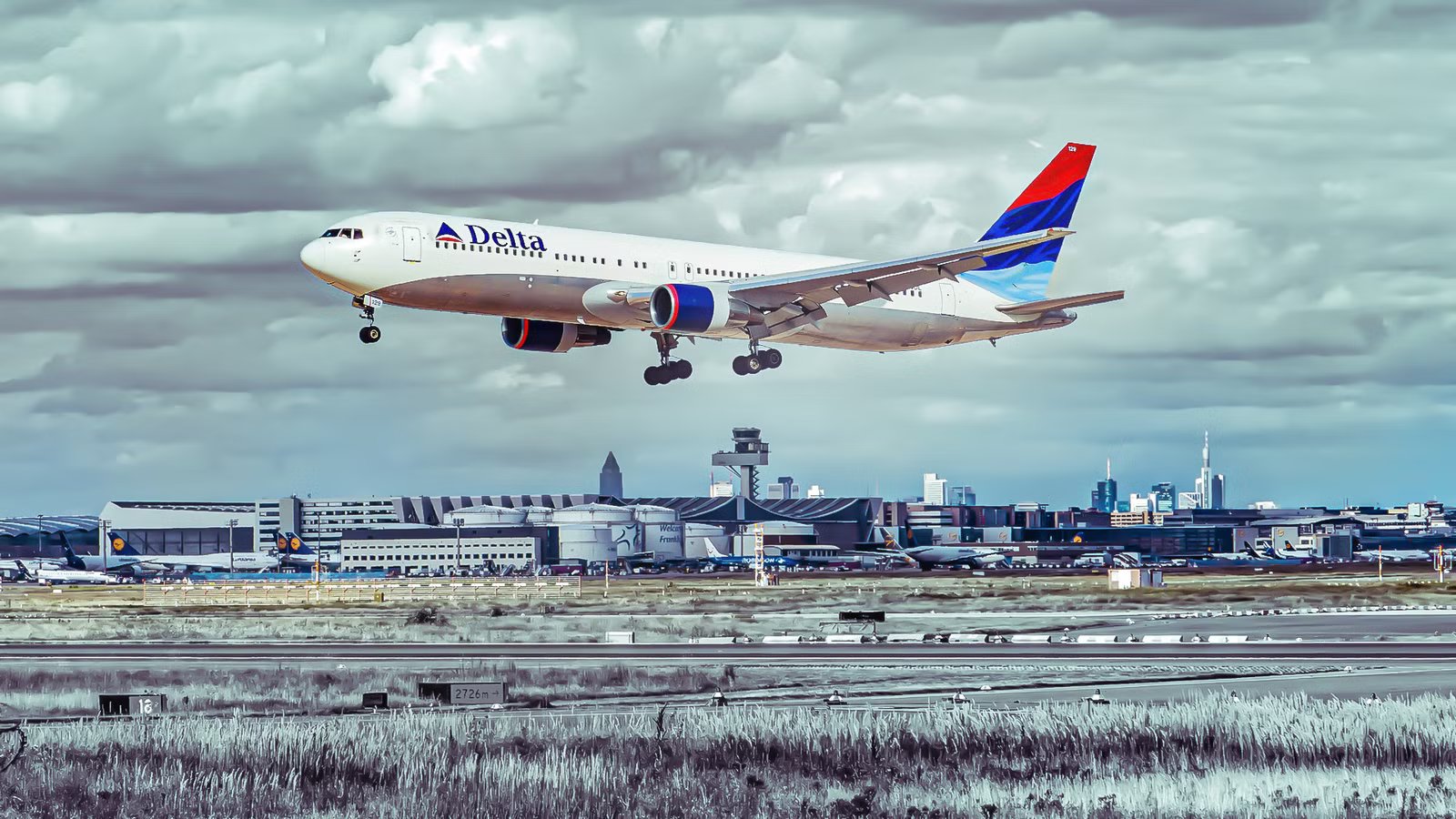
 Frankfurt Airport (FRA) is one of the world’s largest hubs. Serving as a major connecting hub for Star Alliance carrier Lufthansa and several of its partners across the globe, the airport sees millions of passengers pass through its doors each year. However, in decades prior, the airport had a very different history when it came to airline hubs. Multiple international carriers had extensive operations at the airport, but slowly retreated from the facility as a result of network consolidation efforts.
Delta Air Lines, an Atlanta-based legacy carrier, actually used to operate a hub at Frankfurt Airport, something unique for an airline that today is known exclusively for hubs within the United States. Back in the 20th century, Delta used to operate a hub out of this German city, which is not a base for any of the airline’s partner carriers in the SkyTeam alliance. Let’s take a deeper look at the history behind this unique hub and what happened to it.
A Brief Overview of Frankfurt Airport

Frankfurt Airport today is the busiest airport in Germany, and it is one of Europe’s leading air travel hubs in terms of both passenger and aircraft movements. The airport functions as a principal hub for Lufthansa and its affiliate carriers, which include Lufthansa City Airlines, Lufthansa CityLine, and Lufthansa Cargo. The facility covers more than 5,600 acres, and it features four runways with two passenger terminals. Collectively, the airport’s annual capacity is for around 65 million passengers.
With multiple airlines operating major hubs at the facility, it is not surprising that it routinely ranks as one of the busiest on the planet. In 2024, Frankfurt Airport saw more than 61 million passengers pass through its gates, making it the sixth-busiest airport in Europe. In this category, it was only surpassed by the following five hubs: Istanbul Airport (IST),  London Heathrow Airport (LHR), Paris Charles de Gaulle Airport (CDG), Amsterdam Schiphol Airport (AMS), and Madrid Barajas Airport (MAD).
The airport serves more than 330 airports globally across five different continents, with more direct routes than almost any other airport on the planet. The airport was historically an air base, a US military installation that dated back to 1947 and remained open until 2005. This site is now used by the facility as Terminal 3, and the facility continues to play a key role in European and global aviation.

The Airlines That Dominate The World’s 10 Most Connected Airport Hubs
Airport hubs act as central connection points, allowing access to a greater range of destinations. Here are the main airlines based at the top 10.
A Deeper Look At Delta Air Lines’ Operational Strategy

Delta Air Lines is one of the world’s largest and best-known airlines. It is the world’s largest airline in many financial metrics, including market capitalization and revenue. However, the airline trails competitors in terms of passengers and aircraft. Nonetheless, the carrier’s strategy throughout its extensive history has been that of a legacy carrier. This term describes an airline that focuses primarily on catering to high-spending business travelers.
As a legacy airline,  Delta Air Lines optimizes its fleet, cabin offering, and network to provide the most convenient schedule for business travelers. For example, this is one reason why almost all of Delta’s flights to Europe are overnight red-eye services, which are designed for business travelers looking to get sleep on the flight over and arrive in time for morning meetings. For these reasons, Delta partners with carriers that are members of the SkyTeam alliance to offer the most convenient schedules to those traveling on business.
From a strategic standpoint, there are clear reasons why Delta Air Lines would have wanted to close a hub at Frankfurt Airport. The facility serves no major strategic purpose for the airline, and it only did in a previous era when the carrier had hubs outside the United States. Nonetheless, the carrier did have a hub at the airport and operated it for years.
Delta’s History At Frankfurt Airport

Delta Air Lines once had a massive hub at Frankfurt Airport, with the carrier electing to use the facility as a base for its routes within Europe, and as a key gateway for destinations all across the globe. From this hub, Delta operated flights to destinations ranging from Athens to Istanbul and Moscow, offering extensive connectivity beyond just Germany.
The carrier also used the airport as a base for transatlantic service to cities like Los Angeles, Orlando, and Washington DC. Over time, however, Delta’s presence in Frankfurt gradually began to lose any strategic value. Despite strong performance on some routes within Europe, there were major factors that motivated the airline to shut down its hub, according to Flight Global.
For starters, the airline saw greater potential for profitability by reallocating aircraft across its global fleet and maintaining an operational focus on lucrative US operators. This led to an extensive reevaluation of the role that Frankfurt played in Delta’s extensive international strategy, despite the fact that the airline had, over time, built a sizable presence in the German market.

Why Doesn’t Delta Air Lines Have A Hub In Chicago?
Delta Air Lines has strategically avoided a fight over Chicago O’Hare.
A Strategic Withdrawal For The Carrier

By the time the 1990s came around, the Delta Air Lines route strategy department decided to slowly move away from having a hub in Frankfurt in order to optimize network profitability. The carrier projected that this move would actually boost its operating profits by around $62 million and that this would offset an investment of roughly $60 million in organizational restructuring. Up to 800 Delta Air Lines jobs in Europe, primarily those based in Frankfurt, were cut as a result.
At the time, Delta Air Lines chairman Ron Allen denied that this decision was motivated by competitive pressures emerging from the alliance between  Lufthansa and United Airlines. Rather, the executive argued that asset reallocation was the principal reason behind this. Aircraft such as the Boeing 727, which previously operated on the airline’s intra-European routes, were reassigned to serve on more productive US routes. Here, the airline’s aircraft utilization could be effectively doubled.
The airline quickly began to reduce the services it offered from Frankfurt, and the airline simultaneously began to expand its operations out of John F. Kennedy International Airport (JFK) in New York, which included the launch of new transatlantic flights to Istanbul, Madrid, and Manchester. The airline also used this as an opportunity to increase flights to both Athens and Rome. This allowed the carrier to consolidate its international operations on stronger US hub airports as opposed to maintaining a more decentralized footprint in Europe.
The Airline Had Shifting Partnerships At The Time

Delta Air Lines eliminated many direct routes to Frankfurt, but some of these were maintained through the connectivity codeshare agreements. Cities like Bucharest and St. Petersburg could still be served through the airline’s collaborative efforts with Austrian Airlines. From its principal hub at Hartsfield-Jackson Atlanta International Airport (ATL), the carrier launched new services to Stuttgart and Zurich, according to One Mile At A Time.
In the meantime, the carrier also shifted its Paris operations from Orly Airport (ORY) to Charles de Gaulle Airport (CDG), in order to better integrate its network with that of alliance partner Air France. The airline further modernized its fleet, which also helped the carrier implement its long-term strategy. By the time the airline was exiting its Frankfurt hub, the carrier had a completely next-generation long-haul fleet featuring the latest jets from both Boeing and Airbus.
For example, the airline had more long-haul Boeing 767 and Airbus A330 jets that it could use to serve nonstop routes to Europe. This next-generation widebody fleet, which the carrier was considering acquiring, would have a significant impact, and lowered the need for a presence in Europe that was maintained separately from the carrier’s major partners.

Why Delta Air Lines Doesn’t Have A Hub In Texas
The carrier is the only legacy carrier without a hub in the state.
The Bottom Line

At the end of the day, there was a different era of aviation in which the needs of full-service network carriers like Delta Air Lines were much different from their needs today. The story of Delta’s Frankfurt Airport hub is a key example of how these needs can gradually change over time.
For starters, Delta Air Lines once had to work with a limited fleet of  Boeing 747 jets, which, along with some trijets like the L-1011 TriStar, had the unfortunate responsibility of operating all transatlantic flights. This meant that carriers needed continental hubs through which to route their passengers. However, this era of aviation has since disappeared.
Today, Delta Air Lines is a massive global carrier that operates hundreds of different aircraft, dozens of which are capable of making the journey across the North Atlantic every night. As a result, the carrier can rely on its US hubs to funnel passengers to destinations all across Europe.