dailynewsnblog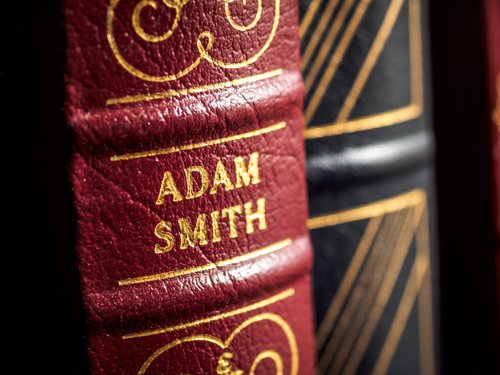
Imagine that you spent 250 years being called the wrong name. That’s basically what’s happened to Adam Smith’s treatise. Everyone refers to it as “The Wealth of Nations,” and sure, that’s a reasonable shorthand for those in the know and those who are simply being expedient. But for politicians and pundits, it turns a rigorous intellectual investigation into a bumper sticker that misrepresents what the book is actually about.
The book was first published on March 9, 1776. Later that same year, a “bunch of farmers” in Britain’s American colonies had their own ideas and fundamentally changed the world. It’s worth asking the simple question: what did Smith actually write?
The full title is An Inquiry into the Nature and Causes of the Wealth of Nations. It’s a mouthful, but the distinction between the full title and the shorthand matters more than people realize.
First, let’s look at the word “Inquiry.” Contrary to what many have claimed, Smith was not declaring in Wealth of Nations that markets and capitalism work. He was asking genuine questions: why are some nations wealthy while others are poor? Why are some nations becoming wealthier while others remain stagnant or are in decline? In fact, all of economics is fundamentally about these questions, even if only indirectly. Nobel Laureate Bob Lucas once said, “once you start thinking about [economic development], it is hard to think about anything else.” This preoccupation is also why Adam Smith is (rightly) referred to as “the father of economics.”
Next, the choice of the word “Nature” in the title is illustrative. Smith is also asking the question, “What is wealth?”
Before Adam Smith, most people and governments assumed that wealth was measured in gold. After all, if having more money makes a household wealthier, then it stands to reason that if the nation has more money, the nation will be wealthier, too. The goal became clear: fill your treasury with gold (read: money), encourage exports so that other countries have to send gold to pay for your exported goods, and restrict imports, so as to avoid having to send your gold to other countries. This was the conventional wisdom of “mercantilism,” but it’s nothing more than the fallacy of composition.
Smith wisely pointed out the problems of the mercantilist understanding of wealth. Wealth is not about how much money you have. Wealth is about access to goods and services that people want or need. It’s about the food we can buy and the coat we can wear. Money is only useful if we can exchange it with other people for the things that we need. Robinson Crusoe would not have had an easier time on his island if he’d washed ashore with a trillion dollar coin in his pocket.
After Smith lays out what wealth is (and is not), we’re ready to understand its “Causes.” If wealth is about access to goods and services, what causes wealth to increase? Smith spells it out in the opening chapters of the book: it’s the division of labor. The pin factory that Smith uses to illustrate this isn’t just a charming example, it demonstrates that wealth is created from ordinary people doing specialized tasks. Disrupting that process destroys value rather than creating it.
But what causes the division of labor? For Smith, that’s easy: exchange. Voluntary, mutually beneficial, free exchanges that happen when people are left to pursue their own interests. And in the right institutional setting, the exchanges that people make are, in his famous phrase, “led by an invisible hand” toward the betterment of society, even if nobody making those exchanges ever intended to pursue that outcome.
An Inquiry into the Nature and Causes of the Wealth of Nations is a research program, not a slogan. Smith never declares that markets work. He investigates the conditions under which they do (and do not). In the process, he provided one of the most consequential arguments in intellectual history: Wealth is not seized, decreed, or stockpiled. Given the right institutional setting, it is produced by ordinary people making ordinary trades with one another, collectively building something that no central planner could design or comprehend.
Two hundred fifty years later, that research program is still going strong. Policymakers—and many others—still confuse money for wealth, mistake the treasury and the stock market for the economy, and believe prosperity can be created by restricting competition and rewarding favored industries. Smith diagnosed the problems with these beliefs in 1776.
Today, the need to read (and reread) Smith has never been greater. We should start with the title.