dailynewsnblog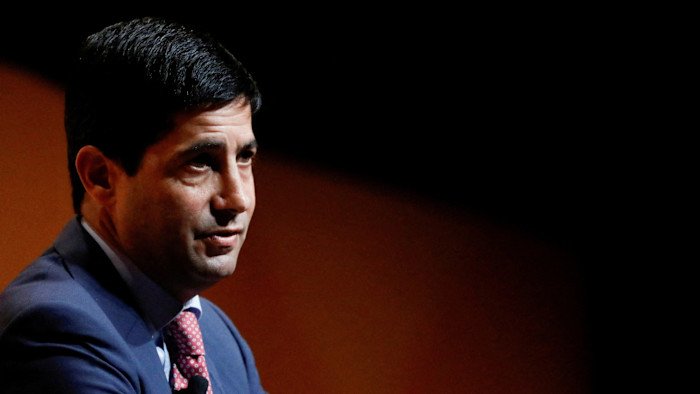
Stephen Cecchetti is professor in international finance at Brandeis International Business School. Kim Schoenholtz is clinical professor emeritus at NYU’s Stern School of Business. They blog at www.moneyandbanking.com.
One of the few constant public positions of Kevin Warsh — President Donald Trump’s choice to succeed Jay Powell as Federal Reserve chair — is that he wants to shrink the central bank’s balance sheet “significantly.” Unfortunately, that’s a very risky idea.
Whether that means returning to the pre-pandemic level of $4tn — or even further back to the $1tn of the pre-Lehman era — remains unclear. What is clear is that a dramatic reduction from today’s $6.5tn could stir interest rate volatility, limit credit supply, cause turbulence in financial market and even pose a risk to financial stability.
To understand why, consider how the Fed manages short-term interest rates.
Under the current framework, the Fed operates a somewhat porous corridor system, setting a 25-basis-point target range for the federal funds rate. Two administered rates — the Fed’s standing repo facility and its overnight reverse repo facility — define the ceiling and floor. The interest rate the Fed pays on reserve balances sits within this band and usually anchors short-term market rates, like SOFR.

This system works well when reserves are “ample”: plentiful enough that small fluctuations in supply barely move market rates, but not so abundant as to be without any short-term rate effect.
The evidence suggests we are close to that sweet spot now. In recent months, modest use of the Fed’s repo facility has returned, while reverse repo balances have dwindled — textbook signs of an ample-reserves regime. Measured as a share of GDP, the balance sheet has already receded to about 21.5 per cent, only slightly above its end-2019 levels.
With currency in circulation and banks’ liquidity needs growing over time, maintaining even this ratio now requires the Fed to resume net purchases of securities. To differentiate this from crisis-fighting quantitative easing, the central bank will only buy short-term Treasury bills, and has dubbed the process “reserve management purchases”.
As Fed chair Jay Powell said at the central bank’s press conference in December:
In light of the continued tightening in money market interest rates relative to our administered rates, and other indicators of reserve market conditions, the Committee judged that reserve balances have declined to ample levels.
Accordingly, at today’s meeting, the Committee decided to initiate purchases of shorter-term Treasury securities — mainly Treasury bills — for the sole purpose of maintaining an ample supply of reserves over time.
Such increases in our securities holdings ensure that the federal funds rate remains within its target range and are necessary because the growth of the economy leads to rising demand over time for our liabilities, including currency and reserves.
Why is the banking system’s demand for reserves so much higher than before the 2008 crisis? Two forces are at work.
First, post-crisis regulation — especially the liquidity coverage ratio introduced in 2015 — requires banks to hold ample, high-quality liquid assets to withstand a 30-day stress scenario. Second, banks strongly prefer reserves to Treasury securities for this purpose, because selling Treasuries or borrowing from the Federal Reserve’s discount window during a crisis risks signalling distress. This stigma effect is deeply entrenched.
Could the Fed overcome these obstacles? In principle, yes — but the practical difficulties are formidable. Making discount window borrowing routine, or counting borrowing capacity towards liquidity requirements, might help on the margin. Yet decades of experience suggest that the stigma associated with central bank borrowing is extraordinarily hard to dislodge, particularly when it matters most.
More fundamentally, shrinking the balance sheet dramatically — taking it back to “scarce reserves” territory — would almost certainly require abandoning the corridor system altogether.
If the standing repo facility were to remain in place, banks would simply borrow there to obtain the reserves they desire, frustrating any effort to constrain the balance sheet. But eliminating the facility would remove any cap on short-term rates — with potentially devastating consequences for the supply of credit and financial stability.
We have seen this movie before. In September 2019, when reserve demand unexpectedly exceeded dwindling supply, the key secured overnight financing rate spiked to 5.25 per cent — a full 3 percentage points above the top of the Fed’s federal funds target range.

Only an emergency expansion of repo supply prevented a broader loss of confidence in the Fed’s monetary control. Without a flexible central bank balance sheet, such episodes would recur. And unfortunately, repo ructions can quickly reverberate dangerously through the financial system.
Complicating matters further, the Treasury’s “general account” at the Fed fluctuates enormously — swinging between $50bn and nearly $1tn over the past five years — driven by debt ceiling stand-offs and seasonal tax flows. Each swing mechanically drains or adds reserves. With abundant reserves, these fluctuations are absorbed harmlessly. With scarce reserves, they would amplify interest rate volatility.
None of this is to deny that a large central bank balance sheet carries costs. It facilitates government financing in ways that risk fiscal dominance and distorts the functioning of financial markets. As Warsh said in a speech last year:
The Fed often presents itself as humble and technocratic, hewing closely to the remit. They say they take fiscal policy decisions as given, and then react. But, it’s no longer obvious whether monetary policy is downstream or upstream from fiscal policy. Irresponsibility has a way of running in both directions.
Fiscal dominance — where the nation’s debts constrain monetary policymakers — was long thought by economists to be a possible end-state. My view is that monetary dominance — where the central bank becomes the ultimate arbiter of fiscal policy — is the clearer and more present danger.
But the alternative — frequent, unpredictable spikes in money market rates that undermine banks’ willingness to extend credit and endangers financial stability — could be even worse.
The incoming Fed chair will therefore need to tread very carefully. Shrinking the balance sheet by $2tn or more is not simply a matter of political will. It requires either a fundamental transformation in how banks manage liquidity — overcoming stigma that has persisted for generations — or accepting a return to the kind of interest rate volatility that the modern framework was designed to prevent.
Neither path is without major risks. A prudent chair will recognise that ambition must be tempered by the realities of how banks and financial markets actually work.