dailynewsnblog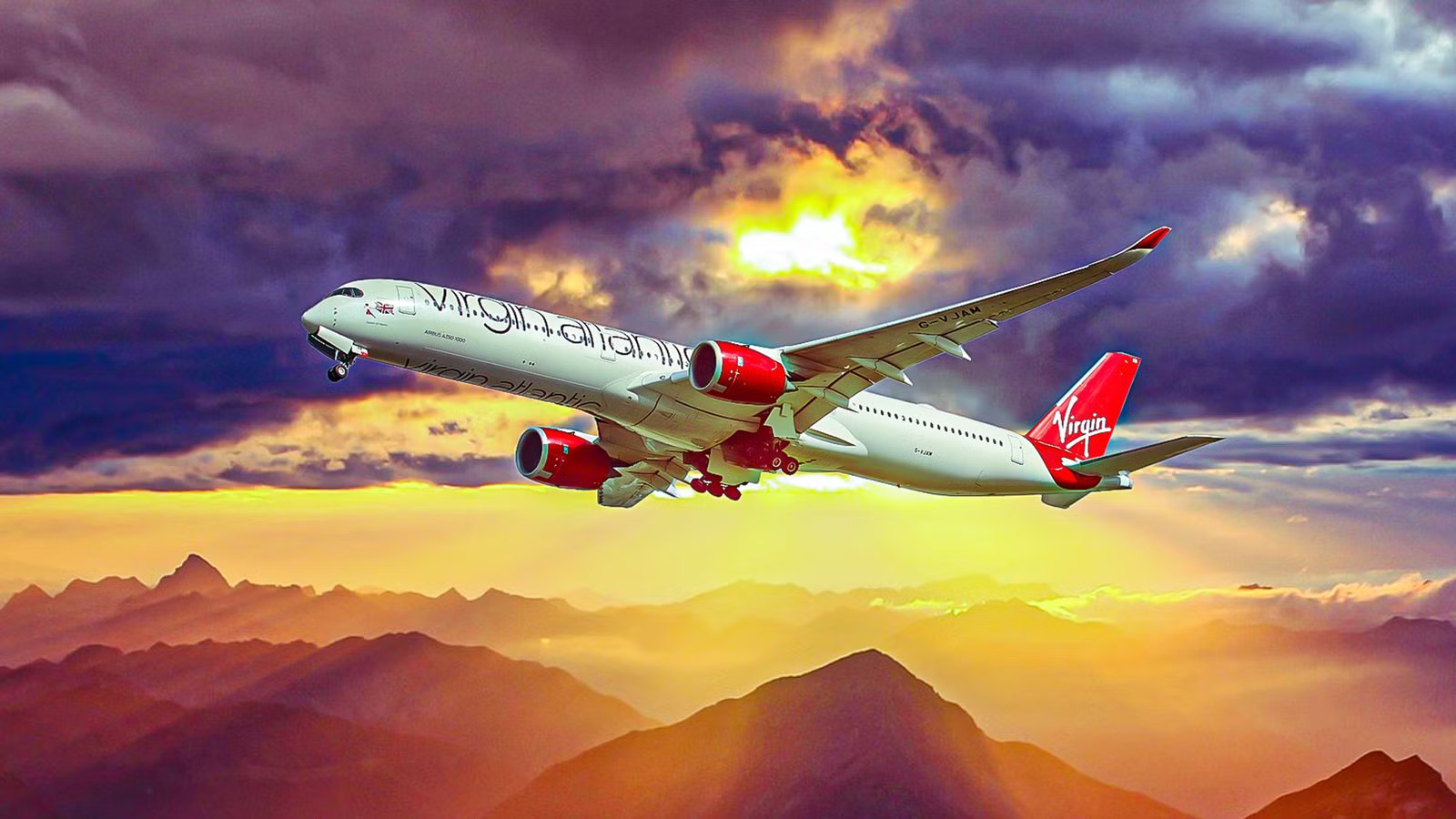
Since its launch in 1984, Virgin Atlantic has built a reputation as a leading long-haul airline, connecting the UK to key destinations across North America, Africa, Asia, and the Caribbean. Central to its modern operations is the Airbus A350-1000, a next-generation widebody that has become the backbone of the airline’s fleet, offering improved fuel efficiency, extended range, and a quieter, more comfortable passenger experience. The aircraft also introduced a new era for Virgin Atlantic’s onboard product, including updated Upper Class and Premium cabins.
By 2026, the capabilities of the A350-1000 will allow Virgin Atlantic to operate some of its longest nonstop services to date, pushing the limits of range while maintaining efficiency and reliability. These ultra-long-haul routes highlight how the airline is using advanced aircraft technology to expand its network, serve high-demand markets, and compete more effectively on lengthy intercontinental flights. Join us as we explore Virgin Atlantic’s longest nonstop A350-1000 routes planned or operated in 2026, using data provided by Cirium, and what they reveal about the airline’s long-haul strategy.
Distance Leaders: The Longest Routes With Virgin Atlantic’s A350-1000

Three routes stand out as the longest in Virgin’s A350-1000 arsenal. The longest of these routes is between the United Kingdom’s capital and the US East Coast.  London Heathrow Airport(LHR) –
  Los Angeles International Airport (LAX) at an average of 5,456 miles (8,780 km) each way. This route offers 321 flights on the outbound and the same on the inbound with 107,535 seats, and just around 586 million available seat miles (ASMs) each way.
Coming in second place is a very similar route between the UK and the US East Coast, with a very similar distance. London Heathrow Airport (LHR) –  San Francisco International Airport (SFO) covers a slightly shorter average distance of 5,386 miles (8667 km) and also features fewer flights, with 198 each way, offering 66,330 seats and over 350 million ASMs on each leg.
|
Specification (Airbus) |
Value |
|---|---|
|
Maximum seating (all-economy) |
480 seats |
|
Typical 3-class seating |
375–400 passengers |
|
Cargo capacity |
44 LD3 containers or 14 pallets |
|
Range |
9,000 nautical miles (16,700 kilometers) |
|
Cruise speed |
Mach 0.85 |
|
Maximum taxi weight |
712,000 pounds (322.9 tonnes) |
|
Maximum take-off weight (MTOW) |
710,000 pounds (322.0 tonnes) |
|
Maximum landing weight |
520,000 pounds (236.0 tonnes) |
|
Maximum zero fuel weight |
492,000 pounds (223.0 tonnes) |
|
Maximum fuel capacity |
44,500 US gallons (168,300 liters) |
|
Overall length |
242 feet, 1 inch (73.78 meters) |
|
Fuselage width |
19 feet, 7 inches (5.96 meters) |
|
Wingspan (geometric) |
212 feet, 5 inches (64.75 meters) |
|
Height |
56 feet (17.08 meters) |
|
Engines |
Rolls-Royce Trent XWB-97 |
The final route in the ‘over 5,000 miles’ category is Virgin’s route between Manchester Airport (MAN) – Las Vegas McCarran International Airport (LAS). This route offers a significantly lower 73 flights each way, with just over 147 million ASMs across 28,981 seats. This route just sneaks into this category, with a distance of 5,088 miles (8,188 km).
The Largest Grouping By Number Of Routes: 4,000–5,000 Miles

Several long-haul routes in the 4,000–5,000-mile range also play an important role in Virgin Atlantic’s Airbus A350-1000 network. Among these, services linking London Heathrow with South Asia and the US East Coast stand out for their balance of distance, frequency, and capacity, making them core missions for the type.
The longest route in this bracket is London Heathrow Airport (LHR) – Chhatrapati Shivaji Maharaj International Airport, Mumbai (BOM), which averages 4,486 miles (7,218 km) each way. Virgin Atlantic operates 154 flights in each direction, offering 61,014 seats and generating approximately 274 million available seat miles (ASMs) per leg. This route highlights the A350-1000’s efficiency on dense, high-demand intercontinental services connecting the UK with the Indian subcontinent.
Close behind are several transatlantic services to Florida. London Heathrow (LHR) –  Miami International Airport (MIA) spans an average of 4,425 miles (7,122 km), with 23 flights each way, 7,705 seats, and just over 34 million ASMs per direction. Slightly shorter still is London Heathrow (LHR) – Tampa International Airport (TPA) at 4,411 miles (7,099 km), operated 17 times each way, offering 5,695 seats and around 25 million ASMs on each leg. Together, these routes demonstrate how Virgin deploys the A350-1000 on medium-long haul missions where range, comfort, and fuel efficiency are equally critical.

Virgin Atlantic’s Simple, (Mostly) Modern Widebody Fleet In 2025
We examine the Virgin Atlantic fleet in 2025, changes since our last Virgin fleet video, and where all of these widebody aircraft are currently deployed!
Shorter But Vital: 3,000-4,000 Miles

Although the Airbus A350-1000 is often associated with Virgin Atlantic’s longest intercontinental services, the aircraft also plays a crucial role on several high-volume long-haul routes under 4,000 miles. These sectors typically emphasize frequency and capacity, connecting London Heathrow with key business, leisure, and connecting markets across the Atlantic, the Middle East, and Africa.
The most prominent route in this category is London Heathrow Airport (LHR) – New York John F. Kennedy International Airport (JFK). Spanning an average distance of 3,452 miles (5,555 km), this flagship transatlantic service represents the busiest A350-1000 route in Virgin Atlantic’s network, with over 1,010 flights in each direction. The route offers approximately 338,000 seats per leg and generates just under 1.17 billion available seat miles (ASMs) each way, reflecting its importance to both Virgin Atlantic’s premium and connecting traffic.
Other notable sub-4,000-mile A350-1000 routes include London Heathrow (LHR) –  Toronto Pearson International Airport (YYZ) at 3,556 miles (5,722 km), operated 210 times each way and providing 81,448 seats per direction. Services to Dubai International Airport (DXB) and Lagos Murtala Muhammed International Airport (LOS) also fall into this range, averaging 3,420 miles (5,504 km) and 3,099 miles (4,987 km) respectively. Together, these routes demonstrate how Virgin Atlantic leverages the A350-1000’s efficiency and capacity on shorter long-haul missions that remain central to its global network.
Virgin Atlantic: A Short History
_(15080030895).jpg?q=49&fit=crop&w=500&dpr=2)
Virgin Atlantic was founded in 1984 by British entrepreneur Richard Branson, entering an airline industry dominated by established carriers. The airline launched operations with a single leased Boeing 747-200, registered G-VIRG and named Maiden Voyager. Previously operated by Aerolíneas Argentinas, the aircraft flew Virgin Atlantic’s inaugural service from London Gatwick to Newark on 22 June 1984 and featured a distinctive “Painter” tail illustration, setting the tone for the airline’s bold and unconventional brand.
During the late 1980s, 1990s, and 2000s, Virgin Atlantic expanded its long-haul network across North America, the Caribbean, Africa, and Asia. The Boeing 747 became one of the airline’s most recognizable aircraft types and formed the backbone of its fleet for many years. Alongside the 747, Virgin Atlantic introduced aircraft such as the Airbus A340 and later the Boeing 787 Dreamliner, while earning a strong reputation for premium cabins, innovative onboard features, and customer-focused service. In 1999, Singapore Airlines acquired a 49% stake, providing financial support while Virgin Group retained control.
In 2012, Delta Air Lines purchased Singapore Airlines’ share, creating a strategic partnership that strengthened Virgin Atlantic’s transatlantic presence. The airline faced major challenges during the COVID-19 pandemic, leading to financial restructuring in 2020 and the retirement of its remaining Boeing 747s. Emerging from this period, Virgin Atlantic has focused on sustainability, fleet modernization, and partnerships, continuing to stand out as a distinctive player in long-haul aviation.
Why Virgin Atlantic Operates The A350-1000

Virgin Atlantic operates the Airbus A350-1000 as a cornerstone of its long-haul fleet because the aircraft combines long range with exceptional fuel efficiency. Designed for ultra-long-haul missions, the A350-1000 allows the airline to fly nonstop to distant destinations while using significantly less fuel than older widebody aircraft. This efficiency helps reduce operating costs and supports Virgin Atlantic’s commitment to lowering carbon emissions as part of its broader sustainability strategy.
Another key reason for selecting the A350-1000 is passenger comfort and product consistency. The aircraft’s advanced aerodynamics and carbon-fiber structure result in a quieter cabin, lower cabin altitude, and improved air quality, enhancing the overall onboard experience. Virgin Atlantic has used the A350-1000 to introduce its latest Upper Class, Premium, and Economy cabins, ensuring a modern and uniform product on its flagship long-haul routes.
Operational flexibility also plays an important role in Virgin Atlantic’s use of the A350-1000. The aircraft offers strong payload performance and reliability, making it well-suited to high-demand transatlantic routes as well as longer services to Africa and Asia. By standardizing around a modern, capable aircraft type, Virgin Atlantic can simplify maintenance and crew training while remaining competitive in an increasingly efficiency-driven long-haul market.

Virgin Atlantic Concorde: Sir Richard Branson’s Quixotic Supersonic Quest
A closer look at how Sir Richard Branson tried and failed to bring supersonic capabilities to the Virgin Atlantic fleet.
A Long Haul Aircraft With A Long Term Future

The Airbus A350-1000 has firmly established itself as a cornerstone of Virgin Atlantic’s long-haul fleet, combining range, capacity, and next-generation efficiency in a way that aligns closely with the airline’s network strategy. From ultra-long transatlantic services to high-density routes linking London Heathrow with major global hubs, the aircraft has proven adaptable across a wide spectrum of missions. Its ability to serve both premium-heavy business routes and leisure-focused markets has made it one of the most versatile widebodies in Virgin’s lineup.
Beyond operational flexibility, the A350-1000 plays a central role in Virgin Atlantic’s modernization and sustainability goals. Compared with older widebody types, it delivers significant reductions in fuel burn, emissions, and noise, while also offering a quieter and more comfortable cabin environment for passengers. These advantages allow Virgin to maintain competitiveness on key long-haul routes while meeting increasingly stringent environmental expectations from regulators and customers alike.
Looking ahead, the A350-1000’s position at Virgin Atlantic appears firmly cemented for years to come. As the airline continues to refine its network around London Heathrow and focus on core long-haul markets, the type is well-suited to remain a backbone aircraft, replacing legacy widebodies and supporting growth where demand is strongest. With its blend of efficiency, range, and passenger appeal, the A350-1000 is set to remain integral to Virgin Atlantic’s long-term fleet and route planning strategy.