dailynewsnblog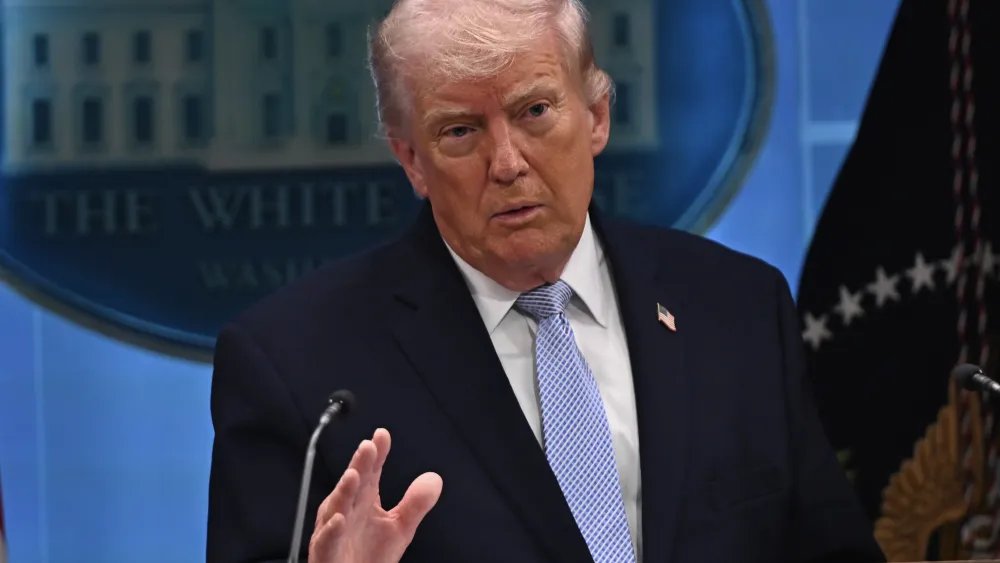
The war in Iran’s far-reaching consequences could hit soon store shelves for brands that are reliant on goods flowing in from Vietnam.
Birchbury, a Los Angeles-based direct-to-consumer online minimalist footwear brand that manufactures exclusively in the southeast Asian country, has experienced a roughly 30 percent uptick in container prices and extended lead times as the war endures in its sixth week.
“Before the Iran war, we were paying roughly $3,500 to $4,000 per container out of Vietnam. Now we’re paying closer to $4,500 to $5,200 and our freight forwarder is already saying that it’s likely to climb further,” Matthew Tran, founder of Birchbury, told Sourcing Journal. “On top of that, lead times have increased by three to four weeks, so right now we’re already preparing for a potential inventory depletion.”
Escalating oil prices have forced Vietnam’s airlines to tighten up capacity in April as possible jet fuel shortages could hit the country. Waiting times for cargo ships have also lengthened in recent weeks due to port congestion in the surrounding regions in south and southeast Asia, which have been exacerbated by a reported shortage of empty containers at major ports in Vietnam.
“We’re not implementing it yet, but we’re looking at increasing our prices next month, or until our stocks last, whichever comes first,” Tran said.
As the conflict continues to foster global uncertainty, the Strait of Hormuz saw an uptick in traffic over the weekend.
Ship tracking intelligence provider MarineTraffic accounted for 14 crossings on Friday and 10 on Saturday before another 11 took place Sunday. In the five days prior, the strait averaged five crossings per day.
However, more than 70 percent of the combined fleet that passed through were either vessels sanctioned for illegal activity or “shadow fleet” vessels—which are ships speculated to be circumventing sanctions.
There were no verified physical attacks on vessels over the weekend, although the United Kingdom Maritime Trade Operations (UKMTO) Centre reported an incident off the Khor Fakkan Port in the U.A.E., in which multiple splashes from unknown projectiles were witnessed near a container ship while it was loading. U.A.E. authorities corroborated the report.
“While the lack of confirmed incidents may indicate short-term restraint, the evolving political signals could still influence vessel behavior and risk exposure in the coming days,” said Dimitris Ampatzidis, senior risk and compliance analyst at MarineTraffic, in a Monday morning update.
U.S. ups Hormuz insurance pledge to $40 billion
On Friday, the U.S. announced it has doubled its maritime insurance guarantee for vessels transiting through the Strait of Hormuz first posited in March, with the Trump administration saying it would ensure losses of up to $40 billion for companies attempting the journey.
President Donald Trump first unveiled the insurance plan in early March, initially putting the backstop figure at $20 billion, but the U.S. Development Finance Corp. (DFC) tasked with implementing the program still has not launched a public portal to apply for insurance. DFC said it will announce the opening of the application portal soon.
Alongside Chubb, which was initially helping DFC with the coverage plan, six new insurance partners Travelers, Liberty Mutual Insurance, Berkshire Hathaway, AIG, Starr and CNA.
“These leading American insurers bring deep underwriting experience in marine and marine war coverage, strengthening our efforts to help restore confidence in maritime trade,” said DFC CEO Ben Black in a statement.
The reinsurance facility will insure losses up to approximately $40 billion on a rolling basis: $20 billion from DFC and $20 billion from the seven insurance partners. Chubb will act as the lead underwriter, and will determine pricing and terms, assume risk and issue policies for eligible vessels and cargo.
The insurance comes as the future of the Iran conflict, and the state of the Strait of Hormuz, remain unclear.
In an expletive-filled social media post Sunday morning, President Trump gave Iran an 8 p.m. Tuesday deadline to reach a deal with the U.S. to end the war or open up the Hormuz strait.
“I would say it’s a pretty big priority,” to ensure passage through the conflict-ridden waterway, Trump said in a White House briefing on Monday.
When asked during the briefing whether the U.S. would consider leaving the conflict even if the Islamic Revolutionary Guard Corps (IRGC) Navy maintained its reported “toll booth” to transit the strait, the president did not directly answer the question.
“What about us charging tolls? I’d rather do that then let them have them,” Trump said. “We have a concept where we’ll charge tolls.”
Opinions on the Strait of Hormuz’s current and future accessibility appear to be varied depending on the party.
On Sunday, Oman’s Foreign Ministry said that it met with Iranian officials a day earlier to discuss “possible options for ensuring the smooth flow of transit through the Strait of Hormuz.”
But the IRGC Navy said the same day that the strait will “never return to its previous condition,” particularly for the U.S. and Israel, and added that it is completing preparations to enforce a new security order in the Persian Gulf.
Sparingly, container vessels have been able to brave out the journey, although little is known as to the circumstances of each sailing.
A report from the Journal of Commerce said French ocean carrier CMA CGM secured assurances that its ships that were stuck in the gulf would be able to voyage through the channel unharmed after one of its vessels successfully passed through.
CMA CGM’s passage followed two safe sailings from Chinese-owned Cosco Shipping days earlier. Cosco was the first major ocean carrier to mosey its way through the conduit, which typically handles about 20 percent of the world’s oil and liquefied natural gas supply daily.