dailynewsnblog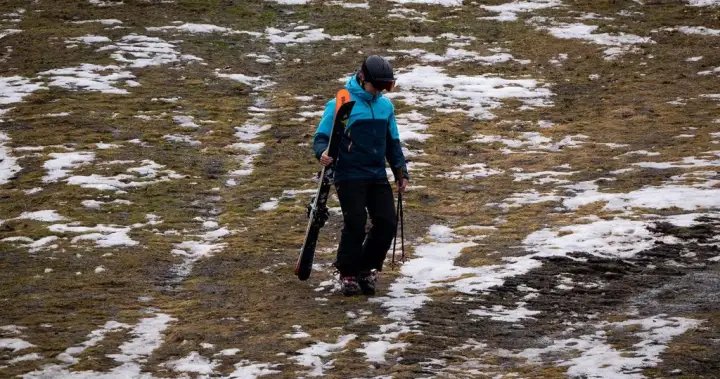
Vancouver is poised to close out its first official snow-free winter in 43 years, in what environmental researchers say may become a new norm for southwestern British Columbia rather than an anomaly.

Friday marks the start of spring, and with temperatures forecast around 12 degrees, the city is sure to see out winter without having experienced the one centimetre of accumulation at the airport that is required to mark an official snowfall.
It’s the city’s first official no-snow winter since 1982-83, although Environment Canada meteorologist Brian Proctor says there were three days this winter with trace snowfall.
Vancouver’s snowless winter is also on pace to be the city’s second-warmest on record, with Environment Canada saying the mean temperature at the airport weather station was 6 degrees from December to February, well above the seasonal average of 4.3 C and only bested by the 6.3 degrees reported in 1958.
It’s been a stark contrast to Central Canada, where Toronto-based Environment Canada meteorologist Geoff Coulson says Ontario was hit with weather colder and snowier than usual, with Pearson International Airport receiving 188.8 centimetres of snow this winter.
University of British Columbia assistant professor Rachel White says a snow-free winter is visible evidence of climate change and its impact on daily life.

Get daily National news
Get daily Canada news delivered to your inbox so you’ll never miss the day’s top stories.
She says that a slight change in winter temperature is more easily seen in Vancouver than in Toronto because it can mean the difference between rain and snow.
White adds that Vancouver residents may not need to wait decades to see the next no-snow winter, as warming temperatures globally will likely mean a more-frequent repeat of the weather pattern experienced this season on B.C.’s southern coast.
“This doesn’t really surprise me in terms of the effect that we know that climate change is having on warming temperatures,” she says.
“This doesn’t mean that from now on Vancouver isn’t going to get snow in the winters. We’ll have winters again where there is snow, but it will start to become more common that we have these snowless winters.”
While average snowpack levels across B.C. are slightly above average, South Coast levels are well below average, at 79 per cent of the historic median for this time of year, according to provincial Environment Ministry data issued this week. Vancouver Island levels are even lower, at 61 per cent.
The impact of the low-snow winter in parts of B.C. will stretch into summer, another researcher says.
John Richardson, professor emeritus at UBC’s Department of Forest and Conservation Sciences, says the snowpack anchors B.C.’s water supply in the drier summer months.
Richardson notes that evaporation is faster when liquid moisture is on the ground instead of snow, and the combined result of that and a smaller snowpack is concerning.
“This time of year, there’s nobody thinking about water shortage,” he says, noting that this week’s atmospheric river has brought hundreds of millimetres to rain to the B.C. coast. “It seems very rainy, but the last four months have all been below average, not even at the average rainfall, based on the last 40 or 50 years’ record.
“And while we really like the long, dry, warm summers, that’s also exactly the problem with water; it’s that warmer conditions, more evaporation, less water into the system is going be something that will catch us up sometime.”
Environment Canada says precipitation at Vancouver International Airport over the three winter months amounted to about 384 millimetres, below the average of 436 millimetres, and B.C.’s southern Interior communities, including Kelowna and Vernon, reported a winter both much warmer and drier than seasonal.
Richardson says the lack of water will affect many areas.
“I think the key thing is to realize is that it impacts so many different aspects of our lives, all the way from our drinking water supply, our supply for fighting fires, for sewage disposal, through the freshwater ecosystems, hydroelectric power generation, those things are all interconnected,” he says “And the same water is used for many of those things.
“So if there’s not much water, all of those things get impacted.”
© 2026 The Canadian Press