dailynewsnblog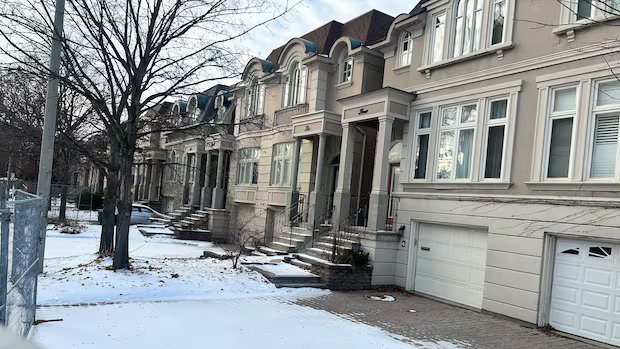
A commercial real estate developer well known for his philanthropic work, along with a ratepayers group and a local refugee shelter, are floating a plan to transform 10 vacant houses in a tony north Toronto neighbourhood into temporary homes for low income families.
But it’s not clear how much support the group will get, from city hall or the owner of the houses.
Developer David Walsh, the FCJ Refugee Centre, and Geoff Kettel of the Leaside Residents Association, are hoping city council will help convince the owner of the vacant luxury homes to let them be converted into temporary housing.
“It’s a perfect opportunity,” said Tsering Lhamo, co-executive director of the refugee centre, who met earlier this week with Walsh and Kettel out front of the houses on Glazebrook Avenue. “These [homes] are a really good opportunity and I’m really sad and also surprised at [the fact that] they’re standing here unoccupied.”

The houses have been sitting vacant for about a year. They were bought in 2023 by Gairloch Developments, which plans to demolish the houses and turn the properties into a 34-story residential tower.
But the city has denied Gairloch a demolition permit because the developer hasn’t yet secured a building permit, according to city records, leaving the project in limbo.
Walsh, a past winner of the Jane Jacobs Prize for his work championing social housing initiatives, asked city councillors on Dec. 3 to consider a plan to turn the houses into transitional homes run by social housing agencies. Kettel made a similar pitch to another city hall committee earlier this year.
So far, there’s been no response from councillors, they say. But Coun. Rachel Chernos Lin, whose ward includes the 10 homes, warns the plan may not be feasible.
In an interview with CBC Toronto she called it “an interesting idea.” But she added: “Whether it’s appropriate for the city to be the broker here … I don’t know that we have the resources or the capability to do that.”

The plan, as outlined to CBC Toronto by Walsh, Lhamo and Kettel, would see the homes undergo minor repairs and cleanup, with the city’s help.
The homes would then be turned over to a social housing agency which would operate as the landlord, choosing the family who’d live in the home and collecting the rent, which would be turned over to the developer.
Chernos Lin also mentioned potential liability issues, and relocation challenges, once it’s time for the homes to be returned to the developer.
But the biggest stumbling block, all three acknowledge, would be getting the company that owns the properties on board.
The company has not responded to emails from CBC Toronto. Walsh says he has also reached out to Gairloch with no response so far.

A spokesperson for BILD, a lobbying group for developers in the Greater Toronto Area, wouldn’t comment on the plan, saying it would be up to individual developers to decide whether to offer temporary housing to needy families while they wait for their projects to be approved.
Walsh, who is himself a commercial real estate developer, said the plan makes good business sense: Renting out the homes allows developers to avoid Toronto’s vacant home tax, which this year is three per cent of a home’s assessed value.
Property records don’t show exactly what the 10 Gairloch homes are worth today, but one sold in 2017 for $1.74 million. Other homes in the same neighbourhood are currently on the market for almost $4 million — which would mean a vacant home tax bill of more than $100,000.
Walsh said many developers who’ve bought up residential properties for re-development have left the existing houses intact and their projects dormant because current market conditions don’t favour building.

City of Toronto staff couldn’t provide an estimate of the number of vacant houses that are sitting vacant while their developer-owners wait, either for market conditions to improve or for their plans to clear the city’s approval process.
But according to a 2024 study by the Canadian Home Builders Association, Toronto developers wait an average of 25 months before getting their projects approved. That’s the second longest building timeline in the country, according to the study’s figures. Only Hamilton’s, at 31 months, is longer.
The shortest wait times are in Saskatoon, where developers get municipal approval for their projects in just two months on average, the study shows.
For the refugee centre’s Lhamo, the silver lining in the Toronto numbers is that two years is plenty of time to house a refugee family as they wait for a permanent home to come available.
She says her agency currently operates three houses where refugee families can stay six months to a year.

The Gairloch properties would be an ideal addition, she says.
“This means everything (to a refugee family)…They need the stability, they need the comfort,” she said, adding “this has to be a collaboration including us, including the city, including the developer.”
She says the city’s role would be to help pay for whatever minor renovations are necessary to get the unoccupied houses into liveable condition.
Vacant lots ‘left a wasteland’
Kettel, who also sits on the Federation of North Toronto Residents Associations, convinced councillors in February to turn down Gairloch’s attempt to demolish the buildings before they had a building permit in place.
“These projects are getting approved but they’re not getting built,” he said. Instead, the builders tear down the existing structures, then leave the vacant lots to become public garbage cans.
Leaving the houses in place, and occupied by needy families, “is better than having them completely torn down, and [the lots] left a wasteland,” he said.
The Gairloch rowhouses, built in 1997, range in size from 2,200 to 3,200 square ft.
Walsh believes not only private properties could be exploited as temporary homes for the needy. He says vacant city-owned structures could also be turned into transitional housing.
“We’ve got 15-hundred people sleeping on the streets so we’ve got a serious situation in the city and we need to be creative in finding ways to house them,” he says.